
Reviewed · ANNAPURNA BASE CAMP TREKS
Annapurna Base Camp Trek
Annapurna Base Camp gives you a lot of Nepal in a short time: village trails, forest, mountain views, a sunrise from Poon Hill, and a final night beneath the Annapurna range. I like the way this route mixes a major Himalayan goal with village walking, rather than sending you straight up and back on the same trail.
I also like that the $700 price covers the pieces that can make a trek stressful, including permits, meals, guide and porter costs, transport, equipment, and two Kathmandu hotel nights. The main catch is the pace. Ten days is efficient, not leisurely, and several walking days last five to seven hours at moderate altitude.
Key points to know before booking
- Poon Hill adds a memorable sunrise: You leave Ghorepani early, then return for breakfast before continuing to Tadapani.
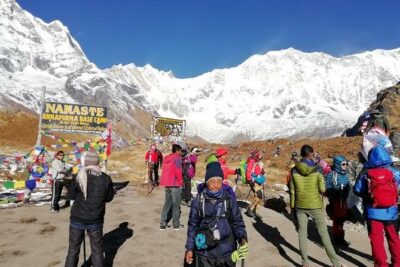
- Annapurna Base Camp is reached on Day 7: The route passes Machapuchare Base Camp before the final ascent.
- The package covers major costs: Meals, permits, guide, porter support, transport, a duffel bag, and basic first aid are included.
- Local guide support is central: The company has used guides including Madan, Rishi, Roshan Pandey, Moti, Arjun, and Ganesh on its trekking departures.
- The return includes Jhinu hot springs: After descending to Jhinu, you have the option to relax in the nearby natural springs.
- This is a private trek: Only your own group takes part, with a 6:15 am start from Thamel in Kathmandu.
Why this 10-day Annapurna route works
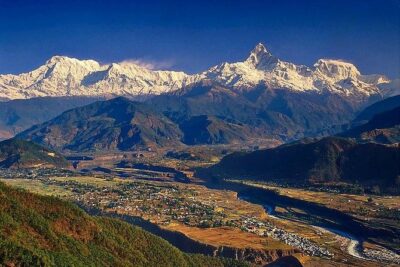
The Annapurna Base Camp trek is a good choice if you want a serious mountain walk without committing to a much longer Himalayan trip. The route moves from Pokhara’s lower hills into forest, high mountain country, and the amphitheater around Annapurna Base Camp.
I like the route’s rhythm. You begin with a long transfer from Kathmandu, then walk through villages and wooded hills before the scenery becomes more severe. Poon Hill gives you a major mountain view before you reach base camp, so the trek offers an early reward rather than making you wait until the final day.
The route also has a practical advantage: you return by much of the same trail. That means the way back is familiar, and your guide can manage the descent without adding a completely new section. The tradeoff is that the ten-day schedule leaves little room for delays, slow walking, or a rest day.
Touch The Himalaya Treks and Expedition describes its guides as local to the Annapurna area, with experience managing altitude, permits, porters, and route logistics. Past departures have included guides named Madan, Rishi, Roshan Pandey, and Moti, with Arjun and Ganesh assisting with baggage on one group trek.
The strongest praise has focused on care and organization. One solo trekker felt safe with guide Rishi, while another credited Roshan Pandey with helping complete the demanding route in ten days. That matters here because the guide is not just pointing out the trail. The guide helps set the walking pace, handles practical problems, and watches how you respond to the height.
Other Annapurna routes from Kathmandu:
- Annapurna base camp trek 5 Days
★ 5.0 · 252 reviews - Annapurna Base Camp Trek
★ 5.0 · 111 reviews - Kathmandu to Annapurna Base Camp (ABC) 5-Day Trek
★ 5.0 · 102 reviews
From Kathmandu to Pokhara on Day 1
Your first day is mostly about getting into position. You leave Kathmandu for Pokhara by tourist bus, private car, or flight. The road journey takes about seven hours and follows the Trishuli River for much of the way, with views of hills, villages, and changing countryside.
The bus is the budget-minded choice, but seven hours on Nepal’s roads can feel long. A car gives your group more control over stops, while a flight saves time if you prefer to begin the walking section sooner. The tour information allows all three options, so confirm which transport is included in your booking and which may require an added charge.
Pokhara is the gateway to the Annapurna region and a useful overnight stop before the trek. The package includes two nights of Kathmandu accommodation, one before and one after the trek, but the route also includes time in Pokhara. Ask the operator how your Pokhara night is arranged, especially if you choose a flight rather than the tourist bus.
The 6:15 am start from Thamel is early. Pack your day bag the night before and keep your passport, permits, water, snacks, sunglasses, charger, and extra layers where you can reach them.
Ulleri and the first uphill test
After breakfast on Day 2, you drive about an hour to Nayapul. From there, the walking begins toward Ulleri, with the trail following the Modi Khola River and passing through villages.
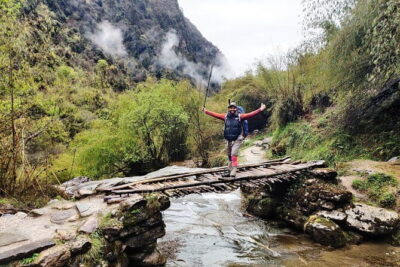
This is where the trek starts to feel real. You are no longer simply transferring between cities. You are walking through settled mountain country, with local homes, village paths, and views that change as you gain height.
The day is listed at about five hours, but do not judge it only by the clock. The route to Ulleri is uphill, and the stair sections can make the first walking day feel harder than expected. A moderate fitness level is required, and you should be comfortable walking for several hours on uneven ground.
Your guide and porter support are included, which is a useful advantage. You can keep your daily pack lighter while the porter carries the duffel bag. The duffel is supplied and returned at the end, so bring only the clothing and gear you actually need.
Ghorepani through forest and mountain views

Day 3 takes you from Ulleri to Ghorepani. The walk lasts roughly five to seven hours and passes through forest, open mountain scenery, and more of the Annapurna range.
Ghorepani matters because it sets up the next morning’s Poon Hill sunrise. You are not simply stopping at another village. You are positioning yourself for one of the most popular viewpoints on this route.
This day can be tiring after the climb to Ulleri, but the wooded trail gives you shade and a change from exposed uphill walking. Keep your water bottle handy and carry small snacks or chocolate, as the operator specifically recommends. Those simple items are useful when lunch feels far away or your energy drops late in the day.
The accommodation style is based around teahouse stops. The information says meals are provided during the trek, while also noting that you can buy meals at teahouses. Clarify the exact meal arrangement before departure, including what is covered and what you may want to purchase separately.
A few more things to do in Kathmandu worth a look
- Everest Base Camp Trek – 14 Days
★ 5.0 · 1,499 reviews - Everest Base Camp Trekking
★ 5.0 · 485 reviews - Nagarkot Sunrise View and Day Hiking from Kathmandu
★ 5.0 · 471 reviews - Annapurna Circuit Trek with Tilicho Lake
★ 5.0 · 368 reviews
Poon Hill sunrise and the walk to Tadapani
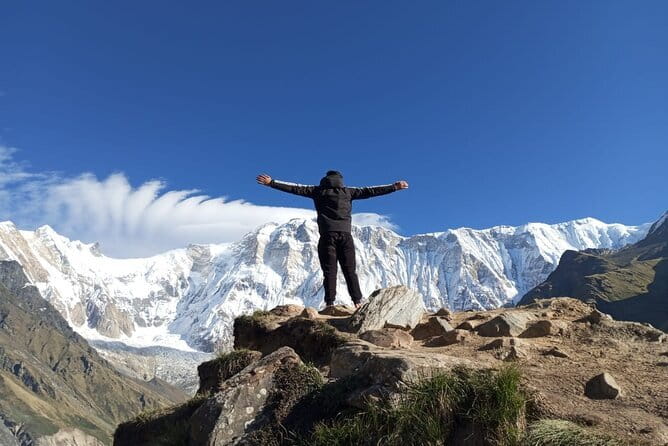
Day 4 begins early with a hike to Poon Hill. You go up for sunrise over the Annapurna and Dhaulagiri ranges, return to Ghorepani for breakfast, and then continue toward Tadapani.
This early start is one of the route’s best features. Poon Hill gives you a broad mountain viewpoint without waiting until base camp, and the sunrise adds a clear sense of occasion. The drawback is equally clear: you will be walking uphill before breakfast, after already spending several days on the trail.
The later walk to Tadapani takes about four hours. It passes through forest and mountain scenery, making this a shorter walking day than some of the others. I like that the route places the sunrise early rather than adding it as an optional extra. If the weather is clear, it can become one of your strongest memories of the trek.
Do not assume a sunrise viewpoint guarantees perfect conditions. Mountain weather can change quickly, and clouds may block some views. The experience still gives you a worthwhile morning walk, but keep expectations sensible.
Tadapani to Sinuwa through forest
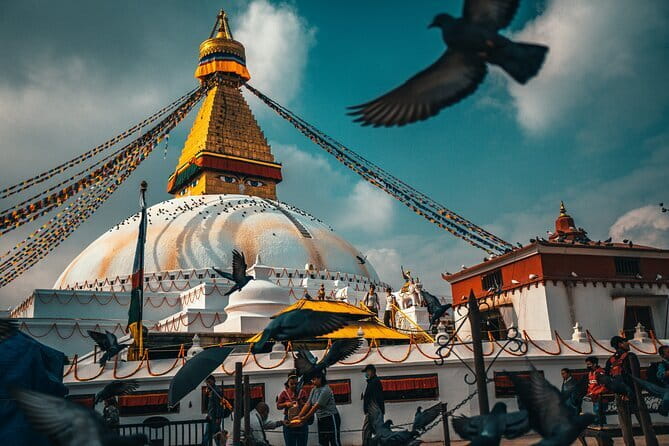
On Day 5, you walk from Tadapani to Sinuwa. The route takes roughly five to seven hours and descends through forest, with small villages along the way.
This day changes the physical pattern. After several uphill sections, you spend more time descending, though the trail is not simply easy. Long downhill walks can be hard on knees, especially if you are carrying too much. Use trekking poles if you normally rely on them, and ask your guide about the best pace.
The route continues to offer views of the Annapurna range, but the forest becomes the main setting. I like this contrast. A Himalayan trek should not be only about standing in front of giant peaks. Forest paths and village sections show how people live along the mountain route.
Sinuwa is also part of the approach to the higher sanctuary. From here, the trail turns toward Deurali and the base camp area, with fewer easy chances to shorten the day.
Sinuwa to Deurali and the higher trail
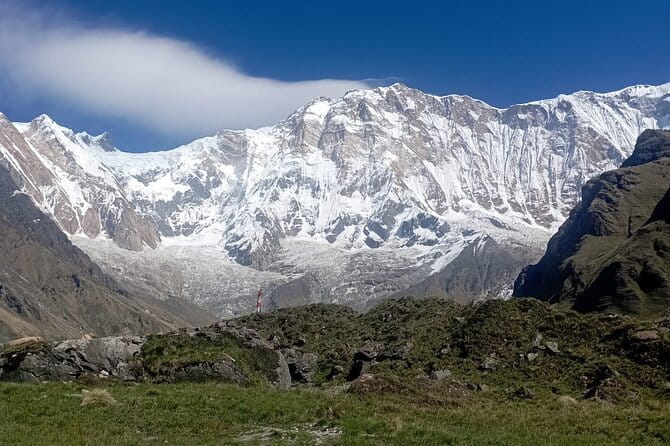
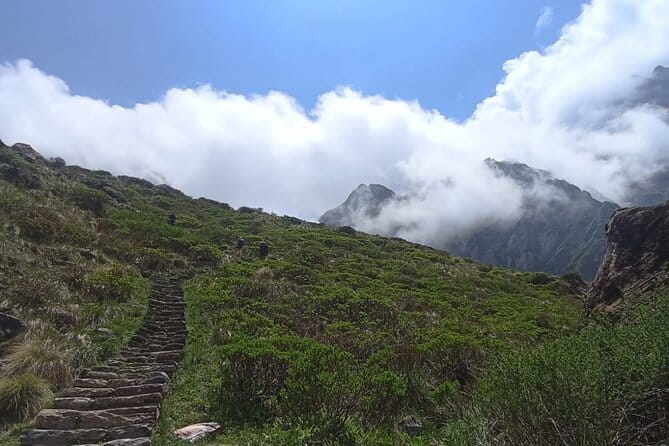
Day 6 takes about five to six hours from Sinuwa to Deurali. You climb through forest, cross several sections of rougher terrain, and move into a more rugged mountain setting.
The route description refers to crossing the Khumbu Glacier. That name is associated with the Everest region, not the Annapurna route, so you should ask the operator to clarify the exact feature intended here. The important practical point is that the trail becomes more rugged as you approach Deurali, and conditions can feel more demanding than in the lower villages.
This is one of the days when guide support has real value. Your guide can help with pacing and watch for signs that you need a break. The company includes an English, Hindi, or Chinese-speaking government-licensed guide with first-aid training, along with a basic first-aid kit carried on the route.
You should not treat the included first-aid kit as a substitute for your own preparation. Bring any regular medication, and tell the guide early if you feel unwell. The route is designed for people with moderate fitness, not for a rushed sightseeing schedule.
Machapuchare Base Camp and Annapurna Base Camp
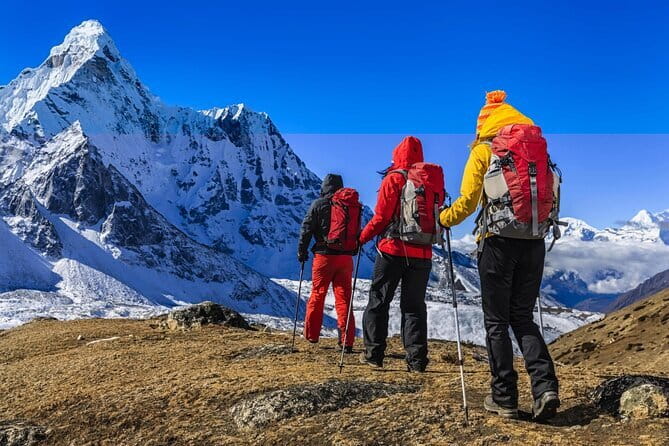
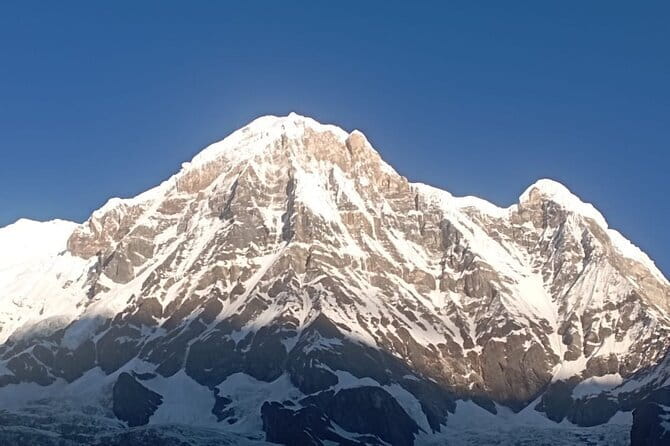
Day 7 is the high point of the trip. You walk from Deurali toward Machapuchare Base Camp, then continue to Annapurna Base Camp. The section takes about six to seven hours.
The approach is rewarding because the scenery becomes more open and severe as you gain height. Machapuchare Base Camp marks a useful pause before the final stretch, while Annapurna Base Camp is the main goal of the trek.
You should expect this to be one of the hardest days. It combines distance, ascent, and altitude, and you will already have several walking days behind you. The guide’s job is especially important here. A steady pace is better than trying to arrive early and exhausting yourself.
The package covers the necessary trekking permits and fees, so you do not have to arrange those separately. It also includes guide and porter salaries, insurance, equipment, transport, food, and accommodation for the staff. That makes the price easier to judge: you are paying for a managed trek rather than just a guide to lead you up a trail.
The descent to Sinuwa and the hot springs at Jhinu
After time at Annapurna Base Camp, Day 8 takes you back to Sinuwa. The descent lasts about six to seven hours, using familiar trail sections.
Downhill walking can be deceptively tough. Your lungs may find it easier than the ascent, but your knees and feet will still work hard. Keep your boots tied securely, take short breaks, and do not rush simply because you are losing altitude.
On Day 9, you continue from Sinuwa to Jhinu, a five to six-hour walk. After reaching Jhinu, you can relax at nearby natural hot springs before driving about one to two hours back to Pokhara.
The hot springs are a sensible ending to the walking portion. They give you a chance to rest before the final transfer, though the time available may depend on your arrival and driving schedule. Ask your guide how long the stop will be so you know whether to carry a change of clothes in your day bag.
Returning to Kathmandu on Day 10
The final day offers a scenic drive of about seven to eight hours or a short flight back to Kathmandu. Once there, you have free time for shopping or exploring before departure.
Again, transport choice affects the feel of the day. The drive is slower but lets you continue seeing Nepal from the road. A flight is practical if you want more time in Kathmandu or have an onward departure.
Airport pickup and drop-off are included, along with two nights of Kathmandu accommodation before and after the trek. Confirm the hotel details and the exact return transport when you book, since the package allows more than one option.
What the $700 price really covers
At $700, this is a strong-value package if all listed inclusions apply to your booking. The price covers:
- Airport pickup and drop-off
- Two Kathmandu hotel nights
- Trekking meals
- Trekking permits and required fees
- A government-licensed, first-aid-trained guide
- Porter support
- Guide and porter food, lodging, transport, salary, and insurance
- A duffel bag
- Trekking maps
- A basic first-aid kit
Tips for the guide and porter are not included. Plan for those separately as a normal part of trekking costs.
The value comes from reducing the number of details you must arrange yourself. A cheaper advertised price may not include permits, porter insurance, meals, or Kathmandu transfers. Here, those costs are grouped together, though you should ask for a written breakdown of transport choices, accommodation, and any meals or hotel charges not covered.
The trek is private, so only your own group participates. That can be worth paying for if you want more control over pace and fewer compromises. It can also mean you do not meet as many other walkers on the route.
Who should book this trek?
I would recommend this experience to you if you want a classic Annapurna route with a clear goal, organized support, and a private group. It suits a first-time Himalayan trekker who has prepared for several consecutive days of walking and wants a guide to handle permits and logistics.
It is also a good fit for solo visitors who want local support. A past solo departure was handled by Rishi, and the company’s team has experience supporting both individual trekkers and groups of friends or families.
I would think twice if you want a slow trip with rest days, short walking hours, or a flexible schedule. Ten days includes long transfers and several five to seven-hour walking days. You also need to be comfortable with basic teahouse-style trekking and changing mountain conditions.
Book at least three full days before the 6:15 am start if you may need to cancel, since the stated policy allows a full refund only up to that point. Changes or cancellations inside that window are not accepted for a refund.
FAQ
How long is the Annapurna Base Camp trek?
The experience lasts about 10 days, including travel between Kathmandu, Pokhara, and the trekking route.
Where does the trek start?
The meeting point is in Thamel, Kathmandu. The stated start time is 6:15 am.
Is airport pickup included?
Yes. Airport pickup and drop-off are included, along with two nights of accommodation in Kathmandu, one before and one after the trek.
Are meals included during the trek?
Breakfast, lunch, and dinner during the trek are included. The tour information also says you can buy meals at teahouses, so confirm the exact meal arrangement before departure.
What transport options are available between Kathmandu and Pokhara?
You can travel by tourist bus, car, or flight at the start. On the return to Kathmandu, you can choose a scenic drive of about seven to eight hours or a short flight.
Is this a private activity?
Yes. Only your own group takes part in the trek.
Should you book it?
Book this Annapurna Base Camp trek if you value local guide support, bundled costs, and a private route that includes Poon Hill and Jhinu hot springs. The strongest practical reasons are the included permits, porters, meals, transport help, and the company’s named guides, including Madan, Rishi, Roshan Pandey, and Moti.
Before paying, confirm the Pokhara transport, hotel arrangements, meal details, and the Day 6 route wording about the glacier. If you are fit enough for long walking days and want to reach base camp in a compact schedule, the $700 package offers a sensible way to experience the Annapurna region.
Just added in Kathmandu
- Traditional Momo Making Class★ 5.0 · 10 reviews
- Women Empowerment Project(Nepali cooking class & jewelry workshop★ 5.0 · 15 reviews
- Kathmandu 2 Nights 3 Days Chitwan Jungle Safari Tour★ 5.0 · 9 reviews
- Walking tour of Kathmandu with awesome local guides★ 5.0 · 4 reviews
- Wildlife Adventure in Chitwan Nepal★ 4.0 · 4 reviews
- Kathmandu to Pokhara Premium sofa bus ticket★ 4.0 · 17 reviews
- Regular Yoga for all levels of practitioners in Kathmandu★ 5.0 · 4 reviews
- Kathmandu Street Food Walking Tour – Eat Like a Local★ 5.0 · 3 reviews
Annapurna Base Camp Treks, compared.
Kathmandu to Annapurna Base Camp (ABC) 5-Day Trek
Read our review →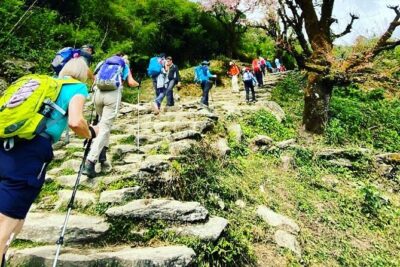
11-Day Hike Tour to Annapurna Base Camp Bliss in Kathmandu
Read our review →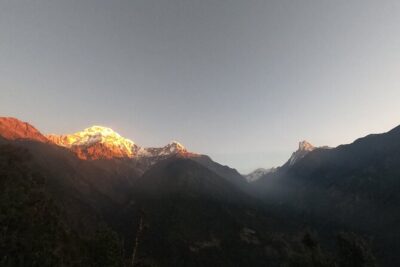
Browse the lists this tour appears in