
Reviewed · ANNAPURNA BASE CAMP TREKS
Annapurna Base Camp Trekking
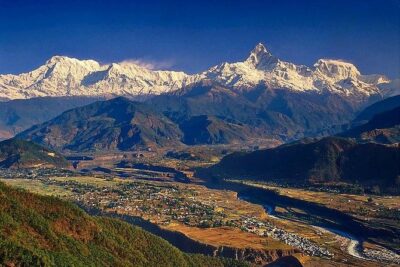
Annapurna Base Camp is the star here, but the route earns its keep before you reach the mountains. You’ll move from Kathmandu’s sacred courtyards to Pokhara, then climb through rhododendron forest, Magar and Gurung villages, cold bamboo woods, and high mountain valleys. The final reward is a close-up setting beneath the Annapurna range, with Machhapuchhre, the famous fishtail peak, nearby.
I like the private guide and porter support, especially because the guide can adjust the pace and help with the practical business of mountain walking. I also like the useful mix of scenery: Poon Hill sunrise, suspension bridges, glacial valleys, and the hot springs at Jhinu Danda. The main caution is the itinerary itself: it is sold as approximately 14 days in the detailed schedule, but the overview calls it 15 days, so confirm the exact timing before booking.
The trek in six useful points
- Kathmandu begins with four major heritage sights: Pashupatinath, Boudhanath, Patan Durbar Square, and Swayambhunath.
- Poon Hill adds a sunrise climb: the 3,210-meter viewpoint gives you a second mountain highlight before Annapurna Base Camp.
- The route is private: only your group takes part, with an English-speaking guide and porters arranged for the trek.
- Meals change with the setting: hotel breakfasts are included in Kathmandu and Pokhara, while breakfast, lunch, and dinner are included in mountain teahouses.
- Jhinu Danda provides a softer ending: after the high-altitude walking, you can enjoy the area’s hot spring and hill views.
- The $899 price covers major logistics: airport pickup, hotels, transport, permits, guide, porter support, and trekking meals are included, but several daily extras are not.
Kathmandu’s sacred beginning
Your first day is simple and practical. A representative from Himalayan Sanctuary Adventure picks you up at Tribhuvan International Airport and takes you to your hotel in Kathmandu, at about 1,300 meters. That transfer matters after a long flight, since you do not have to bargain for a taxi or find the hotel on your own.
The second day is a full sightseeing day and a useful introduction to Nepal before the trek. You visit Pashupatinath Temple, one of the country’s most important Hindu sites, beside the Bagmati River. You also see Boudhanath Stupa, a huge Buddhist monument with a 36-meter structure, then continue to Patan Durbar Square and Swayambhunath, often called the Monkey Temple.
This is a lot of sightseeing in one day. I like that the itinerary gives you cultural context before the walking begins, but you should expect a full schedule rather than a slow morning spent lingering in one place. Entrance fees for the sightseeing stops are not included, so keep extra money available.
The sightseeing day also serves as trek preparation. Use it to check your clothing, charge batteries, and ask your guide about the walking schedule, food, water, and changing weather.
Other Annapurna routes from Kathmandu:
- Annapurna base camp trek 5 Days
★ 5.0 · 252 reviews - Annapurna Base Camp Trek
★ 5.0 · 111 reviews - Kathmandu to Annapurna Base Camp (ABC) 5-Day Trek
★ 5.0 · 102 reviews
The long road to Pokhara
On day three, you leave Kathmandu early. The trekking staff collects you around 6:30 in the morning and escorts you to the tourist bus station. The bus is scheduled to leave around 7:00 or 7:30, depending on the version of the itinerary, and the journey to Pokhara takes about six hours.
Pokhara is the gateway to the Annapurna region. It is set beside Phewa Lake and feels smaller and less hectic than Kathmandu. The town itself is not just a sleep stop. It gives you a chance to see the first mountain views, organize your gear, and prepare for the trail.
The included transport is a tourist coach, not a private vehicle, for the Kathmandu to Pokhara sections. That keeps the price down, but road travel can take much of a day. If you value comfort and speed above cost, ask about transport choices before you commit.
Nayapul, Ulleri, and the first stone steps
On day four, a private vehicle takes you from Pokhara to Nayapul, where the walking starts. The route follows the Modi Khola for about 15 minutes before reaching Birethanti, a sizable village with shops and teahouses. From there, you follow the Bhurungdi Khola toward Hille and Tikhedhunga.
The first day is described as a relatively short and easy introduction, with five to seven hours of walking depending on the schedule. That phrase deserves a little care. The trail may begin gently, but Nepal trekking is not flat walking, and the following morning brings a serious climb.
Day five takes you toward Ghorepani, passing through Ulleri at about 2,070 meters. The climb to Ulleri is steep, then the trail becomes more gradual through oak and rhododendron forest. Banthanti and Nangethanti provide useful waypoints before you reach Ghorepani at roughly 2,750 to 2,840 meters, depending on the stated elevation.
This is where a moderate fitness level becomes important. You need to manage several hours of walking, uneven stone steps, and uphill sections. The reward is a change in scenery from lower villages to cool forest and mountain air.
Poon Hill sunrise before Annapurna Base Camp
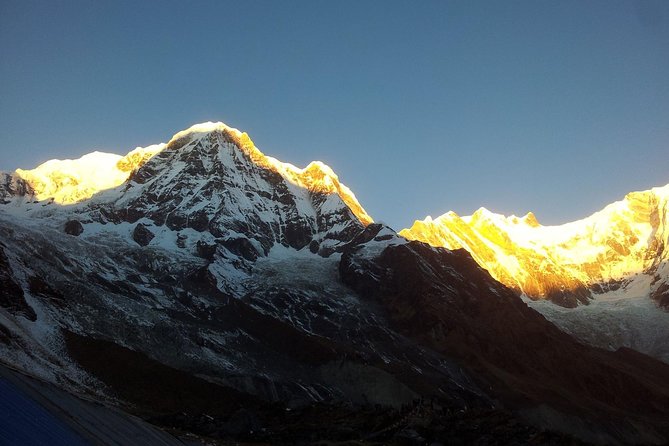
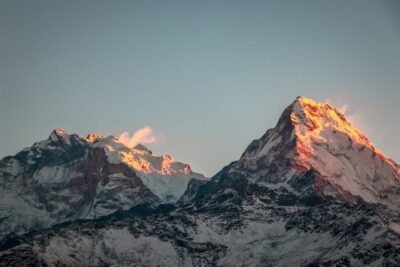
Day six starts early with the climb to Poon Hill, at 3,210 meters. You walk for about an hour from Ghorepani to reach the viewpoint around sunrise. From there, the route gives wide views toward Annapurna and Dhaulagiri, along with Mustang, Pokhara, and many high peaks.
Poon Hill is one of the best features of this route because it provides a major mountain view before you reach base camp. You do not have to wait until the end of the trek for a dramatic payoff. After the sunrise, you return to Ghorepani for breakfast, then continue through rhododendron forest, waterfalls, and ridges toward Tadapani.
The full day can take six to seven hours. The early start, high point, descent, breakfast stop, and second walking section make it a tiring day. Still, it is a smart part of the route. Poon Hill breaks up the ascent and gives you a memorable viewpoint without requiring a separate expedition.
A few more things to do in Kathmandu worth a look
- Everest Base Camp Trek – 14 Days
★ 5.0 · 1,499 reviews - Everest Base Camp Trekking
★ 5.0 · 485 reviews - Nagarkot Sunrise View and Day Hiking from Kathmandu
★ 5.0 · 471 reviews - Annapurna Circuit Trek with Tilicho Lake
★ 5.0 · 368 reviews
Chhomrong and the trail into the sanctuary
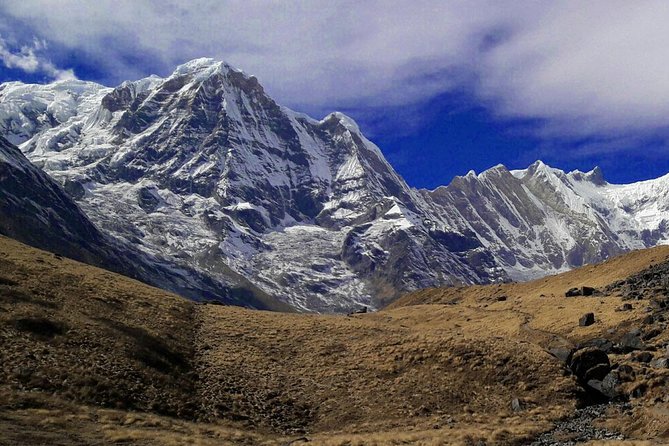
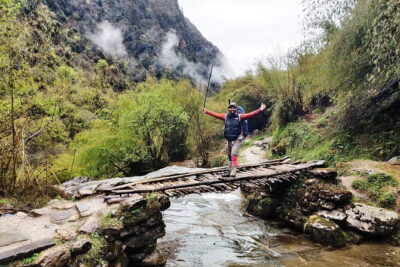
From Tadapani, day seven begins with a descent through rhododendron forest. The route opens onto terraced fields and continues through waterfalls, hillsides, and a suspension bridge before reaching Chhomrong at about 2,170 meters.
Chhomrong is an important stop on the way to Annapurna Base Camp. It sits below the Annapurna massif and marks the point where the route begins to feel more remote and enclosed by the mountains. You should expect more uphill and downhill walking than the simple mileage suggests.
Day eight leads from Chhomrong to Dovan through bamboo forest. The forest can be damp and cold, and parts of the trail are steep. After Himalaya Hotel, the trees open and you get views of the river and waterfalls below. The trail then climbs through drier forest to Hinku Cave, drops to a river, and rises again to Dovan.
This section is a good example of why proper shoes and a steady pace matter. The route changes underfoot and in temperature. Your guide’s help is especially useful here, since the day involves repeated climbs and descents rather than one clean ascent.
Dovan, Deurali, and the final climb
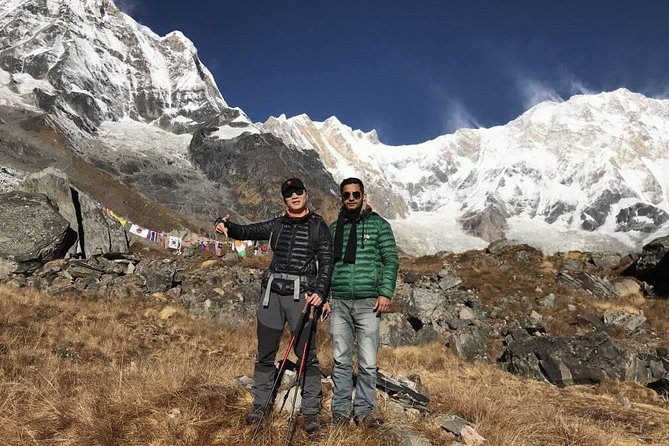
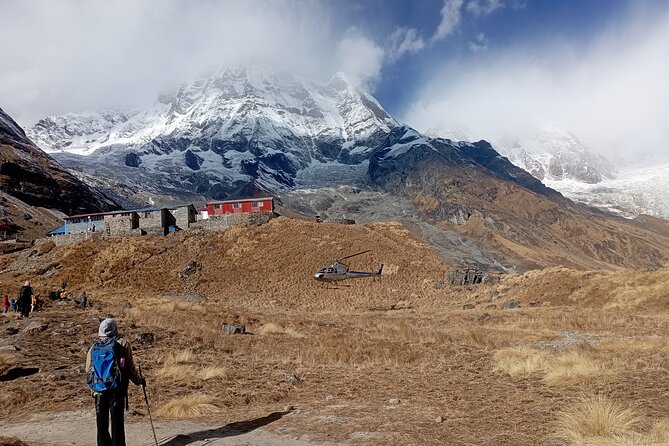
Day nine follows the valley upward toward Deurali. The trail stays close to rocky cliffs in places and can be steep, with a more level stretch before the climb toward Machhapuchhre Base Camp. The walking time is around five to six hours.
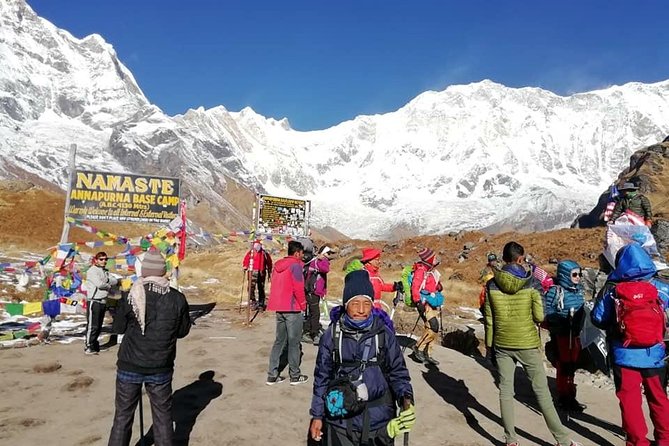
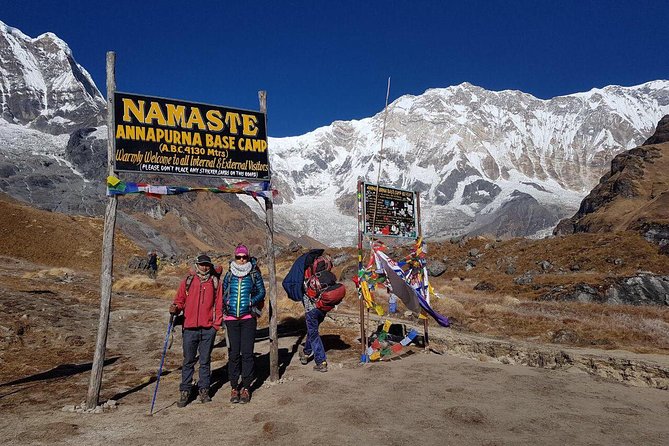
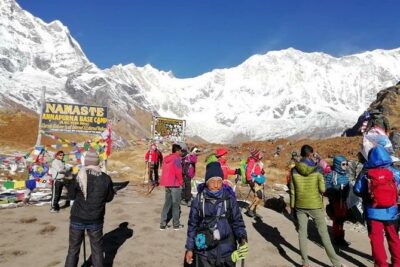
Day ten is the main goal: Annapurna Base Camp. The trail climbs rapidly from Deurali and reaches the base camp in about five to seven hours. The detailed schedule does not give a separate overnight description at base camp, so confirm exactly where you sleep that night and how the guide handles the timing.
The approach is demanding, but the setting is the reason to choose this trek. You are not merely looking at distant summits from a lower valley. You reach a high mountain base camp surrounded by the Annapurna range, with Machhapuchhre nearby. The route’s combination of forest, river gorge, high valley, and base camp gives the trek a strong sense of progression.
A moderate fitness level is the minimum stated expectation. That does not mean the route is effortless. You should be comfortable walking for five to seven hours on consecutive days and handling steep steps. Anyone with health concerns should discuss the plan with a medical professional before booking.
The return through Bamboo and Chhomrong
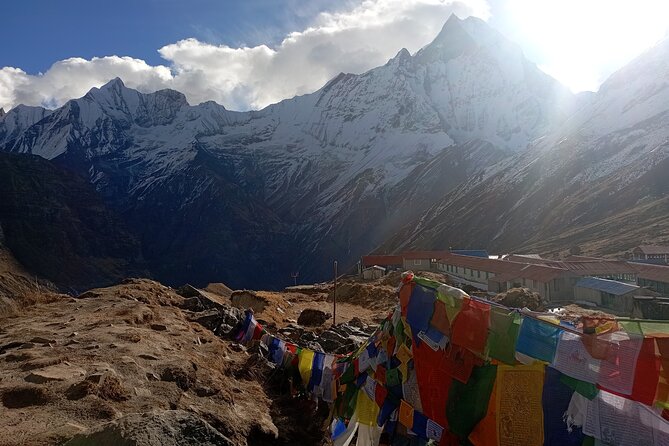
The return begins quickly. Day eleven descends from Annapurna Base Camp past Machhapuchhre Base Camp, Deurali, Himalayan Hotel, and Doban toward Bamboo. The downhill section can take five to seven hours.
Downhill walking sounds easier, but it can be hard on knees and ankles, especially after the high point. Trekking poles, if you use them, can help with balance. The guide and porter arrangement also becomes valuable here, since you can concentrate on safe footing rather than carrying a full pack.
Day twelve continues toward Jhinu Danda. The route returns through Chhomrong and then drops toward the Modi Khola valley. The stone steps near Chhomrong can be tricky in both directions, so do not rush the descent.
Jhinu is a pleasant change of pace. You can enjoy the hot spring and the surrounding hill views after several strenuous days. The schedule gives about five hours for this section and lists an overnight stay at Jhinu.
There is a small inconsistency in the day-by-day labels: one version lists day ten as Deurali, day eleven as Bamboo, and another fuller description places Annapurna Base Camp on day ten. Read the walking sequence rather than relying only on the short stop names, and ask the operator to confirm the final plan.
Returning to Pokhara and Kathmandu
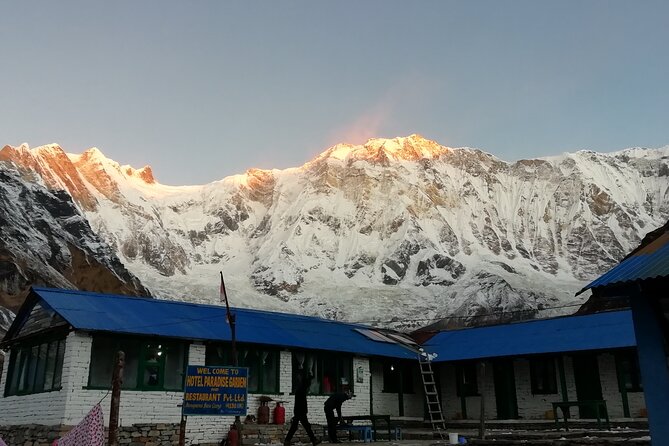
On day thirteen, you walk to Nayapul and drive back to Pokhara. The listed schedule also describes this as roughly five hours, though the actual balance between walking and driving should be confirmed. You spend the night in Pokhara.
That overnight stop is useful. It gives you a proper bed and a chance to recover before the long return to Kathmandu. The package includes a three-star category hotel in Pokhara with breakfast, but lunch and dinner in Pokhara are not included.
Day fourteen takes you back to Kathmandu by tourist bus after breakfast. The ride usually takes seven to nine hours. It is a long final day, so do not plan an important international connection immediately afterward unless you have plenty of time.
The package description sometimes calls the trip 15 days, while the detailed schedule runs from day one through day fourteen. This is the single biggest planning issue in the description. Confirm arrival and departure dates, hotel nights, and the exact number of trekking days before paying.
What the $899 price really covers
At $899 per person, the price has good value if you need a full package rather than a bare trekking permit. Included items cover airport pickup, hotel accommodation in Kathmandu and Pokhara with breakfast, teahouse accommodation during the trek, trekking meals, tourist coach transport between Kathmandu and Pokhara, permits, government and local taxes, an English-speaking guide, and porters.
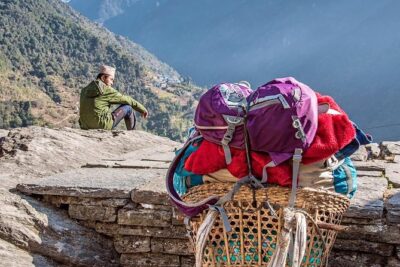
The porter arrangement is listed as one porter for two trekkers. Porters receive salary, insurance, equipment, food, and lodging through the package. That is useful for keeping your daypack manageable, but pack responsibly and keep essential personal items with you.
Several costs remain yours:
- Sightseeing entrance fees in Kathmandu
- Lunch and dinner in Kathmandu and Pokhara
- Bottled or boiled water
- Hot showers and hot water
- Tea and coffee
- Soft drinks and bar bills
- Laundry, phone calls, and battery charging
- Tips for the guide and porters
- Extra hotel nights caused by early arrival, late departure, or an early return from the mountain
The inclusion list also mentions breakfast 13 times, while the wider package has a day count that varies. Treat the meal count as a planning guide, not a guarantee of every meal on every calendar day. Ask for a written breakdown before departure.
The human side of the guiding
The strongest pattern in the experience is personal care. The trip is private, and the guide is assigned to your group rather than shared with a large crowd. That gives you more freedom to adjust walking speed and discuss the day’s plan.
Several guides are named in the supplied material, including Bishnu Bhatta, Vishnu, and Prem dai. One account describes an older group of three reaching Annapurna Base Camp with Bishnu after choosing him on the strength of an earlier short trek. Another describes careful attention to food and airport-to-airport support.
Those details matter because a Himalayan trek is not only about finding the path. You need help with meal choices, timing, accommodation, weather changes, and fatigue. The company’s arrangements were also able to support a plan change when weather stopped one group from continuing to base camp. That is a useful sign, but it does not remove the need to ask about its specific weather and refund procedures.
The experience has eight listed ratings of five, with praise aimed mainly at friendly staff, caring guides, food attention, and full-trip organization. One person completed the trek during monsoon and liked the green scenery, though wet-season walking can bring less predictable conditions. If you choose that season, ask directly about trail conditions and backup plans.
Who should book this trek?
I would recommend this trip to a first-time Nepal trekker who wants the major Annapurna sights without arranging every permit, transfer, hotel, porter, and teahouse independently. It also suits a small private group that values personal support and the ability to adjust the pace.
It is a good choice for people who want culture as well as mountains. The Kathmandu sightseeing day adds four major heritage sites, while the trail passes through villages associated with Magar and Gurung communities.
I would be more cautious if you want a fast, luxurious, or highly polished trip. Tourist bus journeys are long, teahouse accommodation is practical rather than upscale, and many comforts cost extra. The route also requires steady physical effort, with steep stone steps and long walking days.
Before booking, confirm four things: the actual 14 or 15-day schedule, the exact overnight stop after reaching base camp, the elevation and walking time for each day, and the price of water, showers, entrance fees, and extra hotel nights.
Should you book it?
Book this Annapurna Base Camp trek if you want a well-supported mountain route with a private guide, porter help, included trekking meals, Poon Hill sunrise, Jhinu hot springs, and Kathmandu sightseeing in one package. The $899 cost is reasonable for the amount of logistics included.
Do not book until the schedule is clarified if you need fixed dates or have a tight flight connection. With that one issue settled, this is a practical route for a moderately fit person who wants Nepal’s high points without managing the entire trip alone.
FAQ
How long is the Annapurna Base Camp tour?
The detailed schedule runs for 14 days, from airport arrival in Kathmandu through the return bus from Pokhara. The overview describes it as approximately 15 days, so confirm the exact duration before booking.
What fitness level is required?
A moderate level of physical fitness is required. You should be prepared for five to seven hours of walking on several days, steep stone steps, uphill and downhill trails, and trekking at elevations reaching about 3,210 meters at Poon Hill and Annapurna Base Camp.
Is the tour private?
Yes. Only your group participates in the activity. The package includes an English-speaking trekking guide and porters.
Are meals included?
Breakfast is included at the Kathmandu and Pokhara hotels. During the trek, teahouse accommodation includes breakfast, lunch, and dinner. Lunch and dinner in Kathmandu and Pokhara are not included.
Are trekking permits included?
Yes. The package includes the Annapurna Conservation Area Permit, known as ACAP, TIMS, necessary paperwork, and government and local taxes.
Is airport pickup provided?
Yes. A representative picks you up from Tribhuvan International Airport on arrival and transfers you to the Kathmandu hotel.
How do you travel between Kathmandu and Pokhara?
The package uses a tourist coach for the Kathmandu to Pokhara and Pokhara to Kathmandu journeys. The trip to Pokhara takes about six hours, while the return to Kathmandu normally takes seven to nine hours.
What is not included in the price?
Sightseeing entrance fees, water, hot water, showers, tea and coffee, soft drinks, phone calls, laundry, battery charging, bar bills, tips, and meals in Kathmandu and Pokhara are not included. Extra hotel nights caused by early arrival, late departure, or an early return from the mountain are also excluded.
Just added in Kathmandu
- Kathmandu to Chitwan Tour by Tourist Bus – A Convenient and Affordable Way★ 4.0 · 4 reviews
- Changunarayan Hill to Telkot Hike Near Kathmandu Day Tour★ 5.0 · 6 reviews
- Mt Everest Base CampTrek | Budget Package★ 5.0 · 4 reviews
- Chitwan Jungle Safari 3-Day Tour★ 5.0 · 9 reviews
- Chandragiri Hills cable car day trip, private car with driver from Kathmandu★ 5.0 · 8 reviews
- Chandragiri to Taudaha Nature Day Hiking from Kathmandu★ 5.0 · 13 reviews
- Chandragiri Hill Station Tour by Cable Car★ 5.0 · 4 reviews
- Chandragiri Cable Car & Monkey Temple Private Guided Day Tour★ 5.0 · 5 reviews
Annapurna Base Camp Treks, compared.
Kathmandu to Annapurna Base Camp (ABC) 5-Day Trek
Read our review →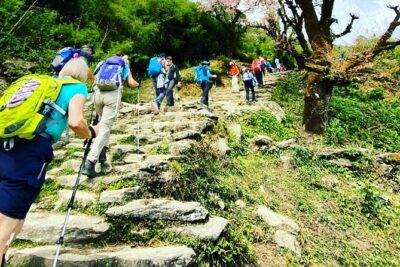
11-Day Hike Tour to Annapurna Base Camp Bliss in Kathmandu
Read our review →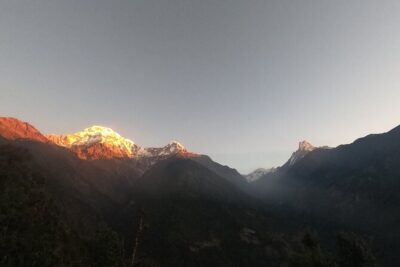
Browse the lists this tour appears in