
Reviewed · EVEREST BASE CAMP TREKS
From Kathmandu Budget: 15 Day Everest Base Camp Trek
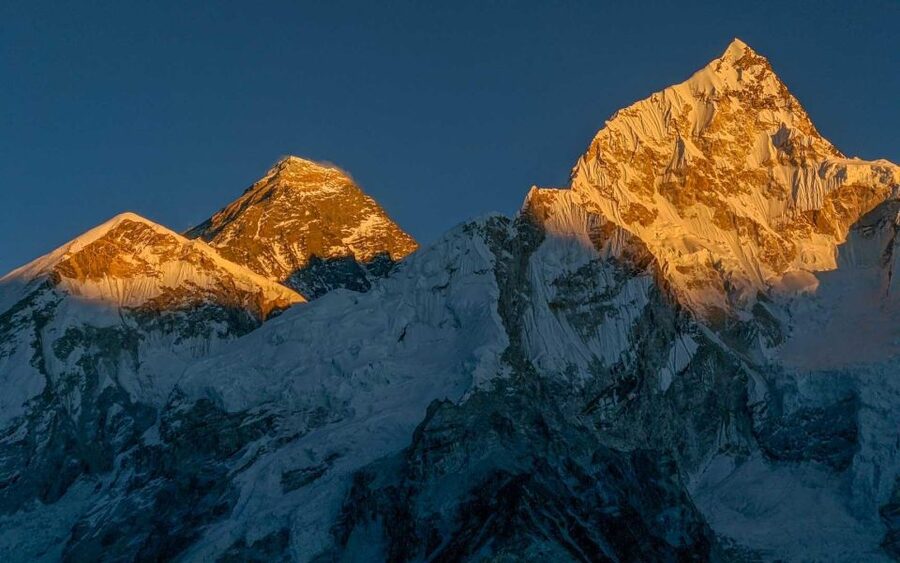
Everest Base Camp is only half the story here. The real prize comes the next morning, when you climb Kala Patthar at 5,545 meters for broad views of Everest, Lhotse, Nuptse, and the Khumbu peaks. I like the route’s gradual rise through Sherpa villages and its two acclimatization-minded stops, Namche Bazaar and Dingboche. I also like that the trek is private, with a guide who can adjust the pace when your health needs come first.
The main catch is the transport. This is a 15-day overland itinerary, not the quicker Lukla flight route, so you spend long hours in shared jeeps and buses at the beginning and end. Food, drinks, travel insurance, and emergency rescue are extra, and the high-altitude days demand real fitness.
Key points to know before booking
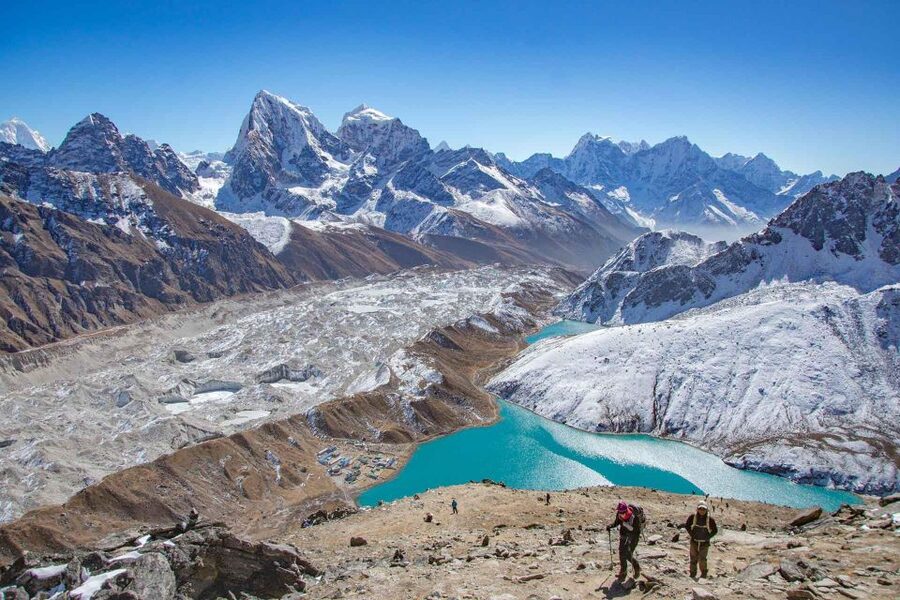
- Kala Patthar is the best viewpoint: The summit gives you the clearest stated views of Everest, Lhotse, and Nuptse, especially around sunrise or sunset.
- The route begins with a long road journey: You travel from Kathmandu to Salleri by shared jeep or bus, then continue toward the trail through Tham Danda.
- Private guiding adds flexibility: English, Nepali, and Hindi support is available, with guides including Milan and Krisna named in the experience details.
- The highest nights are basic: Accommodation is in guesthouses, with food and drinks purchased separately.
- The price covers useful essentials: At $796 per person, the package includes permits, guesthouse lodging, guide costs, transport, pickup, trekking poles, and official documents.
- Altitude is the serious issue: Base Camp reaches 5,365 meters and Kala Patthar 5,545 meters, so warm clothing, good shoes, insurance, and sensible pacing matter.
Why Kala Patthar may be the highlight
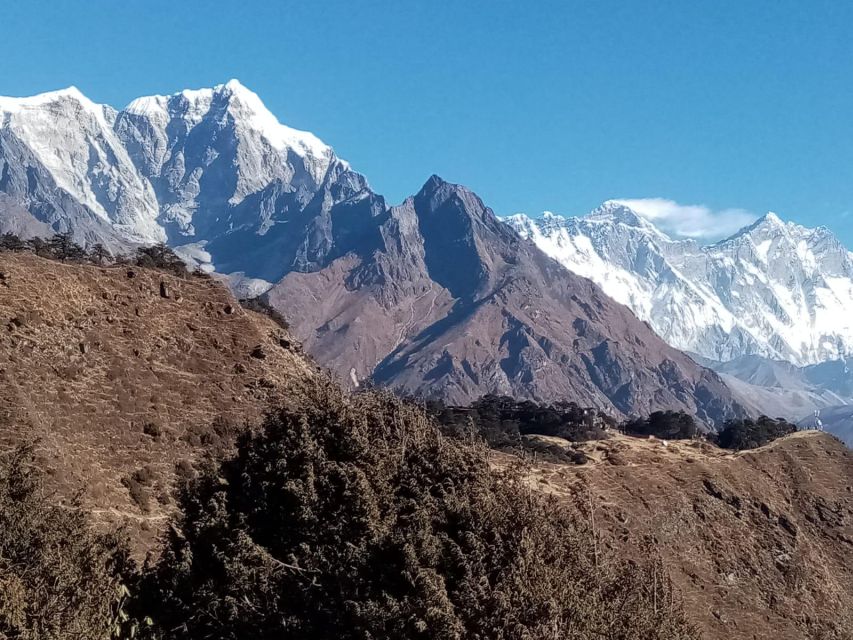
Everest Base Camp has enormous symbolic value. At 5,364 meters, you are at the launch point for expeditions toward the world’s highest mountain. You see the famous camp area and the peaks around it, but the views from Base Camp itself can be partly framed by nearby ridges.
Kala Patthar offers the better viewing platform. It is a rocky summit above Gorak Shep, and the itinerary gives you seven hours for the hike and onward trek to Pheriche. That is a demanding day, but it puts Everest directly into the visual center of the experience, with Lhotse and Nuptse nearby.
I would treat Kala Patthar as the key goal, not an optional extra. The walk begins at high altitude, so every step feels harder than it would at home. The reward is a wide mountain panorama and the sense that you have earned the view rather than simply arrived at a photo stop.
Other treks that start from Nepal:
- Everest Base Camp Trek – 14 Days
★ 5.0 · 1,499 reviews - Everest Base Camp Helicopter Tour landing at Everest View Hotel
★ 5.0 · 668 reviews - Everest Base Camp Trekking
★ 5.0 · 485 reviews
What the $796 price really covers
At $796 per person, this trek offers solid value if you want the major logistics handled. Your package includes Kathmandu pickup and drop-off, shared road transfers, an English-speaking trekking guide, guide accommodation and meals, trekking permits, official documents, guesthouse accommodation, a first-aid kit, and a trekking pole.
The private group format matters. You are not tied to the pace of a large mixed group, and the guide can respond to your condition. The experience details specifically point to guides such as Milan and Krisna. Milan is described as checking in often, explaining things clearly, and changing the pace or itinerary when needed. Krisna is noted for listening and adapting to the group.
That flexibility is useful on a high-altitude trek. A slower day may be wise. A rest day may become necessary. You should still confirm before departure exactly how changes affect accommodation, meals, or transport, since the advertised route is structured around fixed villages and road connections.
The price does not cover food or drinks. You buy those as you go. Travel insurance is also your responsibility, and emergency rescue must be covered by your policy. This is not a minor detail. Your insurance should specifically cover high-altitude trekking and helicopter or other emergency rescue if required.
Days 1 and 2: Kathmandu to Salleri and Tham Danda
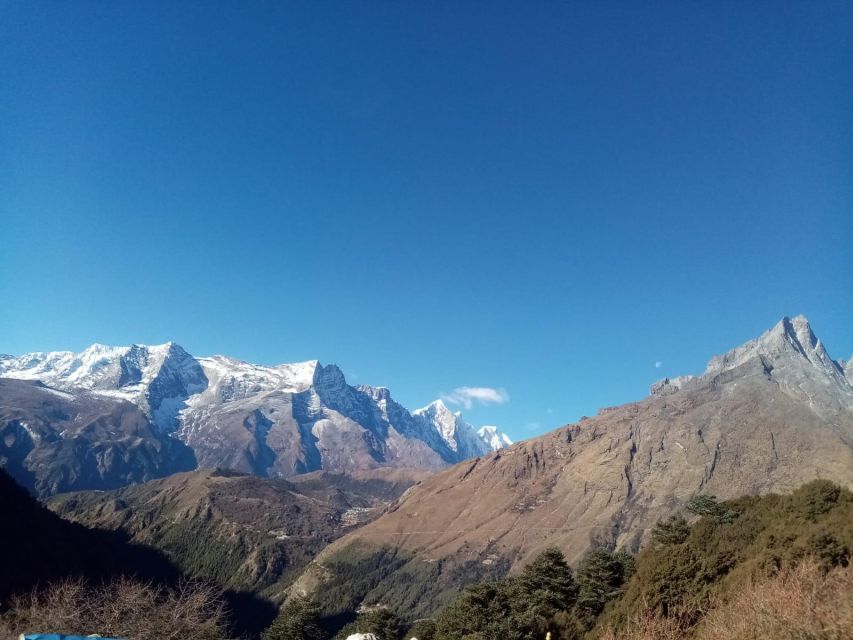
The first day is mostly transport. A pickup from the Kathmandu area takes you by shared jeep to Salleri, a journey listed at about 10 hours and 266.9 kilometers, with Salleri at around 2,600 meters.
This route saves you from flying to Lukla, but it costs time and comfort. Shared road transport can be tiring after an international flight, so plan for a long, physical travel day even though you are not yet walking on the main trail.
On Day 2, you continue by jeep from Salleri to Tham Danda, then trek to Surkhe. The full day is listed at seven to nine hours. This combination gives you an early taste of the trip’s rhythm: road travel where possible, then walking through the mountain villages and hills.
The benefit is a longer approach that can help your body gain altitude more gradually than a sudden flight to Lukla. The drawback is simple: you spend two days reaching the main walking route.
Days 3 and 4: Surkhe, Phakding, and Namche Bazaar
From Surkhe, you trek to Phakding in six to seven hours. The route moves through the lower Khumbu area, with village paths, mountain scenery, and the first feel of the classic Everest route.
Day 4 takes you from Phakding to Namche Bazaar, also in six to seven hours. Namche sits at 3,440 meters and is the main hub of the Khumbu region. It is one of the most important stops on the trip because your body begins adjusting to thinner air here.
The route includes suspension bridges and Sherpa settlements. I like this section because it is not only about reaching Base Camp. You get a sense of how people live along a high mountain trail, with Buddhist prayer flags, monasteries, and villages linking the route together.
Namche is also where you should pay attention to your body. Headaches, poor sleep, unusual tiredness, or nausea deserve a conversation with your guide. A private trip helps here, since your pace is not dictated by a bus-sized group.
A few more things to do in Nepal worth a look
- Nagarkot Sunrise View and Day Hiking from Kathmandu
★ 5.0 · 471 reviews - Annapurna Circuit Trek with Tilicho Lake
★ 5.0 · 368 reviews - Everest Base Camp Trekking – 13 Day
★ 5.0 · 365 reviews - Everest Base Camp Trek -14 Days
★ 5.0 · 321 reviews
Day 5: Tengboche Monastery at 3,860 meters
The trek from Namche to Tengboche takes about five hours. Tengboche is known for its monastery and its setting among the high peaks.
This is a shorter walking day than some later stages, but the altitude continues to rise. The monastery adds a cultural layer that a simple mountain viewpoint cannot provide. Prayer flags and Buddhist traditions are part of the living Khumbu region, not decorative extras placed for visitors.
Tengboche is a good place to slow down and look around. The route is physically demanding, but you should not treat every stop as a race toward Everest. The villages and monastery help explain why this trail has meaning beyond the summit view.
Days 6 and 7: Dingboche and a needed pause
Day 6 leads from Tengboche to Dingboche in five to six hours. Dingboche sits at 4,350 meters, where the air is noticeably thinner and the walking becomes more serious.
Day 7 is an acclimatization day in Dingboche. You do not simply lose a day here. You give your body time to adjust before moving toward Lobuche, Gorak Shep, and Base Camp.
The supplied plan does not specify a particular acclimatization walk, so you should ask your guide what the day will involve. It may be a local hike or a slower day near the village, but do not assume extra activities are included. The important point is that the schedule includes a pause before the highest section.
This is also a good place to use the guide’s flexibility. If you feel unwell, speak up early. The positive feature of a private trip is not just privacy. It is the ability to discuss your condition honestly without worrying about holding up strangers.
Days 8 and 9: Lobuche and Everest Base Camp
On Day 8, you trek to Lobuche, listed at 4,910 meters, in about five hours. The route becomes more exposed and rugged as you enter the high mountain zone.
Day 9 is the longest and hardest stated walking day. You trek to Everest Base Camp at 5,365 meters, then return to Gorak Shep at 5,180 meters. The day is listed at about eight hours.
Base Camp is the emotional center of the trek. You are standing at the place used as the starting point for Everest expeditions, surrounded by towering peaks and high glacial terrain. The exact appearance of camp activity can vary, and the mountain environment is severe, but the altitude and setting make this a powerful arrival.
Do not expect a relaxed sightseeing stop. You are already high, and you still need to return to Gorak Shep. Keep your pace steady, drink as advised, and follow your guide’s judgment. This is the point where excitement can tempt people to walk too fast.
Day 10: Kala Patthar and Pheriche
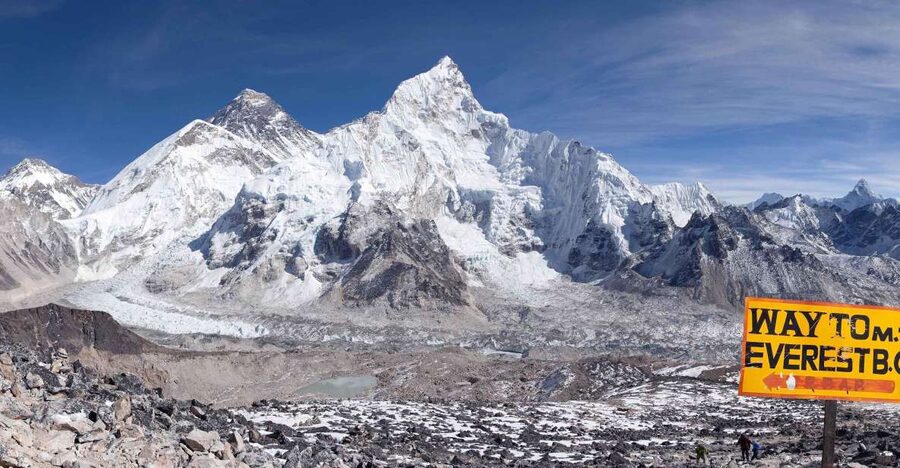
The Kala Patthar hike is listed at seven hours, followed by a trek to Pheriche at 4,120 meters. This is another demanding day, even though you lose altitude afterward.
The summit reaches 5,545 meters, higher than Everest Base Camp. From here, you get the broad views that make the climb worthwhile: Everest, Lhotse, Nuptse, and other Himalayan peaks. The timing may offer sunrise or sunset views, but you should confirm the exact start time with your guide.
After Kala Patthar, the descent to Pheriche is welcome. Pheriche sits much lower than Gorak Shep, so the air should feel easier. Still, your legs will have worked hard over two major days, and the descent can be tiring in its own way.
Days 11 to 13: Panboche, Namche, and Lukla
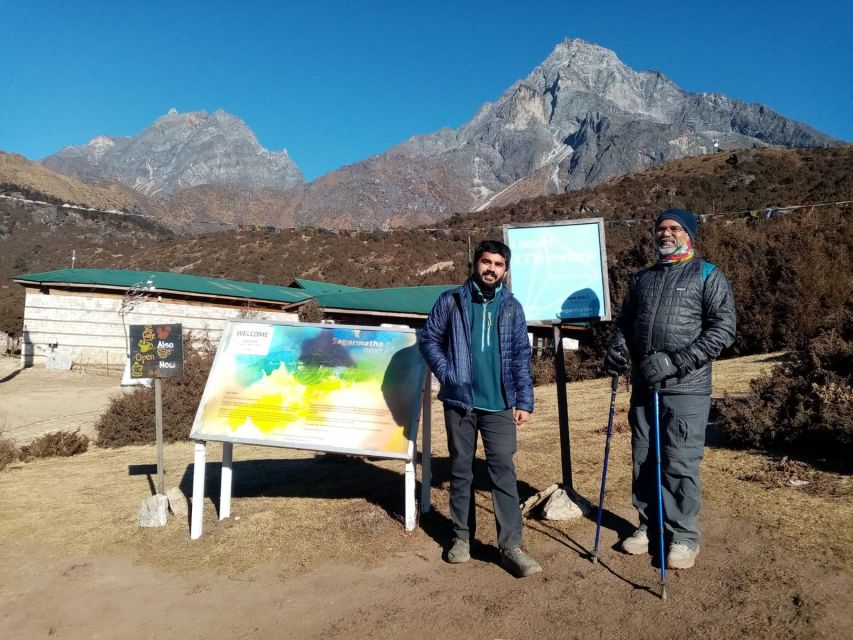
Day 11 takes you to Panboche in five to six hours. Panboche is listed at 3,985 meters. This is part of the return journey, but it should not feel like dead time. Descending gives you a chance to notice details that were harder to appreciate while heading upward.
Day 12 is a seven-hour trek back to Namche Bazaar. The return route gives you another look at the villages, bridges, and mountain paths. You may also find the air more comfortable as you lose height.
On Day 13, you trek from Namche to Lukla in five to six hours. Lukla sits at 2,860 meters. The itinerary does not end with a flight from Lukla. Instead, you continue overland, which makes this trip different from many standard Everest Base Camp schedules.
Days 14 and 15: The long road back to Kathmandu
Day 14 uses a shared jeep from Lukla to Salleri, listed at seven to eight hours. Day 15 continues from Salleri to Kathmandu by shared jeep or bus, listed at about 10 hours.
These final days are practical rather than scenic highlights. You have already completed the main walking challenge, but the return journey can still be tiring. If you need to catch a flight from Kathmandu, allow extra time beyond the stated arrival because road conditions and delays are not addressed in the activity details.
The shared transport keeps the cost down. It also means less privacy and less control over departure timing than a private vehicle. For me, this is the clearest tradeoff in the package: the money goes toward the trek itself, while the approach and return use budget road transport.
Guesthouses, meals, and what to pack
Accommodation is in guesthouses during the trek. The package includes the lodging, but not your food and drinks. You should budget separately for meals and beverages throughout the route and ask the provider what payment methods are practical along the way.
Pack warm clothing, hiking shoes, hiking pants, a passport or accepted copy, a passport-sized photo, and travel insurance details. A trekking pole is included, which is helpful on steep sections and descents.
The activity is not suitable for pregnant women or wheelchair users. Pets are not allowed. The best trekking periods are spring, from March to May, and autumn, from September to November, when conditions are generally more stable and mountain views are often clearer. Mountain weather can still change quickly in any season.
Who should book this Everest trek?
I would recommend this route to a fit hiker who wants the classic Everest experience but prefers a private guide and a lower price than a fully private vehicle itinerary. It suits you if you value local villages, monastery visits, suspension bridges, and a gradual approach as much as the final mountain photographs.
It is less suitable if you want maximum comfort, a short itinerary, or guaranteed control over transport. The long road transfers are the price of avoiding the Lukla flight route. The trek also includes several very long days above 4,000 meters.
The strongest reason to book is the guide flexibility. Milan and Krisna are specifically associated with attentive pacing and clear communication, but you should confirm which guide will lead your departure. That detail could matter if you want support in English, Nepali, or Hindi.
Should you book it?
Book this trek if Kala Patthar views, private guiding, and a budget-friendly overland approach are your priorities. The package covers many costly essentials, and the itinerary gives you time at Namche and Dingboche rather than rushing straight upward.
Think twice if shared road transport, separate meal costs, and basic guesthouses will frustrate you. At $796, this is good value for the permits, guide, lodging, transport, and support included, but it is not an all-inclusive holiday. Go with suitable insurance, warm gear, realistic fitness, and a willingness to let your guide slow the plan when your body needs it.
FAQ
How long is the Everest Base Camp and Kala Patthar trek?
The activity lasts 15 days, including the road journey from Kathmandu to Salleri at the start and the return journey from Salleri to Kathmandu at the end.
What is the price per person?
The listed price is $796 per person.
Does the trek start in Kathmandu?
Yes. Pickup is included from the Kathmandu area, and the first transfer goes by shared jeep to Salleri.
Is transportation included?
Yes. Round-trip transport by shared bus or jeep is included. The plan uses shared road transport between Kathmandu, Salleri, Tham Danda, and Lukla.
What languages can the guide speak?
Guide support is available in English, Nepali, and Hindi.
Is this a private trek?
Yes. The group type is private.
Is food included?
No. Food and drinks are not included and are available for purchase during the trek.
Is accommodation included?
Yes. Guesthouse accommodation during the trek is included.
Is travel insurance included?
No. You must arrange your own travel insurance. Emergency rescue is also not included and should be covered by your insurance.
What should I bring?
Bring warm clothing, hiking shoes, hiking pants, travel insurance, your passport or an accepted copy, and a passport-sized photo. A trekking pole is included.
Just added in Nepal
- Kathmandu to Chitwan Tour by Tourist Bus – A Convenient and Affordable Way★ 4.0 · 4 reviews
- Changunarayan Hill to Telkot Hike Near Kathmandu Day Tour★ 5.0 · 6 reviews
- Mt Everest Base CampTrek | Budget Package★ 5.0 · 4 reviews
- Chitwan Jungle Safari 3-Day Tour★ 5.0 · 9 reviews
- Chandragiri Hills cable car day trip, private car with driver from Kathmandu★ 5.0 · 8 reviews
- Chandragiri to Taudaha Nature Day Hiking from Kathmandu★ 5.0 · 13 reviews
- Chandragiri Hill Station Tour by Cable Car★ 5.0 · 4 reviews
- Chandragiri Cable Car & Monkey Temple Private Guided Day Tour★ 5.0 · 5 reviews
Everest Base Camp Treks, compared.
Everest Base Camp Helicopter Tour landing at Everest View Hotel
Read our review →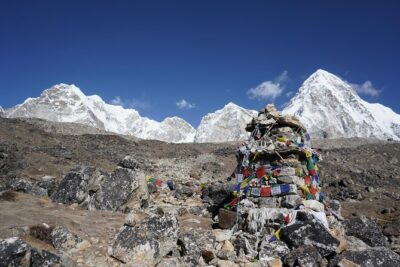
Browse the lists this tour appears in