
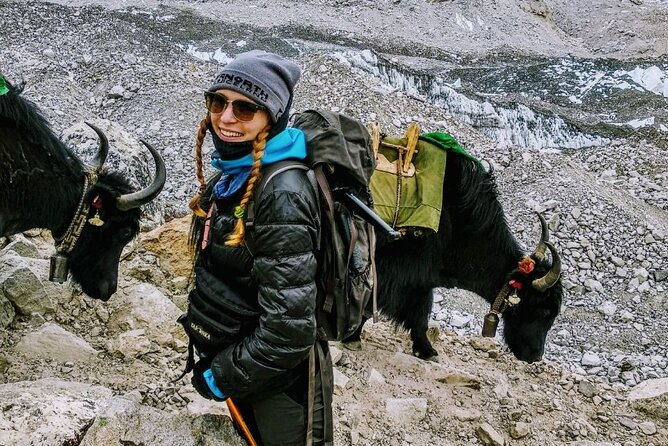
Reviewed · EVEREST BASE CAMP TREKS
Everest Base Camp Trekking – 2025/2026
The big draw here is simple: you walk into the Everest region instead of merely looking at it from a viewpoint. The route leads through Sherpa villages, Buddhist monasteries, and high mountain valleys before reaching Everest Base Camp, with a private guide to set the pace and handle the route.
I like the included Kathmandu to Lukla flights, permits, meals, lodges, and guide support. I also like the care built into the daily routine, with wake-up tea, regular breaks, evening briefings, and help from a porter. The main concern is altitude: this is a serious high-altitude trek, and the published day-by-day schedule is not fully consistent, so confirm the exact acclimatization plan before paying.
Key points to know before booking
- The Lukla flight is included: Domestic air travel to and from the trailhead is part of the package, though weather can affect mountain flights.
- This is a private trek: You walk with your own group rather than joining a large fixed crowd.
- The route reaches Everest Base Camp: Expect steep, rocky paths, cold nights, and days of walking for about three to five hours.
- Meals and lodges are covered: Breakfast, lunch, dinner, and main-course hot drinks are included during the trek.
- Porter support is provided: One porter is assigned for every two trekkers, with luggage generally limited to 18 kilograms.
- Guide quality matters here: Guides named in previous trips include Sujal, Samir, Krishna, Hairy, and Sherpa Manish, but your assigned team may differ.
What the Everest Base Camp trek is really like
At $1,339.20 per person, this is not a casual mountain sightseeing trip. It is a practical package for reaching Everest Base Camp with the major costs bundled together: domestic flights, trekking lodges, most meals, national park fees, the TIMS card, guide support, and porter service.
I see the value in that arrangement. Organizing the Lukla flights, permits, rooms, food, and route alone would take time, and conditions in the Himalayas can change quickly. A local guide also gives you someone to help with pacing, village customs, ordering meals, and route decisions.
The package is described as lasting about 14 days, but the supplied schedule lists only part of that period in detail. It shows arrival in Kathmandu, a flight to Lukla, the trek to Phakding, Namche Bazaar, Pangboche, Lobuche, Gorak Shep and Base Camp, the return to Namche and Lukla, then a flight back to Kathmandu. Before booking, ask for the exact version of the itinerary, including rest and acclimatization days.
That point matters. The route reaches very high altitude, and a sensible schedule needs room for your body to adjust. The company describes the trek as suitable for people with moderate fitness who can walk roughly three to five hours per day, but that does not make it easy. High altitude can turn an ordinary walking day into hard work.
Other treks that start from Kathmandu:
- Everest Base Camp Trek – 14 Days
★ 5.0 · 1,499 reviews - Everest Base Camp Helicopter Tour landing at Everest View Hotel
★ 5.0 · 668 reviews - Everest Base Camp Trekking
★ 5.0 · 485 reviews
Kathmandu arrival and the flight to Lukla
Your first day begins with airport pickup in Kathmandu and a transfer to your hotel. An airport representative welcomes you, and the evening is used for an introduction to the tour.
Kathmandu is not just a staging point. It is where you meet the team, check your gear, organize your luggage, and make sure your passport and visa arrangements are in order. The package does not include your Nepal entry visa, international flights, extra hotel nights, or meals before and after the trek.
The flight to Lukla is included, with the package describing service from Kathmandu or Manthali to Lukla and back. The flight itself is listed as about 35 minutes on the return, though the entire airport process takes longer. Mountain weather can delay flights in Kathmandu or Lukla, so leave room in your wider Nepal plans.
From Lukla, the first walking day leads to Phakding at about 2,652 meters. The listed walking time is around three hours, with another itinerary entry giving four hours, so plan on a half-day walk rather than a precise stopwatch target.
This opening section is a useful warm-up. You begin in a village setting, cross rugged ground, and get your first feel for the rhythm of walking with a guide and porter. The short distance can be deceptive, since you are already moving through hilly terrain.
Namche Bazaar and the first real altitude test
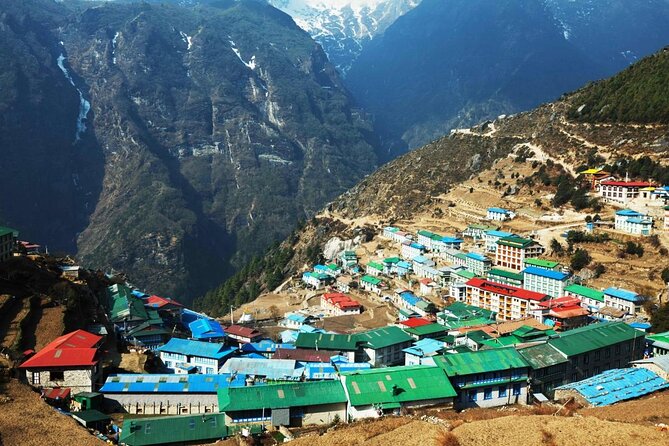
The walk from Phakding to Namche Bazaar covers about 10 to 12 kilometers and takes around five hours. Namche is listed at 11,283 feet, or roughly 3,440 meters, and this is where the altitude becomes a central part of the trip.
I like that the daily routine calls for frequent short rests. You walk for roughly 45 minutes to an hour, then pause for three or four minutes. The guide also asks you to stretch before setting out. That may sound minor, but steady pacing is far more useful here than trying to walk quickly and then struggling later.
Namche is one of the most important settlements on the route. It is a place to rest, eat, look around, and begin adjusting to thinner air. The itinerary supplied for this experience does not clearly spell out a separate acclimatization day, so this is one of the details I would confirm directly.
The company says guides provide evening briefings about the next day. Use those briefings to ask about walking time, altitude gain, water, weather, and how you are feeling. A private trek gives you more room to slow down than a fixed group, which is a real benefit on this route.
Pangboche, monasteries, and Sherpa country
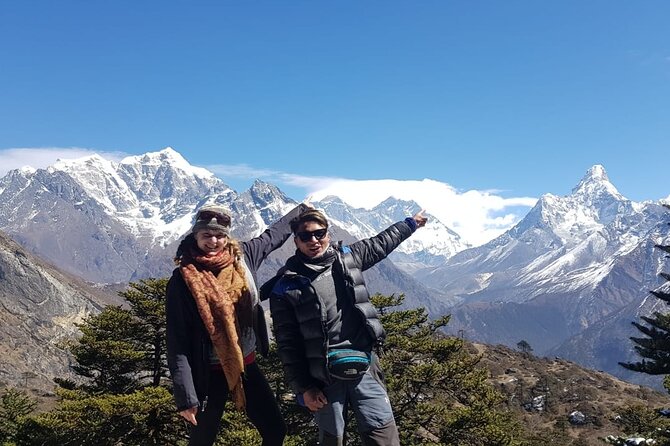
The next listed section runs from Namche to Pangboche and takes about five hours. The wording in the schedule varies between Pangboche and Pangbuche, but it refers to the same village area.
This is where the cultural side of the trek becomes more important. You pass through Sherpa settlements and can ask your guide about local life, Buddhist beliefs, building styles, and the way communities function in a high mountain region. The company specifically encourages you to visit local Sherpa settlements during the afternoon or evening.
I like this part of the program because it gives the trek some purpose beyond collecting photographs of peaks. You are not only walking toward Base Camp. You are moving through communities that make the route possible.
The guide is also there to explain local customs. You are asked to respect local laws, beliefs, and community practices, and to ask before doing something that affects the local area. Carrying rubbish out and using water carefully are small actions, but they matter on a well-used mountain route.
Pangboche is also a useful point to remember that comfort changes as you climb. Mountain lodges are described as basic but clean, with blankets, pillows, and mattresses. You may have a private room, but shared bathrooms are possible at higher elevations because attached bathrooms are not available everywhere.
A few more things to do in Kathmandu worth a look
- Nagarkot Sunrise View and Day Hiking from Kathmandu
★ 5.0 · 471 reviews - Annapurna Circuit Trek with Tilicho Lake
★ 5.0 · 368 reviews - Everest Base Camp Trekking – 13 Day
★ 5.0 · 365 reviews - Everest Base Camp Trek -14 Days
★ 5.0 · 321 reviews
Lobuche and the cold upper valley
The trek from Pangboche to Lobuche is listed at about five hours. The spelling appears as both Lobuche and Labuche in the supplied schedule, but the destination is the high settlement used before Gorak Shep and Base Camp.
The upper section is colder and more exposed. The company supplies warm down jackets and sleeping bags for people who do not have their own, though I would confirm the exact rental or loan arrangement before leaving Kathmandu.
Your packing list should include proper trekking boots, warm gloves, a sun hat, warm hat and scarf, sunglasses, sunscreen, rain protection, fleece layers, trekking trousers, and a day pack of at least 30 liters. A headlamp, water bottle, purification tablets, personal medicine, and extra socks are sensible essentials.
Do not treat the equipment list as decoration. Sun is strong at altitude, nights can be below freezing, and weather can change. Walking poles are optional, but they may help on rough descents and uneven paths. Crampons are listed as optional, not as required technical equipment.
Gorak Shep and the walk to Everest Base Camp
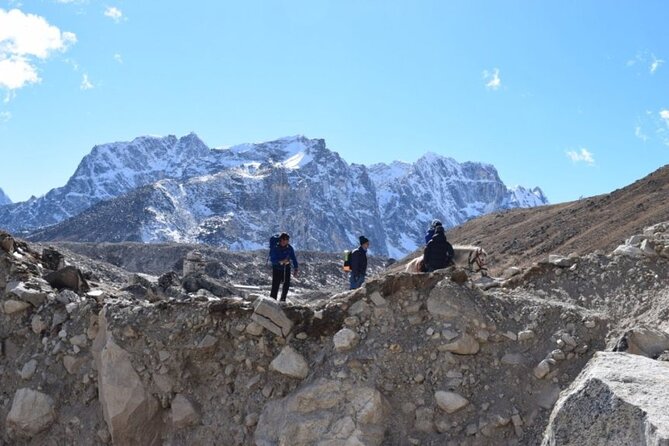
The route from Lobuche to Gorak Shep and Everest Base Camp is listed at around five hours. This is the emotional high point of the trek, but it is also one of the hardest days because of altitude and cold.
The trek is nontechnical. You do not need climbing skills, ropes, oxygen cylinders, or specialist mountaineering equipment for the standard walk. Still, nontechnical does not mean effortless. The ground is rugged, the air is thin, and your pace will likely be slower than it was lower down.
The itinerary then returns to Gorak Shep. That out-and-back pattern lets you reach the Base Camp area without carrying all your overnight gear. Your porter carries the main luggage, while you keep a day pack with water, layers, snacks, and personal items.
The food system is practical. Breakfast and dinner are taken at the lodge where you sleep, while lunch is arranged along the route. Menus may include dal bhat, soups, potatoes, noodles, rice, vegetables, eggs, bread, spaghetti, pizza, and apple pie. Hot drinks such as ginger tea, lemon tea, hot chocolate, coffee, and black tea are available, though drinks beyond the included allowance cost extra.
I would choose simple, fresh foods and avoid meat at high altitude, as the company itself advises. Bottled water costs about $2 to $3 per liter, while tap water can be purified with the included tablets. Bring a proper bottle that can handle hot water, since cold water is not always comfortable in the upper valleys.
The return through Namche and Lukla
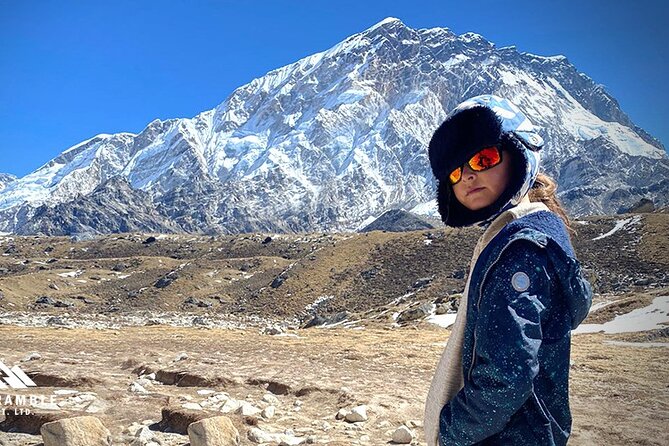
After Base Camp, the schedule shows a return toward Pangboche and then Namche Bazaar. The listed Namche to Lukla walk takes about five hours, though the full return from the upper valley involves more than one day.
The return is not an afterthought. Descending can be hard on knees and feet, and you still need to manage fatigue. This is where a private guide can adjust the pace and arrange breaks without forcing you to match a large group.
The final flight returns you to Kathmandu, followed by a hotel transfer. The flight is listed at about 35 minutes, but weather delays remain possible. Keep your international departure separate from the trekking schedule by a safe margin, especially if your wider trip depends on a fixed flight home.
Kathmandu accommodation before and after the trek is not included unless arranged separately. The company says higher-standard four or five-star hotels can be provided at extra cost, so ask what hotel level is included in your particular booking.
Guides, porters, and the human side of the trip
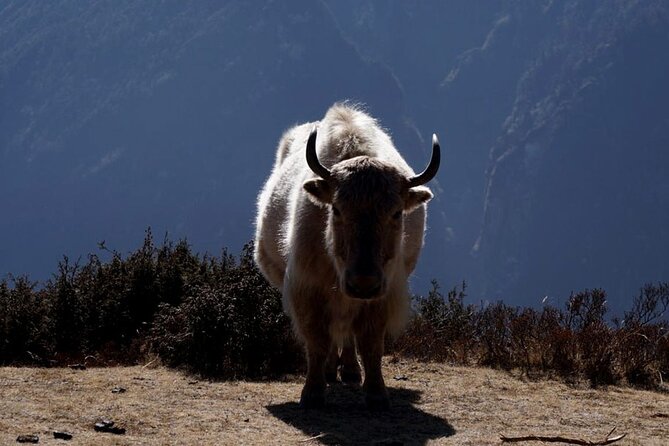
The package includes an English-speaking, government-licensed local guide and porter support. One porter generally carries the luggage of two trekkers, with a suggested limit of 18 kilograms. You can request an individual porter if needed.
That luggage limit is useful for you and fair to the porter. Pack light, use a soft duffel if requested by the operator, and keep valuables, documents, medicines, and one warm layer in your own day pack.
The company’s past trips have included guides named Sujal, Samir, Krishna, and Hairy, as well as a Sherpa porter named Manish. The strongest praise centers on friendly support, clear planning, quick answers from owner Dil, and careful attention to comfort and safety. Those names are useful when you contact the company, but they are not a promise that one of them will lead your trek.
The daily pattern is well defined: wake-up tea around 6 a.m., breakfast near 7, a morning walking section, lunch around noon or 1 p.m., an afternoon walking section, dinner, and a briefing for the next day. You can also use the afternoon to rest, read, shower where available, or visit a nearby Sherpa settlement.
What the $1,339.20 price covers
For a private 14-day trek, the price has a useful list of inclusions. It covers private transportation, the domestic flights, trekking lodge accommodation, full-board meals during the trek, guide and porter support, Everest National Park fees, the TIMS card, and water purification tablets.
That is good value if you want the main arrangements handled for you. The price is less attractive if you expect hotel comforts, reliable hot showers, Wi-Fi, unlimited drinks, or all Kathmandu nights to be included.
You pay extra for Nepal entry documents, international air travel, travel insurance, extra accommodation and meals before or after the trek, snacks, bottled or hot water, hot and cold drinks, Wi-Fi, showers, alcohol, and shopping. A personal insurance policy with high-altitude trekking coverage is especially important.
The cancellation terms are simple: cancel at least 24 hours before the start time for a full refund. Cancellations or changes within 24 hours are not refunded, while weather or minimum-participant cancellations offer a different date or a full refund.
Who should book this Everest trek?
I would choose this trek if you want Everest Base Camp but prefer a private arrangement, a local guide, included meals, and porter help. It suits someone with a moderate fitness base who is willing to train before arrival.
The company suggests walking, jogging, stair climbing, cycling, swimming, gym work, and regular physical exercise before the trip. I would focus on long uphill walks and steady time on your feet, while also practicing with the boots and pack you plan to use.
This is not the right choice if you want a soft adventure with guaranteed schedules and hotel-style facilities. Flight delays, cold nights, shared bathrooms, basic lodges, and high-altitude strain are part of the deal.
Should you book it?
I would book this trek if the included Lukla flights, meals, permits, lodges, and private guide support match what you want. The strongest practical advantages are the personal pace, porter arrangement, established daily routine, and direct support from a local trekking company.
Before booking, ask for the full 14-day schedule in writing. Confirm the acclimatization days, the exact Kathmandu hotels, the current flight routing, what sleeping bag and down jacket support means, porter weight limits, and the name of your guide if already assigned.
If those details check out, the package offers a sensible way to reach Everest Base Camp without arranging every moving part yourself. Go prepared, pack lightly, allow spare time around the flights, and respect the altitude. That is the difference between a demanding trek you can enjoy and a hard trip that asks too much.
FAQ
How long is the Everest Base Camp trek?
The experience is advertised as approximately 14 days. The detailed schedule covers arrival in Kathmandu, the Lukla flight, the trek to Everest Base Camp, the return to Lukla, and the flight back to Kathmandu. Confirm the exact schedule and rest days before booking.
Are flights to and from Lukla included?
Yes. Domestic flights from Kathmandu or Manthali to Lukla and the return flight are included.
Is this a private trek?
Yes. This is a private tour and only your group participates.
What meals are included?
Breakfast, lunch, and dinner are included during the trek, along with the main course. Hot and cold drinks, snacks, bottled water, alcohol, and some other drinks cost extra.
Is accommodation included?
Yes. Trekking lodge accommodation is included during the mountain portion of the trip. Rooms are generally twin-sharing, and shared bathrooms may be required at higher elevations.
How fit do I need to be?
You should have a moderate fitness level and be able to hike about three to five hours per day on rugged, high-altitude ground. Training can include walking, stair climbing, jogging, cycling, swimming, and gym exercise.
Is a porter included?
Yes. The usual arrangement is one porter for every two trekkers, with luggage generally limited to 18 kilograms. Individual porter support can be requested.
Do I need climbing equipment?
The standard Everest Base Camp trek is nontechnical and does not require climbing skills, ropes, oxygen cylinders, or technical equipment. Proper trekking boots, warm clothing, sun protection, and personal medical supplies are still needed.
What is not included in the price?
International flights, Nepal entry visa fees, travel insurance, extra accommodation and meals before or after the trek, shopping, showers, Wi-Fi, snacks, alcohol, and hot or cold drinks are not included.
Just added in Kathmandu
- Kathmandu to Chitwan Tour by Tourist Bus – A Convenient and Affordable Way★ 4.0 · 4 reviews
- Changunarayan Hill to Telkot Hike Near Kathmandu Day Tour★ 5.0 · 6 reviews
- Mt Everest Base CampTrek | Budget Package★ 5.0 · 4 reviews
- Chitwan Jungle Safari 3-Day Tour★ 5.0 · 9 reviews
- Chandragiri Hill Station Tour by Cable Car★ 5.0 · 4 reviews
- Chandragiri Hills cable car day trip, private car with driver from Kathmandu★ 5.0 · 8 reviews
- Chandragiri to Taudaha Nature Day Hiking from Kathmandu★ 5.0 · 13 reviews
- Chandragiri Cable Car & Monkey Temple Private Guided Day Tour★ 5.0 · 5 reviews
Everest Base Camp Treks, compared.
Everest Base Camp Helicopter Tour landing at Everest View Hotel
Read our review →
Browse the lists this tour appears in