
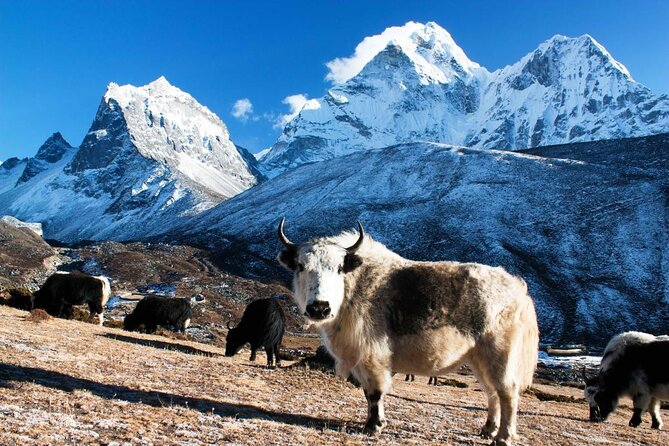
Reviewed · EVEREST BASE CAMP TREKS
Everest Base Camp Trek with Helicopter Return from Gorakshep to Lukla
The best part of this Everest Base Camp trip comes after the hardest walking. You reach Everest Base Camp at 5,365 meters, climb Kala Patthar for the big mountain views, then board a shared helicopter at Gorakshep for a scenic flight back to Lukla. It saves several days on foot without taking away the approach to Everest.
I like the careful altitude plan, with rest hikes at Namche and Dingboche, and I like the practical support: porters, filtered trail water, an oxygen meter, permits, meals, and airport transfers are built into the price. The main catch is the $3,000 cost, plus the need for decent fitness, good weather, and flexibility around mountain flights.
Key points to know before booking
- Kala Patthar reaches 5,555 meters, giving you the trip’s highest walking point and some of its finest mountain views.
- The helicopter return takes about 20 minutes from Gorakshep to Lukla, but it is shared and depends on flying conditions.
- Two acclimatization days are built in, one around Namche Bazaar and one at Dingboche.
- Porters carry your luggage, with one porter assigned for every two people.
- The group can include up to 14 people, while at least two people must book together.
- Guide assignments vary, with Ram, Raj, Madan, and Rajendra among the guides named for this program.
Why this route works so well
The classic Everest Base Camp route asks you to walk both ways. That means retracing the same trail from Base Camp all the way to Lukla, which can add several tiring days. This version keeps the approach, the villages, the monasteries, the bridges, the glacier views, and the high-altitude challenge, then replaces the return with a helicopter.
That is a smart trade for many people. You still earn the arrival at Base Camp on foot, but you avoid spending the final part of the trip walking downhill when your legs and lungs have already worked hard. The helicopter is not just a luxury add-on. It also gives you a quick aerial look at the Khumbu region.
The trip begins and ends in Kathmandu, with about 12 days on the schedule. You receive airport pickup, two nights in a three-star Kathmandu hotel with breakfast, and transport in a private tourist vehicle. Once you leave the city, accommodation changes to mountain guesthouses.
The price includes a lot: domestic flights, permits, staff costs, food, porters, accommodation, a shared helicopter, filtered water, seasonal fruit, and a farewell dinner. You still pay separately for international flights, a Nepal visa, insurance, drinks, personal gear, Kathmandu lunches and dinners, and tips.
Other treks that start from Kathmandu:
- Everest Base Camp Trek – 14 Days
★ 5.0 · 1,499 reviews - Everest Base Camp Helicopter Tour landing at Everest View Hotel
★ 5.0 · 668 reviews - Everest Base Camp Trekking
★ 5.0 · 485 reviews
Days 1 and 2: Kathmandu to Lukla and Phakding
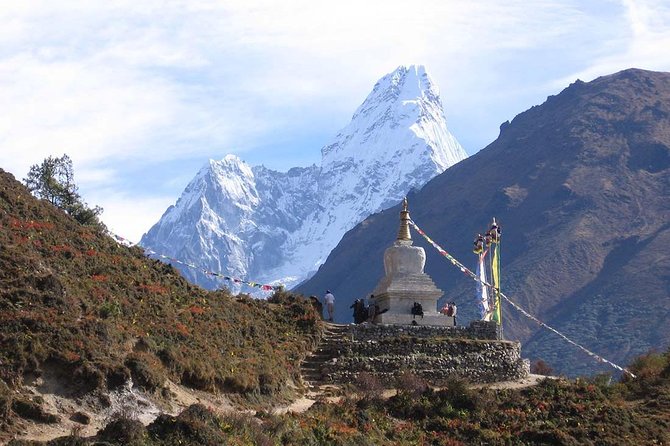
On arrival in Kathmandu, an official meets you at Tribhuvan International Airport and takes you to your hotel. A pre-trip meeting follows, giving you time to meet your guide and sort out the final details before the trek begins.
The next morning starts early at the domestic airport. The flight to Lukla takes about 35 minutes and lands at Tenzing and Hillary Airport, at roughly 2,804 meters. The airstrip is part of the adventure, but mountain aviation also means that schedules can change. The tour requires good weather, and that applies especially to flights and the helicopter return.
From Lukla, you walk to Phakding. This first stretch lets your body begin adjusting without immediately forcing you into the highest elevations. You pass through the first mountain villages and get your initial feel for the trail, but do not mistake the short opening day for an easy holiday walk. The trip requires moderate physical fitness, and the exertion builds quickly.
Phakding is your first night on the trail. Guesthouse accommodation in Lukla, Phakding, and Namche includes attached toilets. In other places, facilities may be more basic, so you should expect a trekking experience rather than hotel comfort.
Day 3: Crossing suspension bridges into Namche Bazaar
The walk from Phakding to Namche takes about six hours. The trail follows the Dudh Koshi and crosses the river several times on suspension bridges decorated with prayer flags.
These bridges are more than a photo stop. They bring a bit of suspense to the route, especially when you are tired or carrying a daypack. The trail then climbs toward Namche Bazaar, the main trading center of the Khumbu region.
Namche sits at about 3,440 meters and is where the altitude becomes a serious factor. You may notice that simple uphill walking takes more effort. Your guide’s role matters here, since the pace should allow you to adjust rather than race ahead.
Namche is also one of the more comfortable and interesting villages on the route. You have time to settle in, eat a full meal, and prepare for the acclimatization walk. This is one of the places where the included meals and staff support provide real value. Food and rooms become more expensive at altitude, so an all-in trekking package reduces the need to manage each purchase as you go.
Day 4: The Everest View Point acclimatization walk
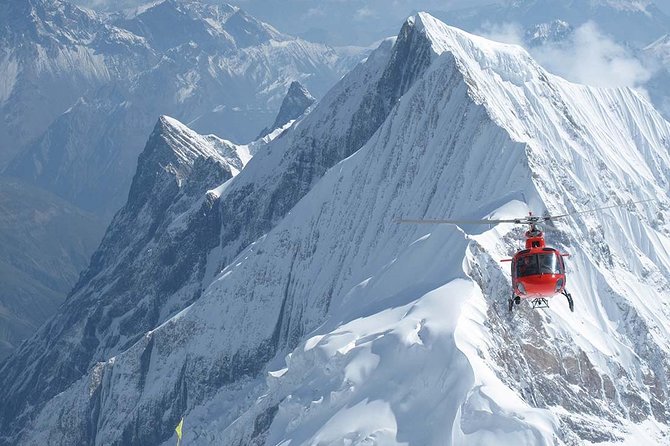
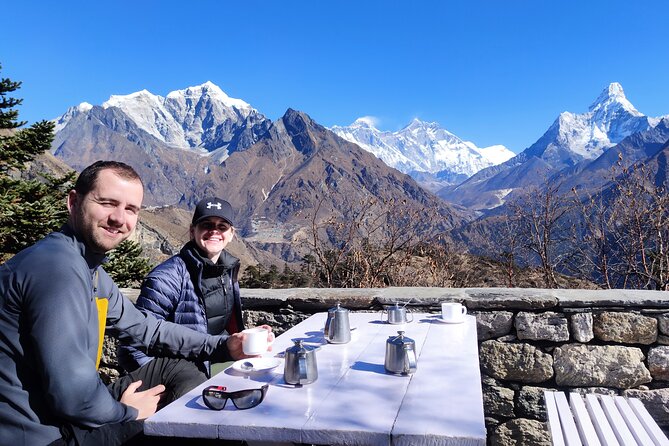
You do not simply spend the day sitting in Namche. The planned short hike around the village includes the Everest View Point, with mountain views and a sunrise option.
This rest day is vital. The trek gains altitude steadily, and a gentle climb followed by a return to the same sleeping elevation gives your body time to adjust. It also gives you a chance to test your pace, footwear, layers, and daypack before the trail becomes more demanding.
I like that the program treats acclimatization as part of the route rather than wasted time. You gain views, but the bigger benefit is safety and comfort later. The description allows only a short listed activity time, yet the day functions as a broader rest and adjustment day around Namche.
More flights over the high peaks from Kathmandu:
- Everest Base Camp Helicopter Tour landing at Hotel Everest View
★ 5.0 · 218 reviews - Everest Base Camp helicopter tour with landing
★ 5.0 · 61 reviews - Everest Base Camp Helicopter Tour with Hotel Everest View Landing
★ 5.0 · 52 reviews - Guaranteed Landing at Everest Base Camp Kalapathar by Helicopter
★ 5.0 · 38 reviews
Day 5: Tengboche and its mountain monastery
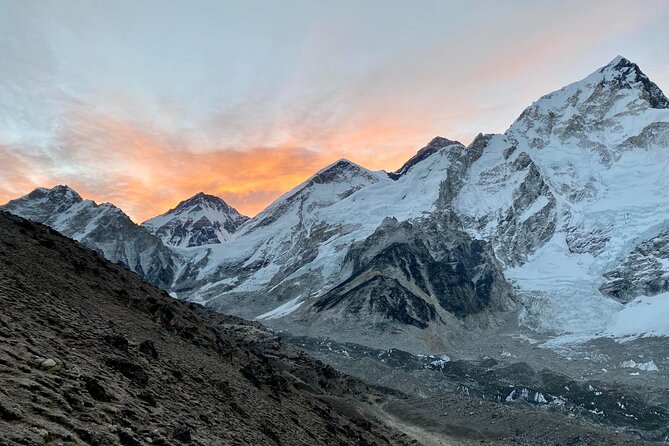
The trail continues beside the Dudh Koshi, with views of the surrounding peaks, before reaching Tengboche at approximately 3,860 meters. The route drops to Debuche, crosses the Imja Khola, and climbs again.
Tengboche is a major cultural stop. Its monastery gives the day a sense of place beyond the physical challenge of the trek. You can expect the walk to feel harder than the early days, since the air is thinner and the trail keeps changing height.
The listed schedule describes this as a long trekking day. That is worth noting if you prefer relaxed walking. The itinerary moves at a steady pace, and you should be ready for several hours on foot rather than a brief scenic outing.
Day 6: Pangboche to Dingboche
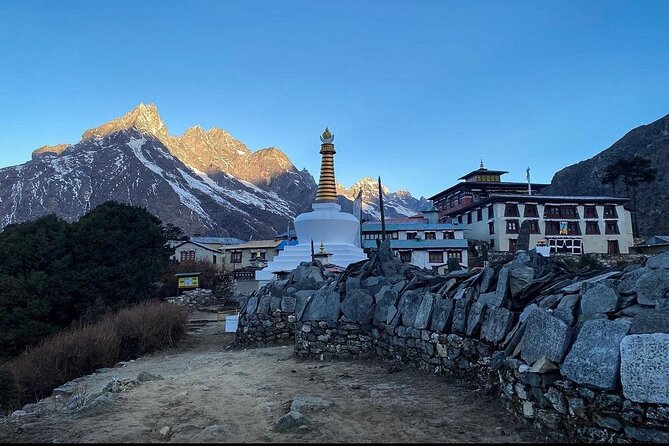
From Tengboche, you continue through Debuche and across another suspension bridge before reaching Pangboche. Mani stones line parts of the route, adding Buddhist detail to the trail.
The climb continues toward Dingboche, at around 4,410 meters. This is a notable jump in altitude, and your body will likely feel the difference. The route is not only about covering distance. Each walking day is also part of the adjustment process.
Dingboche is a good base for the second acclimatization day. You have reached a high village, but the schedule does not send you straight onward to Lobuche. That pause is one reason this itinerary is more sensible than a rushed Base Camp plan.
Day 7: Nangkartshang Peak for altitude practice
The second acclimatization day includes a hike to Nangkartshang Peak above Dingboche. You do not make forward progress toward Base Camp, but you gain a high viewpoint and return to Dingboche to sleep.
This kind of day can feel demanding even though it is called an acclimatization day. The aim is not an easy stroll. It is a controlled effort at altitude, followed by rest. You should keep your own pace and tell your guide if you feel unwell.
Nangkartshang is especially useful because it gives you a high view before the route becomes more barren and glacial. You get another chance to check your clothing, water supply, and stamina before the most strenuous part of the trek.
Day 8: Lobuche and the memorial stones
The trail heads toward Lobuche beside the lateral moraine of the Khumbu Glacier. You pass stone memorials dedicated to climbers who died on nearby peaks.
This is a quieter and more reflective section of the route. The memorials bring home the seriousness of the mountains. Everest Base Camp is a famous goal, but the high Himalaya is not a theme park, and the trail gives you reminders of the risks faced by climbers.
Lobuche is at roughly 4,940 meters. The day is listed as a long one, and the altitude makes every climb feel more pronounced. Keep your expectations realistic. You are not walking quickly at this stage, and the thin air can make a modest distance feel like a full day’s work.
Day 9: Everest Base Camp at 5,365 meters
This is the big walking day. From Lobuche, you follow the Khumbu Glacier toward Everest Base Camp, reaching about 5,365 meters.
The route is difficult, but the destination has a clear purpose. You are standing at the point used by climbers preparing to go higher, as close to Everest as you can get without mountaineering equipment. During spring, the area may have an active expedition atmosphere, though conditions and activity vary by season.
Base Camp itself is not the summit, and the mountain may not look exactly as you imagined from this angle. The real reward is the complete journey: the bridges, villages, monastery, high passes of effort, glacier, and finally the camp.
This is also where the included guide and porter support matter most. You need to focus on steady movement, hydration, food, and your own condition. The company provides a first-aid kit and an oxygen saturation meter, but those tools do not replace travel insurance or emergency evacuation coverage. You must arrange insurance that covers both.
Day 10: Kala Patthar at 5,555 meters
The climb to Kala Patthar is one of the hardest and most rewarding parts of the route. At 5,555 meters, it is higher than Everest Base Camp and provides the major panoramic viewpoint of the trek.
The ascent is steep and tiring. You may spend much of the morning climbing, but the payoff is the mountain view that many people picture when they think of an Everest trek. The exact visibility depends on weather, and mountain conditions can change quickly.
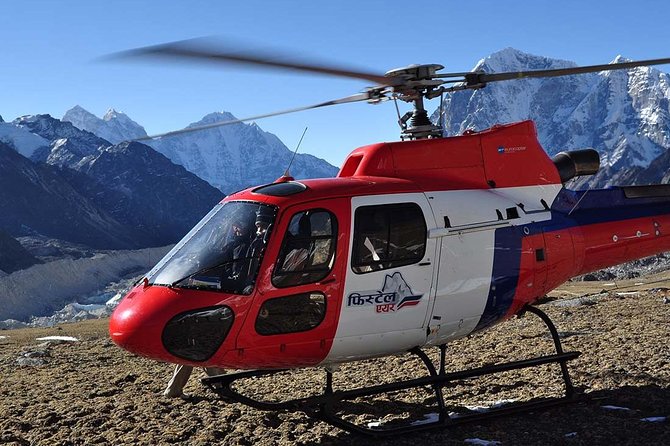
The schedule pairs Kala Patthar with the helicopter return from Gorakshep to Lukla. The supplied day-by-day outline is not perfectly clear about the exact timing, so confirm the operating plan before departure. The central idea is clear: after reaching the high points on foot, you return by shared helicopter rather than walking the entire route back to Lukla.
The flight is described as about 20 minutes. That is short, but it can save several days of downhill trekking. It also gives you an entirely different view of the valleys and ridges you crossed on foot.
Day 11 and Day 12: Lukla, Kathmandu, and departure
The final transport plan deserves a careful check. The program includes airfare from Kathmandu to Lukla and back, while the detailed schedule says the scenic flight from Lukla returns to Kathmandu on Day 11 after the helicopter connection. Day 12 is set aside for transfer to Tribhuvan International Airport.
Because the written schedule places the helicopter at Gorakshep, then describes a Lukla to Kathmandu flight, ask the operator to confirm exactly where you sleep on Day 10, when the helicopter operates, and how the Lukla connection works. Weather can affect both aircraft and helicopters, so leave room for changes.
The airport transfer on the final day is useful, especially for an international departure. Still, I would not treat a mountain flight schedule as something you can time to the minute. A flexible approach is part of trekking in Nepal.
What the $3,000 price really covers
At first glance, $3,000 is a major spend. The value improves when you list what is included. You receive:
- Two Kathmandu hotel nights with breakfast
- Kathmandu airport and hotel transfers
- Kathmandu to Lukla and return airfare
- Trekking accommodation
- Breakfast, lunch, and dinner during the trek
- A licensed English-speaking local guide
- One porter for every two people
- Staff wages, insurance, equipment, and medicine
- Everest National Park and TIMS permits
- Shared helicopter flight from Gorakshep to Lukla
- Filtered trail water using a Katadyn Pocket Water Filter
- Seasonal fruit, a duffel bag, trekking map, and sun hat
- A first-aid kit with an oxygen saturation meter
- A farewell dinner
That package is a strong point. The helicopter alone changes the price compared with a standard return trek, and staff costs in a high-altitude region are not minor. You also avoid arranging permits, domestic flights, porters, meals, and transfers separately.
The price does not cover personal trekking equipment, alcoholic drinks, hot and cold drinks, Kathmandu lunches and dinners, international airfare, visa costs, insurance, or tips. Tipping is expected, so set aside extra money for the guide, porters, and driver.
Who will enjoy this trek most
This trip suits you if you want the full approach to Everest Base Camp but would rather not walk back down the same trail. It is a good fit for someone who values organized support and wants a guide, porter, meals, permits, and transport handled together.
You should have moderate physical fitness and be comfortable walking for several hours on consecutive days. The highest points are above 5,000 meters, so this is not a casual sightseeing tour.
The maximum group size is 14, which is large enough for shared logistics but not enormous. A minimum of two people must book. Solo booking is therefore not available under the stated rules.
This is less suitable if you need fixed flight times, dislike basic mountain guesthouses, or want a slow itinerary with extra spare days. It is also a poor match if you are not prepared to buy rescue and evacuation insurance.
Practical details that affect your day
Wear and pack for changing conditions, but the exact personal equipment list is not supplied. The operator provides a duffel bag, map, and sun hat, while personal trekking equipment remains your responsibility.
Meals are included during the trek, with breakfast, lunch, and dinner listed across the route. Drinks are not included, so budget for beverages separately. Filtered water is provided on the trail, which is a useful cost and waste-saving feature.
Guide quality is central to a high-altitude trip. Guide names connected with departures include Ram, Raj, Madan, and Rajendra, along with porters such as Bishal, Krishna, Probin, Saman, Jit, Sher, Girija, and Pesal. Assignments can change, but the strong emphasis on personal support is worth noting. Ask who your guide and porter team will be at the pre-trip meeting.
Cancellation terms are strict close to departure. Cancelling at least six full days ahead allows a full refund, two to six full days allows a 50 percent refund, and cancelling less than two full days ahead receives no refund. Poor weather cancellation can result in a different date or a full refund.
Should you book it?
I would choose this trek if you want to walk the classic Everest approach, value a planned altitude schedule, and see the return journey from the air. The two acclimatization days, porter support, included meals, permits, and medical kit make the package easier to manage than arranging every part yourself.
I would pause before booking if $3,000 stretches your budget, if you need a guaranteed flight schedule, or if you prefer a gentler walking program. Confirm the Day 10 and Day 11 flight sequence in writing, then make sure your insurance covers emergency rescue and evacuation.
For a fit person who wants Base Camp without the full return trek, this is a practical middle ground. You work for the arrival, then let the helicopter do the heavy lifting on the way back.
FAQ
How long does the Everest Base Camp trek with helicopter return take?
The experience lasts approximately 12 days, including arrival and departure arrangements in Kathmandu.
Where does the trek begin?
The trekking route begins with a flight from Kathmandu to Lukla, followed by the walk to Phakding.
How long is the helicopter flight?
The helicopter ride from Gorakshep to Lukla takes about 20 minutes and is shared with other people on the trip.
Is accommodation included?
Yes. The package includes two nights in a three-star Kathmandu hotel with breakfast and guesthouse accommodation during the trek. Lukla, Phakding, and Namche guesthouses have attached toilets.
Are meals included?
Breakfast, lunch, and dinner are included during the trek, along with a farewell dinner. Lunch and dinner in Kathmandu, alcoholic drinks, and hot and cold drinks are not included.
What fitness level is required?
The tour states that you should have a moderate physical fitness level. The route includes long walking days and reaches Everest Base Camp at 5,365 meters and Kala Patthar at 5,555 meters.
Is travel insurance included?
No. You must arrange your own travel insurance, and it should cover emergency rescue and evacuation.
More Hiking & Trekking in Kathmandu
- Nagarkot Sunrise View and Day Hiking from Kathmandu
★ 5.0 · 471 reviews - Annapurna Circuit Trek with Tilicho Lake
★ 5.0 · 368 reviews - Everest Base Camp Trekking – 13 Day
★ 5.0 · 365 reviews - Everest Base Camp Trek -14 Days
★ 5.0 · 321 reviews
Just added in Kathmandu
- Traditional Momo Making Class★ 5.0 · 10 reviews
- Women Empowerment Project(Nepali cooking class & jewelry workshop★ 5.0 · 15 reviews
- Kathmandu 2 Nights 3 Days Chitwan Jungle Safari Tour★ 5.0 · 9 reviews
- Walking tour of Kathmandu with awesome local guides★ 5.0 · 4 reviews
- Wildlife Adventure in Chitwan Nepal★ 4.0 · 4 reviews
- Kathmandu to Pokhara Premium sofa bus ticket★ 4.0 · 17 reviews
- Regular Yoga for all levels of practitioners in Kathmandu★ 5.0 · 4 reviews
- Kathmandu Street Food Walking Tour – Eat Like a Local★ 5.0 · 3 reviews
Everest Base Camp Treks, compared.
Everest Base Camp Helicopter Tour landing at Everest View Hotel
Read our review →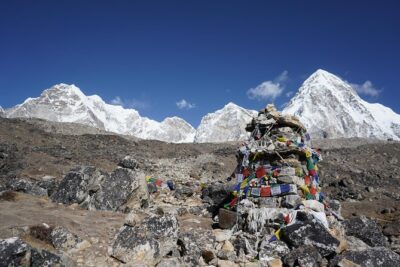
Browse the lists this tour appears in