Reviewed · TOURS IN KATHMANDU
KATHMANDU FULL DAY SIGHTSEEING TOUR (6-hrs)
Kathmandu’s great strength is the way Hindu temples, Buddhist shrines, royal courtyards, and modern city life sit close together. This private six-hour tour takes you to Pashupatinath, Swayambhunath, Patan Durbar Square, and Boudhanath, giving you a useful first look at the city’s religious and architectural mix.
I like the private air-conditioned vehicle, especially when Kathmandu traffic turns a short road journey into a slow one. I also like having an English-speaking guide who can explain the symbols and rituals at each site instead of leaving you to guess. The main drawback is cost planning: the $40 tour price does not include entrance fees, which add roughly $26 in total, or your meals.
- Four major sights in about six hours: Hindu, Buddhist, and royal landmarks are covered in one day.
- Private transport for your group: You do not share the vehicle with other participants.
- A 9:30 a.m. start: The schedule gives you a full morning and afternoon without requiring an early departure.
- 365 steps at Swayambhunath: The hilltop stupa brings exercise, monkeys, small shrines, and city views.
- Entrance fees are extra: Plan for about $10, $10, $4, and $2 at the listed monuments and museums.
- A useful first-day orientation: The tour works well if you want Kathmandu’s main sights before exploring on your own.
Four Kathmandu landmarks in one private day
This is a compact introduction to Kathmandu Valley culture. You move between a major Hindu temple, a hilltop Buddhist shrine, an old royal square, and one of the world’s important Tibetan Buddhist centers.
That range is the tour’s real value. You are not seeing four versions of the same monument. Each stop gives you a different key to the city: Hindu worship at Pashupatinath, Buddhist symbolism at Swayambhunath and Boudhanath, and Newar royal art at Patan.
The day begins at 9:30 a.m. and lasts about six hours. That timing should suit you if you want a substantial sightseeing day without committing to a long excursion outside Kathmandu. Since the tour is private, the pace is more flexible than a large group outing, though four major stops still make this a fairly brisk schedule.
The guide and driver matter here. One particularly well-regarded guide named Dip is described as engaging and well informed, but you should not assume he will be assigned to your booking. The experience includes an English-speaking guide, while the specific person can vary.
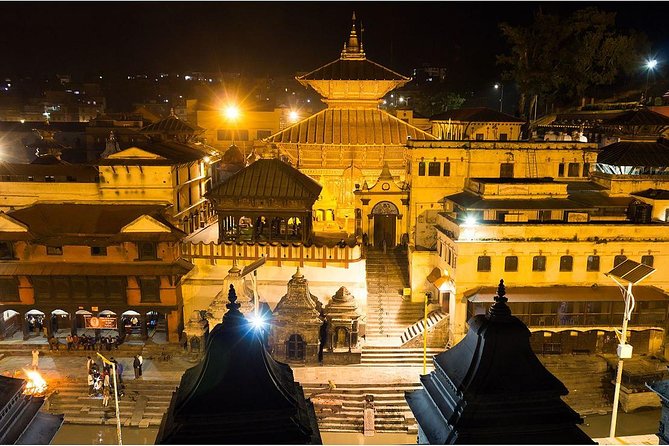
Pashupatinath Temple, Kathmandu’s most important Hindu stop
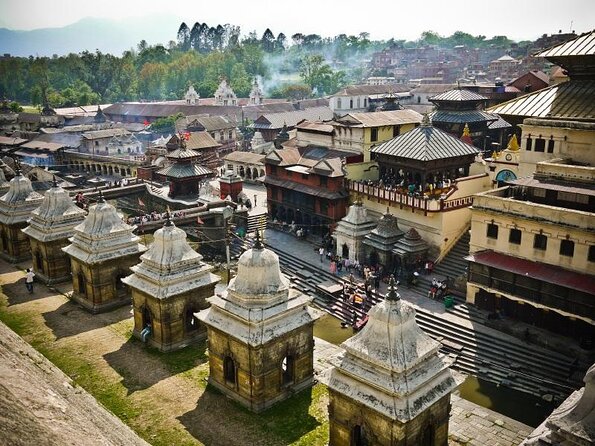
Allow about two hours at Pashupatinath, the longest visit on the schedule. The temple sits in Deopatan, in an open courtyard, and its main structure is a square, two-tiered pagoda on a single-tier base.
This is not simply an architectural photo stop. Pashupatinath is a major Hindu religious center, and the guide’s explanation can help you understand why the temple matters. You will hear about religious symbolism, the role of the site, and the way the temple fits into Kathmandu’s spiritual life.
The two-hour allocation gives you time to look beyond the main building. You might find smaller shrines, courtyards, and details that are easy to miss if you rush through with only a camera. Ask your guide to explain what you can see from public areas and which parts are restricted. At important religious sites, the boundaries between sightseeing and worship matter.
There is one practical point to keep in mind: the itinerary does not promise that every interior space will be open to you. Treat Pashupatinath as an active place of worship, not just a monument. Dress and behave respectfully, and listen carefully to your guide’s instructions.
The entrance ticket is not included. The listed costs suggest that the four monument or museum admissions together come to about $26, although the exact amount charged can depend on the local arrangements. Carry extra cash for these fees and personal expenses.
A few more things to do in Kathmandu worth a look
- Kathmandu: Full Day 7 UNESCO Tour with Lunch – Private/Group
★ 5.0 · 415 reviews - Kathmandu: Full Day Top 4 UNESCO Tour with Lunch – Private/Group
★ 5.0 · 269 reviews - Kathmandu: Full-Day 7 UNESCO Tour with Lunch – Private/Group
★ 4.9 · 247 reviews
Swayambhunath and its 365-step climb
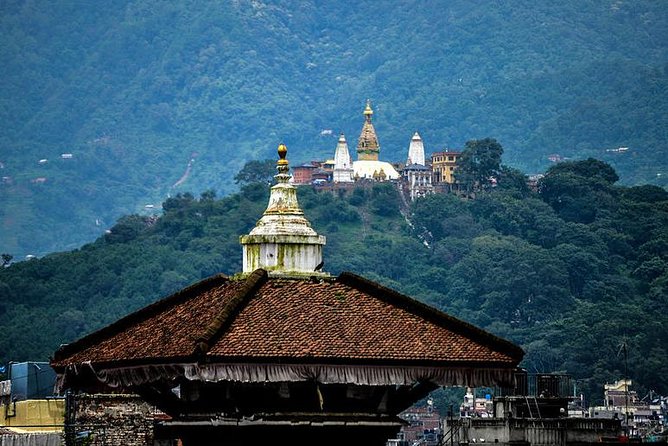
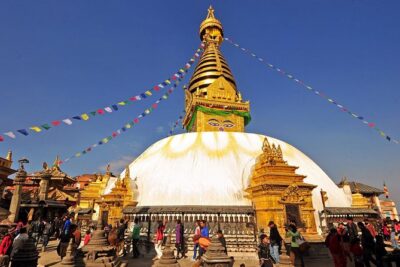
Swayambhunath Mahachaitya takes about one hour. The route includes all 365 steps to the top, so this is the most physically demanding part of the day.
The climb is part of the experience, not just a way to reach the monument. You can pause along the way to look at small stupas, watch the vendors, and keep an eye out for monkeys. The playful warning about vendor prices rising as you climb is useful advice: compare prices before buying rather than assuming the first offer is fixed.
At the top, circle the stupa clockwise. You can also visit the small temples and shrines around it. The site gives you a strong sense of how Buddhist practice works in a living setting, with movement, prayer, images, and ritual objects all connected to the central stupa.
You should pace yourself on the stairs. The tour does not offer a separate easier route in the information provided, and the full climb is specifically part of the visit. Most participants can take part, but anyone concerned about stairs or steep walking should think carefully before booking.
The one-hour visit is enough for the main hilltop experience, though it leaves little spare time for a slow exploration. If Swayambhunath is the stop you most want to study, tell your guide early. A private tour gives you a better chance of discussing your interests than a fixed large-group outing.
Patan Durbar Square and Newar royal artistry
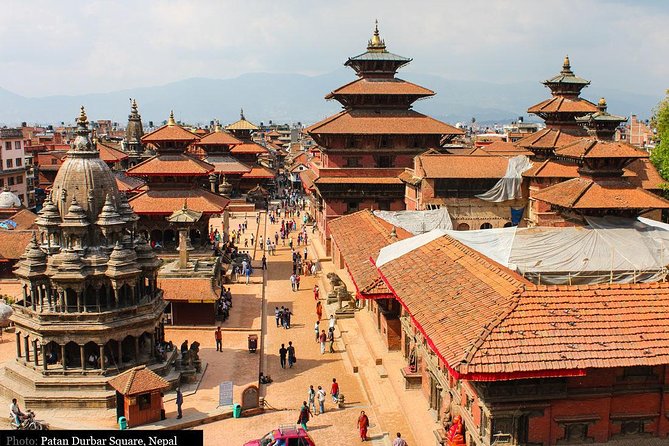
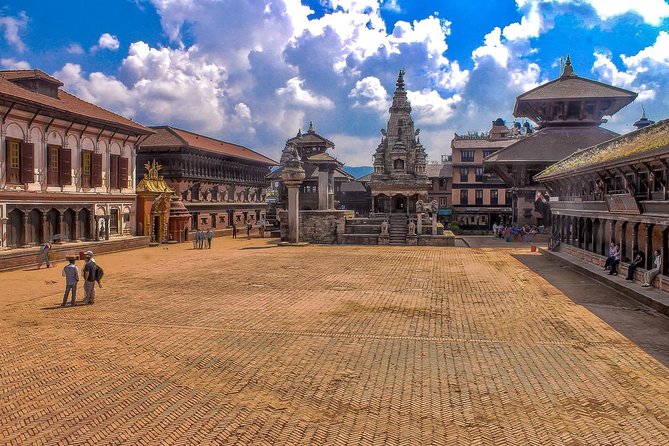
Patan Durbar Square receives about two hours. This is the place to focus on architecture, royal history, and the detailed work associated with the old city of Patan.
The route begins on the left side of the square and moves inward through the city. One early sight is Chyasin Dewal, followed by temples and other major structures. The supplied route description suggests that your guide will lead you through the square in an order that starts with the temples and then moves deeper into the urban area.
Patan is valuable because it rewards close looking. Instead of viewing the square as one large postcard scene, examine the carvings, pagoda roofs, courtyards, and temple layouts. Your guide can explain the religious meaning behind the buildings and point out how the old royal center differs from Kathmandu’s major Hindu and Buddhist sites.
Two hours is a sensible amount of time here. You can see the principal sights without spending the entire day among the courtyards. Still, Patan can feel busy and visually dense, so do not expect to absorb every detail at once. Take notes or mark the buildings you want to revisit later.
Admission is extra. The listed fee breakdown includes charges of about $10, $10, $4, and $2 across the day’s sites and museums. The information does not assign each amount to a particular stop, so confirm the current fee with the operator or guide rather than treating the breakdown as a precise ticket list.
Boudhanath Stupa and the Buddhist cosmos
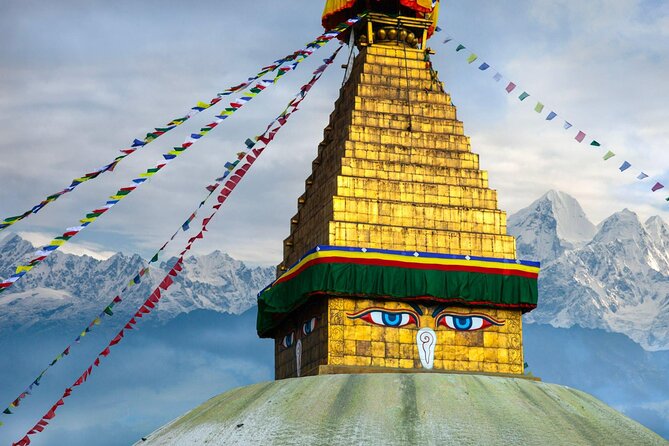
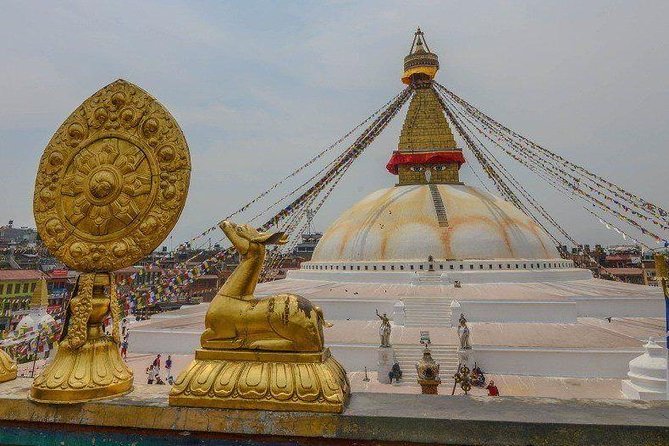
The final stop is Boudhanath Stupa, also called Buddha Stupa, with about one hour allotted. From above, the stupa is designed like a large mandala, a diagram of the Buddhist cosmos.
Four Dhyani Buddhas mark the cardinal directions in the Tibetan Buddhist system. That detail gives you a useful way to read the monument. Rather than seeing only a white dome and a tall central structure, you can look for the geometry, direction, and symbolism that shape the site.
Your guide should explain how to circle the stupa and what the surrounding religious features represent. Follow the established clockwise path and make time to look at the smaller shrines and details around the main structure.
One hour gives you a clear introduction, but not a long study of every corner. Boudhanath is a good place to ask focused questions. You might ask about the mandala design, the meaning of the four directional Buddhas, or the role of the stupa in Tibetan Buddhist practice.
Ending here makes sense. After the formal courtyards and hill climb earlier in the day, Boudhanath offers a final look at a different Buddhist tradition and leaves you with one of Kathmandu’s most recognizable religious spaces.
Same base, a different kind of day:
- Everest Base Camp Trek – 14 Days
★ 5.0 · 1,499 reviews - Private Kathmandu Sightseeing Tour | UNESCO World Heritage sites
★ 5.0 · 756 reviews - Everest Base Camp Helicopter Tour landing at Everest View Hotel
★ 5.0 · 668 reviews - Half day cooking class in Thamel kathmandu
★ 5.0 · 607 reviews
Why private transport matters in Kathmandu
The tour includes an air-conditioned vehicle and private ground transport for your group. That may sound like a basic feature, but it can make a real difference in Kathmandu.
The city’s traffic can be difficult to predict. One positive account specifically praised the driver’s safe handling of the traffic, while the guide explained the sights along the way. You should not expect every road journey to be quick, but you can at least travel in a private vehicle rather than managing multiple local connections between four major stops.
Air conditioning is also useful after the 365-step climb at Swayambhunath or during the warmer part of the day. The vehicle gives you a place to rest between sites, and a private arrangement means you are not waiting for unrelated members of a large group.
The tour does not include a restroom on board. Plan to use facilities at the stops or during a meal break. Lunch and dinner are also not included, with meals estimated at about $3 to $6 each depending on where you eat.
Is $40 a fair price?
The base cost is $40 per person. For a private six-hour tour with an English-speaking guide, private air-conditioned transport, and government taxes included, that can be a reasonable price, especially if you are sharing the vehicle with family or friends.
The real cost is higher once you add entrance fees. The stated monument and museum fees total roughly $26, bringing the tour and admissions to about $66 per person before food, drinks, and personal purchases.
That value depends on what you want. If you prefer to explore slowly and arrange local transport yourself, this tour may feel expensive. If you have only one day in Kathmandu and want four major sites explained in English, the convenience is easier to justify.
A private tour also spreads well across a small group. Group discounts are offered, though the exact discount is not provided. Ask for the total group price before booking so you know how the per-person cost changes.
What the guide adds to the day
The guide is more than a person who points out buildings. These sites use symbols, directions, religious images, and architectural forms that are not always clear at first glance.
The strongest praise connected to the experience focuses on the guide and driver working together. A guide described as engaging and well informed helped make the sites easier to understand, while the driver handled Kathmandu’s difficult roads safely. Another account described the guide as helpful and even shared a meal with the guide during the day.
Your own experience can depend on the assigned staff, but the tour format gives the guide time to answer questions. Use that advantage. Ask about Hindu and Buddhist practices, the meaning of the stupas, and how Patan’s temples differ from the religious sites.
One caution concerns communication with the company. A past booking problem involved confusion around cancellation and payment, even though the guide and sightseeing itself were viewed positively. Confirm the pickup, payment terms, total admission costs, and cancellation conditions in writing before the day of the tour.
Who should book this Kathmandu tour?
I would consider this tour if you are visiting Kathmandu for the first time, have limited time, or want an organized introduction before exploring independently. It suits couples, families, and small groups who value a private vehicle and a guide rather than a fixed large-group schedule.
It also works well for anyone who wants both major religions represented in one outing. Pashupatinath gives you a Hindu center, while Swayambhunath and Boudhanath explain different parts of Buddhist tradition. Patan adds a royal and artistic layer.
You should think twice if you dislike stairs, want long unhurried visits, or prefer to avoid extra costs after booking. The day covers a lot, and the entrance fees are not included. It is a sightseeing sampler, not a slow study of one neighborhood.
Practical details before you book
The tour begins at 9:30 a.m. Pickup is offered, but the provided information does not specify every pickup location, so confirm the exact arrangement when booking.
Confirmation is received at booking, and the activity is private for your group. Most people can participate, but the 365-step climb and amount of walking deserve attention if you have mobility concerns.
Free cancellation is available up to 24 hours before the local start time for a full refund. Cancellations or changes made within 24 hours are not refunded or accepted. Poor weather or failure to meet the minimum number of participants can lead to a different date, another experience, or a full refund.
Should you book it?
Book this tour if you want Kathmandu’s four headline sights handled in one private day, with transport, a guide, and useful religious context. The combination of Pashupatinath, Swayambhunath, Patan, and Boudhanath gives you a strong first picture of the city.
Before paying, confirm the pickup details, the guide assignment if you have a preference, and the full cost of the entrance fees. If you can accept a brisk schedule and roughly $26 extra for admissions, the $40 base price offers solid convenience. If you want quiet, extended visits or the lowest possible cost, arrange fewer sites independently.
FAQ
How long does the Kathmandu sightseeing tour last?
The tour lasts about six hours.
What time does the tour begin?
The stated start time is 9:30 a.m.
Is the tour private?
Yes. Only your group participates in the activity.
Which sites are included in the route?
The route visits Pashupatinath Temple, Swayambhunath Mahachaitya, Patan Durbar Square, and Boudhanath Stupa.
Are entrance fees included?
No. Entrance fees for museums and monuments are extra. The listed fees total about $10, $10, $4, and $2.
Is transport included?
Yes. The tour includes private ground transport in an air-conditioned vehicle.
Is a guide included?
Yes. An experienced English-speaking tour guide is included.
Can I cancel for a full refund?
You can cancel at least 24 hours before the local start time for a full refund. Cancellations or changes within 24 hours are not refunded or accepted.
Just added in Kathmandu
- Traditional Momo Making Class★ 5.0 · 10 reviews
- Women Empowerment Project(Nepali cooking class & jewelry workshop★ 5.0 · 15 reviews
- Kathmandu 2 Nights 3 Days Chitwan Jungle Safari Tour★ 5.0 · 9 reviews
- Walking tour of Kathmandu with awesome local guides★ 5.0 · 4 reviews
- Wildlife Adventure in Chitwan Nepal★ 4.0 · 4 reviews
- Kathmandu to Pokhara Premium sofa bus ticket★ 4.0 · 17 reviews
- Regular Yoga for all levels of practitioners in Kathmandu★ 5.0 · 4 reviews
- Kathmandu Street Food Walking Tour – Eat Like a Local★ 5.0 · 3 reviews
Tours in Kathmandu, compared.
Private Kathmandu Sightseeing Tour | UNESCO World Heritage sites
Read our review →
Everest Base Camp Helicopter Tour landing at Everest View Hotel
Read our review →
Nagarkot Sunrise View and Day Hiking from Kathmandu
Read our review →
Full Day 7 UNESCO Tour with Lunch – Private/Group
Read our review →