
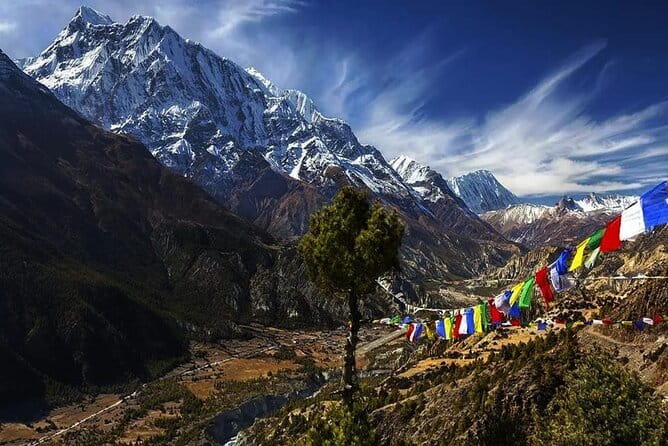
Reviewed · ANNAPURNA CIRCUIT TREKS
13 Days Trekking in Annapurna Circuit
The great prize here is Thorong La Pass, a 17,769-foot crossing that links the Marsyangdi Valley with the dry, high country beyond. You also get a real Himalayan route, not a string of roadside viewpoints: terraced farms, suspension bridges, pine woods, Buddhist villages, and a hard-earned descent toward Pokhara.
I like the practical setup. Your guide, permits, tea-house rooms, and all standard trek meals are included, and an acclimatization day in Manang gives you a sensible pause before the highest section. I also like the human scale of the trip: it is private, so your group sets the pace, with guide names such as Ravi and Sandip appearing among the recent arrangements.
The catch is the schedule. You reach very high altitude quickly, and Day 11 is demanding. The package also does not include a porter, the return to Kathmandu, personal costs, visa fees, or transportation during the trek, so the advertised $809.10 price is a starting point rather than your final trip budget.
Key points to know before booking
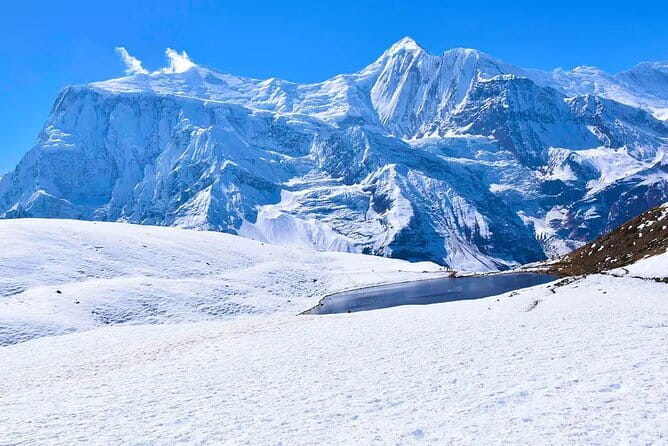
- Thorong La reaches 5,416 meters, making Day 11 the physical and altitude challenge of the trip.
- Manang includes an acclimatization day, with options for Gangapurna Lake or Praken Monastery.
- Tea-house lodging and breakfast, lunch, and dinner are included during the trekking portion.
- Your trip is private, so only your own group takes part.
- A licensed guide is included, and recent trips used guides named Ravi and Sandip.
- Pokhara is included at the end, but transport back to Kathmandu is not.
What the $809.10 package really covers
At this price, the trip offers a useful bundle for a Himalayan trek. You receive airport pickup if required, public transport from Kathmandu toward Besisahar and Nyadi, private transport from the trek’s endpoint to Pokhara, one night in a standard twin-sharing Pokhara hotel with breakfast, and tea-house accommodation along the route.
Your guide’s food and lodging are included, as are the Annapurna Conservation Area permit, TIMS fee, route map, government taxes, office service charges, and a first-aid kit with an oximeter. All standard breakfast, lunch, and dinner meals are included for the trek, plus tea or coffee with breakfast.
That takes care of many costs that can add up in Nepal. Still, you need to budget for personal expenses, a porter if you want one, extra nights in Kathmandu or Pokhara, transport during the trek, your Nepal entry visa, and transport after Pokhara. The return to Kathmandu is specifically left open, which is useful if you plan to continue to Chitwan or stay in Pokhara, but less convenient if you want a single all-in package.
The trip is private rather than a fixed large-group departure. That matters on steep days. You can discuss your pace with your guide instead of trying to match a big mixed group, though the itinerary itself remains fairly brisk.
Other long routes from Kathmandu:
- Annapurna Circuit Trek with Tilicho Lake
★ 5.0 · 368 reviews - Annapurna Circuit Trek
★ 5.0 · 94 reviews - Annapurna Circuit Trek
★ 5.0 · 35 reviews
Day 1: From Kathmandu to Bulbule by road
The first day is mainly a transport day. You leave Kathmandu early for a long drive toward Bulbule, at about 820 meters. The route passes small villages, terraced fields, and lower Himalayan scenery before reaching the starting area.
The schedule describes the drive as roughly nine hours, while the stop description gives about six hours. Treat the timing as flexible. Road conditions and the exact transfer point can affect the day, and the itinerary also refers to Besisahar and Nyadi. Confirm your precise drop-off with the operator before departure.
The included public bus transport keeps the price down. It also means this is not a private sightseeing transfer from Kathmandu. If you prefer comfort and control on a long road day, ask what portion uses public transport and where the sharing transport to Nyadi begins.
Days 2 and 3: Terraces, forests, and the Marsyangdi River
From Bulbule, you start walking toward Bahundanda. This is a gentle introduction to the route, with terraced fields, village paths, and steadily rising hills. The overnight stay in Bahundanda gives you your first taste of tea-house trekking.
The next day brings denser forest, suspension bridges, and views along the Marsyangdi River and its smaller streams. You descend toward Chamche before continuing upward. That combination of descent and ascent is normal on the circuit, so do not judge the trek only by the day’s final elevation gain.
These opening days are valuable because they let you settle into the rhythm of walking, eating, sleeping, and packing before the air gets thin. The drawback is that the road approach and early trekking sections can feel long if your main goal is the high mountains. Their value lies in the gradual change from low foothills to alpine country.
Days 4 and 5: Gurung villages and the road to Chame
The route toward Dharapani passes through Gurung and Manangi villages. You begin to see a stronger shift in architecture, culture, and terrain as the subtropical lower valleys give way to cooler country.
You then continue to Chame, the administrative center of Manang District. The views open toward Lamjung Himal and Annapurna II, while pine forests replace much of the lower vegetation. Chame is an important point in the trek because the scenery now feels distinctly Himalayan rather than simply hilly.
I like this part for its cultural change as much as for the peaks. You are not only walking toward a pass. You are moving through communities shaped by mountain trade, Buddhist traditions, and high-altitude conditions. Your guide can add context that a route map cannot.
A few more things to do in Kathmandu worth a look
- Everest Base Camp Trek – 14 Days
★ 5.0 · 1,499 reviews - Everest Base Camp Trekking
★ 5.0 · 485 reviews - Nagarkot Sunrise View and Day Hiking from Kathmandu
★ 5.0 · 471 reviews - Everest Base Camp Trekking – 13 Day
★ 5.0 · 365 reviews
Days 6 and 7: Pisang and the approach to Manang
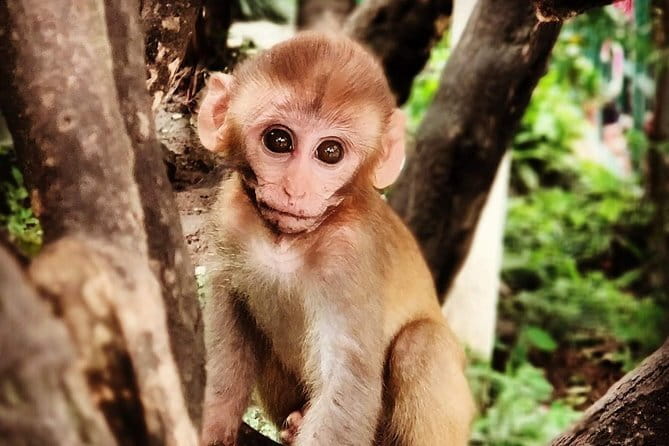
Leaving Chame, you walk toward Lower Pisang through forest and small settlements. Annapurna II, III, and IV become more dramatic as you approach Pisang, a traditional Manangi village.
The route to Manang continues through increasingly open country. Manang is one of the main stops on the circuit, with traditional Tibetan cultural influences and Buddhist monasteries. It is also where the schedule sensibly slows down.
At this point, you are close to the high section. Take the altitude seriously even if you feel strong. The trip is rated for people with moderate physical fitness, but a fitness label does not remove the effects of climbing above 3,000 meters. Walk steadily, follow your guide’s advice, and use the rest day rather than treating it as wasted time.
Day 8: Your acclimatization day in Manang
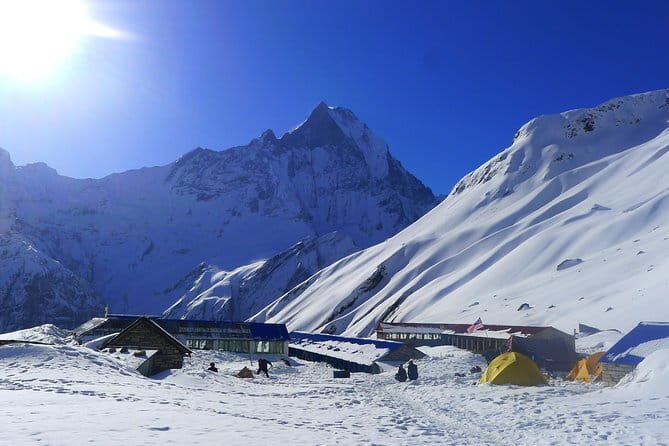
The rest day in Manang is one of the strongest parts of the plan. You can explore the village at an easy pace, hike to Gangapurna Lake, or take a shorter walk to Praken Monastery.
Praken Monastery is listed as a viewpoint for Gangapurna, Annapurna III, and Himalchuli. Gangapurna Lake offers another way to spend the day outdoors without committing to a full trekking stage. The best choice depends on how your body feels, and your guide should help you judge that.
This is not a luxury break. It is a practical altitude stop before Yakkharka, Thorong Phedi, and the pass. You still need to carry enough personal items for the day and remain aware of symptoms. The trip includes a first-aid box and oximeter, but those supplies do not replace careful pacing or a decision to stop if you become unwell.
Days 9 and 10: Yakkharka and Thorong Phedi
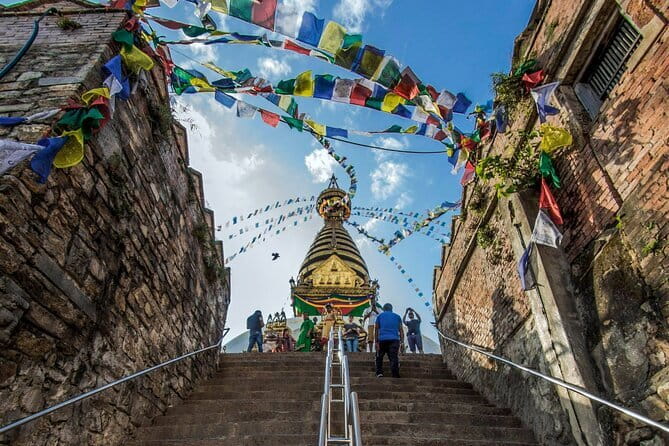
From Manang, the path reaches Yakkharka through sparse forest and high-altitude scenery. Annapurna II and Gangapurna remain major visual rewards, but the route becomes more exposed and the air thinner.
The following day takes you to Thorong Phedi, the base area for the pass. The trail becomes steeper as you approach this final high stop. Your guide’s job matters here: you need clear advice on pace, rest, clothing, water, and the early start required for the crossing.
Thorong Phedi is not a place to arrive casually after a hard day and expect a leisurely evening. The itinerary places it directly before the pass, so you should keep your kit organized and make the next morning as simple as possible. Tea-house lodging is included, but the information does not promise private rooms or specific facilities. Expect basic mountain accommodation rather than hotel comfort.
Day 11: Crossing Thorong La at 5,416 meters
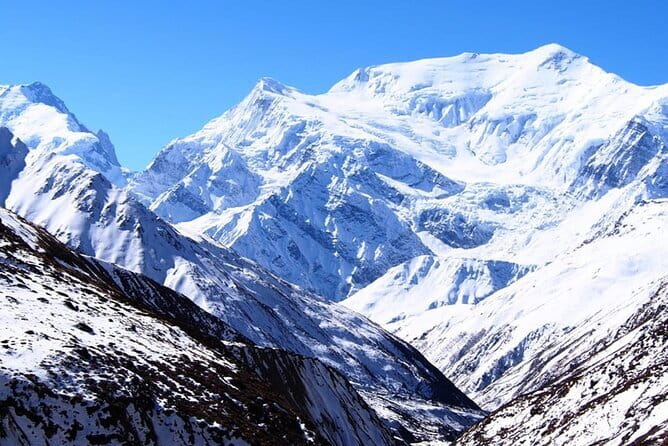
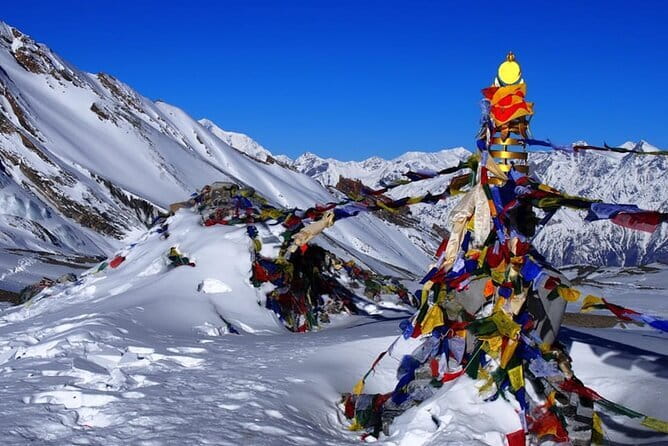
This is the defining day. You start early and climb to Thorong La Pass, at 5,416 meters. The ascent is demanding, but the reward is a wide Himalayan view from the top, followed by the descent on the far side.
The pass is the reason many people choose the Annapurna Circuit, and it is also the point where the schedule asks the most of you. The combination of altitude, cold, early hours, and a long walking day can test even a fit person. Your moderate fitness should include comfort with sustained uphill and downhill walking, not just ordinary city exercise.
I would not book this trip for the pass alone without considering the altitude profile. The acclimatization day helps, but it does not guarantee an easy crossing. You need a flexible attitude and the willingness to follow your guide’s judgment.
Days 12 and 13: Leaving the mountains for Pokhara
After the pass and the final trekking section, the group travels by bus to Pokhara. The package includes private transport from the trek ending point to Pokhara and one standard twin-sharing hotel night with breakfast.
A shared dinner with the team is part of the planned Pokhara finish. It gives you a chance to mark the end of the trek before choosing your next move. Day 13 is open for onward plans: more time in Pokhara, a visit to Chitwan National Park, a drive to Kathmandu, or another destination.
The open ending is useful, but remember that the package does not include transport back to Kathmandu. If you have an international flight soon after the trek, arrange that connection carefully and allow room for changes.
Guides, group size, and the style of support
The experience includes a government-licensed, English-speaking guide with food and accommodation covered. Recent arrangements used Ravi and Sandip, both associated with strong attention to comfort, planning, and day-to-day care. Your assigned guide may be different, so ask for the name and experience of your guide before you leave.
The first-aid kit includes normal medical supplies and an oximeter. That is a practical touch for a high route, especially around Manang and Thorong Phedi. It is still wise to carry any personal medication and to tell your guide about medical concerns before starting.
Because this is a private activity, you are not joining a large public group. That can make the trek calmer and more personal. It can also mean the cost is tied to your own party rather than spread across many people, so confirm how the price changes with group size.
What to pack and what not to assume
The supplied details confirm meals, tea-house stays, a route map, permits, and a guide. They do not confirm a porter, private rooms, Wi-Fi, hot showers, charging, bottled water, or specific equipment rental.
You should therefore ask about those items before booking. A porter is available at extra cost if you need one, but the package does not include that service. Keep your essential personal items organized and be prepared for basic accommodation.
The meeting information lists early time windows of 6:15 to 7:15 AM and 8:15 to 9:15 AM, every day during the stated operating period. Since the trek begins with an early road departure, confirm the exact meeting point and pickup time directly with Blissful Himalayas.
Who should book this Annapurna Circuit trek?
I would point this trip toward you if you want the classic circuit, prefer a private group, and value having meals, permits, guide costs, and basic lodging bundled together. It suits someone who wants a demanding mountain route without arranging every tea house and transfer alone.
It is less suited to you if you want a relaxed holiday, hotel-level accommodation, or a short list of easy walks. It is also a poor match if you need every transport leg included, since the return to Kathmandu and several personal costs remain outside the package.
The cancellation terms are friendly for planning: you can receive a full refund if you cancel at least 24 hours before the start time. Changes or cancellations inside that window are not accepted for a refund.
Should you book it?
Book this trek if crossing Thorong La is your main goal and you want a practical private arrangement with a guide, food, tea houses, permits, and a Pokhara finish. The itinerary gives you a proper acclimatization day and covers the core costs that make a self-arranged circuit complicated.
Before paying, confirm the exact road transfer, your guide’s name, porter pricing, the final trekking endpoint, and your onward transport from Pokhara. If you are ready for a high-altitude trek with a tough pass day and basic lodging, the $809.10 price offers solid value. If you want comfort and generous spare days, choose a slower plan instead.
FAQ
How long is the Annapurna Circuit trekking experience?
The experience lasts approximately 13 days, including the road journey from Kathmandu, the trek, an acclimatization day in Manang, and the transfer to Pokhara.
What is the highest point of the trek?
The highest point is Thorong La Pass, which reaches 5,416 meters.
Is transportation from Kathmandu included?
Yes. Public bus transportation from Kathmandu toward Besisahar is included, along with sharing transportation to Nyadi. Confirm the exact transfer details before departure because the itinerary references both Besisahar and Bulbule.
Is transportation back to Kathmandu included?
No. Transport back to Kathmandu is not included. Day 13 is left open for your onward plans.
Are meals included during the trek?
Yes. Standard breakfast, lunch, and dinner are included during the trek, along with a cup of tea or coffee at breakfast.
Is a porter included?
No. A porter is not included in the listed price. You can request a porter for an additional cost.
Is this a private tour?
Yes. Only your group participates in the activity, with a government-licensed guide provided. Recent guide names connected with the experience include Ravi and Sandip, but your assigned guide may differ.
Just added in Kathmandu
- Kathmandu to Chitwan Tour by Tourist Bus – A Convenient and Affordable Way★ 4.0 · 4 reviews
- Changunarayan Hill to Telkot Hike Near Kathmandu Day Tour★ 5.0 · 6 reviews
- Mt Everest Base CampTrek | Budget Package★ 5.0 · 4 reviews
- Chitwan Jungle Safari 3-Day Tour★ 5.0 · 9 reviews
- Chandragiri Hill Station Tour by Cable Car★ 5.0 · 4 reviews
- Chandragiri Hills cable car day trip, private car with driver from Kathmandu★ 5.0 · 8 reviews
- Chandragiri to Taudaha Nature Day Hiking from Kathmandu★ 5.0 · 13 reviews
- Chandragiri Cable Car & Monkey Temple Private Guided Day Tour★ 5.0 · 5 reviews
Annapurna Circuit Treks, compared.
15-Day Private Annapurna Circuit Trek from Kathmandu
Read our review →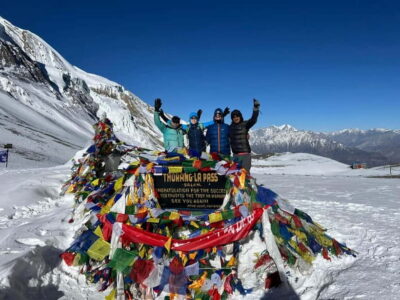
8 Days Private Guided Trekking in Annapurna Circuit with Pickup
Read our review →
Browse the lists this tour appears in