
Reviewed · ANNAPURNA CIRCUIT TREKS
Annapurna Circuit Trek with Tilicho Lake (16 Days)
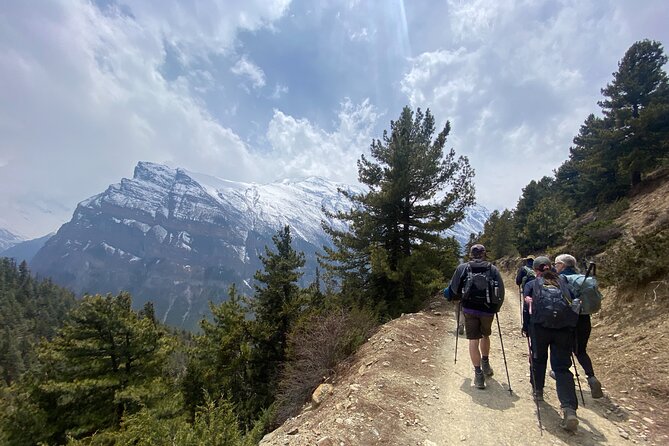
Tilicho Lake and Thorong La Pass are the twin prizes here. In 16 days, you move from forested river valleys to the dry, Tibetan-style country around Manang and Mustang, with a demanding high-altitude detour to Tilicho Lake at 4,919 meters.
I like two things right away: the itinerary includes a full acclimatization day in Manang, and the support setup is generous for a trek of this length, with one porter for every two trekkers and one assistant guide for every five. The main caution is simple: this is a serious high-altitude walk, not a gentle village ramble. Long days, basic teahouses, cold, wind, and a 5,416-meter pass all come with the deal.
Key points before you book
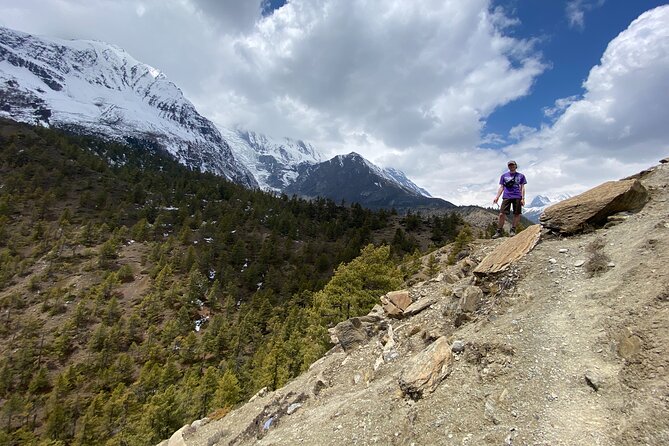
- Tilicho Lake at 4,919 meters: A demanding side trip to one of the highest accessible alpine lakes on Earth.
- Thorong La at 5,416 meters: The trek’s biggest physical test, followed by a long descent to Muktinath.
- Strong support ratio: One porter serves two trekkers, with an assistant guide for every five people.
- Small group size: The maximum group size is 14, useful on narrow trails and in simple teahouses.
- Very different regions: Expect pine forest, Manang’s Tibetan influence, high desert, pilgrimage sites, and Thakali villages.
- Several extra costs: Trek meals, hot showers, charging, Wi-Fi, drinking water, gear, tips, and possible rescue costs are not included.
Why this 16-day route is worth your time
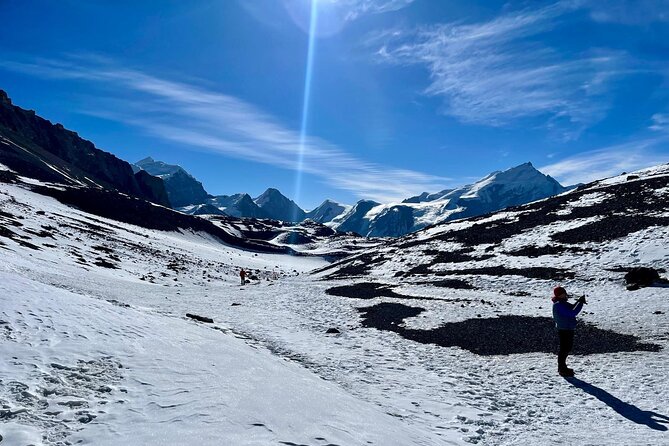
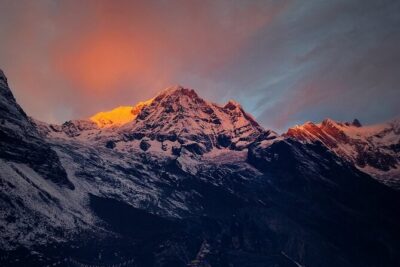
The Annapurna Circuit works because the scenery changes almost every day. You begin beside the Trishuli and Marsyangdi rivers, pass through pine forests and terraced hills, enter the high Manang Valley, cross a stark mountain pass, then descend into Mustang’s dry river country.
Adding Tilicho Lake makes the trip more ambitious and more rewarding. You leave the main circuit for Siri Kharka and Tilicho Base Camp, walking through a rough, remote area where altitude and trail conditions matter. The payoff is a broad glacial lake surrounded by snow-covered peaks.
At $1,800 per person, the price reflects more than accommodation. It includes airport transfers, private transport from Kathmandu to Besisahar, a shared jeep to Dharapani, Kathmandu and Pokhara hotels, teahouse lodging, licensed guiding, porters, assistant guides, permits, and crew insurance. That is a useful bundle for someone who does not want to arrange each moving part alone.
Still, this is not an all-inclusive trek. Meals during the walking days are not included, and drinking water is your responsibility. You should also budget for hot showers, battery charging, Wi-Fi, tips, personal equipment, and possible costs caused by bad weather, delays, rescue, or extra nights.
Other long routes from Kathmandu:
- Annapurna Circuit Trek with Tilicho Lake
★ 5.0 · 368 reviews - Annapurna Circuit Trek
★ 5.0 · 94 reviews - Annapurna Circuit Trek
★ 5.0 · 35 reviews
Days 1 and 2: Kathmandu to Dharapani
Your first day is mainly about arrival. A representative meets you at Tribhuvan International Airport, takes you to a three-star hotel in Thamel, and gives you time to settle in. Thamel is a practical base for checking gear and buying anything you forgot.
Day 2 is a long transport day, taking about 12 hours. The road follows the Trishuli River and then reaches Mugling, a crowded junction where buses, trucks, tea stalls, and snack sellers create a very Nepalese roadside scene.
Besisahar, at 760 meters, marks the traditional gateway to the circuit. From there, the road becomes rougher as you continue by shared jeep toward Dharapani at 1,960 meters. You finish the day in a mountain village beneath pine forests and snowy ridges.
The weak point is the road time. You are not walking yet, but sitting for much of a day on winding roads can be tiring. The benefit is that this transport reduces the number of low-altitude walking days and gets you to the main trekking country quickly.
Days 3 and 4: Pine forest, apple country, and Upper Pisang
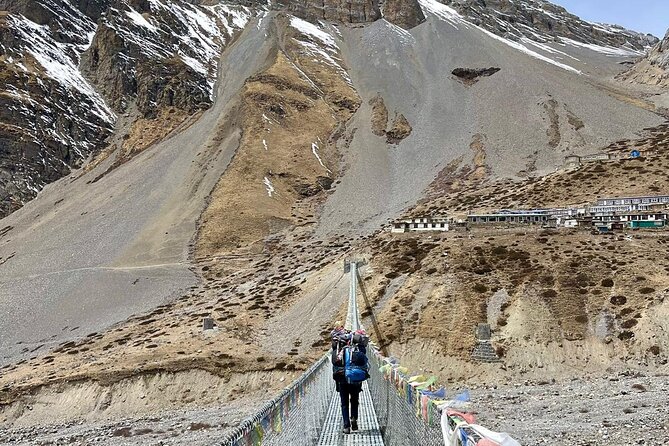
The first walking day leads through Bagarchhap, a small village with whitewashed homes, Buddhist chortens, and pine-covered slopes. This is where the route begins to feel more distinctly Tibetan in its architecture and religious details.
You continue toward Chame, the administrative center of Manang District, at 2,670 meters. The route passes Danaque and climbs through forested country. Chame has more services than the smaller villages, which makes it a useful overnight stop before the altitude rises again.
Day 4 brings Bharatang at 2,850 meters, known for apple orchards and small juice farms. It is a pleasant break beside the Marsyangdi River before the trail reaches Pisang.
The route uses Upper Pisang, at about 3,300 meters, rather than the lower settlement. This higher village has Tibetan-style homes and broad views toward Annapurna II and Pisang Peak. The climb is steady, so take it slowly. Your body is beginning to adjust, and rushing now is poor strategy.
Day 5: The high trail to Manang
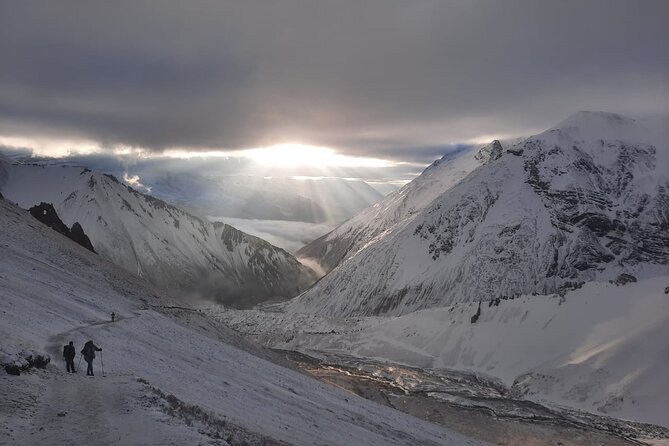
The walk to Manang at 3,540 meters is one of the route’s best days. You pass through Ghyaru and Ngawal, old stone villages high above the valley. The high route brings wider views of Annapurna III and Gangapurna than the lower road route.
Manang is more than a place to sleep. It is the cultural and practical center of the upper valley, with Tibetan-influenced buildings and a strong trekking economy. The village is also where the altitude becomes a serious concern.
Plan to keep this day steady rather than competitive. Drink regularly, eat even if your appetite fades, and tell your guide if you develop a headache, nausea, unusual fatigue, or poor coordination. The route includes planned support, but you still need to speak up early.
A few more things to do in Kathmandu worth a look
- Everest Base Camp Trek – 14 Days
★ 5.0 · 1,499 reviews - Everest Base Camp Trekking
★ 5.0 · 485 reviews - Nagarkot Sunrise View and Day Hiking from Kathmandu
★ 5.0 · 471 reviews - Everest Base Camp Trekking – 13 Day
★ 5.0 · 365 reviews
Day 6: Acclimatization around Manang
The full acclimatization day is one of the strongest choices in this program. You can choose one of three hikes with your guide, including a short, steep climb. The point is to spend time higher than Manang, then return to sleep at the lower elevation.
You may prefer a shorter option if the previous walking days have left you tired. Others will want a longer outing for extra mountain views. The important thing is not how far you go. It is giving your body time to adjust before Siri Kharka, Tilicho Base Camp, and the pass.
This day also gives you a chance to inspect your gear, charge devices if possible, and organize your overnight bag. Porters carry your main bag, but you need a small daypack with water, layers, sun protection, personal medication, and anything you need during the day.
Days 7 to 9: The demanding Tilicho Lake detour
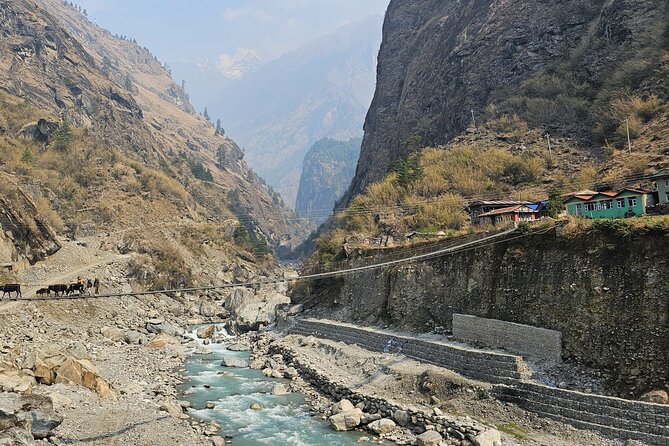
From Manang, the route climbs to Siri Kharka at 4,060 meters. The trail passes through juniper shrubland and reaches a remote ridge with views toward Gangapurna and the Chulu range. At this altitude, even a short distance can take time.
Day 8 continues to Tilicho Base Camp at 4,150 meters. The walk is not especially long on paper, but narrow sections and landslide-prone ground make it a serious day. The scenery becomes sparse and stark, with high cliffs and glacier-carved slopes replacing the greener valley below.
Day 9 is the high point of the detour, literally and emotionally. You climb to Tilicho Lake at 4,919 meters, a glacial lake revered in both Hindu and Buddhist traditions. The stop itself is listed as 45 minutes, so expect a focused visit rather than a leisurely lakeside picnic.
The lake is a major reason to choose this version of the circuit, but it also adds strain before the Thorong La crossing. If you are comparing routes, ask yourself if you want the extra altitude and rough trail. For fit hikers with good preparation, it adds a memorable sense of distance and achievement. For anyone uncertain about high altitude, the standard circuit may be a wiser choice.
Days 10 and 11: Returning toward the pass
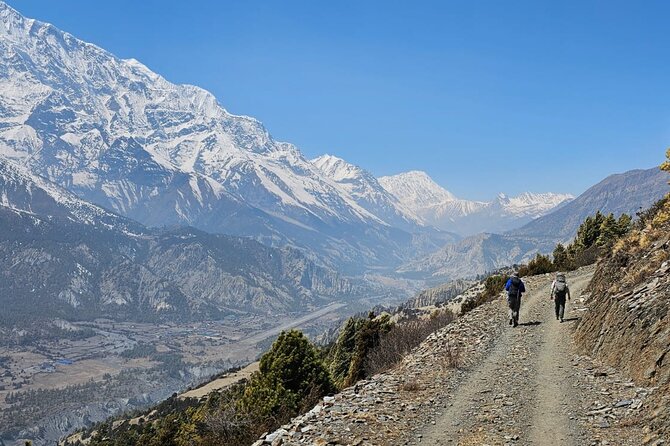
After Tilicho Lake, the route heads toward Yak Kharka at 4,050 meters. The day begins with a descent from Siri Kharka to Khangsar, followed by a climb toward the high grazing settlement. The terrain is increasingly dry and exposed.
Yak Kharka is used as a staging point before Thorong La. The altitude remains high, so your pace should stay conservative. You are not trying to prove anything on these days. The goal is to arrive at Thorong Phedi in useful condition.
Day 11 leads to Thorong Phedi at 4,540 meters, the base of the pass. The route follows barren, dusty ridges and climbs gradually. Accommodation here is basic, and the cold can make the overnight stop uncomfortable.
This is a night to keep your routine simple. Eat, drink, prepare clothing for an early start, and follow your guide’s instructions. Battery charging and hot water generally cost extra at teahouses, and service may be limited.
Day 12: Thorong La and the long descent to Muktinath
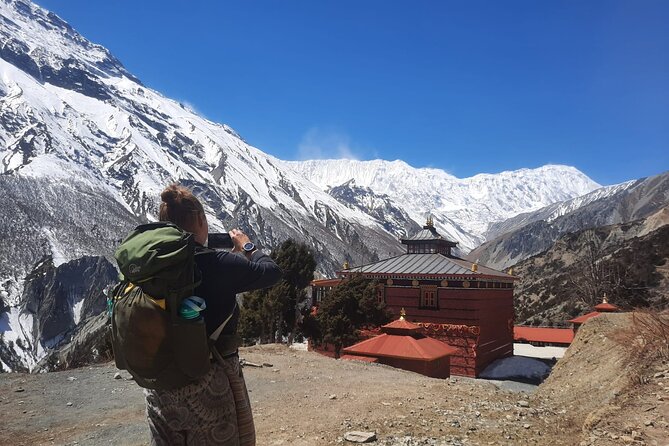
The pass crossing starts before dawn. From Thorong Phedi, you climb more than 900 meters to Thorong La at 5,416 meters. The air is thin, the trail is steep, and wind can make the exposed route feel colder than expected.
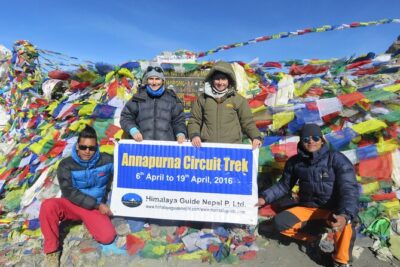
Reaching the prayer flags and pass marker is a major physical achievement, but the job is only partly done. You then descend roughly 1,600 meters to Muktinath at 3,760 meters. That descent can be hard on knees and feet, even after the climb.
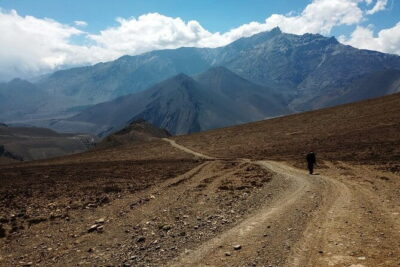
Muktinath is one of Nepal’s most important pilgrimage sites, sacred to both Hindu and Buddhist worshippers. The surrounding country begins to look dry and desert-like, with views toward Mustang. This abrupt change is one of the circuit’s great pleasures.
This day is the clearest test of the trip. The full walking time is listed at about 12 hours, though the exact duration depends on pace, weather, trail conditions, and group energy. Travel insurance that covers trekking at the highest altitude reached and emergency evacuation is essential.
Days 13 and 14: Kagbeni, Jomsom, and the return to Pokhara
From Muktinath, you continue to Kagbeni at 2,810 meters. This old settlement sits where the Kali Gandaki and Jhong rivers meet and marks the gateway to Upper Mustang. Its narrow stone lanes and red-walled monastery give the village a strong sense of place.
The trail then follows the windswept Kali Gandaki River to Jomsom at 2,720 meters. Jomsom is the administrative center of Mustang and a key stop on the lower circuit. The walking day is still long, and strong afternoon winds can make the river route unpleasant.
Day 14 changes the pace again. Public bus transport takes you through Kalopani and Beni toward Pokhara. Kalopani, at 2,530 meters, is greener than the dry country higher up, while Beni at 850 meters is a busy market town at the meeting point of the Kali Gandaki and Myagdi rivers.
The bus ride is practical, but it may be tiring after two weeks on foot. By the time you reach Pokhara Lakeside, the change is welcome. Your three-star hotel includes breakfast, and Phewa Lake gives you a calm setting for the first proper rest after the mountains.
Days 15 and 16: Pokhara rest and Kathmandu departure
Day 15 gives you time in Pokhara before the tourist bus returns to Kathmandu. Pokhara is framed by views toward Machapuchare and the Annapurna range, though weather and visibility always control what you see.
The return bus covers roughly 200 kilometers along the Prithvi Highway and takes about 12 hours. It is not glamorous transport, but it keeps the package cost lower than a private vehicle or flight.
On Day 16, you have a few hours in Thamel depending on your flight time. Airport drop-off is included. If your international flight leaves late, use the extra time for a final meal, souvenir shopping, or a quiet café stop, but do not schedule anything that risks missing your transfer.
What the support package really gives you
The guide is government licensed and first-aid trained. The crew also has insurance coverage, and the plan includes one assistant guide for every five people. For a group capped at 14, that can mean close support on difficult sections.
The porter ratio is one porter for two trekkers. Pack carefully and keep your main bag within the operator’s stated limits, even though the exact weight limit is not provided here. Your daypack remains your responsibility.
Several guide names appear in the operator’s feedback, including Raj Rai, Suman, Prashant, Prem, and Pemba Sherpa. You should confirm your assigned guide before departure rather than assume one of those people will lead your group.
The main strengths repeatedly emphasized are clear pre-arrival communication, careful organization, supportive guiding, smooth teahouse arrangements, and attentive porter service. Those details matter more than fancy lodging on a route where weather, altitude, and transport can quickly disrupt plans.
Costs, food, gear, and comfort
The package includes accommodation in Kathmandu and Pokhara, standard teahouses during the trek, transport listed in the program, permits, government-related arrangements, crew insurance, a trek certificate, and some hotel meals. It also includes three breakfasts and two dinners as specified, including the hotel breakfasts and welcome or farewell meals.
It does not include daily trekking meals. Carry enough Nepali rupees for food and extras, since costs generally rise at higher elevations. You should also expect separate charges for hot showers, Wi-Fi, and battery charging at many teahouses.
Bring personal trekking gear suitable for cold, high-altitude conditions. Travel insurance must cover emergency evacuation and the highest elevation of this route. The published cost details also list $50 per person in government fees outside the package, while another section says government fees are included, so ask the operator to clarify this before paying.
Free cancellation is available up to 24 hours before the start time. Poor weather or failure to meet the minimum group size can lead to a date change, a different experience, or a full refund.
Who should book this trek?
You should consider it if you want the classic Annapurna Circuit with two major additions: Tilicho Lake and a full crossing of Thorong La. It suits people who are comfortable walking for long hours, sleeping in basic teahouses, and accepting rough transport at the beginning and end.
It is a good choice if you want logistical help without paying for a private luxury trek. The guide, porter, assistant guide, permits, hotels, and transport reduce the number of arrangements you need to make yourself.
I would hesitate if you dislike shared buses, simple rooms, limited hot water, or unpredictable mountain conditions. I would also avoid booking until you have trained properly if you are unsure about sustained climbs and high-altitude exposure.
FAQ
How long is the Annapurna Circuit with Tilicho Lake trek?
The experience lasts approximately 16 days, including arrival and departure days, transport between Kathmandu, the trail, Pokhara, and Kathmandu, plus the trekking days.
What is the highest point on the route?
Thorong La Pass is the highest point at 5,416 meters. Tilicho Lake reaches 4,919 meters.
Is accommodation included?
Yes. The package includes a three-star hotel in Kathmandu, a three-star hotel in Pokhara, and standard teahouses during the trek.
Are meals included during the trek?
Meals during the trek are not included. The package specifies hotel breakfasts and two dinners, with three breakfasts listed.
Is drinking water included?
No. You need to pay for drinking water or bring a filter bottle or purification tablets.
How large can the group be?
The maximum group size is 14 people. The support plan includes one porter for every two trekkers and one assistant guide for every five trekkers.
What happens if bad weather cancels the trek?
If poor weather causes cancellation, you will be offered a different date or a full refund. The same applies if the minimum number of participants is not met, with the option of a different date or experience.
Should you book it?
Book this trek if you want a well-supported, high-altitude version of the Annapurna Circuit and you are prepared for the physical demands. Tilicho Lake, Manang, Thorong La, Muktinath, and Mustang give you an unusually varied 16-day journey.
Before committing, confirm the $50 government-fee detail, ask who your assigned guide will be, check the porter baggage limit, and budget for meals and mountain extras. If you accept those conditions and train for the altitude, the package offers strong practical value for a serious Himalayan trek.
Just added in Kathmandu
- Kathmandu to Chitwan Tour by Tourist Bus – A Convenient and Affordable Way★ 4.0 · 4 reviews
- Mt Everest Base CampTrek | Budget Package★ 5.0 · 4 reviews
- Chitwan Jungle Safari 3-Day Tour★ 5.0 · 9 reviews
- Changunarayan Hill to Telkot Hike Near Kathmandu Day Tour★ 5.0 · 6 reviews
- Chandragiri Hill Station Tour by Cable Car★ 5.0 · 4 reviews
- Chandragiri Hills cable car day trip, private car with driver from Kathmandu★ 5.0 · 8 reviews
- Chandragiri to Taudaha Nature Day Hiking from Kathmandu★ 5.0 · 13 reviews
- Chandragiri Cable Car & Monkey Temple Private Guided Day Tour★ 5.0 · 5 reviews
Annapurna Circuit Treks, compared.
15-Day Private Annapurna Circuit Trek from Kathmandu
Read our review →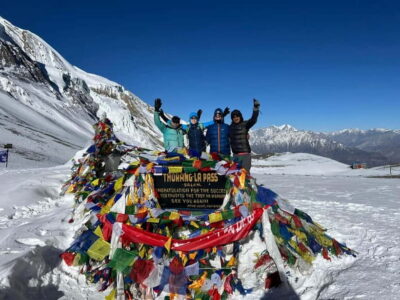
8 Days Private Guided Trekking in Annapurna Circuit with Pickup
Read our review →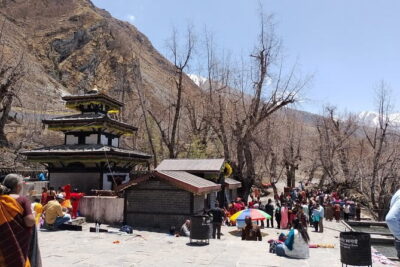
Browse the lists this tour appears in