Reviewed · HIKING & TREKKING
Everest Basecamp Trek: 14 days
The main draw is simple: you walk through the Khumbu region to Everest Base Camp, then climb Kala Patthar for the closest mountain view on this route. Along the way, you cross suspension bridges, sleep in Sherpa villages, visit Tengboche Monastery, and spend key acclimatization days in Namche Bazaar and Dingboche.
I like the sensible pacing, especially the rest days at Namche Bazaar and near Dingboche. I also like the useful inclusions: Lukla flights, permits, meals, guide, porter support, and airport transfers are all covered. The main caution is that this is still a demanding high-altitude trek, and the listed schedule appears to skip the overnight walk from Lukla to Phakding, so confirm the exact day-by-day plan before paying.
Key points to know before you book
- Kala Patthar is the big mountain-view moment: The early morning climb gives you the nearest planned viewpoint of Mount Everest.
- Two acclimatization days are built in: You rest and take short hikes around Namche Bazaar and Dingboche instead of simply pushing uphill every day.
- Lukla flights are included: The package covers round-trip airfare between Kathmandu and Lukla, plus airport transfers.
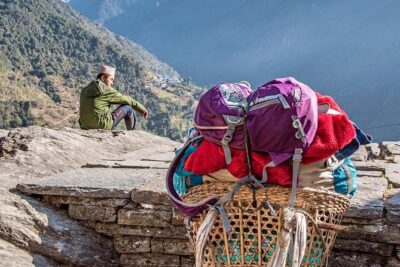
- Porters carry shared luggage: One porter is provided for every two clients, which makes the long walking days more manageable.
- The price covers more than the trek itself: At $1,650 per person, you receive permits, lodging, meals during the trek, guides, porters, and two Kathmandu hotel nights with breakfast.
- The trip is private: Only your own group participates, rather than joining a large public departure.
Why this 14-day route works
An Everest Base Camp trek is not a sightseeing stroll with a few mountain photos attached. You spend many hours walking at increasing altitude, often on rough and steep trails, with limited comforts in the higher villages. A good schedule matters as much as scenery, and this one includes rest days where your body needs time to adjust.
The route begins with two nights in Kathmandu, moves by air to Lukla, then follows the standard Khumbu corridor toward Namche Bazaar, Tengboche, Dingboche, Lobuche, Gorak Shep, and Everest Base Camp. You return by the same general trail before flying back to Kathmandu.
That structure gives you several kinds of scenery. Lower down, you walk through forested sections and villages. Higher up, trees thin out and the trail becomes more open, rocky, and glacial. The changing scenery helps keep the walk interesting, but the upper days are also the toughest.
This is a private activity, so your group has some privacy on the trail and does not need to coordinate with a large mixed party. The provided English-speaking guide is government licensed and first-aid trained. No guide’s personal name is provided, so you should ask for the assigned guide’s name and experience before departure.
A few more things to do in Kathmandu worth a look
- Everest Base Camp Trek – 14 Days
★ 5.0 · 1,499 reviews - Everest Base Camp Trekking
★ 5.0 · 485 reviews - Nagarkot Sunrise View and Day Hiking from Kathmandu
★ 5.0 · 471 reviews
Kathmandu: a useful beginning and ending
Your first day starts with a pickup at Tribhuvan International Airport. A representative from Iconic Holiday Nepal is scheduled to meet you in the terminal with a sign showing your name and the company name, then take you to your hotel.
You have roughly four hours in Thamel after arrival. This central district is the practical staging area for a Himalayan trek, with travel companies, restaurants, hotels, nightlife, and last-minute shopping. It is a good place to check your equipment, buy anything you forgot, and settle into the pace of Nepal before the mountains take over.
The tour includes two nights in a tourist-standard Kathmandu hotel with breakfast. Lunch and dinner in the city are not included, so budget separately for those meals. International airfare, airport departure tax, drinks, bottled or boiled water, insurance, emergency evacuation cover, and tips are also outside the package price.
The final Kathmandu night gives you a buffer after the return flight from Lukla. That is useful because the mountain flight schedule can affect your timing. The airport transfer on arrival and departure is included, and on the last day a representative takes you to the airport according to your flight time.
Lukla and the missing Phakding detail
On day two, you fly early from Kathmandu or, depending on flight conditions, from Manthali Airport. The exact departure airport depends on the operating status during your trip. The flight to Lukla is short, but the mountain views begin quickly, and the approach gives you an immediate sense that this is no ordinary walking holiday.
Lukla is the main air gateway for the Everest region. Its small airport can be busy during trekking season, when many groups arrive and depart. The package includes round-trip airfare between Kathmandu and Lukla, which removes one major cost from your planning, but flights can still be affected by weather or operating conditions.
Here is an important point to clarify. The schedule describes day two as the flight to Lukla, then day three as the walk from Phakding to Namche Bazaar. It does not clearly show the usual Lukla to Phakding walking section or an overnight in Phakding. Ask the operator how that transition is handled and whether the written itinerary needs correction. This is a small paperwork issue, but it matters when you are planning walking distances, lodging, and meals.
The hard climb to Namche Bazaar
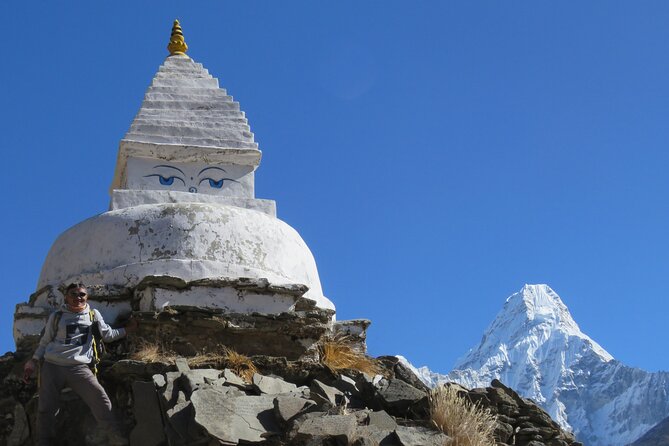
The route toward Namche follows the Dudh Koshi valley and crosses several suspension bridges. Leaving the lower villages, you walk uphill through scenic country and pass smaller settlements before the trail becomes more demanding near Namche.
The schedule calls the Phakding to Namche section tough, and that is useful plain speaking. Namche is not reached by a gentle flat walk. You should expect a sustained uphill day, and the change in altitude is noticeable.
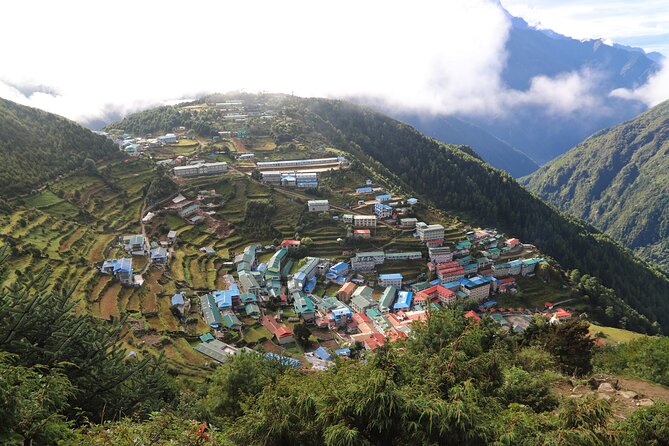
Namche Bazaar is one of the more developed stops in the Khumbu region. You can find hotels, restaurants, and tea houses here, giving you a useful break from the simpler conditions farther up. The town is also the first major place where the itinerary slows down for acclimatization.
The tour gives you two days in Namche. One is used as a rest and adjustment day, with an early hike toward Syangboche. That short outing is valuable because it lets you walk higher during the day and return to sleep at the same altitude. You still need to take it slowly, drink enough water, and tell your guide if you feel unwell.
Same base, a different kind of day:
- Private Kathmandu Sightseeing Tour | UNESCO World Heritage sites
★ 5.0 · 756 reviews - Everest Base Camp Helicopter Tour landing at Everest View Hotel
★ 5.0 · 668 reviews - Half day cooking class in Thamel kathmandu
★ 5.0 · 607 reviews - Kathmandu: Full Day 7 UNESCO Tour with Lunch – Private/Group
★ 5.0 · 415 reviews
Tengboche and its important monastery
From Namche, the trail descends toward the Dudh Kosi Valley before climbing again toward Tengboche. You pass through Phungi Thanka and follow the route near the Imja Khola. The day is listed at about six hours, so you should expect a full walking day rather than a quick transfer.
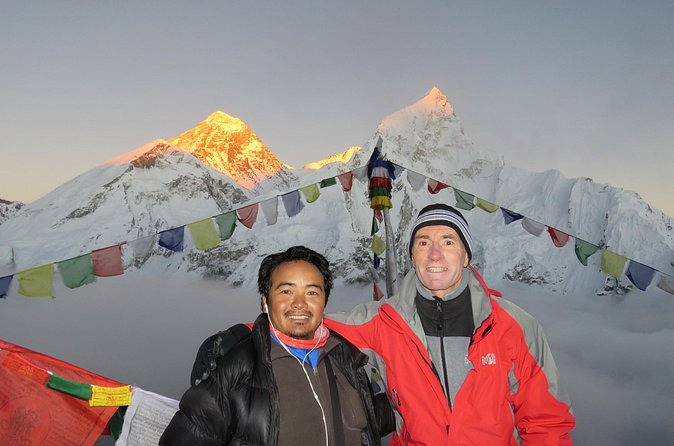
Tengboche is one of the cultural highlights of the route. The following morning includes time at Tengboche Gompa, the area’s important Buddhist monastery. Prayer flags, mountain views, and the quiet setting give this stop a different feel from the more commercial sections of Namche.
After the monastery visit, the trail descends to the Imja River and continues through Pangboche. You then walk through increasingly high country toward Dingboche. The combination of monastery, village life, river crossings, and mountain views makes this section one of the most varied parts of the trek.
Guesthouse accommodation in the Everest region is included on a twin-sharing basis. That means you should expect simple lodging rather than private hotel-style rooms, particularly at higher elevations. The package includes 11 nights in tourist-standard guesthouses during the trek, but it does not include drinks or drinking water.
Dingboche and the second acclimatization day
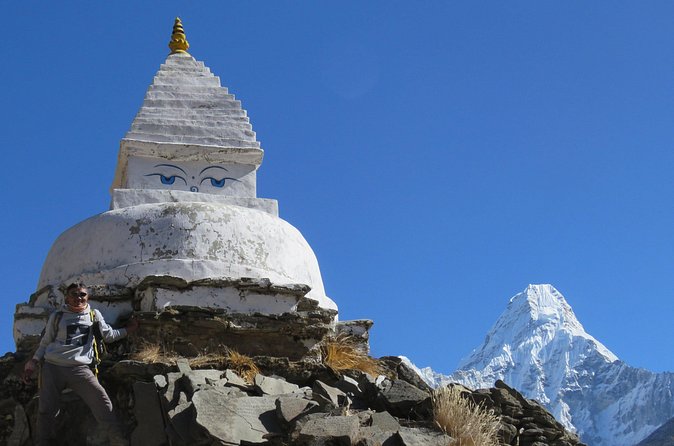
Dingboche is where the route becomes more exposed and more demanding. You leave behind much of the lower forest and walk across more open ground toward the upper Khumbu. The air is thinner, and each uphill section takes more effort.
The itinerary uses a rest day here with a short climb toward Nangkartshang Peak. The listed activity is about one hour, but the value is not distance. This is another controlled test of how your body is handling altitude, followed by a night at the same general elevation.
I like this part of the schedule because it avoids treating the trek as a race. You need time to adapt, and a short acclimatization hike is more sensible than spending every day simply gaining height. Still, an acclimatization day is not a guarantee against altitude sickness. The provided travel insurance and high-altitude emergency evacuation coverage are your responsibility, so arrange them before departure.
Lobuche, Gorak Shep, and Everest Base Camp
Leaving Dingboche, you cross bare fields and gradually reach steeper ground near Dughla. From there, the trail follows the glacial area toward Lobuche. This is a stark section, with less vegetation and a greater sense of altitude.
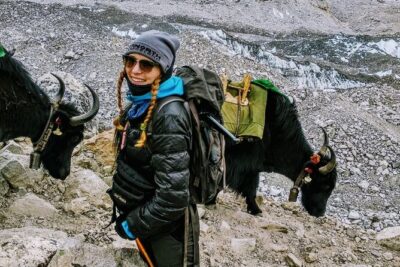
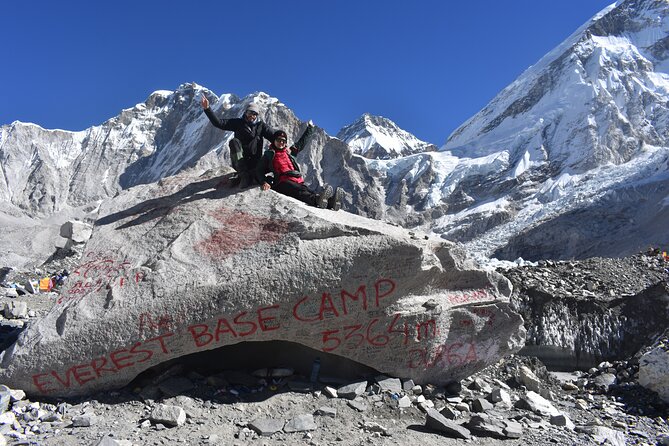
The walk from Lobuche toward Everest Base Camp is one of the trip’s main tests. The route climbs along the Khumbu Glacier to Gorak Shep, a settlement that once served as the Everest Base Camp area. From Gorak Shep, you continue to present-day Everest Base Camp.
The scheduled stop at Base Camp is listed as about two hours, but the total day is much more than a photo stop. You must first reach Gorak Shep, continue to Base Camp, and then return. The trail near the glacier can be uneven, and your pace will depend on altitude, weather, and how your body feels.
Be clear about what you will see. Everest Base Camp itself is the famous staging area for climbing expeditions, but the best planned view of Mount Everest on this route comes from Kala Patthar the next morning. Base Camp gives you the location and the sense of standing at the foot of the climbing route. Kala Patthar gives you the broader mountain panorama.
The sunrise climb to Kala Patthar
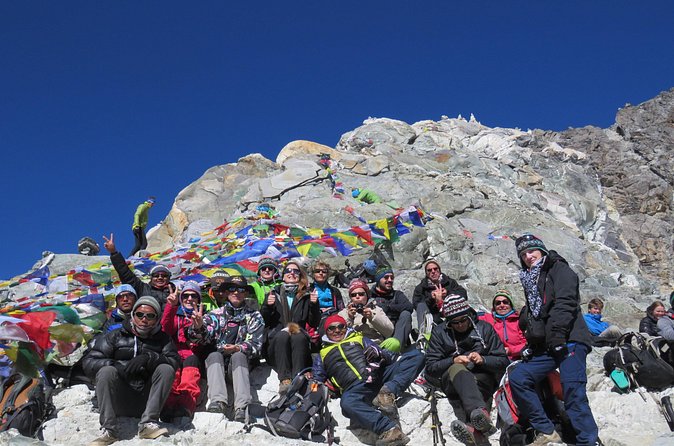
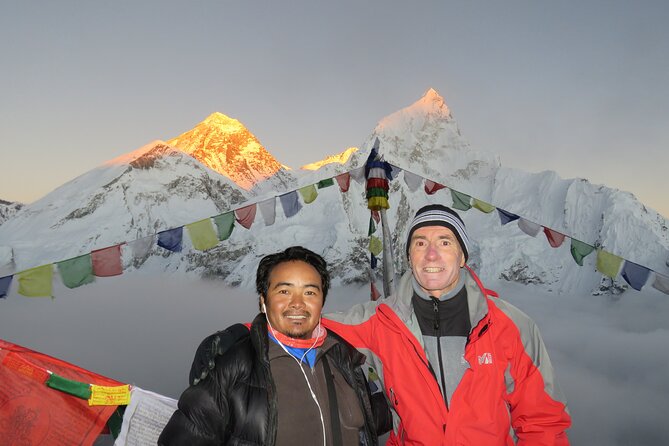
The early start from Gorak Shep is worth taking seriously. You hike before sunrise to Kala Patthar, a high viewpoint above the settlement. The purpose is to reach the top in time for the morning light on the surrounding peaks.
This is a short listed activity of about two hours, but at high altitude even a short climb can feel strenuous. Walk slowly, follow the guide’s instructions, and keep warm while waiting for the light.
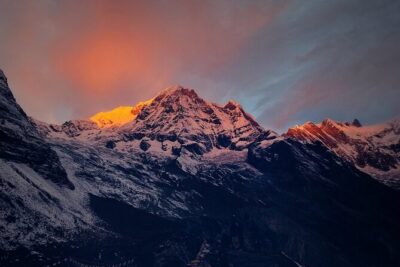
Kala Patthar is described as the nearest viewpoint of Mount Everest on this route. It is the mountain-view payoff of the trip, and it also helps explain why the itinerary includes both Base Camp and Kala Patthar. One is about reaching the destination. The other is about seeing the mountain setting from above.
After the viewpoint, you return for breakfast and begin the descent. The downward direction usually feels welcome, but it still places stress on your knees and legs. Do not assume the return is easy simply because you are losing altitude.
The long return through Tengboche and Namche
The route back follows the trail through Pangboche, Tengboche, and Namche Bazaar. You cross suspension bridges again and revisit places that looked different on the way up. The return days are useful for enjoying the scenery at a less frantic pace, but they remain full walking days.
The schedule places the return to Namche after the high-altitude section, then continues down through wooded paths and smaller settlements toward the lower valley. Repeated river crossings and downhill trail sections make good footwear important.
There is no separate porter fee listed because porter support is included at a ratio of one porter for every two clients. You should still pack with that arrangement in mind. Keep your daypack light, but remember that essential personal items must remain with you while the porter carries the main luggage.
The food plan includes 14 breakfasts, 11 lunches, and 11 dinners. The meal counts match the long portion of the trek, but drinks are not covered. Carrying or purchasing water is an extra cost, and you should not confuse included meals with a fully all-inclusive package.
What the $1,650 price really covers
At $1,650 per person, this is a strong package if you value having the major trek services arranged together. You receive:
- Round-trip flights between Kathmandu and Lukla
- Private ground transportation and airport transfers
- Trekking permits
- Two Kathmandu hotel nights with breakfast
- Eleven twin-sharing guesthouse nights in the Everest region
- An English-speaking, government licensed guide with first-aid training
- Porters at one for every two clients
- Breakfast, lunch, and dinner as specified
- A private trip for your own group
The price does not cover international flights, Kathmandu lunches and dinners, beverages, water, insurance, emergency evacuation, airport departure tax, or tips. Those exclusions are normal planning items for a trek of this kind, but they can add up. The most important one is insurance with high-altitude emergency evacuation coverage. Do not skip it to keep the budget down.
Group discounts are offered, though no discount level is specified. Ask for the exact price for your party size. Since the activity is private, it may suit a small group that wants shared costs without joining strangers.
Who should book this trek
This trip suits you if you have moderate physical fitness and can handle repeated days of uphill and downhill walking. You do not need to be a technical climber based on the information provided, but you do need to prepare for long days, high altitude, basic guesthouse conditions, and changing weather.
It is a good fit if you want the classic Everest route with a guide and porter system already arranged. The package also works well if you prefer a private group and want airport transfers, lodging, permits, meals, and flights bundled into one price.
I would hesitate to recommend it to someone seeking a relaxed holiday, private luxury lodging, or a fixed schedule with no flight uncertainty. I would also ask for a corrected written itinerary before booking because of the unclear Lukla to Phakding section.
Cancellation is flexible up to 24 hours before the experience for a full refund. Confirmation is provided at booking, and mobile tickets are supported. Those details are convenient, but they do not replace the need to check insurance, gear, flight conditions, and the exact walking plan.
Should you book the Everest Base Camp Trek?
Book this trek if your main goal is to reach Everest Base Camp, see Everest from Kala Patthar, and experience Sherpa villages without arranging every permit, flight, meal, and porter yourself. The included acclimatization days and private format are meaningful advantages.
Before you commit, confirm the missing Phakding details, ask for the assigned guide’s name, and price out insurance, water, tips, Kathmandu meals, and international flights. If you are comfortable with basic lodging and a demanding high-altitude walk, the $1,650 package offers solid practical value. If you want comfort or an easy holiday, choose something gentler.
FAQ
Where does the trek start?
The trip begins with an airport pickup at Tribhuvan International Airport in Kathmandu, Nepal.
How long does the experience last?
The trek lasts approximately 14 days.
Is the tour private?
Yes. Only your own group participates in the activity.
Are flights to Lukla included?
Yes. Round-trip airfare between Kathmandu and Lukla is included. The departure may be from Kathmandu Airport or Manthali Airport, depending on flight status.
Is accommodation included?
Yes. You receive two nights in a tourist-standard Kathmandu hotel with breakfast and 11 nights in twin-sharing guesthouses in the Everest region.
Are meals included?
Breakfast is included for all 14 days. The package also includes 11 lunches and 11 dinners. Lunch and dinner in Kathmandu are not included.
Is a guide provided?
Yes. The tour includes an experienced, government licensed, English-speaking trekking guide with first-aid training.
Are porters included?
Yes. One porter is provided for every two clients to carry luggage during the trek.
Is travel insurance included?
No. You must arrange your own travel insurance, including high-altitude emergency evacuation coverage.
Can I cancel for a full refund?
Yes. You can cancel up to 24 hours before the experience for a full refund.
Just added in Kathmandu
- Traditional Momo Making Class★ 5.0 · 10 reviews
- Women Empowerment Project(Nepali cooking class & jewelry workshop★ 5.0 · 15 reviews
- Kathmandu 2 Nights 3 Days Chitwan Jungle Safari Tour★ 5.0 · 9 reviews
- Walking tour of Kathmandu with awesome local guides★ 5.0 · 4 reviews
- Wildlife Adventure in Chitwan Nepal★ 4.0 · 4 reviews
- Kathmandu to Pokhara Premium sofa bus ticket★ 4.0 · 17 reviews
- Regular Yoga for all levels of practitioners in Kathmandu★ 5.0 · 4 reviews
- Kathmandu Street Food Walking Tour – Eat Like a Local★ 5.0 · 3 reviews
Hiking & Trekking, compared.
Nagarkot Sunrise View and Day Hiking from Kathmandu
Read our review →