
Reviewed · EVEREST BASE CAMP TREKS
12 Days Everest Base Camp Trek
The best part of this 12-day Everest Base Camp trek is the steady change in scenery: Sherpa villages and river bridges give way to glacial valleys, prayer flags, monasteries, and huge Himalayan peaks. You are not left to sort permits, lodges, porters, or domestic flights on your own.
I like the two acclimatization days, in Namche Bazaar and Dingboche, and I like that meals, teahouse rooms, a porter, and the licensed guide are bundled into the $1,390 price. The catch is the schedule’s tightness, especially the long Lobuche to Gorak Shep and Base Camp day, plus the real risk of Lukla flight delays.
Key points before you book
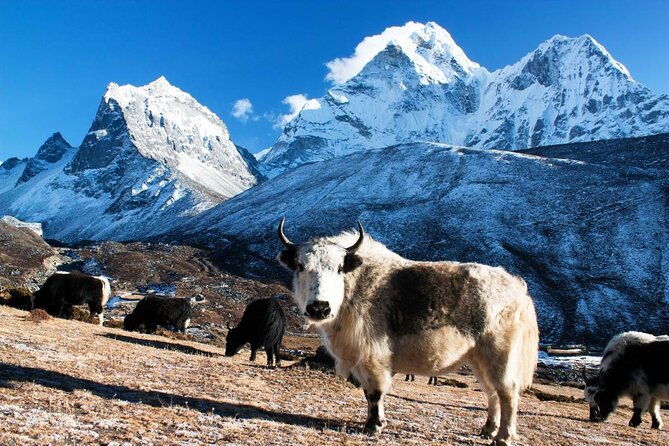
- Lukla flights are included: The 30-minute Kathmandu to Lukla flight saves a long overland journey, but weather can delay or cancel it.
- Two acclimatization stops matter: Namche and Dingboche give you time to adjust before the trek climbs above 4,000 meters.
- The porter arrangement is practical: One porter is provided for every two trekkers, with staff costs covered.
- Base Camp comes with a hard day: The route from Lobuche to Gorak Shep, Everest Base Camp, and back is listed at nearly 12 hours.
- Kala Patthar provides the big viewpoint: At 5,555 meters, it offers the clearest stated mountain panorama of the trek.
- This is a private activity: Only your own group participates, rather than joining a large shared departure.
What the $1,390 price really covers
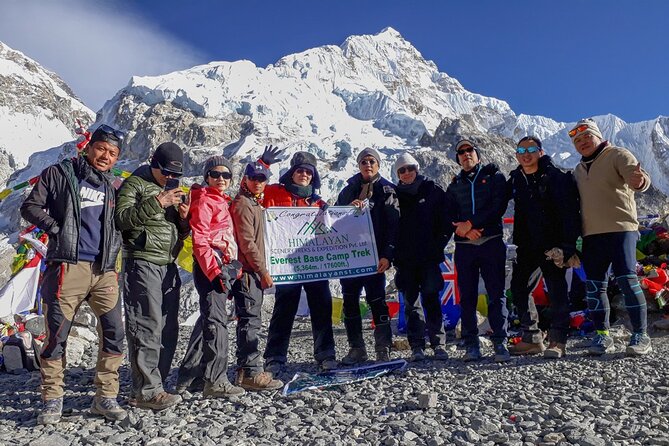
At $1,390 per person, this trek is priced as a package rather than a bare guiding service. That distinction matters in Nepal, where small costs can pile up quickly. The price includes airport pickup and drop-off, Kathmandu to Lukla and return flights, teahouse accommodation, breakfast, lunch and dinner during the mountain portion, permits, a licensed English-speaking guide, and porter service.
Your porter setup is one porter for two trekkers. Staff wages, insurance, equipment, domestic airfare, food, and lodging are also included in the package. That makes the price easier to judge: you are paying for the trip’s operating structure, not just someone to lead you along a trail.
The package also includes the Sagarmatha National Park permit, TIMS paperwork, government and local taxes, a medical kit carried by the trek leader, and a farewell dinner. A stated 12 breakfasts are included, while the main meal coverage applies during the trek.
You still need to budget for your Nepalese visa, international flights, travel and rescue insurance, drinks, bottled or boiled water, showers, laundry, battery charging, phone calls, bar bills, tips, and personal purchases. Extra nights in Kathmandu are also your responsibility if you arrive early, leave late, return from the mountains early, or get held up by the flight schedule.
That list is not a minor footnote. Rescue insurance is especially important on a high-altitude trek. It is not included, and the itinerary can reach 5,555 meters at Kala Patthar.
Other treks that start from Kathmandu:
- Everest Base Camp Trek – 14 Days
★ 5.0 · 1,499 reviews - Everest Base Camp Helicopter Tour landing at Everest View Hotel
★ 5.0 · 668 reviews - Everest Base Camp Trekking
★ 5.0 · 485 reviews
Day 1: Kathmandu to Lukla, then Phakding
The trip starts early, with a 5:15 am meeting time. The flight to Lukla takes about 30 minutes, followed by a three to four-hour walk to Phakding at 2,651 meters.
From Lukla, you meet the rest of the crew and begin along the trail through Cheplung village. The first notable mountain view is Mt. Khumbila, a sacred peak that has never been climbed. That detail gives the opening day more character than simply calling it a warm-up.
Phakding is a sensible first night because the trek begins at a relatively moderate altitude. You get a first taste of teahouse life and the rhythm of walking after the early flight. Still, do not treat this as a lazy arrival day. A pre-dawn start, airport waiting, flight, and several hours on foot can make it feel full.
Day 2: Phakding to Namche Bazaar
The walk to Namche takes about four to five hours, though the steep finish can make the day feel longer. You follow the Benkar Valley, cross the Dudh Koshi River, and pass Chumoa and Monjo before entering Sagarmatha National Park.
The route then reaches Jorsale and follows the Dudh Koshi and Bhote Koshi rivers. Suspension bridges add a little drama, but the bigger test comes as the trail climbs toward Namche Bazaar at about 3,438 meters.
Namche is the main settlement of the Khumbu and an important staging point for the higher trek. The gain in altitude from Phakding is significant, so this is where the itinerary’s acclimatization plan starts to earn its keep. Walk slowly, drink regularly, and resist the temptation to race into town simply because the finish is visible.
Day 3: Acclimatization around Namche
The Namche rest day is active rather than completely still. You hike up toward Sagarmatha National Park for sunrise views of Everest, Lhotse, Nuptse, Ama Dablam, Thamserku, and Kongde.
A possible day hike leads to Khumjung village. The schedule allows about three hours for the day’s activity, giving you a chance to gain some height and then return to sleep at Namche. That is the basic idea behind acclimatization: climb higher during the day, then spend the night lower than your highest point.
I like this stop because it gives you more than a forced day indoors. You see a Sherpa village, get your first broad Himalayan panorama, and give your body time to adjust. Namche is also the place to take stock of your pace. The harder days are still ahead.
A few more things to do in Kathmandu worth a look
- Nagarkot Sunrise View and Day Hiking from Kathmandu
★ 5.0 · 471 reviews - Annapurna Circuit Trek with Tilicho Lake
★ 5.0 · 368 reviews - Everest Base Camp Trekking – 13 Day
★ 5.0 · 365 reviews - Everest Base Camp Trek -14 Days
★ 5.0 · 321 reviews
Day 4: Namche to Tengboche
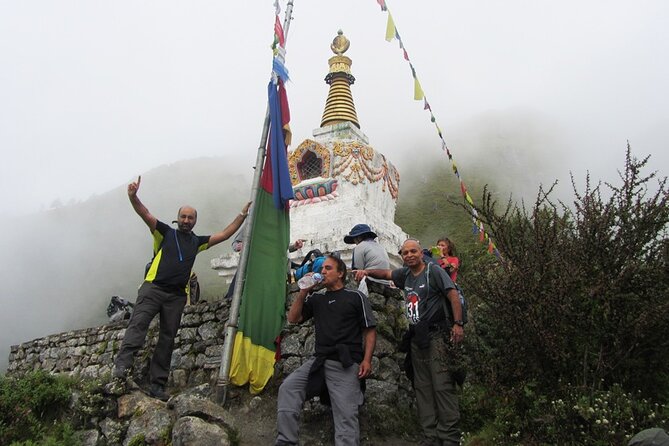
The five to six-hour route to Tengboche begins with a relatively easy walk to Phunki, followed by a climb toward the village at 3,870 meters. The change is noticeable: you are now moving into higher country, with the mountains becoming more dominant around the trail.
Tengboche Monastery is the main cultural stop of the trek. It is described as the largest monastery in the Everest region and sits within Sagarmatha National Park, a UNESCO World Heritage Site. Views include Everest, Nuptse, Lhotse, Ama Dablam, and Thamserku.
Timing matters here. The monastery opens at 3:00 pm, and arriving around 4:00 pm may allow you to observe a Buddhist religious ceremony. The schedule does not guarantee that you will see one, but your guide can help you understand what is possible that day.
Day 5: Tengboche to Dingboche
You descend first to Debuche, cross the Imja River, and continue to Pangboche. The route includes the upper Pangboche trail and a visit to Pangboche Monastery before following the Imja Valley and Lobuche River toward Dingboche.
This five to six-hour day reaches about 4,360 meters. The walking time is manageable on paper, but altitude changes the calculation. A short uphill section can feel much harder than the same distance at home.
Dingboche is surrounded by broad, high mountain views and becomes your base for two nights. The teahouse arrangement means you have a set place to eat and sleep without spending each afternoon searching for a room. That convenience is valuable once the air gets thin.
Day 6: Dingboche acclimatization
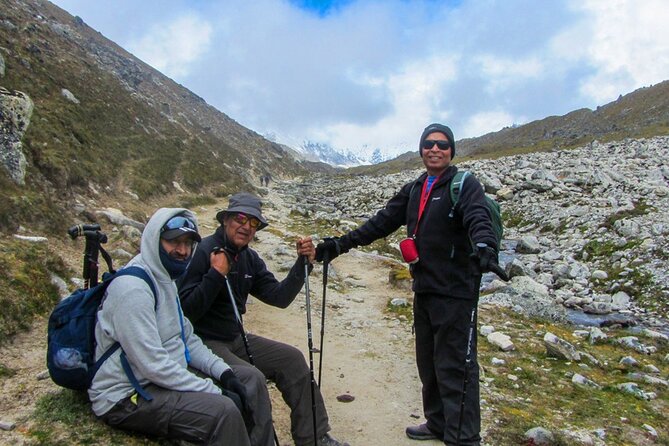
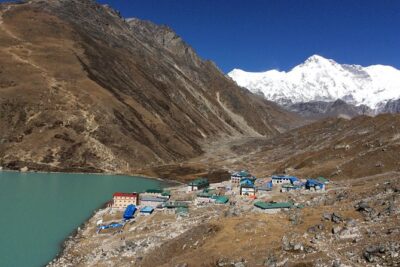
The second acclimatization day is one of the most important parts of the schedule. You can hike for about four hours to a hill behind Dingboche, with views toward Lhotse, Makalu, and Cho Oyu.
The stated itinerary also lists about three hours of activity, so the exact outing may depend on pace and conditions. Either way, the purpose is clear: gain some height, return to Dingboche, and sleep there before continuing upward.
This day is not wasted time. The next two days bring Lobuche, Gorak Shep, and Base Camp, with sleeping altitudes near and above 4,900 meters. A rushed itinerary with no Dingboche rest day would be less forgiving.
Day 7: Dingboche to Lobuche
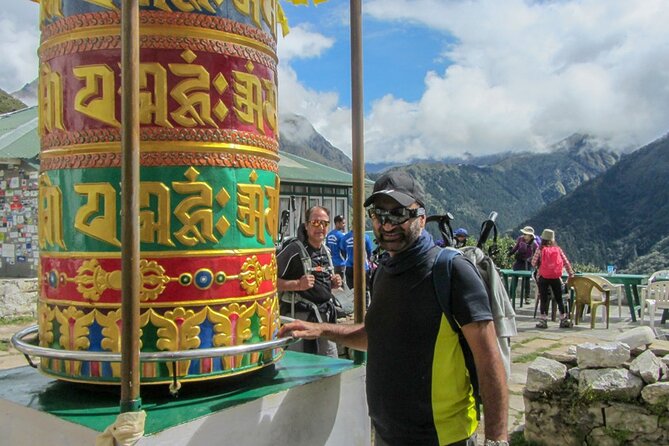
The trail to Lobuche covers about nine kilometers and is listed at roughly seven hours, while the stop description gives four hours. Expect the day to vary with walking speed, rest breaks, and trail conditions.
The route heads toward the high valley, passes through the Dughla area, and reaches Lobuche at about 4,900 meters. This is a stark shift from the villages lower down. The air is colder and thinner, and the mountains feel much closer.
At this point, comfort becomes relative. Teahouse accommodation provides a bed, meals, and shelter, but you should not expect hotel-style facilities. Extra charges apply for items such as hot water, showers, drinks, charging, and laundry.
Day 8: Lobuche to Gorak Shep and Everest Base Camp
This is the trek’s most demanding day. The schedule describes nearly 12 hours and about 17 kilometers to Gorak Shep, with a walk to Everest Base Camp after lunch and a return to Gorak Shep for the night.
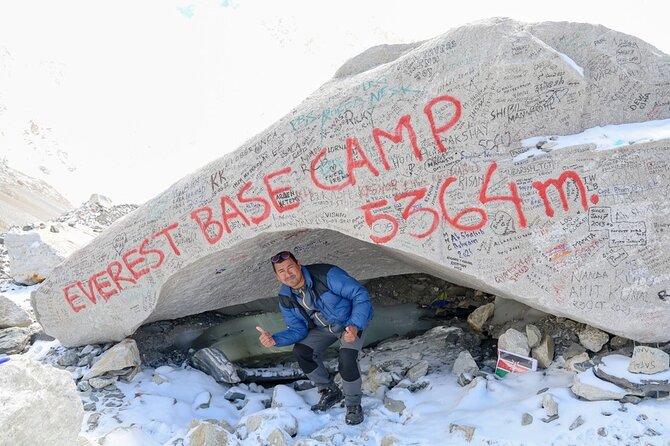
The official elevation figures place Gorak Shep at about 5,160 meters and Everest Base Camp at 5,365 meters. You pass views toward Nuptse, Khumbutse, and Pumori. The destination is famous, but the route there is not a quick photo stop. You are walking at very high altitude, then returning to sleep at Gorak Shep.
This is where honest expectations help. You may reach Base Camp and feel proud, tired, cold, or all three. The view is impressive, but Kala Patthar on the next morning is the better stated viewpoint for seeing Everest itself.
The long day is also the main drawback of the fixed schedule. If you are slow at altitude, this can be a very taxing push. Your guide’s support, the medical kit, and the porter system are useful here, but they do not remove the physical demands.
Day 9: Kala Patthar and the descent to Pheriche
You rise early for Kala Patthar, the trek’s highest point at 5,555 meters. The climb takes about three hours, followed by a return to Gorak Shep for lunch.
From the summit, you look toward Everest and other major peaks including Lingtren, Khumbutse, and Changtse. This is the clearest mountain-viewing moment in the schedule, but it also comes when your body is already tired from the previous day.
After lunch, you descend to Pheriche at about 4,200 meters. The drop in altitude should feel welcome, and the overnight stop breaks up the return journey. The itinerary labels this section as Pheriche and the Dughlha Road, but the practical point is simple: you leave the highest sleeping points behind.
Days 10 and 11: Pheriche to Namche, then Lukla
The return to Namche passes through Pangboche and Tengboche before reaching the market town again. The schedule gives about seven hours for this section, with an afternoon arrival and overnight stay in a guesthouse.
You then make the final trekking day to Lukla, listed at around six hours. The afternoon is free for a hot shower, a rest, or a walk around town, followed by a celebratory evening with the trekking group.
These descent days are not just filler. Going downhill can be hard on tired knees, and you still need to manage uneven trails and suspension bridges. The return to Lukla gives you a chance to recognize how far you have come, from the lower river valleys to Base Camp and Kala Patthar.
Day 12: Lukla to Kathmandu
The early flight returns you to Kathmandu in about 40 minutes, followed by a transfer to your hotel. A cultural dinner is planned for the evening.
Build flexibility into your wider Nepal plans. Kathmandu to Lukla and Lukla to Kathmandu flights can be delayed for hours or canceled for one or more days because of weather. This can happen at the start, at the end, or on both sides of the trek.
That means you should avoid scheduling an international departure immediately after the planned return. Extra hotel nights and meals caused by a flight delay are not included, so both time and money buffers are sensible.
Guides, porters, and the private format
The trek uses an English-speaking, government-licensed guide, and the activity is private to your group. That gives you more control than a large shared departure, especially when you need to slow down, stop for photographs, or discuss how you are feeling at altitude.
The company’s communication contact includes Bishnu, who was noted for handling arrangements and even authorizing a refund when a trek had to be canceled during the pandemic. That is useful evidence of responsive administration, though you should still confirm current pickup details and flight procedures before departure.
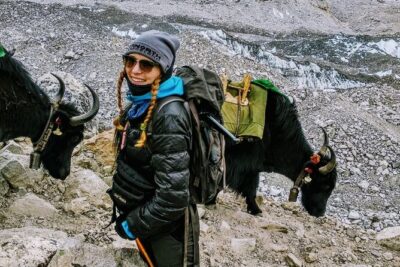
With one porter for every two trekkers, pack carefully. The porter carries the main load, but you still need a daypack with water, warm layers, rain protection, personal medication, snacks, and anything you need during the walking day.
Who should book this trek?
This trip suits you if you want a guided route with the major practical pieces arranged and you can handle sustained walking at high altitude. A moderate fitness level is required, but the altitude makes this more serious than an ordinary moderate hike.
You should be comfortable with teahouse accommodation, basic facilities, early starts, long walking days, and the chance that weather will disrupt the flight schedule. You also need to accept that the Base Camp day is particularly long.
I would choose this package if I valued a fixed plan, included permits, a porter, meals, and domestic flights more than complete flexibility. I would look for a longer version if I wanted more spare days for weather, illness, or a slower pace.
Should you book it?
Book this trek if you want the classic Lukla to Everest Base Camp route with strong logistical support and a clear 12-day structure. The included flights, permits, meals, teahouses, guide, porter, and acclimatization days make $1,390 a reasonable package price.
Think twice if you need a relaxed schedule or dislike uncertainty. The flight risk, high sleeping altitudes, long Base Camp day, and extra costs for insurance, drinks, showers, charging, tips, and delays all matter.
For a fit hiker who wants the famous route without arranging every permit and lodge independently, this is a practical choice. Set aside spare time after the trek, buy rescue insurance, and arrive ready to walk slowly.
FAQ
What is included in the Everest Base Camp trek?
The package includes airport pickup and drop-off, teahouse accommodation, breakfast, lunch and dinner during the trek, domestic flights between Kathmandu and Lukla, a licensed English-speaking guide, porter service, permits, a medical kit, staff costs, taxes, and a farewell dinner.
Are international flights included?
No. International flights are not included in the price.
Is travel and rescue insurance included?
No. Travel and rescue insurance must be arranged separately.
How long is the flight from Kathmandu to Lukla?
The flight takes about 30 minutes.
What happens if the Lukla flight is delayed or canceled?
Flights may be delayed for hours or canceled for one or more days because of unfavorable weather. You should be prepared for extended waits in Kathmandu or Lukla and possible extra accommodation and meal costs.
What accommodation is provided?
Teahouse accommodation is provided during the trek. Extra nights in Kathmandu caused by early arrival, late departure, early return, or schedule changes are not included.
How many trekkers does one porter carry for?
The arrangement provides one porter for every two trekkers.
Are meals included in Kathmandu?
Lunch and evening meals in Kathmandu are not included. Meals during the trek are included, along with breakfast listed for the trip.
How difficult is the trek?
The tour requires a moderate physical fitness level and includes high-altitude walking. The hardest section is the long day from Lobuche to Gorak Shep, Everest Base Camp, and back, which is listed at nearly 12 hours.
Just added in Kathmandu
- Kathmandu to Chitwan Tour by Tourist Bus – A Convenient and Affordable Way★ 4.0 · 4 reviews
- Changunarayan Hill to Telkot Hike Near Kathmandu Day Tour★ 5.0 · 6 reviews
- Mt Everest Base CampTrek | Budget Package★ 5.0 · 4 reviews
- Chitwan Jungle Safari 3-Day Tour★ 5.0 · 9 reviews
- Chandragiri Hill Station Tour by Cable Car★ 5.0 · 4 reviews
- Chandragiri Hills cable car day trip, private car with driver from Kathmandu★ 5.0 · 8 reviews
- Chandragiri to Taudaha Nature Day Hiking from Kathmandu★ 5.0 · 13 reviews
- Chandragiri Hills Private Tour★ 5.0 · 4 reviews
Everest Base Camp Treks, compared.
Everest Base Camp Helicopter Tour landing at Everest View Hotel
Read our review →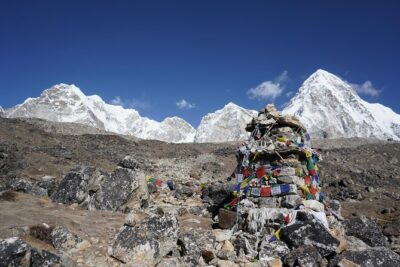
Browse the lists this tour appears in