
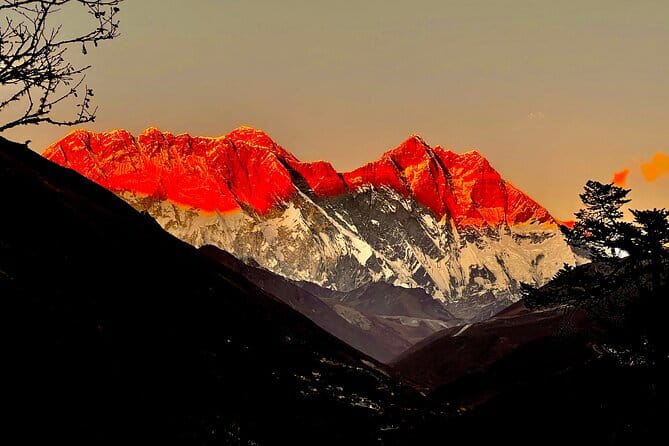
Reviewed · EVEREST BASE CAMP TREKS
14 Days Everest Base Camp Trekking
The real prize here is the slow climb from Lukla to the foot of Everest, with suspension bridges, Sherpa villages, monasteries, glaciers, and high mountain views arriving one day at a time. I like the two acclimatization days, especially the stay in Namche and the extra day in Dingboche. I also like that flights, permits, meals, a guide, and porter support are built into the $1,420 price.
The main caution is simple: this is a hard trek at serious altitude, not a sightseeing stroll. Long days are listed at up to 10 hours, hot showers cost extra, Kathmandu food and lodging are not included, and weather can affect the Lukla flights. The itinerary also contains a few timing oddities, so confirm the daily walking hours before you pay.
Key points before you book
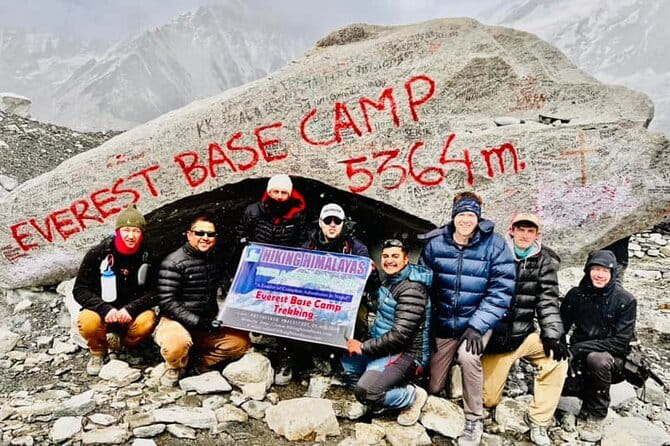
- A classic high-altitude route: Walk from Lukla through Namche, Tengboche, Dingboche, Lobuche, and Gorakshep to Everest Base Camp.
- Two planned acclimatization days: Rest in Namche with an Everest View Point outing, then spend another day in Dingboche.
- Kala Patthar is a major highlight: The early hike to 5,565 meters provides one of the finest viewpoints on the route toward Everest.
- Practical support is included: You get an English-speaking certified guide, one porter for every two trekkers, tea-house lodging, meals, permits, and domestic flights.
- Private group format: Only your own group takes part, with airport pickup and ground transport in a private vehicle.
- Good value, with extra costs: The price covers many major expenses, but insurance, Kathmandu lodging and food, drinks, showers, equipment, and tips are separate.
What the $1,420 package really gives you
At $1,420 for 14 days, this trip offers a useful bundle of services. You receive private airport and hotel transfers, round-trip Kathmandu to Lukla flights, twin-sharing lodge accommodation during the trek, breakfast, lunch, and dinner on the trekking days, permits, a guide, porter support, a first-aid kit, a trekking map, and a trip certificate.
That matters because the small costs of a Himalayan trek can pile up quickly. Having flights, permits, meals, and basic lodging arranged keeps you from making separate bookings for each part of the route. The porter arrangement is also clear: one porter is provided for every two trekkers, while the guide’s food, lodging, insurance, and other field costs are covered.
You still need to budget for Kathmandu. Food and accommodation there are listed at $45 per day, and the package does not include international flights, travel insurance, Nepal’s $40 entry visa for 30 days, drinks, snacks, personal spending, hot showers, equipment, or gratuities.
I consider the price fair for the services listed, but I would not judge it as an all-in holiday cost. Ask exactly what your porter carries, how many nights are covered in each lodge, and how the operator handles flight delays before booking. Those details matter more here than a small difference in the headline price.
Other treks that start from Kathmandu:
- Everest Base Camp Trek – 14 Days
★ 5.0 · 1,499 reviews - Everest Base Camp Helicopter Tour landing at Everest View Hotel
★ 5.0 · 668 reviews - Everest Base Camp Trekking
★ 5.0 · 485 reviews
Day 1: Kathmandu and the first mountain views
Your trip begins at Tribhuvan International Airport, with a stated meeting time of 6:15 am. The arrival flight into Kathmandu can offer broad views of snow-covered peaks on a clear day, setting the tone for the days ahead.
The first day is mainly about arrival and orientation. Because Kathmandu food and lodging are not included, you should allow room in your budget for that night and any other Kathmandu stay. The package provides airport transport in a private vehicle, which is handy after an international flight.
The early start is worth noting. Confirm whether your arrival time matches the 6:15 am pickup, especially if you reach Nepal on a late-night flight.
Day 2: Lukla to Phakding on the Dudh Koshi
The flight to Lukla is one of the most memorable parts of the trip before you even begin walking. Lukla sits at about 2,850 meters, and the runway is built on a steep mountain slope. From the village, you meet the trekking crew and follow a marked trail through the Dudh Koshi Valley to Phakding at roughly 2,656 meters.
This is a good first walking day because the route does not immediately push you to a higher overnight altitude. You get your first feel for the trail, the river valley, and the pace of walking with your guide and porter team.
The listed duration is up to 10 hours, which sounds long for this section. Ask the operator how much of that figure includes airport procedures, breaks, and possible flight waiting time. Lukla schedules are also sensitive to weather, so flexibility is important even though it is not clearly detailed in the package.
Day 3: Suspension bridges and Namche Bazaar
From Phakding, the route crosses the river several times on high suspension bridges. You pass Monjo at 2,845 meters and enter Sagarmatha National Park, a protected area created to help preserve the fragile mountain environment.
Namche Bazaar is set between ridges in the Khumbu region and serves as a major stopping point on the route. You will find lodges, tea shops, and souvenir shops here, making it a useful place to rest and adjust to the higher altitude.
The approach to Namche is a real test. The trail gains height, and the day can feel demanding even for fit hikers. Walk slowly, drink regularly, and let your guide set the pace. The package calls this another long day, up to 10 hours, so do not plan other activities around your arrival.
A few more things to do in Kathmandu worth a look
- Nagarkot Sunrise View and Day Hiking from Kathmandu
★ 5.0 · 471 reviews - Annapurna Circuit Trek with Tilicho Lake
★ 5.0 · 368 reviews - Everest Base Camp Trekking – 13 Day
★ 5.0 · 365 reviews - Everest Base Camp Trek -14 Days
★ 5.0 · 321 reviews
Day 4: Acclimatization and Everest View Point
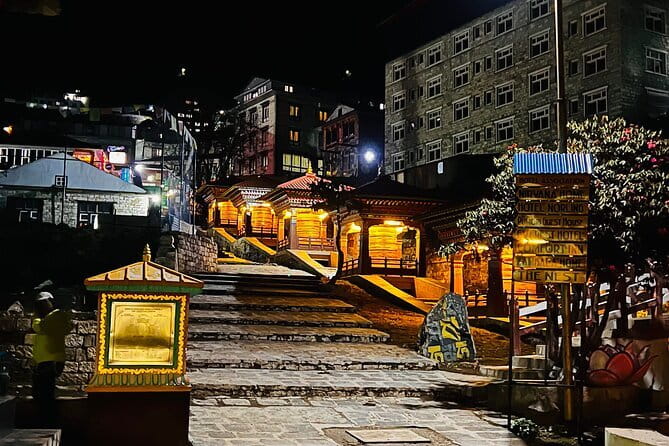
A full day in Namche is one of the strongest features of this plan. Instead of racing higher, you have time to adjust to the altitude and take an outing toward the Everest View Point.
Namche is more than a sleeping stop. Its shops and tea houses give you a chance to rest, sort your gear, and spend time with the local mountain community. The surrounding ridges also provide your first strong views of the Khumbu peaks.
I like this day because it serves a clear purpose. Acclimatization is not wasted time on a high-altitude trek. It gives your body a better chance to adapt before the route rises toward Tengboche and Dingboche.
Day 5: Tengboche and the first great peak views
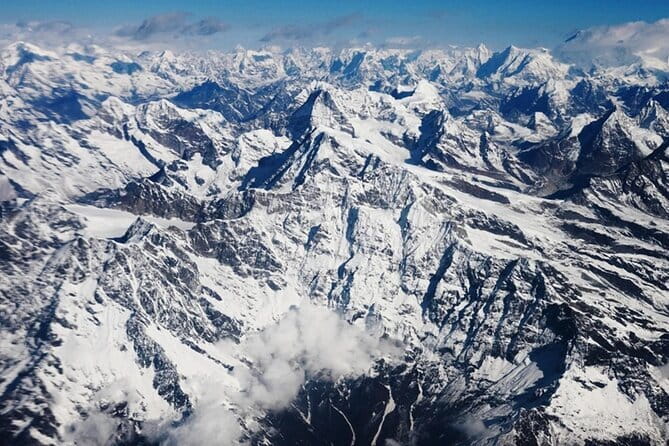
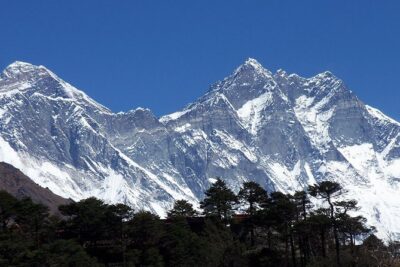
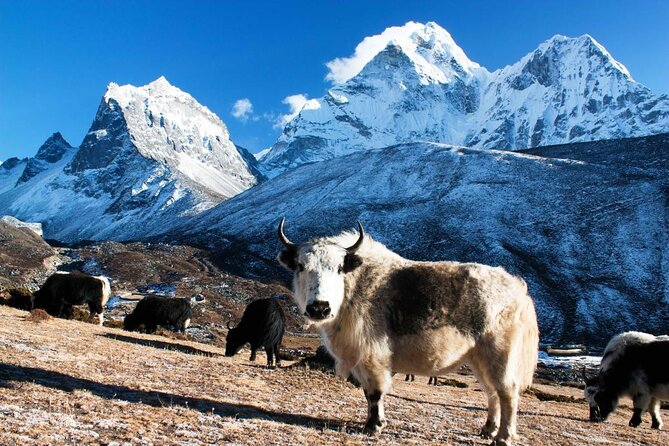
The trail leaves Namche by contouring along the side of the valley above the Dudh Koshi. This section brings some of the route’s first big views of Everest, Lhotse, Nuptse, and Ama Dablam.
The path passes through several villages before reaching Tengboche, written as Tyangboche in the daily plan. The stop is known for its monastery setting and broad mountain views. The combination of religious life, mountain scenery, and trail culture makes this one of the most rewarding stops before the terrain becomes more severe.
The day is again listed at up to 10 hours. Your guide’s role becomes increasingly important here, since a steady pace helps you conserve energy for the higher sections still ahead.
Day 6: Pangboche and Dingboche
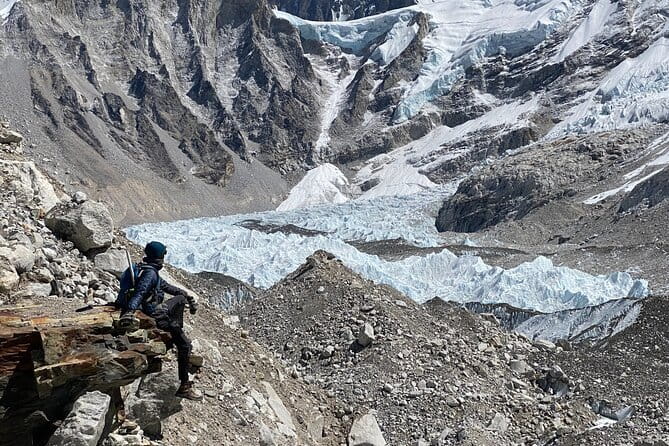
The route drops through forest, crosses the Imja Khola, and climbs toward Pangboche at about 3,985 meters. Pangboche faces Ama Dablam and is described as having striking views, with a gompa, mani walls, and traditional mountain scenery.
From there, you continue toward Dingboche. The surroundings begin to feel more open and alpine as the trees thin out. This change is one of the pleasures of the trip: you can see the environment shift from lower forested valleys to harsher high-country terrain.
The itinerary again gives a possible 10-hour duration. That is a demanding day, especially as the air gets thinner. You should be comfortable walking for many hours on uneven paths before choosing this trip.
Day 7: A second acclimatization day in Dingboche
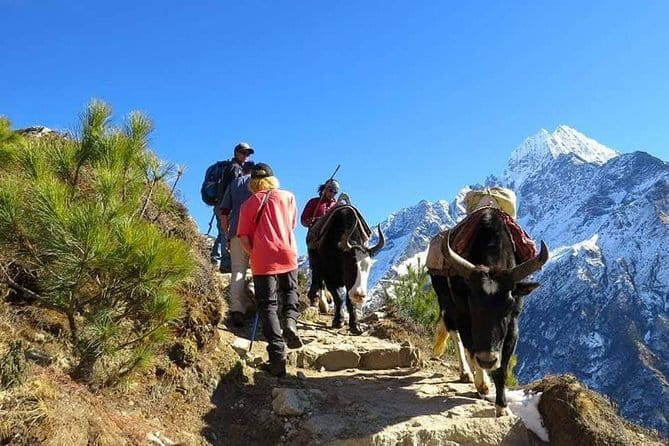
Dingboche gets another full acclimatization day. The suggested outing reaches toward Tshola Tsho lake at about 4,510 meters, with views of the steep walls of Cholatse and Taboche. You may also climb to Nagarjun at about 5,100 meters.
This day gives you a choice between resting and making a controlled higher walk. Follow your guide’s advice rather than treating the optional climb as a competition. At this altitude, a modest walk can be more useful than pushing too hard.
The two acclimatization stops, Namche and Dingboche, make this route more sensible than a rushed schedule. Still, no itinerary removes the risk of altitude illness. Travel insurance with trekking and emergency evacuation coverage is not included, so arrange it yourself before leaving home.
Day 8: Lobuche and the Khumbu Glacier
From Dingboche, the trail follows a broad valley beneath Cholatse and Tawache. It then turns toward the Khumbu Glacier, with a steep climb to Duglha at around 4,620 meters. The tea house there is described as a lunch stop before continuing to Lobuche.
This is where the trek feels more rugged. The open ground, cold air, and nearby ice make the route feel far removed from the lower valleys. You are also getting close to the highest overnight stops, so slow walking and warm layers become especially important.
The day is listed at up to 10 hours. That figure, combined with the altitude, is a reminder to treat the schedule as a full physical challenge, not simply a sightseeing program.
Day 9: Gorakshep and Everest Base Camp
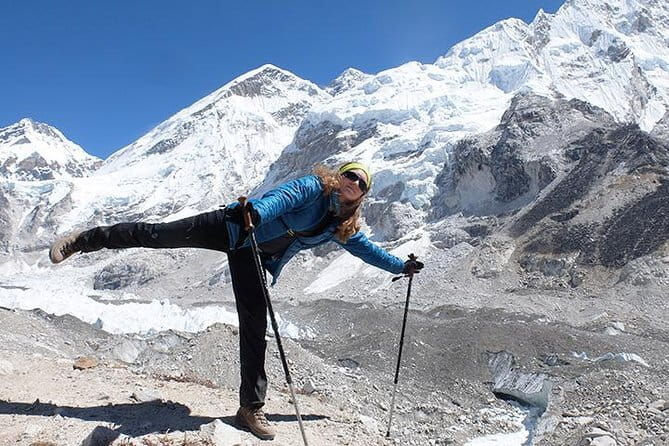
You continue beside the Khumbu Glacier toward Gorakshep at approximately 5,164 meters. The trail rises to cross a tributary glacier and offers views of the surrounding peaks. Gorakshep is the last major stopping point before Base Camp.
Later, you walk to Everest Base Camp at about 5,364 meters. The route takes you past ice formations and crevasses of the Khumbu Glacier. The stated timing is unusual: one section is listed as one hour, while the Base Camp outing is listed at seven hours, with a total of about five hours given for the route in the description. Treat this as a long and tiring day and ask for the operator’s current timing.
Everest Base Camp itself is not the summit of Everest, but reaching it is still a major achievement. You stand at the start point for expeditions toward the world’s highest peak, surrounded by glaciers and high Himalayan walls. The return route may use a higher path for wider views.
Day 10: Kala Patthar and the descent to Pheriche
The early hike to Kala Patthar reaches 5,565 meters and is one of the trip’s main rewards. From this high viewpoint, you can see Everest, Nuptse, Ama Dablam, Pumori, Lola, and Lhumbutse, among other peaks.
The early start makes sense because mountain visibility can change during the day. It also means you will be walking at the highest point of the trip when your body is already tired, so pace and warmth matter.
After Kala Patthar, the route mostly descends through Gorakshep and Duglha toward Pheriche. Downhill walking may sound easy, but loose ground and tired legs can make it tough. The day is listed at up to 10 hours, making this another serious effort.
Days 11 and 12: Retracing the route to Lukla
The return route follows the river and climbs back through birch and rhododendron forest toward Tengboche. From the trail, you can see Kwangde, Tawache, Everest, Nuptse, Lhotse, Ama Dablam, Kantega, and Thamserku.
The descent gives you a different view of places you passed on the way up. You may also appreciate the thicker air and greener forests after the stark upper valley. The route then continues through the Dudh Koshi valley toward Lukla.
The final evening in Lukla is planned as a celebration with the Sherpa guide and crew. That is a fitting close to the walking portion, but remember that the two days are still listed at up to 10 hours each. You will want enough energy for the last stretch rather than treating the celebration as the main event.
Days 13 and 14: Back to Kathmandu and home
On Day 13, you head early to the airstrip for the flight back to Kathmandu. Once you arrive, the rest of the day is free for shopping, packing, postcards, or your own plans. Private transport between the domestic airport and your hotel is included.
Day 14 brings airport assistance for your flight home. The operator also presents options for extending your stay with activities such as national park game drives, white-water rafting, Tibet tours, or mountain biking, but those additions are not part of this package.
The short return flight schedule is useful, but do not book an international departure too tightly around the Lukla flight. The provided information does not promise a backup day for weather delays, so ask about this before finalizing your international ticket.
Guides, porters, and the private format
The package includes one professional English-speaking certified guide and one porter for every two trekkers. The guide’s food, lodging, and insurance are covered, and the activity is private, meaning only your own group takes part.
Named guides associated with past departures include Hari, Kapil, and Namo. Specific praise has focused on Hari’s calm help and careful arrangements, Kapil’s organization and care, and Kapil and Namo’s friendly approach with a family group. That gives you useful names to ask for, but guide assignment is not guaranteed in the information provided.
The private format is especially useful if your group wants a particular pace. It can also make the trip feel more personal, but you should still confirm the maximum group size and porter load policy.
Who should choose this Everest Base Camp trek?
I would recommend it to someone who wants the standard Everest Base Camp route with a guide, porter support, tea-house lodging, and major logistics handled in advance. It also suits families or friend groups that prefer a private arrangement, provided everyone has strong fitness and understands the altitude.
I would be cautious about choosing it if you want a relaxed holiday, dislike long walking days, or have not prepared for high-altitude conditions. The route reaches above 5,500 meters, and some days may last 10 hours.
Pack for cold conditions, bring personal trekking equipment, and plan for paid showers, snacks, and drinks. Since the package includes a first-aid kit but not travel insurance, arrange suitable insurance before departure.
Should you book it?
Book this trek if you want a fairly priced, supported route with the classic stops, two acclimatization days, and the major cost items already arranged. The strong points are the guide and porter structure, round-trip Lukla flights, meals, permits, and a private group setup.
Before booking, get written confirmation of the daily walking times, Kathmandu accommodation arrangements, flight-delay procedures, porter limits, and the exact guide assigned to your group. If those answers are clear, this is a practical way to reach Everest Base Camp without arranging every piece yourself. Free cancellation is available up to 24 hours before the start time, but changes or cancellations inside that window are not accepted.
FAQ
Is the Everest Base Camp trek suitable for beginners?
The provided information says participants should have a strong physical fitness level. The trek includes several days listed at up to 10 hours and reaches altitudes above 5,500 meters, so you should be prepared for strenuous walking.
Are flights between Kathmandu and Lukla included?
Yes. Round-trip flights between Kathmandu and Lukla, including departure taxes, are included in the package.
Is accommodation included during the trek?
Yes. The package includes the best available twin-sharing lodge accommodation during the trek. Food and accommodation in Kathmandu are separate and listed at $45 per day.
What meals are included?
The package includes 13 breakfasts, 11 lunches, and 11 dinners. Drinks, snacks, and personal expenses are not included.
Is a guide provided?
Yes. One professional English-speaking certified guide is included, along with the guide’s food, accommodation, and insurance. The trip also includes an in-person English guide.
Is porter support included?
Yes. One porter is included for every two trekkers. The porter’s food, accommodation, and insurance are included.
What is the cancellation policy?
You can cancel at least 24 hours before the experience start time for a full refund. Cancellations or changes made less than 24 hours before the start time are not accepted.
Just added in Kathmandu
- Traditional Momo Making Class★ 5.0 · 10 reviews
- Women Empowerment Project(Nepali cooking class & jewelry workshop★ 5.0 · 15 reviews
- Kathmandu 2 Nights 3 Days Chitwan Jungle Safari Tour★ 5.0 · 9 reviews
- Walking tour of Kathmandu with awesome local guides★ 5.0 · 4 reviews
- Wildlife Adventure in Chitwan Nepal★ 4.0 · 4 reviews
- Kathmandu to Pokhara Premium sofa bus ticket★ 4.0 · 17 reviews
- Regular Yoga for all levels of practitioners in Kathmandu★ 5.0 · 4 reviews
- Kathmandu Street Food Walking Tour – Eat Like a Local★ 5.0 · 3 reviews
Everest Base Camp Treks, compared.
Everest Base Camp Helicopter Tour landing at Everest View Hotel
Read our review →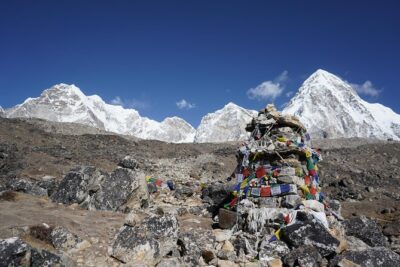
Everest Base Camp Trek with Helicopter Return from Gorakshep to Lukla
Read our review →
Browse the lists this tour appears in