
Reviewed · EVEREST BASE CAMP TREKS
Everest Base Camp trek- 11 days
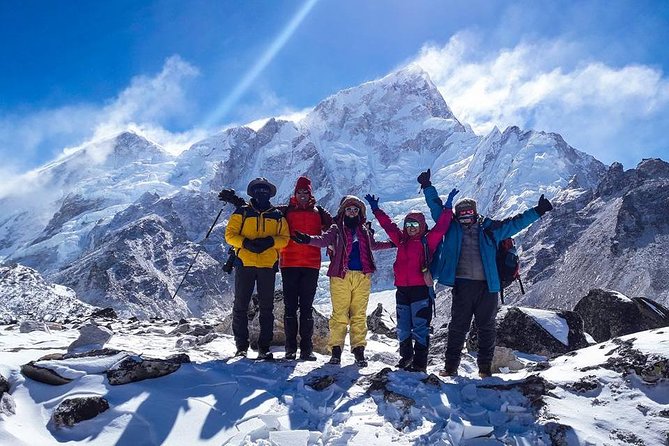
The best part of this trek is that it takes you from a small mountain flight to the foot of the world’s highest peak in just 11 days. You’ll pass through Namche Bazaar, walk beneath Ama Dablam, visit Tengboche Monastery, and reach Everest Base Camp before climbing to Kalapatthar for the classic sunrise view.
I like the private format, since your group can move at its own pace within the fixed route. I also like the amount included in the $1,699 price: Lukla flights, meals, lodging, permits, a licensed guide, porter support, and airport transfers. The main caution is the pace. The route is physically demanding, and the final days include long uphill and downhill walks at high altitude.
Key points to know before booking
- Lukla flights are included, along with pickup and drop-off at the local airport.
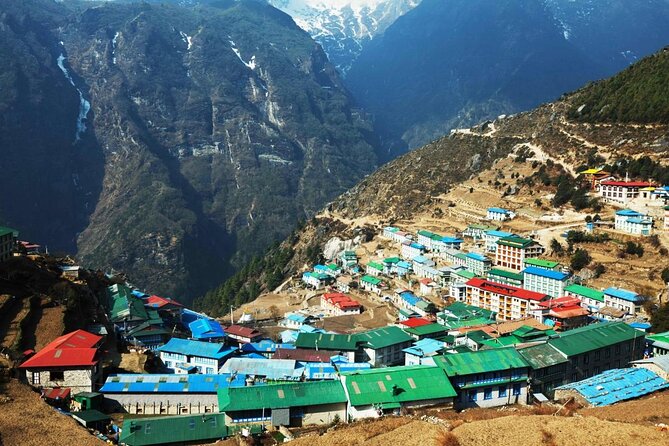
- Namche Bazaar provides the main acclimatization stop, giving you a rest day before the trail climbs higher.
- Kalapatthar at 5,545 meters is the high point and the best scheduled viewpoint for Everest.
- Meals, accommodation, permits, guide, and porter support are covered, which makes the price easier to judge.
- The trek is private, so only your group participates.
- Day 10 is demanding, with the itinerary taking you from Namche to Phakding and then onward to Lukla.
What the $1,699 package really covers
At $1,699 per person, this trek is not simply a guiding service. The price includes the Kathmandu to Lukla and return flights, airport transfers, full-board meals during the trek, available lodge accommodation, a government-licensed guide, porter support, trekking permits, TIMS registration, first-aid supplies, local taxes, staff wages, equipment for the trekking team, and ground transport back to Kathmandu.
That list matters. A trek to Everest Base Camp involves several moving parts, and flights to Lukla can be one of the largest expenses. Having the air tickets and local transport arranged means you do not need to manage each piece yourself.
You also get one porter for two clients as the normal arrangement. Pack thoughtfully, because your porter carries your main baggage while you still need a daypack for personal items and essentials. The package does not include your own trekking equipment, drinks, laundry, shopping, tips, travel insurance, Kathmandu lodging, Kathmandu lunches or dinners, visa fees, or international airfare.
I consider the price good value for someone who wants a handled, private trip rather than a bare-bones trek. The value is less clear if you already have Kathmandu accommodation, trekking permits, flights, and a guide arranged independently. Also note that costs can be recalculated if the trekking schedule changes.
Other treks that start from Kathmandu:
- Everest Base Camp Trek – 14 Days
★ 5.0 · 1,499 reviews - Everest Base Camp Helicopter Tour landing at Everest View Hotel
★ 5.0 · 668 reviews - Everest Base Camp Trekking
★ 5.0 · 485 reviews
Day 1: The Lukla flight and the walk to Phakding
The trek begins at 7:15 a.m. from Thamel, Kathmandu, followed by airport arrangements for the flight to Lukla. This short mountain flight is part of the appeal. It quickly moves you from the capital to Lukla at about 2,850 meters.
From Lukla, you walk to Phakding, listed at about 2,660 meters. This first section is useful because it lets you start walking without making a huge altitude gain on day one. It also gives you a first look at the villages, footpaths, and mountain culture of the Khumbu region.
Do not treat this as a throwaway day. The flight, airport transfer, and first walk create a full opening day, and mountain flights can affect timing. Keep important personal items in your daypack, not in checked trekking baggage.
Day 2: Phakding to Namche Bazaar
The walk from Phakding to Namche Bazaar reaches about 3,435 meters. This is where the trek begins to feel serious. You gain altitude, cross through mountain settlements, and follow the route toward the main trading center of the Khumbu.
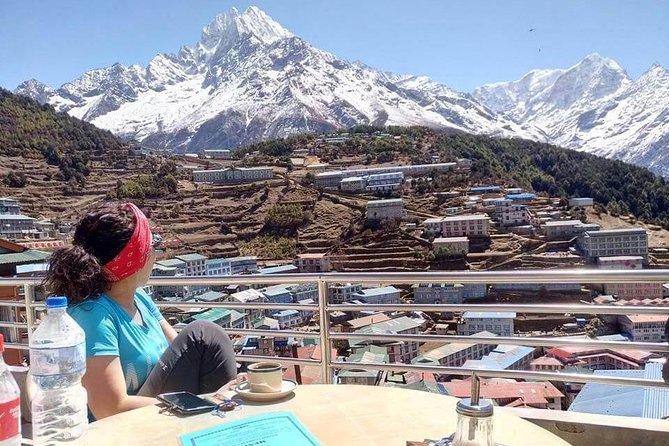
Namche is more than a stopping point. It is the gateway to Everest Base Camp and an important Sherpa town. You can expect a stronger sense of local life here, along with monasteries, mountain views, and the feeling that the trail is now entering the high Himalaya.
This day is demanding because the route climbs steadily. Walk slowly and keep your breathing controlled. Your guide can help set a pace that protects your energy for the higher sections ahead.
Day 3: Acclimatization in Namche Bazaar
The schedule gives you a full acclimatization day in Namche. That is one of the most important features of the plan. You need time for your body to adjust before the route climbs toward Tengboche, Dingboche, and Lobuche.
The schedule does not specify a separate excursion for this day, so ask the operator or your guide how the day will be handled. You may spend time exploring Namche and taking in views of Everest, Lhotse, Nuptse, Ama Dablam, and Thamserku, but the exact program should be confirmed.
I like seeing this rest day included rather than rushing straight upward. You should still remember that a rest day does not turn the trek into an easy holiday. The altitude remains a factor, and you should report any health concerns to your guide promptly.
A few more things to do in Kathmandu worth a look
- Nagarkot Sunrise View and Day Hiking from Kathmandu
★ 5.0 · 471 reviews - Annapurna Circuit Trek with Tilicho Lake
★ 5.0 · 368 reviews - Everest Base Camp Trekking – 13 Day
★ 5.0 · 365 reviews - Everest Base Camp Trek -14 Days
★ 5.0 · 321 reviews
Day 4: Namche to Tengboche and its monastery
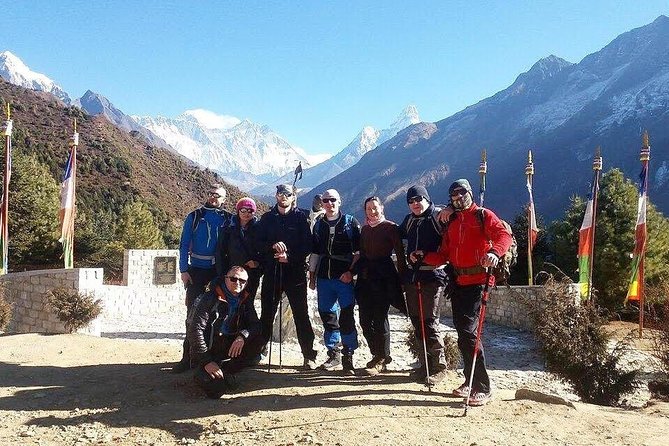
The trail continues from Namche to Tengboche at around 3,890 meters. Tengboche is one of the cultural highlights of the route because of its monastery and its broad mountain setting.
The monastery gives the walk a sense of place beyond scenery. You are moving through a region where Sherpa culture, Buddhist practice, trade, farming, and mountaineering all meet. The route also opens views toward Everest, Lhotse, Nuptse, Ama Dablam, and Thamserku.
This section can feel long after the rest day, especially as you adjust to the thinner air. Keep your expectations realistic. The reward is not only reaching Tengboche, but also seeing how the villages and religious sites fit into daily life in the Khumbu.
Day 5: Tengboche to Dingboche
From Tengboche, the trek climbs to Dingboche at approximately 4,400 meters. At this height, even a moderate walking distance can take more effort than you expect. Your guide and porter arrangement become especially useful here, since you can keep your personal load lighter.
Dingboche is an important transition point. The route is now well above the lower valleys, and the cold and altitude become more noticeable. The views remain a major part of the experience, with large peaks surrounding the trail.
I would use this day to conserve energy rather than chase speed. The next stages reach nearly 5,000 meters, so arriving tired at Dingboche can make the following days harder.
Day 6: Dingboche to Lobuche
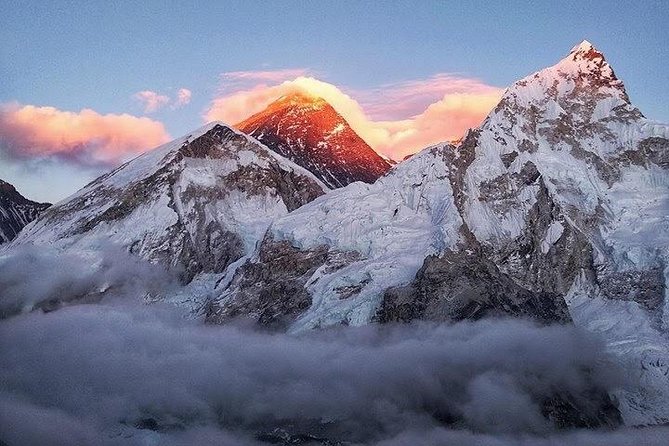
The walk to Lobuche reaches about 4,910 meters. This is one of the days when the trek’s physical demands become impossible to ignore. You are gaining altitude again, and the air contains less oxygen than at the start.
The route brings you closer to the Khumbu Icefall and the high mountain world around Everest. The scenery becomes more austere, with fewer signs of ordinary valley life and a greater sense of exposure.
Lobuche is not a place to expect comfort in the usual sense. Accommodation is described as the best available, which means lodge standards can vary. Shared or simple facilities are part of the practical reality of a high-altitude trek, and you should value warmth, food, and a safe bed more than luxury.
Day 7: Lobuche to Everest Base Camp and Gorakshep
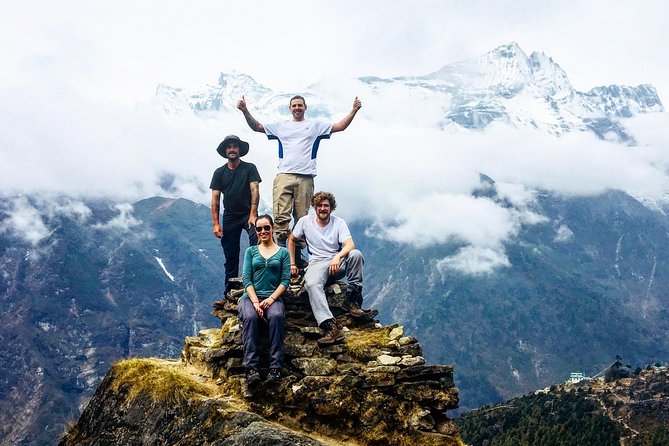
This is the emotional center of the trek. You walk from Lobuche to Gorakshep, continue to Everest Base Camp at about 5,380 meters, and then return to Gorakshep for the night.
The route is long and tiring, but the goal gives it purpose. At Base Camp, you are near the Khumbu Icefall and surrounded by the peaks that define the Everest region. Conditions and visible activity can vary, but the location itself is a powerful achievement.
Gorakshep is listed at about 5,180 meters, so this is not simply a sightseeing stop. The altitude can affect your appetite, sleep, walking rhythm, and general comfort. Follow your guide’s advice, drink the beverages available to you, and do not judge your fitness by how easy the first few days felt.
Day 8: Kalapatthar and the descent to Pheriche
The day begins with a climb from Gorakshep to Kalapatthar, at approximately 5,545 meters. This is the highest point on the itinerary and the place for the famous early morning view over the snowcapped peaks.
The sunrise timing is a major reason to accept the early start. From Kalapatthar, you are positioned for sweeping views of Everest, Lhotse, Nuptse, Ama Dablam, and the surrounding peaks. The climb is short compared with the full trek, but altitude makes it tough.
After Kalapatthar, you descend to Pheriche at around 4,320 meters. The drop in altitude is welcome, though the combined morning climb and descent still makes this a strenuous day. Your legs may feel the downhill work more than the uphill walk, so use trekking poles if you normally rely on them.
Day 9: Pheriche to Namche Bazaar
The route now returns toward Namche Bazaar, descending from Pheriche at 4,320 meters to Namche at about 3,435 meters. Lower altitude usually feels easier, but this is still a long walking day after the high section.
You will see familiar villages from a different direction, and the descent gives you more room to notice local details that may have passed quickly on the way up. This is also a good time to appreciate the multi-ethnic communities and Sherpa culture that make the route more than a mountain challenge.
The pace remains important. A lower altitude does not erase tiredness, and a fast descent can create sore knees and feet.
Day 10: Namche to Phakding and Lukla
The itinerary schedules Namche to Phakding and then onward to Lukla in one day, finishing around 2,835 meters. This is the most questionable part of the plan for many people. After the summit section and several long walking days, covering this distance in one push can be exhausting.
Ask for a clear distance and timing estimate before you start. Since the trek is private, your group may have some room to discuss pace, but the final day in the mountains still needs to be completed in time for the next morning’s flight.
Reaching Lukla is a satisfying finish, yet you should not plan an elaborate evening around it. Keep the night simple, prepare for the flight, and confirm the morning arrangements with your guide.
Day 11: Lukla to Kathmandu
The final flight returns you to Kathmandu. The package includes the air fare and ground transportation charge for returning from the trekking area.
Your activity ends back at the meeting point in Thamel. Kathmandu accommodation is not included, so arrange your own hotel before booking if you need a room after the flight. Lunch and dinner in Kathmandu are also separate expenses.
Guides, porters, and the private format
A government-licensed guide and porter are included. The guide helps with route management, altitude concerns, lodge arrangements, and communication along the way. Dipu, also written as Deepu in the supplied information, is the staff member repeatedly associated with personal support, good communication, and useful conversation.
That personal support is especially valuable on a trek where the logistics do not stop once you leave Kathmandu. Flights, meals, lodges, permits, baggage, and health concerns all require attention. The private format means you are not placed with a large mixed group, which can make the pace and daily decisions easier to manage.
The normal porter ratio is one porter for two clients. Be considerate about baggage weight and ask exactly what your porter will carry. Tips are not included, so budget for them separately.
Food, lodges, and what you pay extra for
Breakfast, lunch, and dinner are included during the trekking period. That makes budgeting easier and removes one daily decision from a demanding schedule. Drinks, including hot, soft, cold, and alcoholic beverages, are not included.
Accommodation is described as the best available during the trek. That wording is sensible for the Everest route, where facilities change with altitude and location. Expect function over luxury, particularly at Gorakshep and Lobuche.
You pay separately for Kathmandu lodging and meals, travel insurance, entry visa fees, personal equipment, laundry, gifts, souvenirs, drinks, and staff tips. International airfare and airport departure tax are also outside the package.
Who should book this trek?
This trip suits you if you want the classic Everest Base Camp route with the major logistics handled. It is particularly useful for a first visit to Nepal, a private group, or anyone who prefers not to arrange Lukla flights, permits, porters, and mountain lodges independently.
You should have a moderate level of physical fitness. The itinerary includes several days above 4,000 meters, a 5,545-meter viewpoint, and long walking days. It is not a gentle cultural tour with a few mountain views added.
The trek also suits people who value culture as much as scenery. Namche, Tengboche Monastery, Sherpa communities, local homes, monasteries, and multi-ethnic village life are central to the experience.
Should you book it?
I would book this trek if you want an organized private route and value having flights, meals, permits, guide service, porter support, and airport transfers bundled into one price. The strongest points are the full-board arrangement, the built-in Namche acclimatization day, and the support associated with guide Dipu or Deepu.
I would ask questions before paying about the exact Day 10 timing, lodge standards, baggage limits, and the plan if flights are delayed. You should also buy travel insurance and bring suitable personal trekking equipment, since neither is included.
For a fit walker who accepts simple mountain accommodation and wants the classic Everest Base Camp experience without managing every detail, this is a strong choice. If you need a slower schedule, more rest days, or higher comfort, request a revised itinerary and confirm the new price before booking.
FAQ
Where does the trek start?
The meeting point is in Thamel, Kathmandu, Nepal. The listed start time is 7:15 a.m.
How long is the Everest Base Camp trek?
The planned duration is 11 days, including the flights from Kathmandu to Lukla and back.
Are Lukla flights included?
Yes. The package includes Kathmandu to Lukla and Lukla to Kathmandu airfare, as well as pickup and drop-off at the local airport.
Is this a private activity?
Yes. Only your group participates in the trek.
Are meals included?
Breakfast, lunch, and dinner are included during the trekking period. Lunch and dinner in Kathmandu are not included.
Is accommodation included?
Yes. The package includes the best available accommodation during the trek. Hotel accommodation in Kathmandu is not included.
Is a guide and porter included?
Yes. A government-licensed guide and porter are included. The normal arrangement is one porter for two clients.
What is the cancellation policy?
You can cancel at least 24 hours before the experience start time for a full refund. Changes or cancellations made less than 24 hours before the start time are not accepted for a refund.
Just added in Kathmandu
- Traditional Momo Making Class★ 5.0 · 10 reviews
- Women Empowerment Project(Nepali cooking class & jewelry workshop★ 5.0 · 15 reviews
- Kathmandu 2 Nights 3 Days Chitwan Jungle Safari Tour★ 5.0 · 9 reviews
- Walking tour of Kathmandu with awesome local guides★ 5.0 · 4 reviews
- Wildlife Adventure in Chitwan Nepal★ 4.0 · 4 reviews
- Kathmandu to Pokhara Premium sofa bus ticket★ 4.0 · 17 reviews
- Regular Yoga for all levels of practitioners in Kathmandu★ 5.0 · 4 reviews
- Kathmandu Street Food Walking Tour – Eat Like a Local★ 5.0 · 3 reviews
Everest Base Camp Treks, compared.
Everest Base Camp Helicopter Tour landing at Everest View Hotel
Read our review →
Everest Base Camp Trek with Helicopter Return from Gorakshep to Lukla
Read our review →
Browse the lists this tour appears in