
Reviewed · EVEREST BASE CAMP TREKS
Everest Base Camp Trek 15 days | Local Guide | Flexible Itinerary
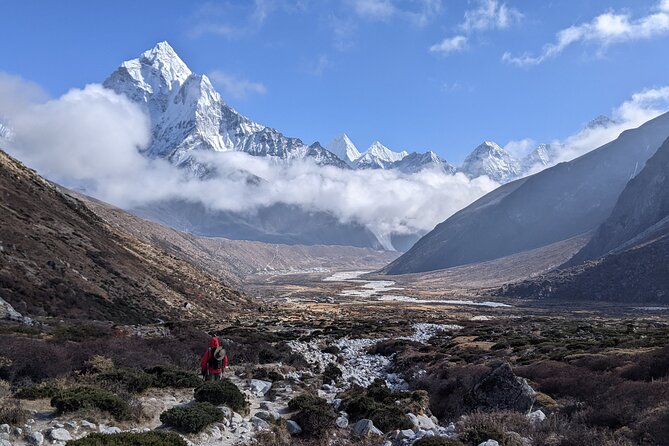
Everest Base Camp is the headline, but the real prize is the changing trail: Sherpa villages, suspension bridges, monasteries, glacial valleys, and huge peaks that seem to grow taller each day. This 15-day private trek gives you two acclimatization days, which is the sensible way to handle the altitude.
I like the practical inclusions: flights, permits, meals, a sleeping bag, down jacket, trekking poles, and porter support are covered. I also like the less crowded return through Phortse and Mong Danda instead of simply retracing every step. The drawback is the price of $1,890, which does not include travel insurance, hot showers, battery charging, Kathmandu meals, tips, or possible extra nights.
Key points to know before booking
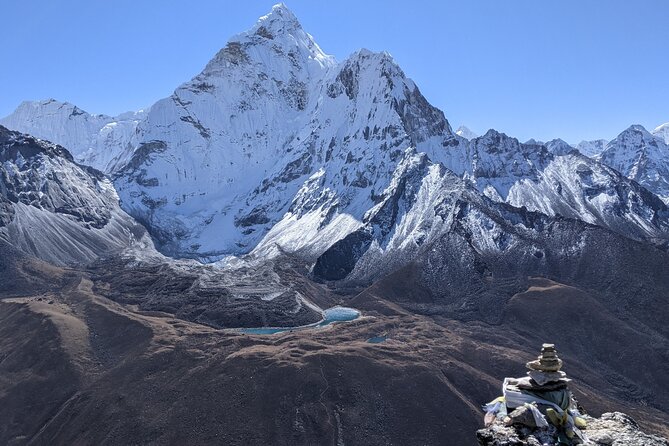
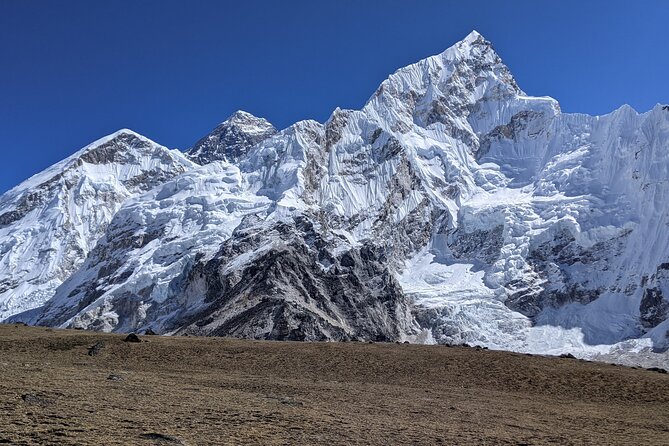
- Kala Patthar reaches 5,545 meters: The early climb brings the best stated views of Everest, Lhotse, Nuptse, and nearby peaks.
- Two acclimatization days are built in: You spend an extra day at Namche Bazaar and another at Dingboche.
- The route includes a quieter return: Phortse and Mong Danda offer a change from the main trail.
- Your porter carries shared luggage: One porter is assigned for two people, carrying up to 20 kilograms total.
- Domestic flights are included: The package covers Kathmandu or Ramechhap to Lukla and the return flight.
- This is a private trip: Only your own group takes part, with an English-speaking, licensed local guide.
The trek’s main appeal: a classic route with local support
This is the standard Everest Base Camp route, but it is not a sightseeing stroll. You walk for several hours most days, sleep in simple tea houses, and spend much of the trip above 3,000 meters. The reward comes in stages, first with Sherpa culture and mountain views, then with glaciers and high valleys, and finally with Everest Base Camp and Kala Patthar.
The itinerary is built for people who want the classic route without joining a large group. That private format matters. Your guide can keep the pace suited to your group, explain local customs, and watch for signs of altitude trouble. The company describes its guides as English-speaking, experienced, and licensed. Names connected with recent trips include Raj, Sagar, Ram, Rabin, and Jal, but your guide is assigned by the operator, so confirm the name before departure.
The route is designed to reduce altitude problems, but no itinerary can remove the risk. You still need strong physical fitness, patience, and a willingness to walk slowly. Travel insurance covering trekking up to 6,000 meters is required as an added cost, listed at about $200 per person.
Other treks that start from Kathmandu:
- Everest Base Camp Trek – 14 Days
★ 5.0 · 1,499 reviews - Everest Base Camp Helicopter Tour landing at Everest View Hotel
★ 5.0 · 668 reviews - Everest Base Camp Trekking
★ 5.0 · 485 reviews
Days 1 and 2: Kathmandu to Lukla
Your Nepal trip begins with airport pickup at Tribhuvan International Airport in Kathmandu. A company representative takes you to your hotel, giving you a useful first point of contact before the trek begins.
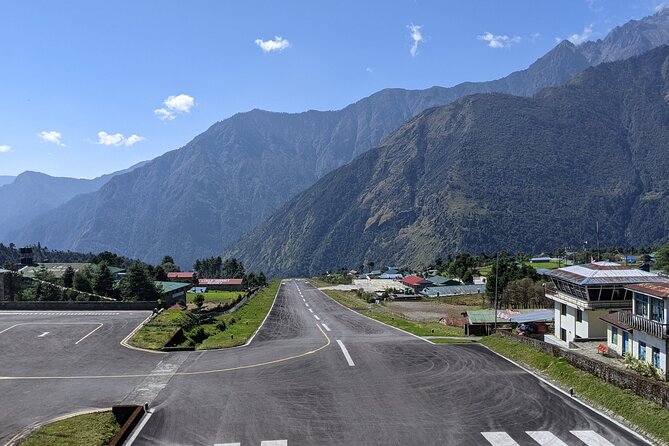
On Day 2, you take an early flight to Tenzing-Hillary Airport in Lukla, at 2,810 meters. The flight is listed as about one hour, and it is included for the full group and staff. Depending on operating conditions, the flight may use Ramechhap rather than Kathmandu, so keep your schedule flexible.
Lukla is the gateway to the Everest region. The first day here is less about sightseeing than getting ready to walk. Your main bag allowance on the domestic flight is 10 kilograms, with 5 kilograms for hand carry, 15 kilograms total per person. Pack carefully, since that limit is firm enough to shape what you bring.
The practical advantage of this package is that the flight, airport transfers, permits, and porter arrangement are handled for you. The catch is weather. Mountain flights can be delayed, and the trip includes a weather-related cancellation option, not a promise that flights will run on your preferred timetable.
Days 3 and 4: Namche Bazaar and the first acclimatization day
The walk from the Lukla area toward Namche Bazaar takes about five hours on the stated itinerary. A key sight is the Hillary Bridge, one of the suspension bridges along the trail. You follow the route toward the Sherpa capital, crossing river valleys and gaining height in steady steps.
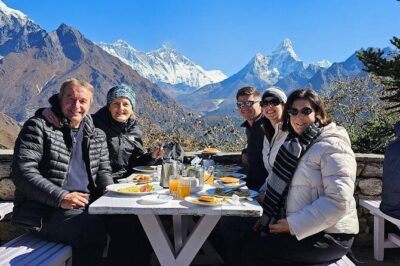
Namche Bazaar sits at about 3,440 meters and serves as the first major altitude pause. Day 4 is set aside for acclimatization, with a side walk to the Hotel Everest View listed as the main stop. The admission ticket is not included, so budget for that small extra separately.
I like this pause because it keeps the schedule from becoming a race. You remain active instead of spending the whole day in bed, while your body gets time to adjust. The Namche area also gives you one of the first broad mountain viewpoints and a chance to see how daily life works in the Sherpa communities.
Do not treat the rest day as optional time to push harder. Altitude illness can affect fit people, and the best response to symptoms is to tell your guide early. The itinerary’s safety claim is most useful here, when careful pacing matters more than covering extra ground.
Days 5 and 6: Tengboche, Dingboche, and changing mountain views
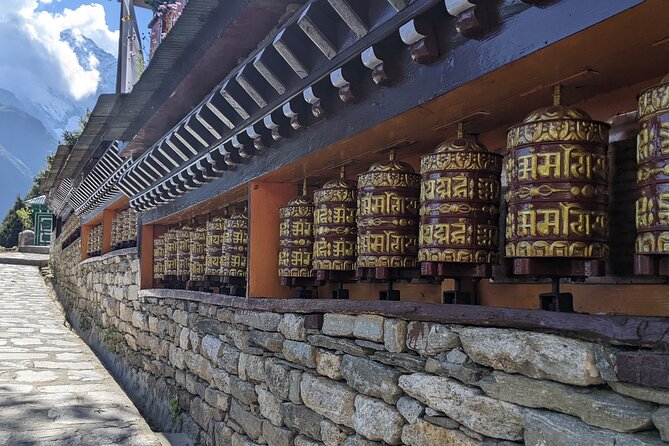
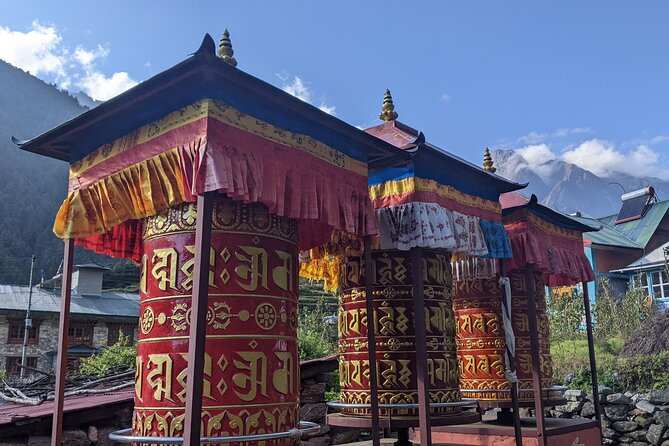
From Namche, the trail continues toward Tengboche after roughly five hours of walking. Tengboche Gompa is the key stop, and the admission ticket is included. The monastery gives the route a cultural center, not just another mountain photo stop.
The walk to Tengboche includes uphill sections, and you continue gaining height. The trail also opens to views of peaks such as Ama Dablam and Thamserku, with the monastery adding a strong sense of place to the day.
Day 6 takes you toward Dingboche in about four to five hours. You follow the Imja Khola, cross a bridge, and pass the point where the route to Pheriche separates from the Dingboche trail. The descriptions include the Lobuche direction, so this part of the route is clearly preparing you for the higher valley ahead.
Dingboche is more exposed and feels more remote than Namche. Tea house accommodation remains the norm, with meals chosen from the lodge menu. The package covers hygienic food, but you should expect simple lodge cooking rather than restaurant variety.
A few more things to do in Kathmandu worth a look
- Nagarkot Sunrise View and Day Hiking from Kathmandu
★ 5.0 · 471 reviews - Annapurna Circuit Trek with Tilicho Lake
★ 5.0 · 368 reviews - Everest Base Camp Trekking – 13 Day
★ 5.0 · 365 reviews - Everest Base Camp Trek -14 Days
★ 5.0 · 321 reviews
Day 7: The second acclimatization day at Dingboche
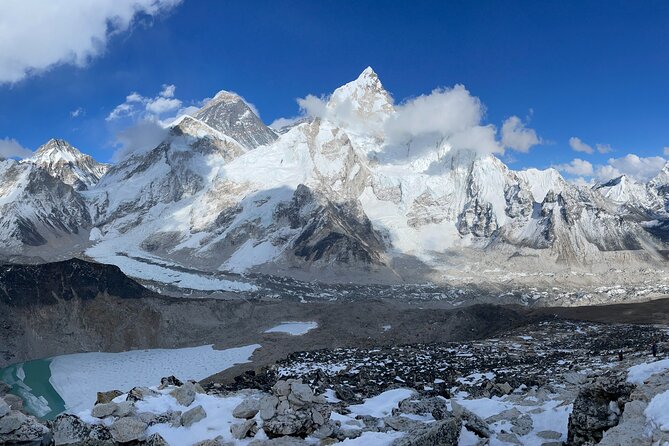
The second rest day is one of the strongest parts of the plan. Dingboche sits at high altitude, and the itinerary keeps you there for another night rather than pushing straight toward Lobuche.
You stay active with a side excursion, then return to the village. That approach is useful because altitude adjustment tends to be gradual. You also get a day to check your clothing, water, snacks, and camera batteries before the trail becomes colder and more demanding.
The schedule does not list a fixed side excursion or admission fee, so your exact outing depends on your guide and conditions. Ask what is planned before setting out. The point is not to collect another attraction. It is to gain height slowly and return safely.
Days 8 and 9: Lobuche to Everest Base Camp
After Dingboche, the trail heads toward the Thugla area and then onward through the high valley. The itinerary describes big Himalayan views and a morning walk with a gentle start, though the altitude makes even a moderate day feel serious.
This is where the trek changes character. Trees thin out, the air feels colder, and the route becomes more focused on glaciers and high mountain terrain. The walk toward Lobuche and then Everest Base Camp is demanding because you are now far above the elevation where most people live.
Day 9 is the main objective: Everest Base Camp at 5,364 meters. The stated visit lasts about an hour, with admission included. Reaching base camp is a strong achievement, but remember that the famous summit pyramid of Everest is not always the clearest view from the base camp area itself. The most celebrated panorama comes the next morning from Kala Patthar.
At base camp, conditions can be rough. You should expect cold, thin air, and a tiring return to your lodge rather than a long, relaxed visit. Your guide’s pacing and your own willingness to turn around if you feel unwell matter more than a photograph.
Day 10: Kala Patthar at 5,545 meters
The highest point of the trip comes early in the morning, when you climb Kala Patthar. At 5,545 meters, it is higher than Everest Base Camp and usually the biggest physical test of the trek.
The listed stop lasts about 20 minutes, with no admission charge. That does not mean the whole outing is brief. The climb begins early, and the descent continues afterward. The purpose is the view: Everest, Lhotse, Nuptse, and other Himalayan peaks from a high ridge.
This is the day for warm layers, a headlamp if your guide advises one, water, and a slow pace. The package provides a down jacket and sleeping bag for use during the trek, but you return both afterward. Your own clothing still needs to handle cold mornings and changing conditions.
If altitude symptoms are serious, Kala Patthar is the wrong place to prove toughness. The guide should make the final call based on your condition and the weather. The summit is optional in practical terms, even though it is the trip’s visual high point.
Days 11 and 12: The quieter return through Phortse
After the high point, you descend toward Pangboche, then take a less crowded route through Phortse. This is a good change from simply walking back on the same busy trail.
The route offers views toward Ama Dablam, Thamserku, and Tengboche Monastery. Phortse is also tied closely to the Sherpa communities of the region, giving you another chance to see village life away from the main flow of the base camp route.
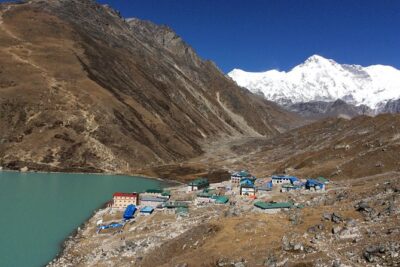
Day 12 continues through the Phortse area toward Phortse Thanga, listed at 3,680 meters, then climbs toward Mong Danda. The trail connects with the route toward Gokyo Lake, though this trip does not include the Gokyo Lakes, Cho La Pass, or Renjo La Pass.
That distinction matters. Some company trips combine Everest Base Camp with Gokyo, but this 15-day itinerary focuses on Base Camp, Kala Patthar, and a quieter return. You get variety without adding the extra high passes and nights required for a full three-pass route.
Days 13 to 15: Lukla, Kathmandu, and departure
Day 13 follows the lower trail through Toktok, Phakding, Ghat, and Cheplung at about 2,650 meters before the final climb into Lukla. The description calls the last 200 meters uphill, a small reminder that the final day is not entirely downhill.
Back in Lukla, you have an evening to rest before the flight. Day 14 begins with the earliest possible flight to Kathmandu, or the relevant Ramechhap routing. After hotel check-in, the rest of the day is free.
Day 15 is departure day. A company representative transfers you to Tribhuvan International Airport according to your flight schedule. The airport transfer at the beginning and end is a useful service, especially after a long trek when navigating Kathmandu is not the part of Nepal you most want to think about.
What the $1,890 package really covers
At $1,890 per person, the value depends on how much support you want arranged in advance. The package includes:
- Domestic flights to and from Lukla, using Kathmandu or Ramechhap as required
- Private transportation
- Sagarmatha National Park, local rural area, and TIMS permits
- English-speaking local guide
- One porter for every two people
- Tea house accommodation
- 14 breakfasts, 13 dinners, and 12 lunches
- Sleeping bag, down jacket, and trekking poles for use during the trek
- Trekking map, achievement certificate, and farewell dinner
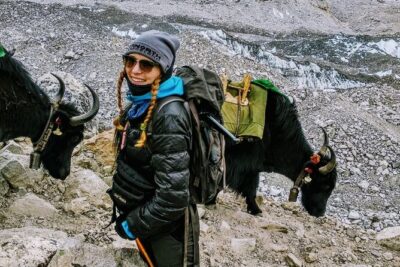
The porter system is especially useful. One porter carries up to 20 kilograms for two people, meaning each person should keep the main packed weight near 10 kilograms. You still carry your daypack with essentials, so do not fill every kilogram with spare clothing.
The major extra costs are international flights, Nepal visa fees, travel insurance up to 6,000 meters, tips, Kathmandu lunches and dinners, personal snacks and drinks, extra nights, hot showers, and battery charging during the trek. Those extras can add up, so the advertised price is not the final trip budget.
Who should book this Everest trek?
This trip suits you if you want a private itinerary with a local guide, organized logistics, and a classic Everest route. It is a good fit for people who value support from guides and porters but still want a demanding walking trip rather than a luxury holiday.
It also works well for small groups. The experience is private, and groups of five or more receive an assistant guide. The company’s strongest service pattern is personal care: guides and porters are described as attentive, supportive, and willing to help with pacing and comfort.
You should think twice if you dislike basic lodges, cold mornings, limited charging, or several hours of walking at altitude. This is not a hotel-to-hotel sightseeing tour. It is a serious mountain trek with simple accommodation and a real chance of flight disruption.
The cancellation terms are reasonable: cancel at least 24 hours before the start for a full refund. Changes made inside that window are not accepted, and poor weather may lead to a new date or full refund. Read the insurance terms carefully before paying, especially for high-altitude evacuation and flight delays.
Should you book it?
I would choose this trek if you want the classic Everest Base Camp achievement with two proper acclimatization days, porter help, and a quieter return through Phortse. The included flights, permits, meals, gear, and transfers make the $1,890 price easier to justify, though you need to budget for insurance, tips, personal expenses, and possible delays.
Before booking, confirm the assigned guide, the flight departure point, the tea house standard, and the plan for altitude symptoms. If you are fit, flexible, and comfortable with basic mountain conditions, this is a well-supported way to reach Base Camp and Kala Patthar without the complications of arranging every detail yourself.
FAQ
How long is the Everest Base Camp trek?
The experience lasts approximately 15 days, including arrival and departure days in Nepal, the flight to Lukla, the trek, the return flight, and airport transfers.
What is the highest point on the trip?
Kala Patthar is the highest point, at 5,545 meters. Everest Base Camp is at 5,364 meters.
Are domestic flights included?
Yes. Flights between Kathmandu or Ramechhap and Lukla are included for all group members and staff.
How much luggage can I take on the domestic flight?
The stated allowance is 10 kilograms for a main bag and 5 kilograms for hand carry, 15 kilograms total per person.
Are meals included?
Yes. The package includes 14 breakfasts, 13 dinners, and 12 lunches. Lunch and dinner in Kathmandu, snacks, and beverages are not included.
Is accommodation included?
Yes. Tea house or lodge accommodation during the trek is included. Extra nights are not included.
Is this a private tour?
Yes. Only your group participates. Groups of five or more receive one assistant guide in addition to the main guide.
What physical condition do I need?
The experience requires a strong level of physical fitness. You should be ready for several hours of walking at high altitude, with two acclimatization days built into the route.
Just added in Kathmandu
- Kathmandu to Chitwan Tour by Tourist Bus – A Convenient and Affordable Way★ 4.0 · 4 reviews
- Changunarayan Hill to Telkot Hike Near Kathmandu Day Tour★ 5.0 · 6 reviews
- Mt Everest Base CampTrek | Budget Package★ 5.0 · 4 reviews
- Chitwan Jungle Safari 3-Day Tour★ 5.0 · 9 reviews
- Chandragiri Hill Station Tour by Cable Car★ 5.0 · 4 reviews
- Chandragiri Hills cable car day trip, private car with driver from Kathmandu★ 5.0 · 8 reviews
- Chandragiri to Taudaha Nature Day Hiking from Kathmandu★ 5.0 · 13 reviews
- Chandragiri Cable Car & Monkey Temple Private Guided Day Tour★ 5.0 · 5 reviews
Everest Base Camp Treks, compared.
Everest Base Camp Helicopter Tour landing at Everest View Hotel
Read our review →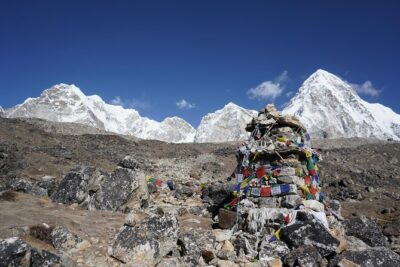
Browse the lists this tour appears in