
Reviewed · EVEREST BASE CAMP TREKS
Everest Base Camp Trek
Everest Base Camp is not just a viewpoint you reach by road. You earn it on foot, one suspension bridge, stone stairway, and thin-air morning at a time. This 14-day route carries you from Kathmandu to Lukla, then through Namche Bazaar, Tengboche, Dingboche, Gorak Shep, and the Khumbu Glacier.
I like the built-in acclimatization days at Namche Bazaar and Dingboche, which give your body a fair chance to adjust. I also like the practical package: Lukla flights, permits, meals, trekking lodging, a sleeping bag, down jacket, duffel bag, and airport transfers are included.
The main catch is that this is a serious physical challenge, not a gentle sightseeing holiday. Flight delays, cold, altitude, basic mountain rooms, and extra costs for showers, water, charging, porters, and tips all need to be part of your plan.
Key points to know before you book
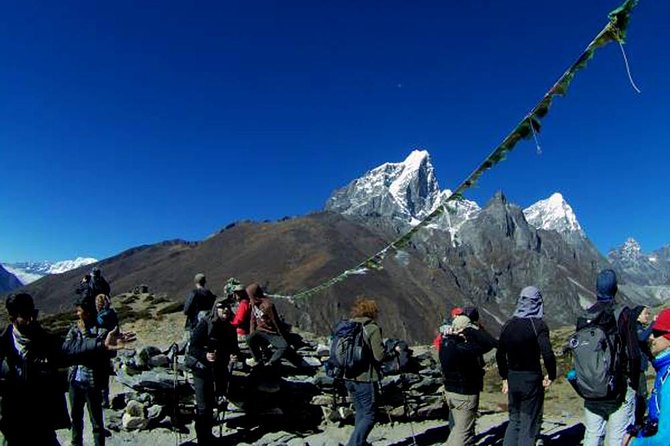
- The route reaches Everest Base Camp and Kala Patthar: You get both the famous base camp walk and an early climb for mountain views.
- Buddhi and Pawan are named guides: Feedback gives special credit to Buddhi’s care, encouragement, and support, while Pawan led one group through a longer Gokyo and Cho La trip.
- Two acclimatization stops are built in: You spend a full day at Namche and another at Dingboche rather than racing uphill every day.
- Lukla flights are included both ways: This saves a major expense, though mountain weather can still delay or cancel flights.
- The package covers useful gear: A sleeping bag, down jacket, and duffel bag are supplied, which reduces what you need to bring.
- The price is about $1,799 per person: That is solid value for the included flights, permits, meals, guide, trekking accommodation, and transfers, but not for insurance, porters, or Kathmandu lodging.
What this 14-day Everest route feels like
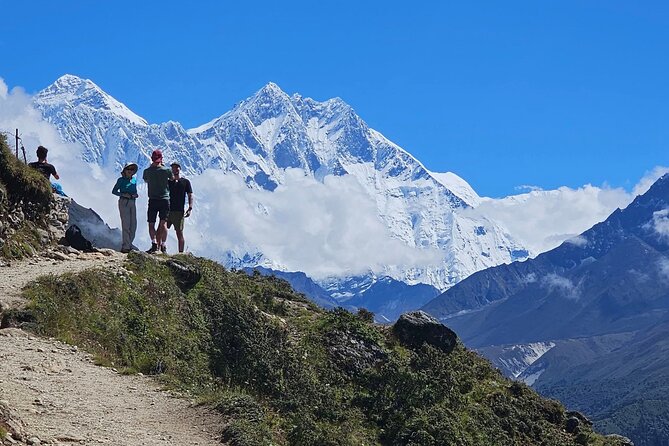
The appeal here is simple: you walk into the Everest region instead of merely looking at it from a plane window. Villages, monasteries, rivers, memorial stones, and high mountain passes become part of the journey. You also get time to stop and adjust, which matters far more than squeezing in another photo stop.
This is a private activity, so only your own group participates. That can make a difference on a demanding trek. Your guide can pay attention to your pace, energy, and comfort rather than manage a large mixed group.
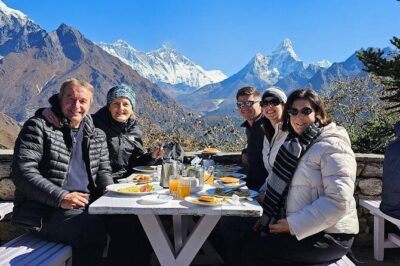
The schedule calls for walking, domestic flights, and 11 nights of trekking accommodation. Meals include breakfast, lunch, and dinner during the trek, along with three cups of hot tea each day. That is helpful in cold conditions, though you should expect mountain food and basic facilities rather than city-hotel service.
The strongest praise is directed at the guiding team. Buddhi is repeatedly singled out for steady encouragement, care, and help during hard sections. The wider team is also credited with keeping the journey organized and helping people feel safe. That support is especially valuable when the altitude makes an ordinary uphill walk feel much harder than expected.
Other treks that start from Kathmandu:
- Everest Base Camp Trek – 14 Days
★ 5.0 · 1,499 reviews - Everest Base Camp Helicopter Tour landing at Everest View Hotel
★ 5.0 · 668 reviews - Everest Base Camp Trekking
★ 5.0 · 485 reviews
Day 1: Kathmandu arrival and a practical start
After landing at Tribhuvan International Airport, a representative from Nepal High Trek and Expedition meets you and takes you to the arranged hotel. The plan also includes dinner.
This first day is less about sightseeing and more about getting oriented. You can meet the team, sort your bags, and prepare for an early start. Keep your essentials accessible, since the next morning involves transfer to Kathmandu’s domestic terminal and the flight to Lukla.
One point needs attention when booking: hotel accommodation in Kathmandu is not included. Airport pickup and drop-off are included, but you should confirm exactly where you will stay before arrival.
Day 2: The short flight to Lukla
The morning transfer takes you to the domestic terminal for the flight to Lukla. This is the gateway to the Everest Base Camp route, and the change is immediate. Kathmandu’s urban setting gives way to a small mountain airfield and the beginning of the walking section.
The flight is included in the price, as is the return flight. That adds real value, since these tickets are a major part of the trip cost. It also creates a practical risk: the schedule depends on suitable flying conditions. If weather interrupts the flight, extra expenses caused by delays, cancellations, or changes are not included.
The itinerary does not give a detailed walking schedule for this day, so ask the operator how the first night is handled if the flight arrives late or conditions change.
Day 3: Phakding, suspension bridges, and Namche Bazaar
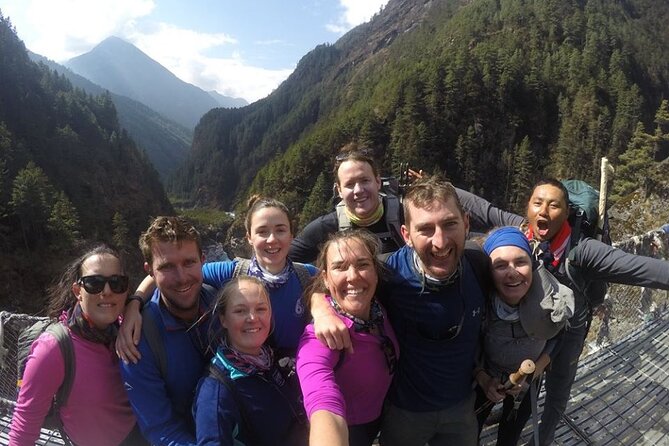
The route follows the Dudh Koshi River from Phakding toward Namche Bazaar. You cross several suspension bridges and gain your first strong views of Mt. Thamserku, listed at 6,618 meters.
This is where the trek begins to feel real. The river, bridges, stone paths, and mountain villages establish the rhythm for the days ahead. The scheduled stop is shown as about one hour, but that should not be read as the total walking time. The full route from Phakding to Namche is a substantial trekking day, and the duration can vary with pace and conditions.
Namche is more than a place to sleep. It is the region’s main service center, with banks, ATMs, internet cafés, and other useful facilities. You may want to use this opportunity to handle cash, contact home, and charge devices before the route becomes more remote.
A few more things to do in Kathmandu worth a look
- Nagarkot Sunrise View and Day Hiking from Kathmandu
★ 5.0 · 471 reviews - Annapurna Circuit Trek with Tilicho Lake
★ 5.0 · 368 reviews - Everest Base Camp Trekking – 13 Day
★ 5.0 · 365 reviews - Everest Base Camp Trek -14 Days
★ 5.0 · 321 reviews
Day 4: Namche Bazaar and the first acclimatization day
You stay in Namche for a full acclimatization day. The schedule includes time around the town and a stop at the Irish Pub, which is a slightly amusing reminder that even on the road to Everest, you are not entirely cut off from familiar comforts.
The real value of this day is not the pub. It is the pause. Altitude adjustment takes time, and a rest day can help you continue safely instead of pushing upward too quickly. You may explore the surrounding area, take a short walk, and enjoy views without carrying on to a higher overnight stop.
Namche also gives you one of the last good chances to buy small necessities. Extra snacks, batteries, toiletries, and cash are easier to handle here than farther up the valley. The package does not cover battery charging, bottled water, hot water, showers, laundry, or phone calls, so budget accordingly.
Day 5: Tengboche Gompa and big mountain views
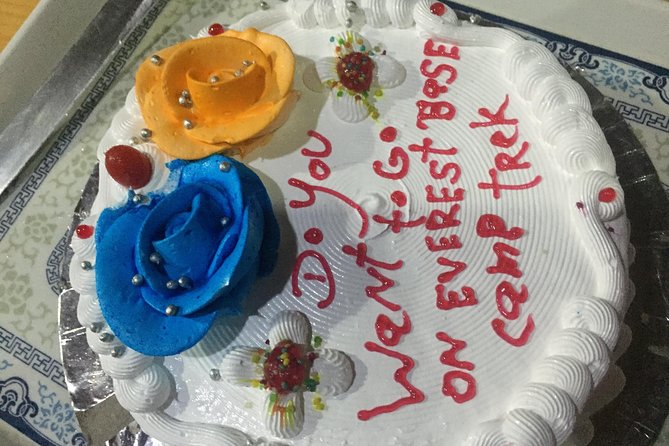
Leaving Namche, you follow the trail toward Tengboche. The route is framed by views of Everest, Nuptse, Lhotse, Ama Dablam, and other peaks. Tengboche Gompa is the key stop, giving the day a cultural focus as well as a scenic one.
The monastery matters because this trek is not only about the summit of Everest. You are moving through the home region of the Sherpa people, and Buddhist monasteries are part of daily life in the high valleys. The itinerary allows a short stop, so do not expect a long formal cultural program. Still, the setting makes Tengboche one of the memorable points on the route.
The cold breeze and altitude begin to make the physical side more obvious. Keep your pace steady. There is no prize for reaching the lodge first.
Day 6: From Tengboche toward Dingboche
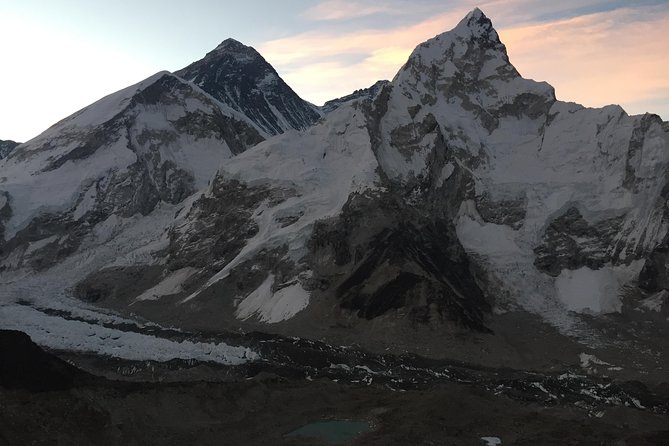
The morning includes a short visit to Tengboche and its monastery before the trek continues toward Dingboche. The schedule highlights a Dingboche viewpoint and gives about three hours for the named stop.
Dingboche is an important base for the next acclimatization pause. As you gain height, short climbs can feel surprisingly demanding. The right approach is slow, regular movement and plenty of water, while paying close attention to how you feel.
Your guide’s role becomes more important here. Good support is not just carrying a first-aid kit or pointing out peaks. It means watching the group, answering questions, and helping you make sensible decisions when the altitude changes your energy.
Day 7: Dingboche acclimatization and Chhukung
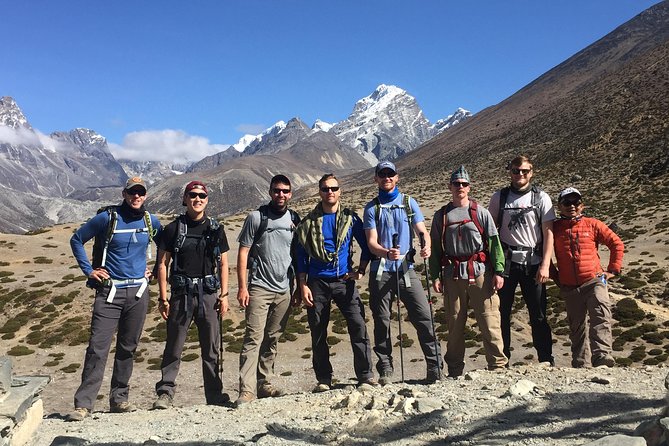
The second full acclimatization day takes you through the Imja Khola valley toward Chhukung. The itinerary highlights views of Lhotse and a stop at Dingboche Stupa.
This is another carefully chosen pause. You gain some height during the day but return to Dingboche to sleep, giving your body more time to adjust. The exact walking time is listed around three hours for the stop, but the day is still an active outing rather than a day spent in bed.
You will likely appreciate the balance here. The trek keeps moving, but it does not treat your body like a machine. The route is demanding enough without turning poor acclimatization into the main problem.
Day 8: The Khumbu Glacier and memorial stones
The trail continues along the lateral moraine of the Khumbu Glacier. You pass stone memorials for climbers who died on nearby summits before continuing toward Lobuche.
This is one of the more sobering sections. The memorials give the high mountains a human scale. Everest can look like a distant postcard from lower valleys, but these stones remind you that high-altitude climbing carries real danger.
The glacier route also changes the feel of the walking. Expect rocky, uneven ground and a more severe setting than the green lower valleys. The itinerary shows about two hours for the named stop, but the complete day’s walking will be longer.
Day 9: Gorak Shep and Everest Base Camp
After breakfast, you walk toward Gorak Shep, with views of the high peaks and Everest. From there, the trail continues to Everest Base Camp.
Reaching base camp is the emotional center of the trek. You are not climbing Everest itself, and the famous summit may not appear from every angle, but you are standing at the staging area for expeditions on the world’s highest mountain. The Khumbu Glacier and surrounding peaks make the setting feel appropriately grand.
The listed stop duration is only four minutes, which clearly does not describe the full walking day. Treat the itinerary’s stop times as rough points of interest, not a promise of total hiking time. Ask for the expected walking hours and elevation profile before departure so you know how demanding this day will be.
Gorak Shep is high and basic. Cold, tiredness, and limited facilities can make the evening harder than the photographs suggest. This is where the supplied down jacket and sleeping bag become useful rather than decorative extras.
Day 10: Kala Patthar at sunrise
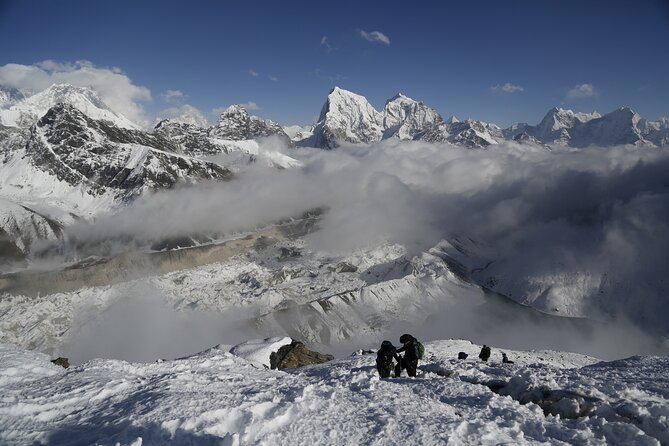
The schedule calls this the main day of the journey, with an early ascent to Kala Patthar. The goal is the morning view as sunlight reaches the snow and the surrounding peaks.
Kala Patthar is often the better place for a broad Everest view than base camp itself. The early start is uncomfortable, but the reason is sound: first light gives the mountains a changing display that you cannot repeat later in the day.
The listed stop at Gorak Shep is only 30 minutes, so again, do not use that number to estimate the entire excursion. The ascent takes sustained effort, and the high altitude makes every step count. You should bring warm layers, sun protection, water, and a camera that works in cold conditions.
A useful tip from the feedback is to use sunscreen every day. High-altitude sunlight can be harsh even when the air feels cold, and exposed skin pays the price quickly.
Days 11 and 12: The return through Pheriche, Pangboche, and Lukla
The return route begins through Pheriche, then takes a slightly different path toward Orsho and Pangboche. Pangboche has an old monastery associated with stories about the scalp and bones of the yeti. The itinerary also includes a seven-hour stop, which likely reflects a long walking day rather than a brief attraction visit.
This change of route keeps the return from feeling like a simple rewind. You see familiar valleys from a different direction and have more time to notice villages and mountain details you may have missed while focused on reaching base camp.
From Namche, the route continues back to Lukla. You are expected to arrive early enough to spend leisure time in the Lukla valley before staying overnight in a guesthouse.
The return is not automatically easy. Descending can be kinder to your breathing, but tired legs and uneven paths create their own strain. Keep your walking poles and good footwear in use until the final day.
Day 13: Back to Kathmandu and time around Durbar Square
The flight returns you to Kathmandu within a few hours. The plan includes time to explore the city, with Kathmandu Durbar Square named as a stop.
This day adds a useful urban contrast after nearly two weeks in mountain villages. You can see historic squares, temples, and city life before preparing for departure. The schedule says about two hours for the stop, so treat this as a short visit rather than a full Kathmandu sightseeing day.
Because mountain flights can shift, do not schedule an important international connection immediately after the return flight unless you have a generous buffer.
Day 14: Airport transfer and departure
After a final night in Kathmandu, the team takes you to Tribhuvan International Airport. The plan asks you to arrive three hours before your flight and includes a small farewell program.
Airport drop-off is included, which keeps the last morning simple. You will need to handle your own Kathmandu hotel arrangements and any personal expenses not covered by the package.
What the $1,799 price really covers
At about $1,799 per person, this is a strong package if you use the inclusions. Round-trip Kathmandu to Lukla flights, 11 nights of trekking accommodation, meals, a licensed mountain guide, national park and local entrance fees, airport transfers, gear, a medical kit, and emergency helicopter arrangements create substantial value.
The helicopter arrangement deserves careful reading. Emergency helicopter service is organized, but payment is expected from your travel insurance company. You still need travel and rescue insurance, and you should confirm that your policy covers high-altitude trekking and helicopter evacuation.
The following costs are extra:
- Kathmandu hotel accommodation
- Porter service
- Bottled water and hot water
- Showers and laundry
- Phone calls and battery charging
- Expenses caused by strikes, delays, or canceled flights
- Tips for the guide and porter
Three cups of hot tea per day are included, along with breakfast, lunch, and dinner during the trek. The supplied sleeping bag, down jacket, and duffel bag are especially useful if you do not want to buy or carry every piece of high-altitude gear.
Who should book this trek
You should consider it if you want a classic Everest Base Camp route with a private group, organized transport, and a guide who can provide steady support. It suits people who enjoy a challenge, can walk for multiple days, and are willing to accept basic mountain accommodation.
It is not a good match if you want a soft adventure, predictable flight times, private bathrooms, or a fully inclusive price with no extras. You need strong physical fitness, and the operator specifically lists walking and plane travel as part of the experience.
The 100 percent recommendation rate and 5-star overall rating from 114 reviews point to a consistently well-received service, especially from the guiding team. I would still focus your questions on practical matters: exact daily walking hours, group size, porter arrangements, Kathmandu lodging, and the plan if the Lukla flight is delayed.
You can cancel for a full refund up to 24 hours before the start time. If poor weather cancels the experience, you are offered another date or a full refund. That policy is useful, but it does not remove the need for insurance or cover extra costs caused by transport disruption.
Should you book the Everest Base Camp Trek?
Book it if reaching Everest Base Camp on foot is a personal goal and you want the main logistics handled for you. The combination of included flights, permits, food, guide support, acclimatization days, and basic gear makes the price reasonable.
Before paying, make sure you are comfortable with the physical demands and the extra costs. If you prepare well, follow a slow pace, protect yourself from the sun, and take the acclimatization days seriously, this itinerary gives you a clear and rewarding path through the Everest region.
FAQ
How long is the Everest Base Camp Trek?
The experience lasts approximately 14 days, including arrival and departure days in Kathmandu, the Lukla flights, the trek, and the return to Kathmandu.
What is included in the price?
The price includes a sleeping bag, down jacket, duffel bag, meals, round-trip Kathmandu to Lukla flights, a licensed mountain guide from Kathmandu, park and local entrance fees, 11 nights of trekking accommodation, airport pickup and drop-off, a medical kit, and three cups of hot tea during the trek.
Are airport transfers included?
Yes. Airport pickup and drop-off are included for both domestic and international airport transfers.
Is Kathmandu hotel accommodation included?
No. Hotel accommodation in Kathmandu is not included.
Are porters included?
No. Porter costs are not included, and porter tips are also excluded.
Is travel insurance required?
Travel and rescue insurance is not included. You need your own insurance, and emergency helicopter service is expected to be paid by your insurance company.
Is this a private tour?
Yes. Only your group participates in the activity.
How fit do I need to be?
The experience requires a strong level of physical fitness. It includes extended walking at high altitude, with routes through Namche Bazaar, Dingboche, Gorak Shep, Everest Base Camp, and Kala Patthar.
What happens if bad weather cancels the experience?
If poor weather causes cancellation, you are offered a different date or a full refund. Flights and other expenses affected by delays or cancellations are not otherwise included.
Just added in Kathmandu
- Kathmandu to Chitwan Tour by Tourist Bus – A Convenient and Affordable Way★ 4.0 · 4 reviews
- Chitwan Jungle Safari 3-Day Tour★ 5.0 · 9 reviews
- Changunarayan Hill to Telkot Hike Near Kathmandu Day Tour★ 5.0 · 6 reviews
- Mt Everest Base CampTrek | Budget Package★ 5.0 · 4 reviews
- Chandragiri Hill Station Tour by Cable Car★ 5.0 · 4 reviews
- Chandragiri Hills cable car day trip, private car with driver from Kathmandu★ 5.0 · 8 reviews
- Chandragiri to Taudaha Nature Day Hiking from Kathmandu★ 5.0 · 13 reviews
- Chandragiri Cable Car & Monkey Temple Private Guided Day Tour★ 5.0 · 5 reviews
Everest Base Camp Treks, compared.
Everest Base Camp Helicopter Tour landing at Everest View Hotel
Read our review →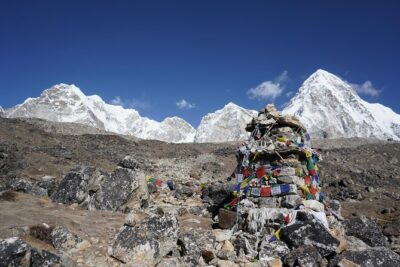
Browse the lists this tour appears in