
Reviewed · EVEREST BASE CAMP TREKS
Everest Base Camp Trek
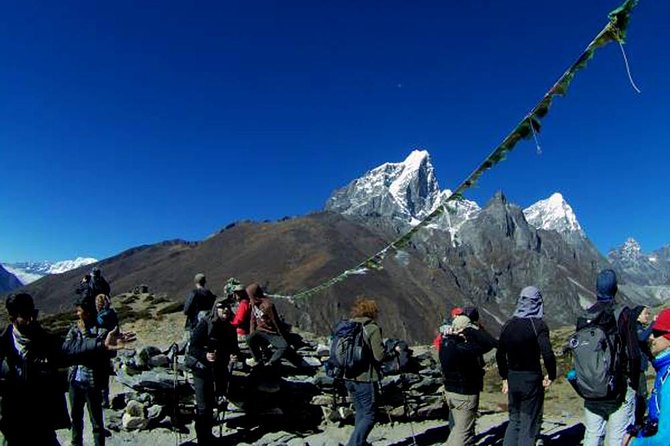
The great prize here is not simply reaching Everest Base Camp. It is the slow approach through Sherpa villages, Buddhist monasteries, suspension bridges, and high mountain valleys, with the route building toward the Khumbu Glacier, Everest, and the dawn view from Kala Patthar. This 14-day plan gives your body time to adjust, which matters far more than rushing to the finish.
I like the practical shape of the trip: Namche Bazaar and Dingboche each receive acclimatization time, and the group is limited to eight people. I also like that airport transfers, mountain flights, meals, and two Kathmandu hotel nights are included, making the $1,300 price easier to understand.
The main caution is the Lukla flight. Weather and air traffic can cause delays or cancellations, especially when flights operate through Ramechhap in the busy season. You also need moderate fitness and a willingness to sleep in simple mountain lodges at high altitude.
Key points to know before booking
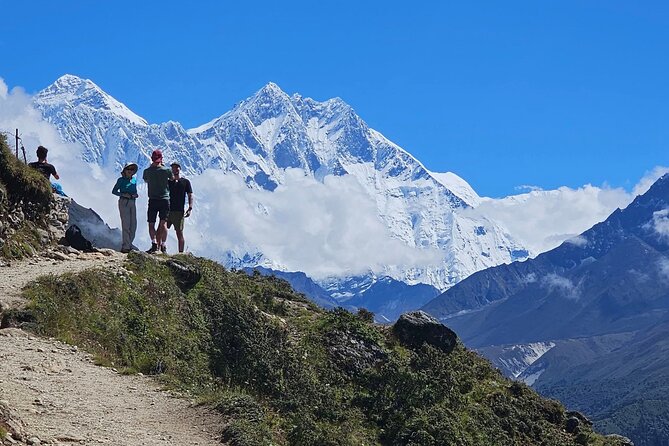
- Kala Patthar is the high point: At about 5,550 meters, this early climb gives the route’s clearest dawn view toward Everest.
- Two acclimatization stops help: You spend extra time in Namche Bazaar and Dingboche rather than climbing higher every day.
- Lukla flights are part of the adventure: The flight takes about 40 minutes, but weather and airport conditions can change the plan.
- A small group keeps things manageable: The maximum group size is eight, with guides and porter support arranged by the company.
- The price covers the major trek basics: Flights, airport transfers, two Kathmandu nights, 13 breakfasts, 11 lunches, and 11 dinners are included.
- Guide care is a major strength: Ram, Prakash, Bishnu, Rajesh, Tilak, Binode, Sanjay, and Gore are among the guides and support staff praised for encouragement and practical help.
Why the 14-day route works
An Everest Base Camp trek is a test of patience as much as stamina. You begin at Lukla, around 2,860 meters, and finish with time above 5,000 meters. The route cannot be treated like a long city walk. The body needs time to adjust to thinner air, and this itinerary allows that with nights in Namche and Dingboche.
The schedule is also designed around the two major goals: reaching Base Camp and climbing Kala Patthar. Base Camp gives you the sense of arriving at the foot of the Everest climbing route. Kala Patthar generally offers the more impressive view of Everest itself, especially at dawn, when the peaks catch the first light.
You should still expect long days. Several walking stages last about five to six hours, and the terrain includes stone paths, steep sections, streams, moraines, and suspension bridges. The itinerary calls for moderate physical fitness, but that phrase should not be read as easy. You need to be comfortable walking uphill for hours over consecutive days.
Other treks that start from Kathmandu:
- Everest Base Camp Trek – 14 Days
★ 5.0 · 1,499 reviews - Everest Base Camp Helicopter Tour landing at Everest View Hotel
★ 5.0 · 668 reviews - Everest Base Camp Trekking
★ 5.0 · 485 reviews
Kathmandu preparation and the flight to Lukla
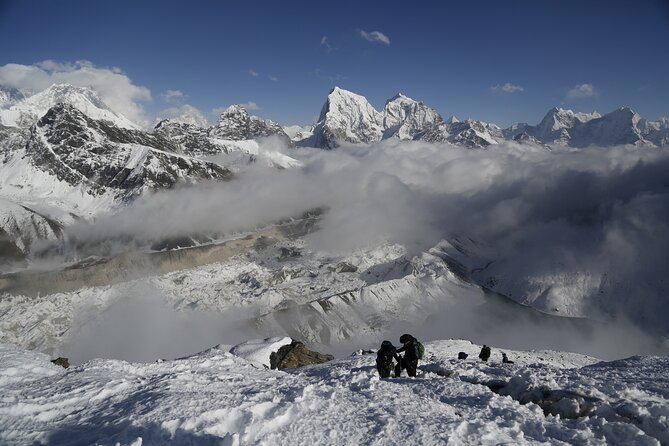
Day one is deliberately simple. You are met at the airport, taken to a hotel near Thamel, and brought together for a pre-trek meeting. This is your chance to prepare for the next morning, check arrangements, and settle into Nepal before heading into the mountains.
The flight to Lukla takes about 40 minutes and offers aerial views of the Himalayas. Lukla’s airport is famous for its short, demanding approach, though the real issue for you is less the airport itself than the weather. Flights can be delayed or canceled, and during busy periods you may be driven to Ramechhap Airport, then fly from there instead.
That change matters. Ramechhap is not in central Kathmandu, and the program specifically allows for driving there during peak periods because of air traffic at Tribhuvan International Airport. Keep some flexibility around your international flight home. Day 14 is reserved for departure, but mountain flight schedules can shift.
After landing at Lukla, you walk for roughly three hours toward Phakding. This is a useful first day because it introduces the trail without sending you straight into a major altitude gain. You sleep in or near Phakding and have some time to look around the local community.
From Phakding to Namche Bazaar
The next stage follows the Dudh Koshi, crossing small suspension bridges and passing through Monjo. Monjo marks the approach to Sagarmatha National Park, and the route begins to feel more remote as you continue toward Namche Bazaar.
The walk takes about six hours. Namche is not just a stopping point. It is the main settlement and cultural center of the Everest region, with shops, lodges, and strong links to the Sherpa community. It is also where the itinerary first slows down for altitude.
The next day is an acclimatization day in Namche at about 3,440 meters. You do not simply stay in bed. The plan includes a walk toward the Everest View Point, with the highest-placed hotel in the area mentioned as a key viewpoint. You can also visit the Sherpa Museum, which adds useful context about local culture and mountaineering.
I like this part because it gives the trek a human scale. You are not only counting kilometers toward Base Camp. You are seeing how Namche functions as the entry point to the high valleys and learning why Sherpa communities are central to mountaineering in the region.
Tengboche and Dingboche bring the mountains closer
Leaving Namche, you follow a high trail above the Dudh Koshi toward Tengboche. The walking time is listed at about five hours, with views toward Everest, Nuptse, Lhotse, Thamserku, Kwangde, and Ama Dablam.
Tengboche Monastery is one of the route’s quieter highlights. Its setting gives you time to pause, and the visit adds a spiritual layer to what could otherwise become a parade of mountain viewpoints. The schedule does not treat the monastery as a rushed photo stop. You have an overnight stay in the area, so the atmosphere has time to register.
The following day leads toward Dingboche through rhododendron forest and meadow, passing the Buddhist nunnery at Deboche and the Imja Khola. The route offers views toward Island Peak and Amphu Laptsa Peak. This is another five-hour walking day, but altitude makes the effort feel greater than the clock suggests.
Dingboche receives another acclimatization day. You can rest or take a shorter walk before the more demanding stages ahead. That flexibility is valuable. The program gives you about three hours of optional walking, but you should not feel obliged to use every available hour. At this height, conserving energy is sensible.
A few more things to do in Kathmandu worth a look
- Nagarkot Sunrise View and Day Hiking from Kathmandu
★ 5.0 · 471 reviews - Annapurna Circuit Trek with Tilicho Lake
★ 5.0 · 368 reviews - Everest Base Camp Trekking – 13 Day
★ 5.0 · 365 reviews - Everest Base Camp Trek -14 Days
★ 5.0 · 321 reviews
The memorials at Dughla and the approach to Lobuche
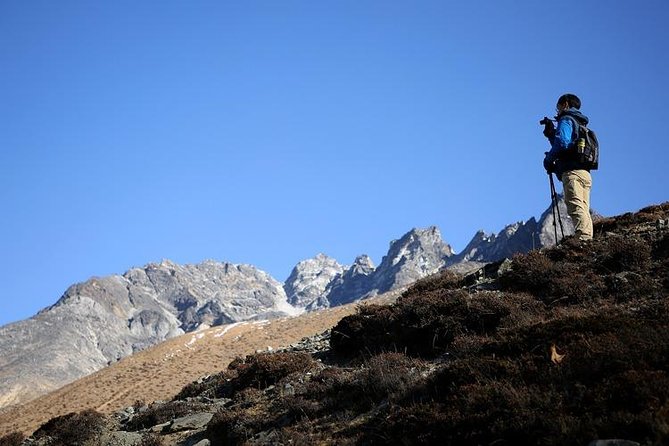
Day eight takes you toward Dughla and then up a hill containing memorials to Sherpas who died on Everest expeditions. This is an important pause in the route. It reminds you that the mountain is not simply a scenic backdrop or a personal achievement. It has taken lives, and the people who work on it carry much of that risk.
From there, the trail continues along the Khumbu Glacier moraine toward Lobuche. You see views toward Kala Patthar and Pumori, while the stone and ice around you become more severe. The day is listed at about six hours, and this is one of the points where steady pacing matters.
The route does not promise comfort at Lobuche or higher. The information provided does not specify individual lodges or room arrangements, so you should expect basic mountain accommodation rather than hotel standards. Personal expenses and beverages are not included, which means you should budget for anything beyond the supplied meals.
Everest Base Camp and the night at Gorak Shep
From Lobuche, you continue toward Gorak Shep and Everest Base Camp. The Base Camp stage is listed at around six hours, with a route across rocky ground, moraines, and streams toward the Khumbu Icefall.
Reaching Base Camp is a strong symbolic moment, but you should keep your expectations realistic. You are not standing on the summit, and the actual view of Everest from Base Camp is not always the clearest because of the surrounding peaks and glacier formations. The value is in seeing the staging ground for Everest expeditions, the Khumbu Glacier, and the Icefall up close.
After visiting Base Camp, you return to Gorak Shep for the night. The return stage is listed separately at about three hours and includes an initial incline, a steeper section, and then a descent back to the lodge. By now, fatigue and altitude may make a short distance feel long.
This is where the support of the guide becomes especially important. The strongest feedback about the company focuses on calm encouragement and practical care. Ram was praised for helping one participant stay composed, while Prakash was credited with steady attention during a 12-day version of the route. Gore was described as sharing gear, repairing shoes, and making sound decisions during a sudden snowstorm.
Those details matter more than polished promises. On a high-altitude trek, a guide who notices small problems early can make the day safer and less stressful.
Kala Patthar at dawn, then the long descent
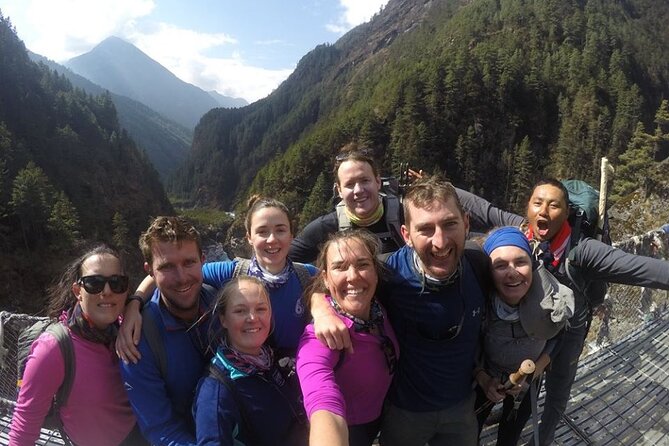
Kala Patthar is the highest point on this itinerary, at about 5,550 meters. The climb begins early, takes roughly two hours, and is timed for sunrise. This is the place for broad views toward Everest, Nuptse, Pumori, and the surrounding peaks.
The climb is short on paper but demanding in practice. You are starting before breakfast, at the highest elevation of the trip, after the Base Camp day. Take the pace slowly and follow your guide’s advice. The reward is not just the summit of the viewpoint, but the changing light over the mountain range.
After descending to Gorak Shep for breakfast, you turn back toward Pheriche. The walking time is listed at about six hours. This descent should feel easier than climbing higher, but tired knees and the long distance still demand care.
The next day takes you toward Namche Bazaar, with the chance to visit Pangboche Monastery, described as the oldest monastery in the area. You continue through Tangboche and Phungithanka before reaching Namche. The route brings familiar places back into view, but the return also lets you notice how much farther away they seemed on the way up.
Returning to Lukla and Kathmandu
From Namche, you walk for about six hours toward Lukla, passing local Sherpa hamlets, mountain views, and the Hillary suspension bridge. This is a greener section than the high valley, and the descent gives your eyes a break from rock and ice.
You spend the night in Lukla before flying out the next day. The return flight may go directly to Kathmandu or through Ramechhap, depending on the season and available flights. If the weather changes, the schedule can change with it.
This is why I would not plan an important international connection immediately after the scheduled return. The program includes transport to your accommodation after the flight, but it cannot control mountain weather or airport congestion.
The final day includes transfer to Tribhuvan International Airport for your flight home. You may also have time for extra activities if your departure schedule allows.
What the $1,300 price really covers
At $1,300, the package includes several expensive and essential elements:
- Airport pickup and departure transfer
- Flights between Kathmandu or Ramechhap and Lukla
- The guide’s flight
- Two nights in Kathmandu on a bed-and-breakfast plan
- Thirteen breakfasts
- Eleven lunches
- Eleven dinners
- Fees and taxes
That is a useful package for a 14-day Himalayan trek. The included Lukla flights alone are important, and the airport transfers reduce the need to arrange complicated transport at the beginning and end.
The limits are just as important. Personal expenses, drinks, alcoholic beverages, and tips for the guide and driver are not included. The listing also refers to porter support in the experience, but the included-cost section does not spell out every porter arrangement, so ask the company exactly what is covered before paying.
The small maximum group of eight gives the price added value. You are not being placed in a huge walking line, and a guide can keep a closer eye on pace and wellbeing. The company has received a 100 percent recommendation rate from 58 submitted ratings, with repeated praise for guides, encouragement, airport help, and support during difficult weather.
Who should choose this trek
This trip suits you if you want the classic Everest route and prefer a planned group experience rather than arranging every lodge, flight, meal, and transfer yourself. It is also a good match if you value human support. Names repeatedly associated with the company include Ram, Amer, Prakash, Bishnu, Rajesh, Tilak, Binode, Sanjay, and Gore.
Families have used the service, including one trek planned around giving a granddaughter a memorable mountain experience. At the same time, the route remains physically serious. A family group should be comfortable with long walking days, cold conditions, altitude, and simple lodging.
I would be cautious about booking if you need fixed flight times, dislike schedule changes, or expect comfortable accommodation throughout. The weather clause is real, not a technical footnote. The operator may offer another date or a full refund if poor weather forces cancellation, but once you are in the mountains, patience is part of the deal.
You can cancel for a full refund up to three full days before the start time. Changes or cancellations inside that window are not accepted for a refund, and the local Nepal time cut-off applies.
Should you book the Everest Base Camp Trek?
I would choose this trip if you want the classic Everest Base Camp route with two built-in acclimatization days, a small group, and major transport and meals bundled into one price. The itinerary hits the essential places: Namche, Tengboche, Dingboche, Lobuche, Base Camp, Gorak Shep, Kala Patthar, and the return through the Khumbu.
The best reason to book is the combination of structure and guide support. The main reason to pause is the uncertainty of Lukla flights and the physical demands of high altitude.
If you can keep your schedule flexible, train for long uphill walks, and accept basic mountain conditions, this is a strong-value way to approach Everest. If you need a predictable holiday with no weather risk, choose a lower-altitude Nepal trip instead.
FAQ
How long is the Everest Base Camp Trek?
The planned duration is approximately 14 days, including Kathmandu arrival and departure days, mountain flights, the trek to Base Camp, the Kala Patthar climb, and the return to Lukla.
Is airport pickup included?
Yes. Pickup on arrival and transport to the airport for final departure are included.
Are flights to Lukla included?
Yes. The package includes the client’s flight between Kathmandu and Lukla, or between Ramechhap and Lukla when that route operates. The guide’s flight is also included.
How many people can join the group?
The maximum group size is eight people.
What meals are included?
The package includes 13 breakfasts, 11 lunches, and 11 dinners. Personal expenses, beverages, and alcoholic drinks are not included.
What happens if bad weather cancels the trek?
If poor weather causes the experience to be canceled, you will be offered a different date or a full refund. Mountain flights may also face delays or changes because of weather and local airport conditions.
Just added in Kathmandu
- Kathmandu to Chitwan Tour by Tourist Bus – A Convenient and Affordable Way★ 4.0 · 4 reviews
- Changunarayan Hill to Telkot Hike Near Kathmandu Day Tour★ 5.0 · 6 reviews
- Mt Everest Base CampTrek | Budget Package★ 5.0 · 4 reviews
- Chitwan Jungle Safari 3-Day Tour★ 5.0 · 9 reviews
- Chandragiri Hill Station Tour by Cable Car★ 5.0 · 4 reviews
- Chandragiri Hills cable car day trip, private car with driver from Kathmandu★ 5.0 · 8 reviews
- Chandragiri to Taudaha Nature Day Hiking from Kathmandu★ 5.0 · 13 reviews
- Chandragiri Hills Private Tour★ 5.0 · 4 reviews
Everest Base Camp Treks, compared.
Everest Base Camp Helicopter Tour landing at Everest View Hotel
Read our review →
Browse the lists this tour appears in