
Reviewed · EVEREST BASE CAMP TREKS
Everest Base Camp Trek
Everest Base Camp is less about reaching a single finish line than learning how to move through the Khumbu one steady step at a time. This 14-day trek takes you from Kathmandu to Lukla, through Sherpa villages and high mountain passes, then up to Base Camp and Kala Patthar at 5,545 meters.
I like the built-in acclimatization days at Namche Bazaar and Dingboche, and I like that the price includes tea-house lodging, meals on trek, a guide, and porters. The main caution is altitude: this is a demanding trip, not a casual walk, and Lukla flight delays can disrupt the schedule.
Key points at a glance
- Reach Everest Base Camp at 5,364 meters: The route passes through Gorakshep before reaching the famous base camp below Everest.
- Climb Kala Patthar to 5,545 meters: This is the highest point on the itinerary and a major test of fitness and altitude tolerance.
- Two acclimatization days are included: Rest and short walks at Namche Bazaar and Dingboche help you adjust before going higher.
- Stay in local tea houses: Lodging is simple, practical, and tied closely to village life along the route.
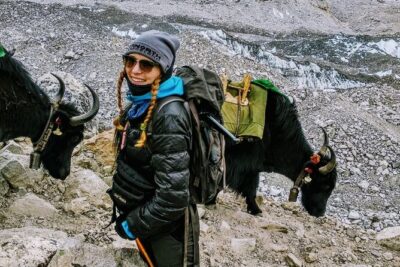
- Guides and porters handle the hard logistics: One porter is provided for every two people, while the guide manages the route and daily plans.
- The $1,500 price covers much of the trek: Airport transfers, Kathmandu hotels, meals during the trek, permits listed in the package, lodging, staff, and flights to and from Lukla are included.
Why this Everest route works
The appeal of this trip is its progression. You begin in Kathmandu at 1,320 meters, fly to Lukla at 2,886 meters, and then walk upward through a chain of settlements rather than trying to gain altitude too quickly.
That rhythm matters. Namche Bazaar sits at 3,440 meters, Dingboche at 4,260 meters, Lobuche at 4,930 meters, and Gorakshep at 5,140 meters. The numbers explain why the itinerary includes rest days and why you need patience.
I also like the cultural side of the route. Namche is the main Sherpa trading center in the Khumbu, while Tengboche is known for its monastery. The trek is not only a long approach to Everest. It is a route through villages where local lodges, porters, guides, and mountain workers shape the experience.
The group size can reach 15 people. That is small enough for organized support, but it may not feel like a private journey. Ask before booking how many people are expected on your departure and whether a private guide arrangement is available.
Other treks that start from Kathmandu:
- Everest Base Camp Trek – 14 Days
★ 5.0 · 1,499 reviews - Everest Base Camp Helicopter Tour landing at Everest View Hotel
★ 5.0 · 668 reviews - Everest Base Camp Trekking
★ 5.0 · 485 reviews
Days 1 and 2: Kathmandu to Lukla and Phakding
Your arrival day begins at Tribhuvan International Airport, where a representative meets you after customs and transfers you to a three-star standard hotel. Two Kathmandu nights are included: one on arrival and another after the trek.
This first night is useful for sorting bags, checking equipment, and preparing for an early start. The meeting time listed for the trek is 5:30 am, so do not plan a late evening.
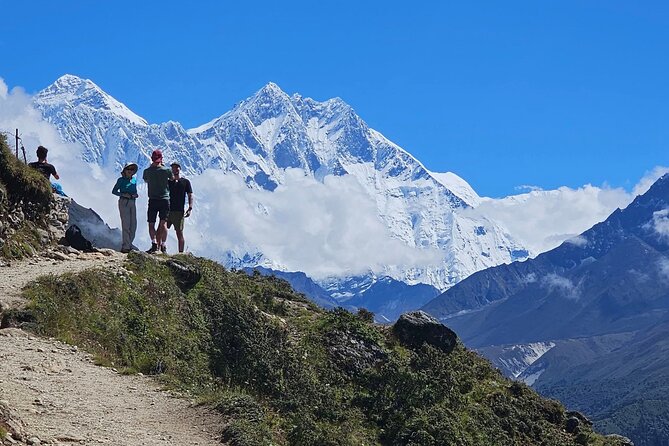
On Day 2, you fly from Kathmandu to Lukla and begin walking to Phakding. The trek itself takes about four hours, which gives your legs a gentle introduction before the longer days ahead.
Lukla flights are one of the trip’s biggest practical variables. If weather or other conditions cancel a flight, the operator says it will try to reschedule for the following day, subject to availability. A helicopter may be arranged for a group, but that costs at least $500 per person and is your responsibility.
This is why travel insurance covering flight delays and cancellations is not a luxury here. The package does not include travel insurance, and a missed Lukla flight can affect the whole schedule.
Days 3 and 4: Phakding to Namche Bazaar
The walk from Phakding to Namche takes about six hours. You cross into the higher Khumbu region and finish in Namche Bazaar, the best-known town on this route.
Namche is more than an overnight stop. It is where you first feel the altitude in a serious way, and it is also where the route begins to feel distinctly Himalayan. The village is a major base for Sherpa communities, mountain guides, traders, and trekkers.
Day 4 is set aside for acclimatization. You stay at 3,440 meters instead of gaining more height, with time for rest and a local walk. Do not treat this as a wasted day. It is one of the most valuable parts of the schedule.
The itinerary lists about six hours for the acclimatization day, but that does not mean you must walk hard for six hours. The purpose is to stay active without exhausting yourself. Follow your guide’s plan, drink regularly, and tell the guide quickly if you feel unwell.
Days 5 and 6: Tengboche and Dingboche
From Namche, you walk to Tengboche at about 3,867 meters. The village is known for its monastery, and this stop gives the trek a spiritual pause after several demanding walking days.
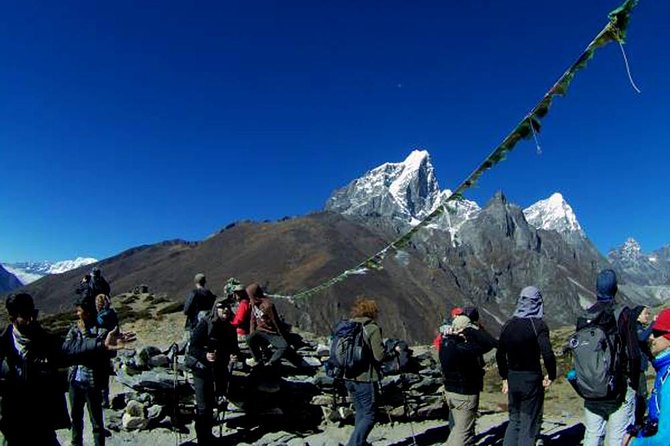
Tengboche is also a good place to appreciate how the route changes as you climb. The settlements become more remote, the nights colder, and the options for comfort more limited.
The next day takes you to Dingboche at 4,260 meters. This is another six-hour walking day. The provided itinerary names a Dingboche viewpoint, but the main value of the day is reaching a high village that allows the body to adjust before the route continues toward Lobuche.
Tea-house accommodation becomes increasingly basic at altitude. You get a clean, comfortable place to sleep according to the operator, but you should not expect city-hotel standards. Rooms are normally twin share, and a single supplement is available for $200.
A few more things to do in Kathmandu worth a look
- Nagarkot Sunrise View and Day Hiking from Kathmandu
★ 5.0 · 471 reviews - Annapurna Circuit Trek with Tilicho Lake
★ 5.0 · 368 reviews - Everest Base Camp Trekking – 13 Day
★ 5.0 · 365 reviews - Everest Base Camp Trek -14 Days
★ 5.0 · 321 reviews
Day 7: A second acclimatization day in Dingboche
Dingboche gives you another rest day before the most strenuous part of the route. The itinerary refers to the Chhukhung path and a return to Dingboche, so expect a short acclimatization outing rather than a full transfer to another lodge.
This is a smart pause. From here, the route rises quickly toward 4,930 meters and beyond. You will be walking at elevations where cold, thin air, poor sleep, and slower recovery can affect even fit people.
Your guide is central on days like this. Several guides named in the supplied information, including Pradip and Pradam, also known as Laxman, received strong praise for careful support, mountain experience, humor, and wildlife spotting. Guide assignments can vary, so confirm who will lead your group.
Days 8 and 9: Lobuche, Gorakshep, and Base Camp
Day 8 takes you from Dingboche to Lobuche at 4,930 meters. You stop for lunch at Dugla, around 4,595 meters, before continuing higher.
This is where the trek becomes physically serious. The walking day is listed at about six hours, but altitude makes distance feel very different. Keep your pace slow and steady. A day pack with water, sunscreen, a camera, a spare jacket, and basic personal items is all you should carry while porters handle your main luggage.
From Lobuche, you walk to Gorakshep at 5,140 meters and then continue to Everest Base Camp at 5,364 meters. The itinerary calls this the most rewarding section, and it is easy to see why. You are finally walking into the place associated with Everest expeditions, sacrifice, hard work, and the long attempt to reach the summit.
Do not confuse Everest Base Camp with the summit view seen in photographs. The experience here is about reaching the base area and seeing Everest from its lower approach. The route is rocky, high, and tiring, so the return to Gorakshep matters as much as the arrival.
Accommodation at Gorakshep is among the most basic on the trip. The high altitude and remote setting limit comfort. That is part of the price of reaching this far on foot.
Day 10: Kala Patthar and the return to Pheriche
The next morning, you climb from Gorakshep to Kala Patthar at 5,545 meters before descending to Pheriche at 4,243 meters.
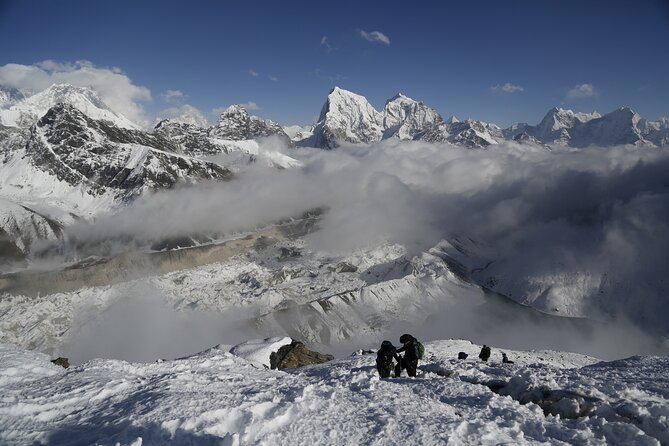
Kala Patthar is the highest point on this itinerary. It is also one of the best places on the route for a broad view of the Everest range. Reaching it requires an early, demanding climb, followed by a major descent, so this is likely to be your hardest day.
The reward is not just the altitude record. Kala Patthar helps you understand the scale of the Khumbu, with peaks, glaciers, and rocky ridges spread around you. Afterward, descending to Pheriche is welcome, but your knees will notice the long day.
Days 11 to 13: Back to Namche and Lukla
The return route takes you from Pheriche through the lower villages toward Namche Bazaar. The schedule description for Day 11 refers to Tengboche and Namche, so exact overnight stops may depend on the group’s pace and local arrangements.
This part of the trip is easier in terms of altitude, but not effortless. Your legs are tired, and the trail includes repeated climbs even when your overall direction is downhill.
Day 12 continues from Namche to Lukla in about six hours. Once in Lukla, you have time to rest before the flight back to Kathmandu.
Day 13 is the return flight to Kathmandu. As on the way in, this depends on flight conditions and availability. The second included Kathmandu hotel night gives you a buffer before departure and a place to recover, repack, and take a hot shower.
Day 14: Airport transfer and departure
On the final day, a private car, van, or bus takes you to Tribhuvan International Airport. The listed transfer takes about an hour.
The package describes airport pickup and drop-off, so send your international flight details after booking. On arrival, the representative is meant to meet you outside the terminal after customs with your name displayed.
What the $1,500 price really covers
At $1,500 per person, this package offers good value if you use the included services. It covers airport transfers, two Kathmandu hotel nights, tea-house lodging during the trek, a guide, one porter for every two people, staff salaries and insurance, the listed TIMS card fees, a first-aid kit, a duffle bag if needed, taxes, and meals during the mountain portion.
The meal plan lists 14 breakfasts, 11 lunches, and 11 dinners. Kathmandu lunches and dinners are not included, and neither are alcoholic or nonalcoholic drinks.
You should also budget for hot showers, charging electronics, snacks, bottled or boiled water, tips, souvenirs, and any entrance fees during time in Kathmandu. Normal water is available, and purification tablets are recommended. Bottled and boiled water can be bought along the route.
Domestic airlines allow 15 kilograms including your hand luggage. Excess weight costs extra, so pack carefully. The best setup is a trek bag for the porter and a small day pack for yourself. Items not needed on the trail can stay in a hotel locker in Kathmandu.
Tips are not fixed, but the operator suggests allowing 10 to 15 percent of the tour cost if the staff serve you well. That is a meaningful extra cost, so include it in your budget from the start.
Comfort, fitness, and group expectations
You need a strong level of physical fitness. The trek has repeated six-hour days, high altitude, cold conditions, basic lodging, and long descents. The acclimatization days help, but they do not remove the risks of altitude.
The support system is a real strength. Guides handle route decisions and daily coordination, while porters let you walk with a lighter day pack. Recent praise has focused heavily on guides such as Pradip, whose mountain knowledge, humor, and ability to spot wildlife made a strong impression, as well as Laxman and the pre-trip support from Niti.
Still, your guide cannot guarantee clear skies, flight availability, or a comfortable night at high altitude. You should arrive prepared for schedule changes and bring insurance that covers trekking and emergency transport.
Mobile ticketing and confirmation at booking make the reservation process simple. Service animals are allowed, and public transportation is nearby, but the trek itself is not designed around easy access. The route is remote and physically demanding.
Should you book this Everest Base Camp trek?
Book it if you want a structured Everest Base Camp route with two acclimatization days, guide and porter support, tea-house lodging, and most trek meals folded into one price. It suits fit hikers who value local villages, Sherpa culture, Tengboche Monastery, and the satisfaction of reaching Base Camp and Kala Patthar without arranging every detail alone.
Think twice if you need private rooms, flexible flight dates, a gentle walking pace, or polished hotel comfort throughout. The biggest risks are altitude, basic high-mountain lodging, and Lukla flight disruption.
For the right person, the package gives you a clear route, useful support, and a fair amount of practical coverage for $1,500. Buy strong insurance, pack light, listen to your guide, and leave room in your schedule for the mountain to make the final decision.
FAQ
How long is the Everest Base Camp trek?
The program lasts approximately 14 days, including arrival and departure days in Kathmandu, flights between Kathmandu and Lukla, the trek, and two Kathmandu hotel nights.
What is the highest point on the route?
Kala Patthar is the highest point, at 5,545 meters. Everest Base Camp is listed at 5,364 meters, and Gorakshep is at 5,140 meters.
Are flights between Kathmandu and Lukla included?
The transportation details include flights from Kathmandu to Lukla and back. If a flight is cancelled, rescheduling is subject to availability. A helicopter may cost at least $500 per person and is not included.
What accommodation is provided?
You receive two nights in a three-star standard hotel in Kathmandu and lodge or tea-house accommodation during the trek. Mountain accommodation is generally twin share, with a $200 single supplement available.
Are meals included?
Breakfast is included for 14 days, with 11 lunches and 11 dinners included during the trekking program. Lunch and dinner in Kathmandu are not included, and drinks are extra.
Do porters carry the main luggage?
Yes. The package provides one porter for every two people. You carry a day pack, while your main luggage is carried on the trail.
Is travel insurance included?
No. You must arrange your own travel insurance. Insurance covering trekking, flight cancellation, and possible helicopter costs is especially important for this route.
What is the cancellation policy?
You can receive a full refund if you cancel at least 24 hours before the experience start time. Cancellations or changes made less than 24 hours before the start time are not accepted for a refund.
Just added in Kathmandu
- Kathmandu to Chitwan Tour by Tourist Bus – A Convenient and Affordable Way★ 4.0 · 4 reviews
- Changunarayan Hill to Telkot Hike Near Kathmandu Day Tour★ 5.0 · 6 reviews
- Mt Everest Base CampTrek | Budget Package★ 5.0 · 4 reviews
- Chitwan Jungle Safari 3-Day Tour★ 5.0 · 9 reviews
- Chandragiri Hill Station Tour by Cable Car★ 5.0 · 4 reviews
- Chandragiri Hills cable car day trip, private car with driver from Kathmandu★ 5.0 · 8 reviews
- Chandragiri to Taudaha Nature Day Hiking from Kathmandu★ 5.0 · 13 reviews
- Chandragiri Cable Car & Monkey Temple Private Guided Day Tour★ 5.0 · 5 reviews
Everest Base Camp Treks, compared.
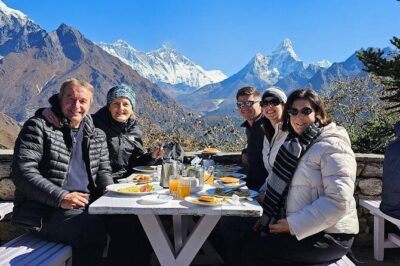
Everest Base Camp Helicopter Tour landing at Everest View Hotel
Read our review →
Browse the lists this tour appears in