
Reviewed · EVEREST BASE CAMP TREKS
Everest Base Camp Trek | Deluxe Lodges | Both Way Helicopter Ride
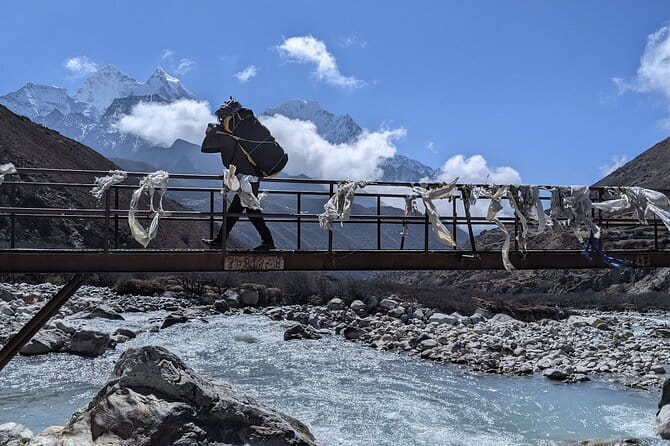
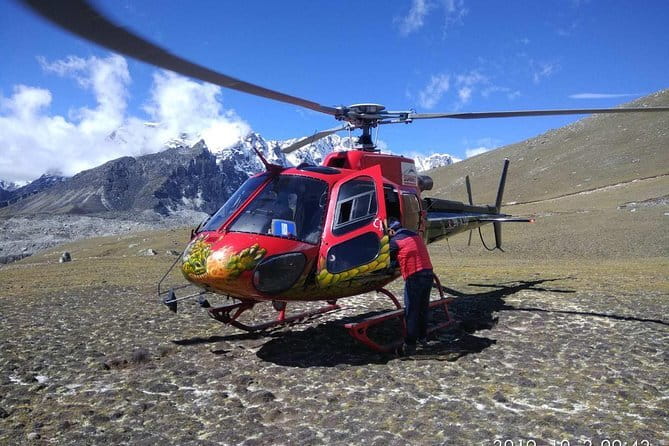
A shared helicopter carries you from Kathmandu to Lukla, then the trail takes over through Sherpa villages, pine forests, suspension bridges, and the high Khumbu. You reach Everest Base Camp on foot, climb Kala Patthar for sunrise, and return by helicopter from Gorakshep to Lukla before flying back toward Kathmandu. It is a fast, tightly planned route that cuts out the long walk back.
I like the two planned acclimatization days, especially the hike to Hotel Everest View and the climb above Dingboche. I also like the practical package: permits, meals, porters, sleeping bags, down jackets, airport transfers, and emergency coordination are covered. The drawback is clear: ten days at high altitude leaves little spare time, and helicopter flights can be affected by weather or operating conditions.
Key points at a glance
- Shared helicopter flights save walking days: You fly from Kathmandu to Lukla and return by helicopter from Gorakshep, with the final flight arrangement routed through Lukla.
- Two acclimatization days are built in: Namche Bazaar and Dingboche each include a higher hike followed by sleep at a lower elevation.
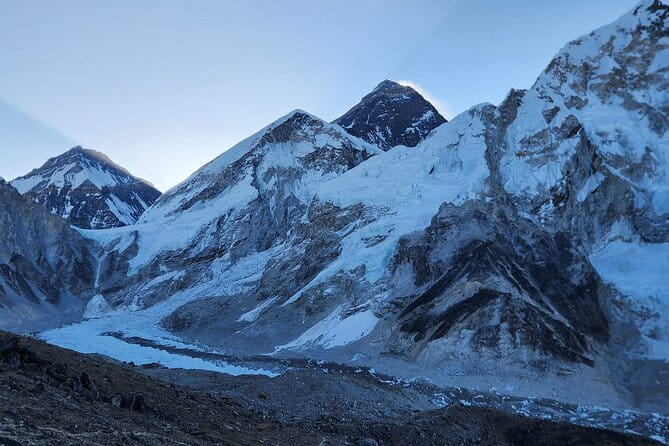
- Everest Base Camp is reached on foot: The route includes Gorakshep, glacier terrain, and the memorials near Thukla Pass.
- Kala Patthar brings the sunrise view: The early climb gives you a close mountain panorama and a strong final morning.
- The package includes useful high-altitude gear: A down jacket, minus-20-degree sleeping bag, duffel bag, map, first-aid kit, and oxygen meter are supplied.
- The pace is demanding: You need strong physical fitness, and insurance covering trekking and rescue up to 5,500 meters is your responsibility.
What the $3,332 price really covers
At $3,332 per person, this is not a bargain-basement Everest Base Camp trip. It is priced around speed, helicopter access, staff support, and a fairly broad list of inclusions.
Your price covers shared helicopter flights from Kathmandu to Lukla and from the Everest Base Camp area at Gorakshep toward Lukla. It also includes two nights in a three-star Kathmandu hotel, twin-share lodges during the trek, a licensed guide, one porter for every two people, meals on the trekking days, permits, airport transfers, and staff insurance.
The gear allowance adds real value. You receive a warm down jacket and a sleeping bag rated to minus 20 degrees, both returned after the trip. You also receive a trekking duffel, a T-shirt, a trail map, and first-aid support with an oxygen meter.
I would still read the price as an organized service fee rather than an all-inclusive holiday. Drinks, snacks, Kathmandu lunches and dinners, international flights, Nepal’s entry visa, and rescue insurance are extra. The rescue insurance point matters most. You need a policy that covers trekking at high altitude and helicopter evacuation up to 5,500 meters.
The helicopter element is the biggest reason to choose this package. A standard Everest Base Camp itinerary often needs more days because you must walk both directions. Here, you spend more of your limited vacation walking toward Base Camp and less retracing the same trail.
Other treks that start from Kathmandu:
- Everest Base Camp Trek – 14 Days
★ 5.0 · 1,499 reviews - Everest Base Camp Helicopter Tour landing at Everest View Hotel
★ 5.0 · 668 reviews - Everest Base Camp Trekking
★ 5.0 · 485 reviews
Day 1: A simple start in Thamel
Your trip begins with an airport pickup in Kathmandu. The local team takes you by car or van to your hotel in Thamel, the city district where the operator’s office is located.
This first day is mainly for rest after your flight. That is useful because the next morning starts early. Keep your important documents, medication, and basic trekking items close at hand, even though the operator provides a duffel and manages much of the transport.
The Kathmandu hotel night is included, as is the final Kathmandu night. Meals in the city are not included apart from the listed breakfasts, so budget separately for lunch and dinner.
Day 2: Helicopter to Lukla, then the walk to Phakding
The morning helicopter flight to Tenzing-Hillary Airport at Lukla takes about 45 minutes. The route offers views toward Everest and Kanchenjunga, and the approach to Lukla gives you an immediate sense that this is no ordinary walking holiday.
At Lukla, you begin the trek toward Phakding. The first walking section is described as gentle and relatively short, giving you time to adjust before the harder days ahead. You follow the river and pass through the first Sherpa settlements.
This is a good introduction to the rhythm of the trek: breakfast, walking, a lodge stop, and an early night. The long stated duration for this day reflects the transfer and walking schedule rather than nonstop hiking.
Day 3: Suspension bridges and the climb to Namche Bazaar
The route follows pine forest beside the Dudh Koshi River. You pass Benkar and Monjo, then enter Sagarmatha National Park after the trail crosses the river system near the Hillary Bridge.
The day becomes harder as you approach Namche Bazaar. The path rises steeply after the confluence of the Dudh Koshi and Bhote Koshi rivers. This is the first major altitude gain, and it is normal for the climb to feel demanding even if the distance does not look extreme on a map.
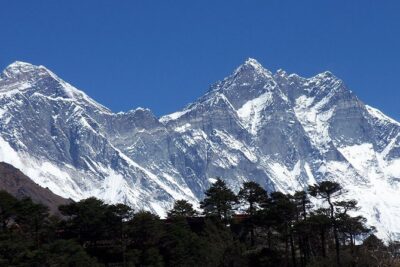
Namche is one of the most important stops on the route. It is a trading town with restaurants, massage centers, shops, and places to rest. You also get the first peek of Everest over the Lhotse and Nuptse range, a small preview that arrives after a serious uphill push.
More flights over the high peaks from Kathmandu:
- Everest Base Camp Helicopter Tour landing at Hotel Everest View
★ 5.0 · 218 reviews - Everest Base Camp helicopter tour with landing
★ 5.0 · 61 reviews - Everest Base Camp Helicopter Tour with Hotel Everest View Landing
★ 5.0 · 52 reviews - Guaranteed Landing at Everest Base Camp Kalapathar by Helicopter
★ 5.0 · 38 reviews
Day 4: Acclimatization above Namche
This is the first dedicated acclimatization day. Instead of simply resting, you climb toward Syangboche and Hotel Everest View, around 3,880 meters above sea level, then return to sleep in Namche at about 3,440 meters.
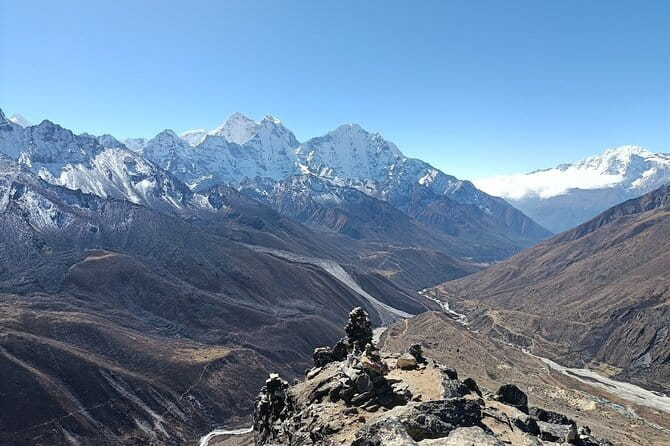
That high walk followed by a lower overnight stay is the right basic approach to altitude adjustment. The climb also gives you broad views toward Everest, Ama Dablam, Lhotse, and Khumbila Peak.
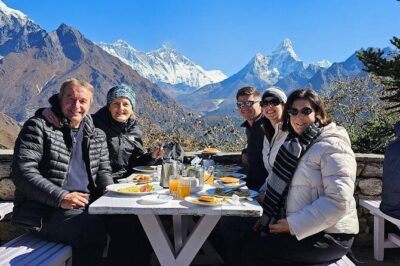
Hotel Everest View is a natural pause point, though its admission is not included. You can stop for coffee and enjoy the mountain view, but you should not confuse this with a luxury mountain retreat. Conditions remain high, exposed, and changeable.
The long stop in Namche lets you look around instead of treating the town as just a bed for the night. You might use the time for a massage, a meal, or quiet rest. Do not spend the whole day racing around. The next stages continue upward.
Day 5: Tengboche Gompa and the Imja Khola Valley
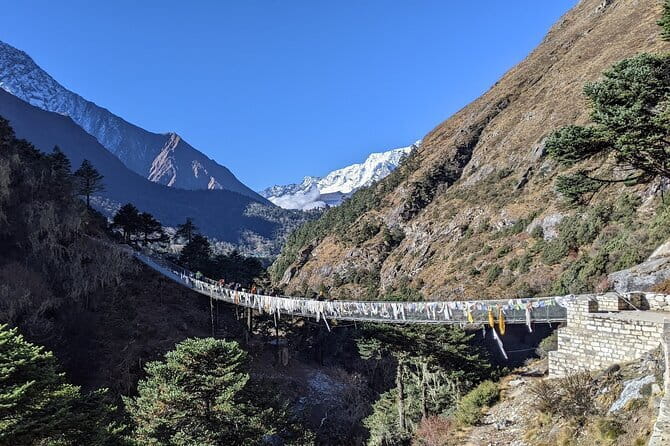
The trail follows the Dudh Koshi before crossing a long suspension bridge and turning toward the Imja Khola Valley. The route reaches Tengboche Gompa, one of the most important cultural and religious stops on the trek.
The monastery gives the day a welcome change of pace. The walk is not only about altitude and distance here. You are moving through a region shaped by Sherpa Buddhist traditions, with prayer sites and mountain villages along the route.
This is also one of the days when the scenery carries much of the appeal. Ama Dablam becomes a strong presence, and the surrounding peaks make the trail feel increasingly remote. The five-hour walking estimate is manageable on paper, but altitude can make an ordinary uphill section feel slow.
Day 6: Pangboche and high mountain views
After breakfast, you continue toward Pangboche. The village includes a Buddhist monastery, and the route offers views of Ama Dablam and other major peaks.
The day is listed at about five hours of walking. That gives you a little more time to settle into the pace before the higher stages near Dingboche, Lobuche, and Gorakshep.
Pangboche is valuable because it feels like a working mountain settlement rather than a quick photo stop. You should expect simple lodge accommodation, twin-share rooms, and basic conditions. The package calls these the best available lodges, but deluxe should be understood in trekking terms, not as a city hotel standard.
Day 7: Second acclimatization day in Dingboche
Dingboche is the second major acclimatization stop. The plan follows the useful rule of climbing high and sleeping lower, with a hike to a higher point before returning to Dingboche for the night.
This day is one of the strongest features of the itinerary. The ten-day schedule is quick, so it needs these pauses to give your body time to adjust. Skipping the acclimatization walk would make the route less sensible, not more adventurous.
You should use this day conservatively. Walk steadily, drink as directed by your guide, and pay attention to how you feel. The operator states that you need strong physical fitness, and that is especially true here. You are not just walking farther. You are working at altitude.
Day 8: Lobuche and the memorials at Thukla
The walk to Lobuche is relatively light in distance but gains substantial height. You pass through the broad valley of Dughla and then reach the memorial area near Thukla Pass.
The memorials honor climbers and Sherpa staff who died on the mountains. This is a quiet and sobering part of the route. It gives you a better sense of the risks behind the famous summit photographs.
The day is listed with a very long total duration, so your exact timing may depend on walking speed, rest stops, and lodge arrangements. The practical point is that you should not expect a casual afternoon. Lobuche is high, cold, and close to the demanding final approach.
Day 9: Everest Base Camp through Gorakshep
This is the central day of the trek. From Lobuche, you walk across rough glacier terrain toward Gorakshep, the last settlement before Everest Base Camp. After a pause there, you continue to Base Camp.
The walk to Base Camp takes about four hours from Lobuche according to the schedule, with a total day of roughly six hours. The route is not a smooth park path. Expect uneven ground, high altitude, and a slower pace as you approach the glacier.
Everest Base Camp itself is a major personal milestone, but keep your expectations realistic. You do not get the classic summit view directly from Base Camp because the nearby Khumbu Icefall and surrounding terrain block much of Everest. The famous broad Everest panorama is better from Kala Patthar the next morning.
The helicopter return begins from the Gorakshep area, not from the Base Camp trail itself. That means you still need to walk back to Gorakshep after visiting Base Camp. The shared flight is also dependent on conditions, so your guide and operator coordinate the practical details.
Day 10: Kala Patthar at sunrise and the helicopter return
You start before sunrise for the climb to Kala Patthar. The ascent is short in distance but tough because of the altitude and early hour. The reward is a wide view toward Everest, Ama Dablam, Lhotse, Nuptse, and the surrounding peaks as light reaches the summit faces.
For many people, this is the best mountain viewpoint on the whole route. If you have enough energy, this is the morning to protect. Carry only what you need, dress warmly, and follow your guide’s pace.
After Kala Patthar, the stated plan returns you by shared helicopter from Gorakshep toward Lukla, followed by the flight arrangement back toward Kathmandu. The package lists helicopter transport from Lukla to Kathmandu as well, so confirm the exact same-day sequence with the operator before departure.
The return flight is a major convenience, but it is also the part most exposed to mountain weather and scheduling changes. Keep a little flexibility in your wider Nepal plans rather than booking an international connection too tightly after the trek.
Guides, porters, and the human side of the trek
The package provides a government-licensed trekking guide and one porter for every two people. Staff salary, food, transport, equipment, and accidental insurance are included for the guide and porters.
The names associated with the company include Tika, Pramod, Promod, and Rabin. Tika is described as encouraging and safety-focused, while Pramod and Rabin have also guided successful Everest Base Camp trips. Shiba is noted for careful communication before the trek.
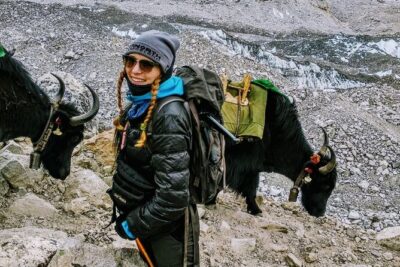
You should still ask who your assigned guide will be, how porter luggage is divided, and how much weight you may place in the big bag. The stated allowance is 10 kilograms for the big bag and 5 kilograms for a handbag. Pack with discipline. Your porter carries the shared load, and the high route is hard work for everyone.
Who should book this 10-day trek?
This trip suits you if you have limited time, want to reach Everest Base Camp on foot, and value a helicopter return over a longer walk back. It also suits people who prefer having permits, lodging, meals, guides, porters, and gear arranged through one local operator.
It is less suitable if you want a relaxed schedule with many spare days. The route is compressed, the altitude is serious, and the helicopter plan leaves less room for a weather-related delay.
The private format is useful because only your group participates. The company can adjust parts of the itinerary for group needs, but changes should be discussed before you arrive. You should not assume that every adjustment is possible once you are high on the route.
Should you book it?
I would choose this package if the $3,332 price fits your budget and your priority is reaching Everest Base Camp quickly with a helicopter return. The included gear, staff support, permits, meals, acclimatization days, and airport transfers make the cost easier to justify than a bare trek price.
I would pause before booking if you dislike fixed schedules, have no strong trekking fitness, or cannot purchase rescue insurance up to 5,500 meters. Ask the operator to confirm the helicopter routing, luggage handling, lodge standards, and contingency plan for poor weather.
For a fit person with ten days, this is a practical Everest Base Camp plan. It gives you the core trail, the two essential acclimatization stops, a sunrise at Kala Patthar, and less backtracking than a standard walking itinerary.
FAQ
How long is the Everest Base Camp trek?
The planned duration is approximately 10 days, including the Kathmandu arrival and departure arrangements.
Where does the experience begin?
The meeting point is Life Himalaya Trekking at Narsingh Chowk Marg in Kathmandu. Airport pickup is included.
Is helicopter transportation included?
Yes. Shared helicopter transportation is included from Kathmandu to Lukla, from the Gorakshep or Everest Base Camp area toward Lukla, and from Lukla toward Kathmandu.
Is accommodation included?
Yes. The package includes two nights in a three-star Kathmandu hotel with breakfast and twin-share lodge accommodation during the trek.
Are meals included?
Breakfast is included for 10 days. Eight lunches and eight dinners are also included. Kathmandu lunches and dinners, beverages, and snacks are not included.
Is a trekking guide included?
Yes. The package includes an experienced, government-licensed trekking guide.
Are porters included?
Yes. One porter is provided for every two people, with staff salary, food, equipment, transport, and accidental insurance included.
What luggage allowance is provided?
The stated allowance is 10 kilograms for a large bag and 5 kilograms for a handbag.
Is trekking gear supplied?
A warm down jacket and a sleeping bag rated to minus 20 degrees are provided for use during the trip and must be returned afterward. A duffel bag, T-shirt, and trail map are also included.
Is travel insurance included?
No. You must arrange your own travel insurance, including coverage for trekking, rescue, and evacuation up to 5,500 meters.
More Hiking & Trekking in Kathmandu
- Nagarkot Sunrise View and Day Hiking from Kathmandu
★ 5.0 · 471 reviews - Annapurna Circuit Trek with Tilicho Lake
★ 5.0 · 368 reviews - Everest Base Camp Trekking – 13 Day
★ 5.0 · 365 reviews - Everest Base Camp Trek -14 Days
★ 5.0 · 321 reviews
Just added in Kathmandu
- Kathmandu to Chitwan Tour by Tourist Bus – A Convenient and Affordable Way★ 4.0 · 4 reviews
- Changunarayan Hill to Telkot Hike Near Kathmandu Day Tour★ 5.0 · 6 reviews
- Mt Everest Base CampTrek | Budget Package★ 5.0 · 4 reviews
- Chitwan Jungle Safari 3-Day Tour★ 5.0 · 9 reviews
- Chandragiri Hill Station Tour by Cable Car★ 5.0 · 4 reviews
- Chandragiri Hills cable car day trip, private car with driver from Kathmandu★ 5.0 · 8 reviews
- Chandragiri to Taudaha Nature Day Hiking from Kathmandu★ 5.0 · 13 reviews
- Chandragiri Hills Private Tour★ 5.0 · 4 reviews
Everest Base Camp Treks, compared.
Everest Base Camp Helicopter Tour landing at Everest View Hotel
Read our review →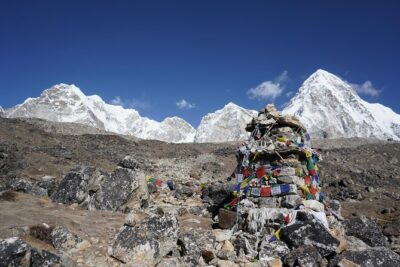
Browse the lists this tour appears in