
Reviewed · EVEREST BASE CAMP TREKS
Everest Base Camp trek with Helicopter return 9 days
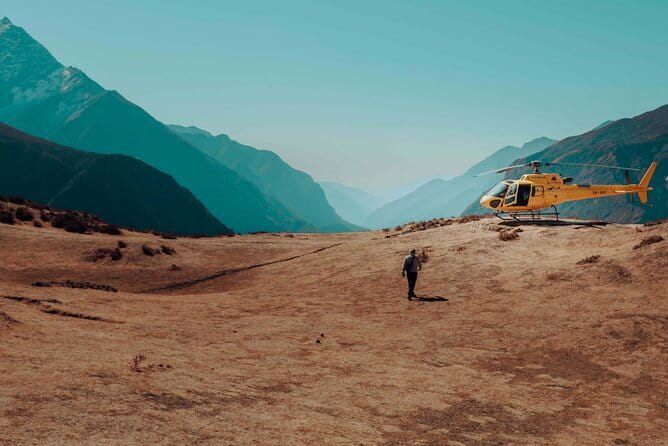
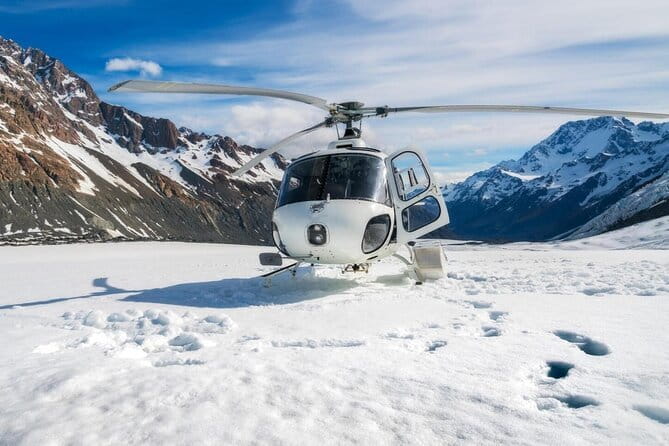
The clever part of this Everest trip is the exit. You walk the classic route to Base Camp and Kala Patthar, then skip the long return trek by taking a helicopter from Gorakshep to Lukla. That cuts the journey to nine days, a useful option if your calendar is tight.
I like the gradual start through Phakding and Namche, and I like that altitude checks with an oximeter are built into the daily routine. The main caution is simple: nine days is fast for a high-altitude trek, and the itinerary information has a few unclear stop names. Ask the operator to confirm the exact overnight plan before paying.
Key points at a glance
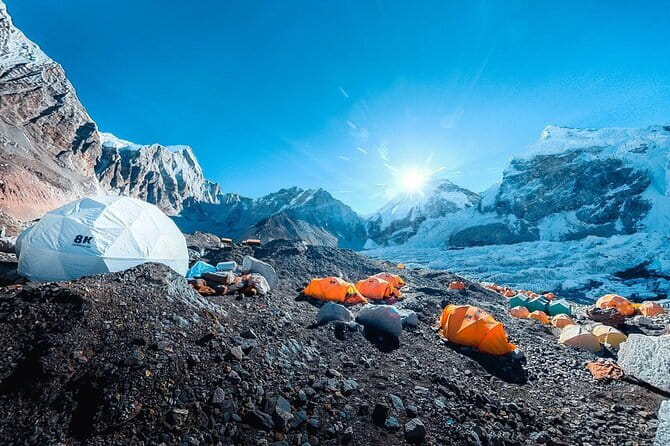
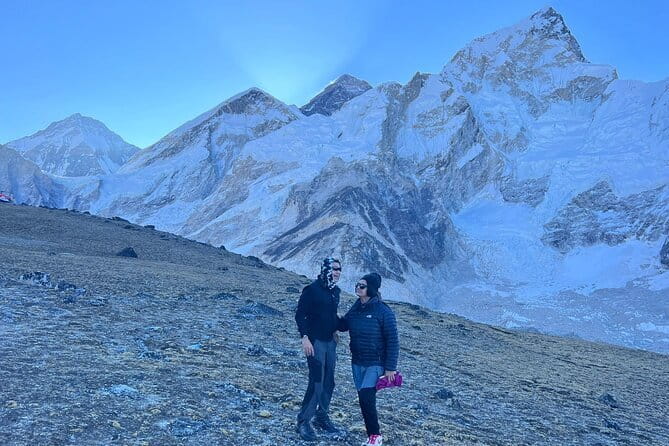
- Kala Patthar at 5,644 meters: The high point of the trek gives you the major Everest-area mountain views.
- Helicopter from Gorakshep to Lukla: You walk up the Khumbu valley and fly out instead of retracing the full route.
- Namche acclimatization day: A rest day helps your body adjust before the trail rises higher.
- Private group format: Only your group takes part, with private airport and ground transfers.
- Porter support included: One porter is provided for every two people, reducing the load you carry.
- Meals, permits, and guide costs covered: Breakfast, lunch, dinner, park fees, and government charges are included, while drinks and personal extras are not.
Why the helicopter return makes sense
The usual Everest Base Camp trek takes longer because you must walk in and walk out. This version keeps the classic approach but replaces the return march with a helicopter flight from Gorakshep to Lukla. You still earn the major views on foot, but you avoid several days of retracing the same trail.
That trade makes the tour attractive to people with limited holiday time. It also changes the rhythm of the trip. You spend seven full days in the mountains, then use the final day for Kala Patthar and the helicopter return. There is no relaxed descent built into the schedule.
The route is rated moderate, but that label needs context. The trail becomes steeper and more remote above Dingboche, and Kala Patthar reaches 5,644 meters. You need a reasonable level of fitness, patience with slow uphill walking, and a willingness to handle cold, basic tea-house conditions, and possible flight changes.
The group is private, so you are not placed with strangers. That can make a difference on a demanding route. Your guide can focus on your group’s pace and needs, though the specific guide’s name is not provided in advance. The company has used guides named Ramesh, Sital, and Ganesh on other Nepal trips, but you should confirm who will lead this Everest departure.
Other treks that start from Kathmandu:
- Everest Base Camp Trek – 14 Days
★ 5.0 · 1,499 reviews - Everest Base Camp Helicopter Tour landing at Everest View Hotel
★ 5.0 · 668 reviews - Everest Base Camp Trekking
★ 5.0 · 485 reviews
Day 1: Kathmandu arrival and a practical first evening
An airport team meets you at Kathmandu’s international terminal, transfers you by private car, helps with check-in, and carries your bags. This is a small service, but after an international flight it removes a fair amount of hassle.
The first evening is also your chance to meet the core team and settle your gear. Use it to confirm the morning departure, ask how the porter load will be divided, and check what is included in your personal bag. Food in Kathmandu at lunch and dinner is not included, and neither is your visa, travel insurance, or international airfare.
The first night matters because the next morning starts early. This is not a tour built around leisurely mornings.
Day 2: The Lukla flight and the walk to Phakding
You fly from Kathmandu to Lukla, home of Tenzing Hillary Airport. The flight is short and known for its mountain setting, but the useful point for you is that it places you directly at the trailhead.
After landing, porters join the group and you begin walking. The first day is designed to be manageable, with about four hours on the trail and an overnight stop at Phakding. It is a good introduction to the route because you begin below the highest elevations rather than rushing straight into the thin air.
The flight is also the first schedule point to watch. The tour includes the Kathmandu to Lukla and Lukla to Kathmandu air travel, plus the helicopter from Gorakshep to Lukla. If flights shift, the day plan can change, so keep some flexibility around the wider Nepal trip even though the official duration is nine days.
Day 3: Phakding to Namche Bazaar
The trail follows the route through rhododendron and magnolia forest toward Toktok at 2,760 meters. From Bengkar Village at 2,630 meters, you cross two bridges on the way to Monjo, then continue toward Namche Bazaar.
This is a longer walking day, listed at about six hours. The route gives you a clear sense of how the trek changes. The lower valley has forest, bridges, and villages. As you climb toward Namche, the path feels more serious and the altitude begins to affect your pace.
Namche Bazaar is one of the most important stops on the route because it is the main acclimatization point. You will want a warm meal, a good rest, and an honest check of how your body feels. The trek’s moderate rating does not mean the altitude is mild.
More flights over the high peaks from Kathmandu:
- Everest Base Camp Helicopter Tour landing at Hotel Everest View
★ 5.0 · 218 reviews - Everest Base Camp helicopter tour with landing
★ 5.0 · 61 reviews - Everest Base Camp Helicopter Tour with Hotel Everest View Landing
★ 5.0 · 52 reviews - Guaranteed Landing at Everest Base Camp Kalapathar by Helicopter
★ 5.0 · 38 reviews
Day 4: Acclimatization around Namche and Khumjung
You spend a rest day in Namche so your body can adjust. Rest does not mean staying in bed all day. The planned outing reaches the Syangboche airstrip and the Everest View Hotel, with Khumjung included in the day’s route.
The walk is listed at about five hours. That is a useful design choice: you gain elevation during the day but return to sleep at Namche. This kind of up-and-down day is more useful than simply sitting still, provided you keep the pace gentle.
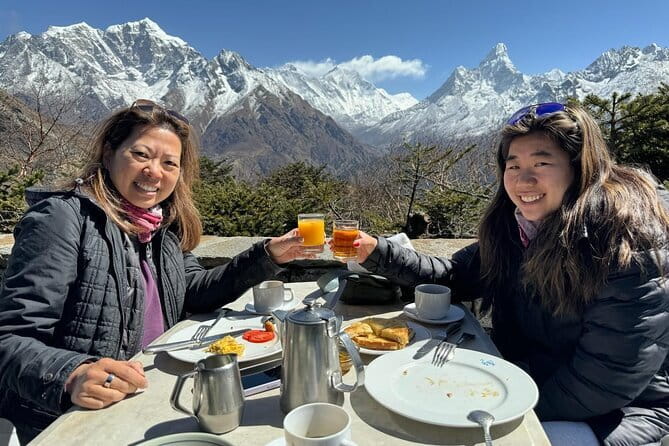
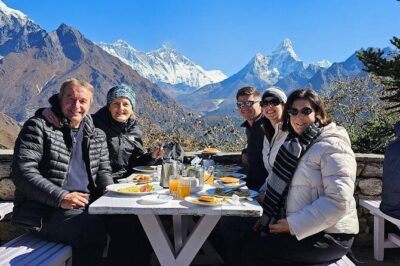
Khumjung adds village scenery and a quieter feel than Namche. The Everest View Hotel stop gives you an early look at the high peaks before the trail moves into more exposed terrain. Treat this day as preparation, not a bonus sightseeing walk. Drink water, eat properly, and tell the guide if you have a headache, unusual fatigue, or breathing trouble.
Day 5: Namche to Kyangjuma
The route leaves Namche and climbs through the green foothills to Kyangjuma at 3,550 meters. The day is listed at about five hours, with mountain views along the way.
The trail rises and falls rather than simply pointing uphill. That can be tiring, but it also breaks the climb into manageable sections. Kyangjuma is a useful overnight location because you are moving higher while still following a well-used section of the route.
The supplied itinerary places this stop after the Namche acclimatization day, but the day-by-day description is brief and the exact overnight sequence should be confirmed. The route may be described differently by the operator depending on the tea house used. Get the final lodge list and elevation plan before departure.
Day 6: Tengboche and the monastery setting
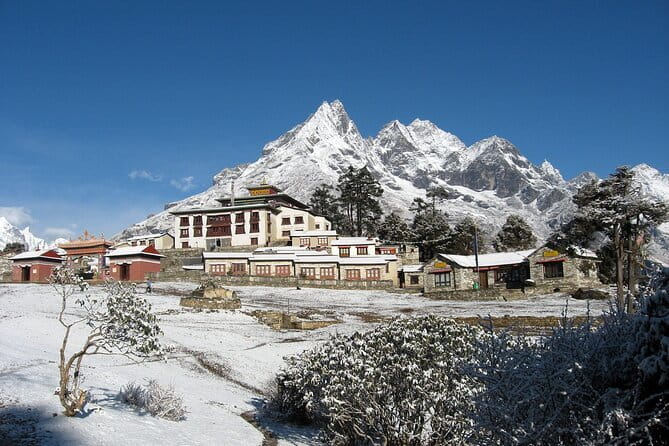
The day begins early for sunrise, then continues toward Tengboche. After breakfast, the route drops through rhododendron forest to Deboche at 3,320 meters. The area may offer sightings of musk deer, blue sheep, and Himalayan birds, though wildlife is never guaranteed.
Tengboche is one of the memorable stops on this route because of its mountain setting and monastery. The walking time is about five hours, but the downhill section to Deboche and the later climbs still demand care. High-altitude trails can feel easy in one direction and surprisingly hard on the next rise.
This is also a day when the scenery changes again. The forest thins as you gain height, and the valley feels more open. I would keep your camera accessible, but not at the cost of losing your rhythm. The best way to enjoy the route is to walk steadily, take short rests, and save your energy for the higher days.
Day 7: Toward the Khumbu Glacier
The route now moves into the higher Khumbu region. Leaving Dingboche, you climb along a ridge, with views toward Cholatse and Tawache before continuing toward the glacier area.
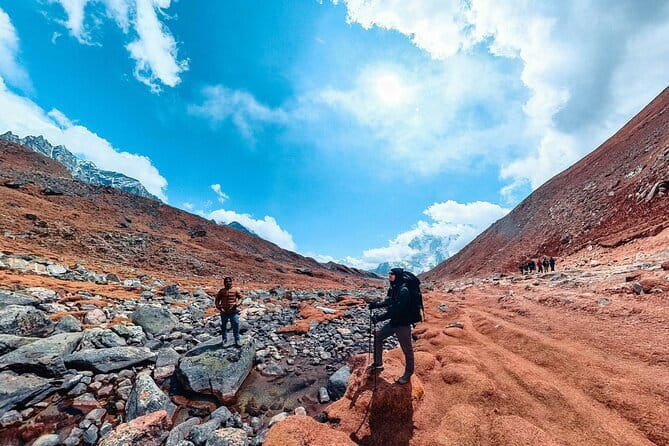
About six hours of walking is planned. Above Dingboche, the route becomes steeper and more remote, so this is where the moderate rating starts to feel optimistic for anyone unused to altitude. The trail is not described as technical, but the combination of elevation, rocky ground, and thin air makes every uphill section slower.
The Khumbu Glacier is not just a photo stop. It marks the high mountain environment you came to see, with rock, ice, and broad views replacing the forests lower down. Stay close to the guide and follow the established route. Your guide also checks oxygen saturation, pulse, and heart rate twice a day using the included oximeter, a useful safeguard on a fast itinerary.
Day 8: Lobuche to Gorakshep and Everest Base Camp
This is the big walking day. From Lobuche, you follow the wide valley toward Gorakshep, with the trail becoming steeper as the elevation increases. The planned walking time is about eight hours.
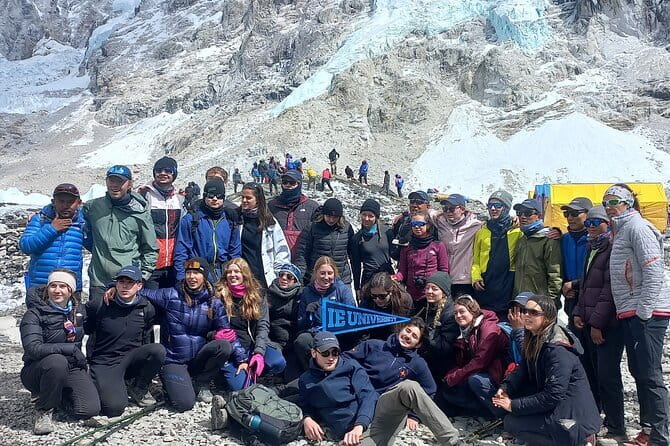
The route includes Gorakshep and the walk toward Everest Base Camp. You move over rocky ground beside the Khumbu Glacier, with little shelter and a much slower pace than you may expect from a map. The physical effort is real, even though the route does not involve technical climbing.
Base Camp itself is a major goal, but the nearby glacier and surrounding peaks are part of the experience. The exact appearance of the camp can vary by season, and you should not expect to climb Mount Everest from here. This is the starting area for expeditions, not a summit route for ordinary trekkers.
Gorakshep is also the launch point for the next morning’s climb. Keep the evening simple. Eat, drink, prepare warm clothing, and sleep as much as you can. Desserts, chocolate, cake, pie, and pudding are not included, and cold or hot drinks must be purchased separately.
Day 9: Kala Patthar and the helicopter back
The final day begins with the climb to Kala Patthar. The trail starts above Gorakshep and is well used and easy to follow, although the altitude makes the walk hard. The schedule allows about six hours for the day.
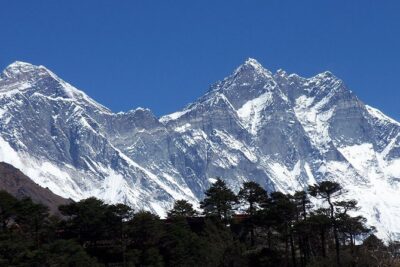
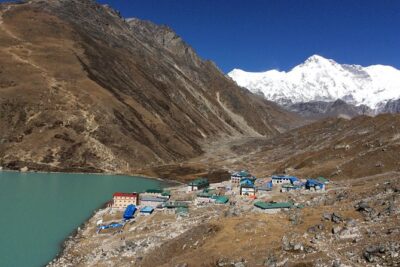
This is the best viewpoint section of the trip. Early sunlight brings a golden tone to the high peaks, and the position above Gorakshep gives you a broad view of the Everest area. At 5,644 meters, Kala Patthar is higher than Everest Base Camp, so do not treat it as a quick add-on.
After the mountain walk, you take a helicopter from Gorakshep to Lukla. From Lukla, the included flight returns you to Kathmandu. The helicopter is the trip’s major convenience, but it is also a practical point to discuss with the operator. Weather and high-altitude flying can affect timing, and the information does not promise a fixed departure hour.
What the $3,888 price covers
At $3,888 per person, this is a costly short trek, but much of the main expense is bundled into the price. You receive private ground transport, the Kathmandu to Lukla and Lukla to Kathmandu flights, the Gorakshep to Lukla helicopter, an experienced guide, one porter for every two people, meals during the trek, permits, government charges, taxes, and a completion certificate.
The guide’s salary, food, accommodation, transport, and insurance are also covered. That matters because guide costs and mountain logistics can add up quickly on a route like this. First aid equipment and the twice-daily oximeter checks are included as well.
The exclusions are worth reading carefully. You pay for Kathmandu lunch and dinner, your visa, international flights, travel and medical insurance, personal purchases, drinks, hot showers, phone charging, desserts, alcohol, and tips. Tea-house showers and charging generally cost about $2 to $5, and tipping the guide, porter, and driver is expected.
The value is strongest for someone who wants Everest Base Camp but cannot spend two or three weeks walking down. If you have more time and want a slower trip, the helicopter return may feel like an expensive shortcut. If your priority is seeing the high Khumbu region within a fixed holiday, the price is easier to justify.
Who should book this trek
I would consider this trip if you have moderate fitness, limited time, and a strong desire to reach Base Camp and Kala Patthar. The private format suits couples, families, and small friend groups that want one guide and one shared pace.
You should also be comfortable with basic tea-house conditions and extra charges for showers and charging. The route is not a casual sightseeing walk. The high point exceeds 5,600 meters, and the itinerary gives you little spare time if you need a slower schedule.
The trip is less suitable if you need a highly flexible pace, dislike early starts, or want a long, gentle descent. It is also not the right choice without proper travel and medical insurance. The operator provides guide insurance and basic first aid support, but your own coverage remains your responsibility.
Booking details worth checking first
Confirmation is provided at booking, and free cancellation is available up to 24 hours before the experience starts. Inside that 24-hour window, cancellations and changes are not accepted, with no refund.
Service animals are allowed, and the tour is near public transportation, though most of your time after Lukla is on foot. Before booking, ask for the exact guide’s name, the confirmed overnight stops, the planned helicopter timing, and the baggage limit for the porter.
Those questions are especially useful because the published day descriptions use a few different place names and do not spell out every overnight stop. Clear information before departure is more valuable than discovering the fine print in Kathmandu.
Should you book it?
Book this Everest Base Camp helicopter-return trek if you want the classic approach, need to keep the trip to nine days, and accept a hard high-altitude schedule. The Namche acclimatization day, private transfers, porter support, included meals, permits, and helicopter exit give the package real practical value.
I would pause if you are new to altitude, want a relaxed walking holiday, or have no spare time for flight disruption. Confirm the itinerary details and guide assignment first. If those answers are clear, this is a focused way to reach Everest Base Camp and Kala Patthar without spending extra days walking back down the valley.
FAQ
How long is the Everest Base Camp helicopter-return trek?
The experience lasts approximately nine days. You spend seven full days in the mountain region and return toward Kathmandu by helicopter and flight on the final day.
Is the helicopter flight included?
Yes. The helicopter from Gorakshep to Lukla is included, along with the Kathmandu to Lukla and Lukla to Kathmandu flights.
What meals are included?
Eight breakfasts, eight lunches, and eight dinners are included. Food in Kathmandu at lunch and dinner is not included.
Is a guide provided?
Yes. An experienced guide is included, with salary, food, accommodation, transport, and insurance covered by the tour price. The guide’s name is not specified in the provided details.
How high does the trek go?
The route reaches Kala Patthar at 5,644 meters, or 18,519 feet. The itinerary also visits Everest Base Camp and the Khumbu Glacier.
Can I cancel for a full refund?
You can cancel up to 24 hours before the experience starts for a full refund. Cancellations or changes made less than 24 hours before the start time are not accepted and are not refundable.
More Hiking & Trekking in Kathmandu
- Nagarkot Sunrise View and Day Hiking from Kathmandu
★ 5.0 · 471 reviews - Annapurna Circuit Trek with Tilicho Lake
★ 5.0 · 368 reviews - Everest Base Camp Trekking – 13 Day
★ 5.0 · 365 reviews - Everest Base Camp Trek -14 Days
★ 5.0 · 321 reviews
Just added in Kathmandu
- Luxury Everest Base Camp Trek -11 Days★ 5.0 · 7 reviews
- 14 Days Everest Base Camp Trek★ 5.0 · 7 reviews
- Everest Base Camp Helicopter Tour★ 5.0 · 3 reviews
- Everest Base Camp Helicopter Tour★ 5.0 · 17 reviews
- Everest Base Camp Helicopter Tour★ 5.0 · 11 reviews
- Everest Base Camp Heli Tour★ 5.0 · 15 reviews
- Everest Base Camp Helicopter Tour with Stop at Everest View Hotel★ 5.0 · 19 reviews
- Everest Base Camp Helicopter Tour★ 5.0 · 4 reviews
Everest Base Camp Treks, compared.
Everest Base Camp Helicopter Tour landing at Everest View Hotel
Read our review →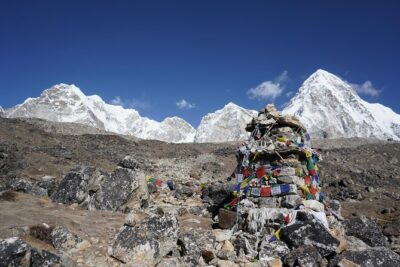
Browse the lists this tour appears in