
Reviewed · EVEREST BASE CAMP TREKS
Everest Base Camp Trek
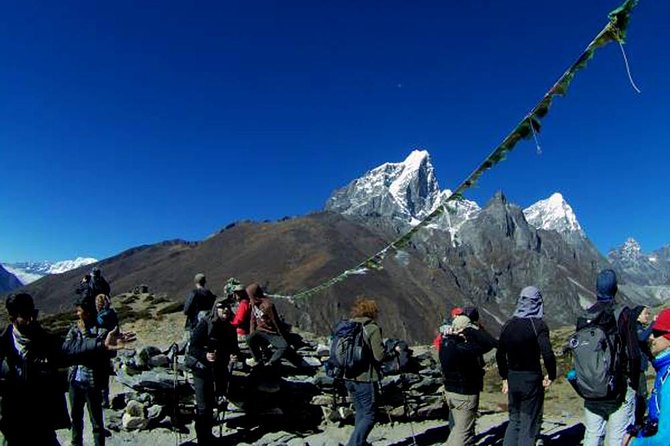
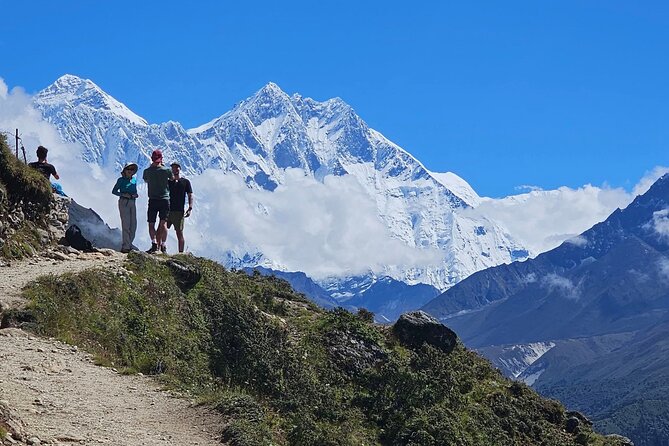
The adventure begins with a short, dramatic flight to Lukla, a mountain airstrip that makes the Everest route feel serious before you take your first step. From there, you walk through Sherpa villages, pine forests, river valleys, glaciers, and high mountain passes on the way to Base Camp and Kala Patthar.
I like the private small-group format, which lets your guide adjust the walking pace instead of pushing everyone along like a marching band. I also like that porters carry the main load and that the price includes a sleeping bag, down jacket, duffle bag, permits, meals, and domestic flights.
The main catch is altitude. This is not a sightseeing stroll with a few hills added. You need moderate fitness, patience for slow uphill walking, and flexibility when Lukla flights are delayed by weather.
Five details that shape this Everest trek
- Lukla flights are part of the adventure: The 30-minute flight from Kathmandu is scenic and weather-sensitive.
- Two acclimatization days are built in: You hike near Namche and later climb toward Nagarkhang Peak at about 5,000 meters.
- Porters carry your main gear: You walk with a lighter day pack while the guide handles route planning and daily arrangements.
- Kala Patthar provides the big mountain viewpoint: The early morning climb is hard, but it is one of the trip’s visual high points.
- The $1,408 price covers many major costs: Permits, domestic flights, lodging, meals, guide services, porters, and loaned equipment are included.
- A spare Kathmandu day protects the schedule: Day 14 is held open for shopping or for delays caused by Lukla weather.
What the $1,408 price really covers
At $1,408 per person, this trek is priced as a package rather than a simple guided walk. You are paying for 15 days of organization, airport transfers, Kathmandu accommodation, domestic flights, national park access, TIMS registration, a licensed English-speaking guide, porters, meals, and mountain gear.
That matters in the Everest region. A do-it-yourself trek may look cheaper at first, but you would still need to arrange permits, flights, lodging, meals, porters, and equipment. Here, the guide and company handle the moving parts while you concentrate on walking and staying healthy.
The included equipment is useful rather than decorative. You receive a down jacket, four-season sleeping bag, and duffle bag, all returned after the trek. The guide also carries a first-aid kit. You still need your personal clothing, footwear, insurance, toiletries, drinks, snacks, and any medical supplies you require.
The package includes breakfast for 14 days, lunch for 11 days, and dinner for 12 days. Personal expenses are extra, including hot showers, laundry, telephone use, bar and beverage bills, and small snacks. International airfare, Nepal visa fees, travel insurance, medical insurance, and emergency evacuation are also excluded.
That last point deserves attention. High-altitude trekking carries real risks, and emergency evacuation is not included in the tour price. Arrange suitable insurance before you go and check that it covers trekking at the elevations on this route.
Other treks that start from Kathmandu:
- Everest Base Camp Trek – 14 Days
★ 5.0 · 1,499 reviews - Everest Base Camp Helicopter Tour landing at Everest View Hotel
★ 5.0 · 668 reviews - Everest Base Camp Trekking
★ 5.0 · 485 reviews
Kathmandu arrival and the first night
On day one, an airport representative meets you with a name card and transfers you to your hotel in Kathmandu. The listed airport transfer takes about 30 minutes, and the day is mainly for arrival, settling in, and meeting the team.
This is a practical beginning. You do not have to find your own way through Kathmandu after a long international flight, and you have time to ask questions before the mountain portion starts. The operator has staff such as Upendra and Birendra handling pre-trip communication, while guides assigned to different groups have included Lok, Khila, Lal, Hari, and Ossman.
Guide quality matters greatly here. The most useful guide is not simply the person who knows the path. You want someone who watches your pace, pays attention to your health, handles lodge and meal arrangements, and explains what comes next. Past guide assignments have included Lok, Khila, Lal, Hari, and Ossman, with Khila and Lal receiving especially strong praise for safety, care, and encouragement.
Lukla to Phakding: four hours above the river
Day two starts with the flight from Kathmandu to Lukla, roughly 30 minutes in the air. The flight offers mountain views, but weather can interrupt the plan, so keep your schedule flexible from the outset.
After landing, you begin walking toward Phakding. The day is listed at about four hours, a sensible introduction to trekking after the flight. The route gives you an early taste of the Khumbu, with mountain scenery and local villages arriving quickly.
Lukla is more than a transport stop. It is the gateway where paved-road travel ends and the walking route begins. You will likely feel the change at once: your porter team becomes central, your feet set the day’s rhythm, and every meal and bed ahead depends on the route.
Phakding to Namche Bazaar: the first serious climb
The next stage follows the trail through pine forests and toward Monjo. Lunch is planned at Jorsalle, then you continue toward the Hillary Bridge before taking on a steeper section toward Namche Bazaar.
This is one of the days when a slow pace pays off. The trail begins gently, but the climb after the bridge tests your legs. The forest, river crossings, and changing views make the route interesting, yet the effort is real.
Namche is the cultural and practical center of the Khumbu route. It is also where the altitude begins to demand respect. Do not use your arrival day to prove anything. Eat, drink, rest, and let your guide decide how hard the next walk should be.
A few more things to do in Kathmandu worth a look
- Nagarkot Sunrise View and Day Hiking from Kathmandu
★ 5.0 · 471 reviews - Annapurna Circuit Trek with Tilicho Lake
★ 5.0 · 368 reviews - Everest Base Camp Trekking – 13 Day
★ 5.0 · 365 reviews - Everest Base Camp Trek -14 Days
★ 5.0 · 321 reviews
Namche acclimatization: choose the hike that suits you
Day four is a rest and acclimatization day, but rest does not mean staying in bed all day. Your guide may offer several options, including hikes toward Khumjung and Khunde, the Everest View Hotel, Thame, or Sagarmatha National Park.
This flexible menu is one of the trip’s better features. A strong hiker may want a longer outing, while someone feeling the altitude may need a gentler option. The goal is to sleep at the same altitude and spend part of the day walking higher, helping your body adjust.
This is also a good point to learn about Sherpa life in the region. Villages such as Khumjung, Khunde, and Namche are not just scenic backdrops. They are working communities shaped by trade, mountaineering, tourism, and Buddhist traditions. Your guide is the best person to connect the views with local life.
Namche to Pangboche through Kyanjuma and Tengboche
The route climbs toward the national park headquarters and continues to Kyanjuma. After a tea break, you descend to Phungi Thanga for lunch, cross the Dudh Koshi River, and then climb again.
This up-and-down pattern is typical of the Everest route. You may gain altitude overall while still descending into a river valley, only to climb again afterward. It can feel inefficient, but the path follows the terrain rather than a neat staircase.
The next major destination is Pangboche, at about 3,930 meters. The village is associated with well-known Everest climbers and is described as home to brave Sherpas. Here, the sense of entering a high mountain community becomes stronger, and the peaks begin to feel much closer.
The second acclimatization day at Nagarkhang Peak
Day seven offers another acclimatization break, with a hike toward Nagarkhang Peak at approximately 5,000 meters. From the high point, you can expect broad Himalayan views, assuming weather cooperates.
This is a demanding rest day. The hike itself may be harder than a short walking day lower down, but you return to sleep at the same elevation. That is the point. Your guide may adjust the plan based on your condition, and you should speak up early if you have a headache, nausea, unusual fatigue, or trouble breathing.
The itinerary also includes an assistant guide for groups larger than six people. That can help with pace and group management, but the trip is still physically demanding for everyone. A small group does not remove the altitude.
Pangboche to Dughla: the trail turns tougher
The route follows a ridge above Pheriche before reaching Dughla. After a quick lunch, you climb steeply to Dughla Pass and continue toward the higher part of the valley.
This section changes the feel of the trek. The air is thinner, the climbs take longer, and the trail becomes less forgiving. You should stop thinking in terms of distance and focus on steady effort, regular rest, and the next safe point ahead.
Dughla is also where the route begins to feel tied closely to Everest history and mountaineering. The terrain grows more stark, and the mountains dominate the view. At this altitude, however, scenery should not distract you from hydration, warm layers, and careful pacing.
Everest Base Camp and the Khumbu Glacier
The walk toward Base Camp begins relatively easily, then becomes much harder once you reach the glacier. The guide describes the glacier crossing as difficult because of uneven trail conditions and low oxygen levels.
That warning is important. Base Camp is not reached by a smooth path with a grand entrance. You may walk over rough glacial ground, move slowly, and spend much of the day concentrating on balance and breath. The destination matters, but the route is the challenge.
Everest Base Camp itself is a seasonal mountaineering base rather than a permanent village. The experience is about reaching the famous point at the foot of the world’s highest mountain, seeing the glacier, and understanding how demanding the climbing route is. Weather and conditions can affect how much you see and how long you stay.
Kala Patthar before sunrise
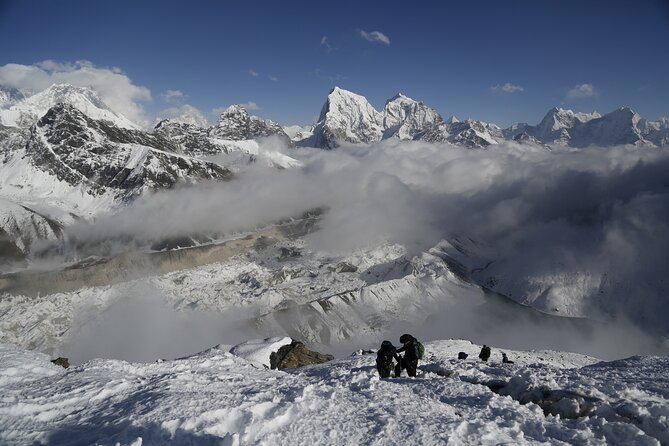
Day ten begins early, before sunrise, with the climb to Kala Patthar. The ascent is difficult, but the reward is the classic Khumbu panorama, with towering Himalayan peaks filling the view as the light changes.
For many hikers, this is the visual high point of the trek. Base Camp gives you the achievement of reaching the destination, while Kala Patthar gives you the broad mountain view that people often picture when they think of Everest.
The early start also means cold and fatigue. Bring the warm layers supplied or recommended by the operator, and do not confuse a famous viewpoint with an easy one. The climb is short in the grand scheme of the trip, but high altitude makes every step count.
The long return through Tengboche and Phakding
After Kala Patthar, you retrace much of the route. You pass through Debuche and Tengboche, descend steeply to Phungi Thanga for lunch, and climb again toward Kyanjuma.
The return is not simply a victory lap. Descending can be hard on tired knees, and the repeated climbs may surprise you. Still, familiar villages can feel different when you know how far you have come.
The next day takes you down to Jorsalle and then onward to Phakding, with the route eventually continuing toward Lukla. The itinerary refers to this as the end of the 11-night, 12-day walking portion, although the full program continues through day 15.
Lukla weather and the spare Kathmandu day
On day 13, you fly from Lukla back to Kathmandu. The flight is described as scenic and adventurous, with the right side of the plane suggested for mountain views.
Lukla weather can cause delays or cancellations. That is why day 14 is kept free in Kathmandu. You can use it for shopping and city time, or it can absorb a delayed return flight without immediately ruining your international departure.
This buffer is one of the more sensible parts of the schedule. Do not book an international flight too tightly around the expected Lukla arrival unless your own plans allow for disruption. The final airport transfer is scheduled about three hours before your international flight on day 15.
What daily support feels like
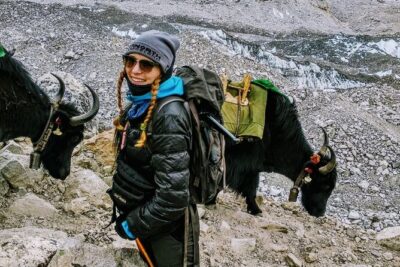
Porters carry your main gear, while the guide organizes the route, meals, accommodation, and timing. You will still carry a day pack with the things you need during the walk, but you are not expected to haul all of your clothing and sleeping equipment from village to village.
The guide also carries a first-aid medical kit. That does not replace insurance or professional medical care, but it gives the group basic support on the trail.
A guide can also make the walking pace more human. Several assigned guides, including Lok, Khila, and Lal, have been singled out for careful attention to safety, individual pacing, and encouragement. That is exactly the kind of help you want when the day feels harder than expected.
Who should book this trek?
Book it if you want a structured Everest Base Camp experience and prefer not to arrange every permit, flight, porter, meal, and lodge yourself. It suits hikers who can manage sustained uphill and downhill walking and who are comfortable with basic mountain conditions.
It is also a good fit if you value cultural contact and local guidance. The route passes through Sherpa communities, and the guide can give meaning to the villages, bridges, monasteries, and mountaineering traditions along the way.
Think twice if you need a fixed schedule, dislike early starts, or want hotel-style comfort throughout. Weather can change the flight plan, personal extras cost more, and high altitude can make even moderate distances exhausting.
Should you book the Everest Base Camp Trek?
I would book this trek if you want the famous route with strong logistical support and a clear acclimatization plan. The two acclimatization days, porters, included equipment, and spare Kathmandu day add real value to the $1,408 price.
Before paying, confirm the current flight schedule, lodging details, guide assignment, group size, insurance requirements, and exactly what happens if weather prevents the Lukla flight. Cancellation is generous if you cancel at least six full days before departure, while a weather cancellation offers a new date or full refund.
For a prepared hiker who wants Everest without carrying every piece of gear or arranging every detail alone, this is a practical and well-supported choice.
FAQ
How long is the Everest Base Camp Trek?
The program lasts approximately 15 days. The walking portion runs from the flight to Lukla through the return to Lukla, followed by a Kathmandu buffer day and airport transfer on day 15.
What is the price per person?
The listed price is $1,408 per person.
Is this a private trek?
Yes. This is a private activity, so only your group participates. An assistant guide is included for groups larger than six people.
Are flights between Kathmandu and Lukla included?
Yes. The package includes Kathmandu to Lukla and Lukla to Kathmandu domestic airline tickets, including the guide’s ticket.
What meals are included?
The package includes breakfast on 14 days, lunch on 11 days, and dinner on 12 days.
Are porters included?
Yes. Experienced Sherpa helpers are included, with their meals, accommodation, salary, and insurance covered by the package.
What equipment is provided?
You receive a down jacket, four-season sleeping bag, and duffle bag. These items must be returned after the trek.
What fitness level is required?
You should have a moderate level of physical fitness. The route includes steep climbs, glacier walking, high-altitude terrain, and long walking days.
What happens if bad weather cancels the Lukla flight?
The experience requires good weather. If poor weather causes cancellation, you are offered a different date or a full refund.
Just added in Kathmandu
- Kathmandu to Chitwan Tour by Tourist Bus – A Convenient and Affordable Way★ 4.0 · 4 reviews
- Changunarayan Hill to Telkot Hike Near Kathmandu Day Tour★ 5.0 · 6 reviews
- Mt Everest Base CampTrek | Budget Package★ 5.0 · 4 reviews
- Chitwan Jungle Safari 3-Day Tour★ 5.0 · 9 reviews
- Chandragiri Hill Station Tour by Cable Car★ 5.0 · 4 reviews
- Chandragiri Hills cable car day trip, private car with driver from Kathmandu★ 5.0 · 8 reviews
- Chandragiri to Taudaha Nature Day Hiking from Kathmandu★ 5.0 · 13 reviews
- Chandragiri Cable Car & Monkey Temple Private Guided Day Tour★ 5.0 · 5 reviews
Everest Base Camp Treks, compared.
Everest Base Camp Helicopter Tour landing at Everest View Hotel
Read our review →
Browse the lists this tour appears in