
Reviewed · EVEREST BASE CAMP TREKS
Everest Base Camp Trekking
Everest Base Camp is not a sightseeing stop you reach by bus. It is a high-altitude trek through Sherpa villages, mountain passes, tea houses, memorials, and changing weather. This 12-day package takes care of the hard planning, including permits, food, porters, tea-house rooms, and flights between Kathmandu and Lukla.
I like the practical setup: one porter is assigned for every two trekkers, and a licensed English-speaking guide stays with you throughout the route. I also like the cultural side, especially time around Namche Bazaar and Tengboche Monastery, rather than treating Everest as only a mountain view.
The main drawback is that the $1,350 price does not cover everything. You still need to pay for Kathmandu accommodation and meals, personal travel insurance, emergency evacuation, showers, charging, Wi-Fi, bottled water, and personal trekking equipment. This is a serious high-altitude trek, not a soft adventure.
Key points to know before booking
- Lukla flights are part of the package, with air travel between Kathmandu or Ramechhap and Lukla included.
- Namche Bazaar gives the trek its first major cultural stop, with a famous high-altitude market and Sherpa way of life.
- Everest Base Camp and Kala Patthar are different highlights, with Base Camp offering the destination itself and Kala Patthar providing a famous mountain viewpoint.
- Tengboche Monastery adds a spiritual side, with time to seek blessings from a monk and see an important Sherpa religious site.
- Your guide and porter support are included, with a maximum group size of 15 people and a two-to-one porter ratio.
- The package is best for fit hikers, since the operator requires a strong level of physical fitness and does not include personal rescue insurance.
What the $1,350 price really covers
At first glance, $1,350 is a large sum for a 12-day trip. I think the value becomes clearer when you separate the included logistics from the costs you must handle yourself.
The package covers 11 nights of basic tea-house accommodation during the trek. It also includes breakfast, lunch, and dinner while you are on the trail, plus national park fees, VDC fees, TIMS fees, and other applicable taxes.
You also receive a licensed English-speaking guide and porter. The company covers the guide and porters’ food, salary, accommodation, and insurance. That matters because the trek is not simply a walking route. Flights, permits, lodging, meals, baggage support, and local staff all need to line up at the right time.
A duffel bag, sleeping bag, and down jacket are available on request. Ask for these before departure rather than assuming they will appear automatically. One trekking map is supplied for each group, and you receive a trekking certificate after completing the trip.
You must budget separately for accommodation and meals in Kathmandu. The package also excludes personal medical and accident insurance, helicopter rescue, emergency evacuation costs, trekking gear, alcoholic drinks, bottled or mineral water, laundry, phone calls, tips, hot showers, hot water, battery charging, and Wi-Fi.
That list is not a minor footnote. At altitude, you may want warm showers, extra drinks, charging, and a few small comforts. The package is good value for the main trek, but you should not treat $1,350 as the complete cost of your Nepal trip.
Other treks that start from Kathmandu:
- Everest Base Camp Trek – 14 Days
★ 5.0 · 1,499 reviews - Everest Base Camp Helicopter Tour landing at Everest View Hotel
★ 5.0 · 668 reviews - Everest Base Camp Trekking
★ 5.0 · 485 reviews
Starting at 6:15 a.m. in Kathmandu
The meeting point is in Thamel, Kathmandu, with a 6:15 a.m. start. Domestic airport pickup and drop-off are included, and the operator handles the flight arrangements between Kathmandu or Ramechhap and Lukla.
The flight detail deserves attention. The package describes the route as Kathmandu, or Ramechhap, to Lukla and back. Your exact departure airport may depend on operating arrangements at the time of your trek, so confirm this before you arrive. The early start also means you should keep your first morning simple and be ready on time.
Lukla flights are part of the experience, but they are also one of the trip’s practical pressure points. The information provided describes them as a thrilling part of the journey. You should still expect a small domestic flight setting and a schedule that requires careful coordination with the trek.
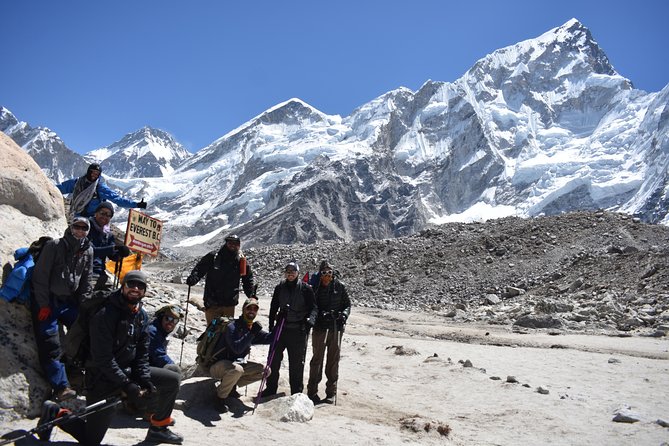
Your guide meets you at the stated meeting point and accompanies you through the trip. The tour has a maximum of 15 people, which is small enough to keep the group manageable while still giving you company on the trail.
Namche Bazaar and the first taste of Sherpa life
Namche Bazaar is described as the gateway to Everest, and it is one of the most meaningful stops on the route. It is a high-altitude market town where you begin to see how Sherpa communities live and work in the Khumbu region.
I like that Namche is not treated merely as a place to sleep. The stop gives the trek a human setting. You are following paths used by local communities, guides, porters, and mountaineers, not walking through an empty mountain postcard.
The route also follows the trail associated with Sir Edmund Hillary and Tenzing Norgay Sherpa. That connection adds context to the walking. You are not just heading toward a famous camp. You are moving through the same broad mountain world linked with early Everest expeditions.
The exact amount of time at each village is not provided, so you should rely on your guide for the day-by-day pacing. The package is designed around the full route rather than long independent stays in individual settlements.
Mountain views above 8,000 meters
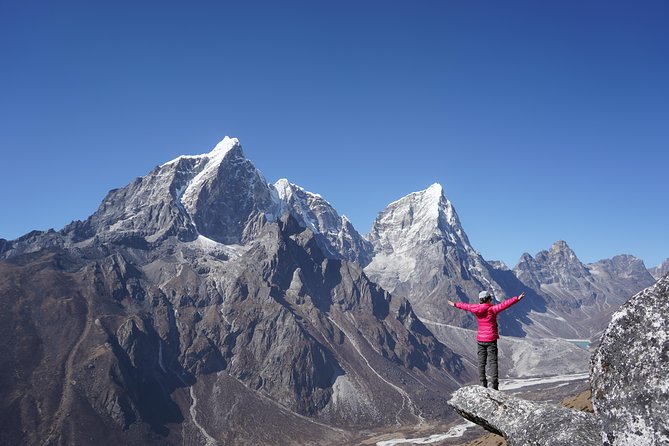
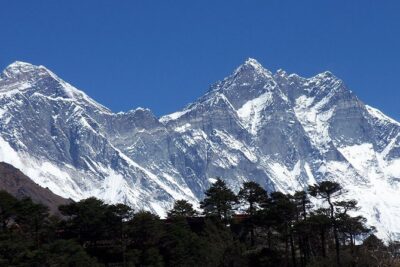
The trek promises panoramic views of some of the world’s highest peaks, including mountains above 8,000 meters. The attraction is not a single dramatic viewpoint. The scenery changes as you walk, and the mountains become part of the daily rhythm.
You will want a camera, but do not let photography distract you from the practical demands of the trail. Weather, energy, and visibility will shape what you see. The package promises mountain views, but it cannot promise clear skies every day.
The high-altitude setting is also why the physical fitness requirement matters. You need enough stamina for repeated days of trekking, not just one long walk. The operator gives no detailed fitness test or altitude guarantee, so you should assess your own readiness honestly and arrange personal insurance before going.
A few more things to do in Kathmandu worth a look
- Nagarkot Sunrise View and Day Hiking from Kathmandu
★ 5.0 · 471 reviews - Annapurna Circuit Trek with Tilicho Lake
★ 5.0 · 368 reviews - Everest Base Camp Trekking – 13 Day
★ 5.0 · 365 reviews - Everest Base Camp Trek -14 Days
★ 5.0 · 321 reviews
Tengboche Monastery and the spiritual side of the trek
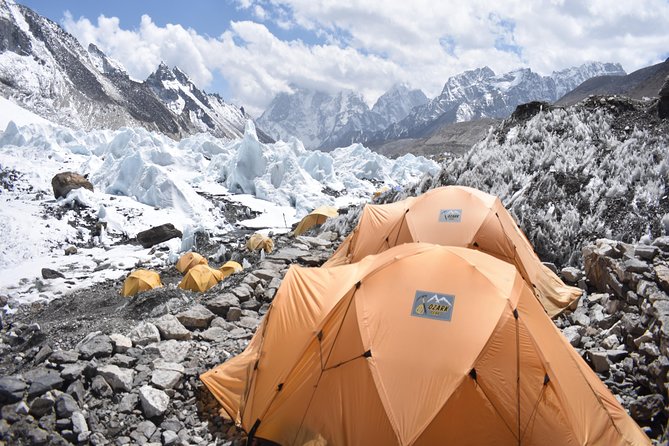
Tengboche Monastery brings a different mood to the journey. The itinerary includes a chance to seek blessings from a monk and explore the monastery, giving you a direct connection to the Buddhist culture of the Khumbu.
This is one of the strongest parts of the trip for anyone who wants more than mountain scenery. A good guide can help explain the cultural and natural values of the places you pass through, and the package specifically says your guide accompanies you and explains those elements along the way.
Do not expect a museum-style visit with a long formal program. The available information simply promises time to explore the monastery and seek blessings. Treat the stop with respect, follow local guidance, and keep your expectations focused on a quiet cultural encounter.
Khumbu Glacier, Everest Base Camp, and the memorial hill
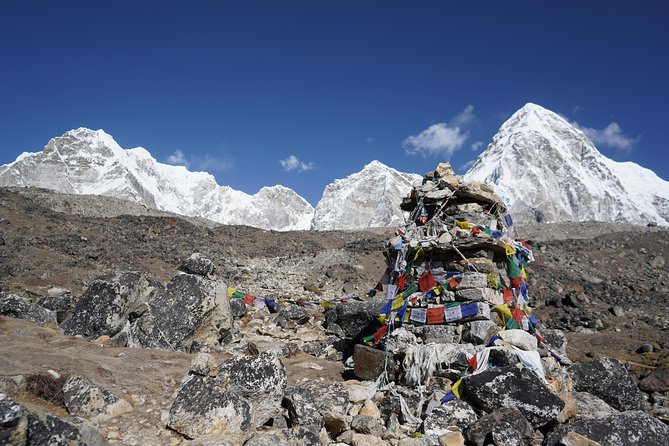
The trek includes a chance to see the Khumbu Glacier and reach Everest Base Camp. These are major milestones, but they offer different kinds of satisfaction.
At Base Camp, the reward is reaching the point associated with Everest expeditions. You set foot at one of the world’s best-known mountaineering locations, even though this tour does not take you up Everest itself. It is a trek to Base Camp, not a summit expedition.
The Khumbu Glacier gives the journey a more physical sense of the mountain environment. You see one of the natural features that makes this route so demanding and memorable. The information provided does not promise a specific amount of time at the glacier, so your guide will determine how the stop fits into the day.
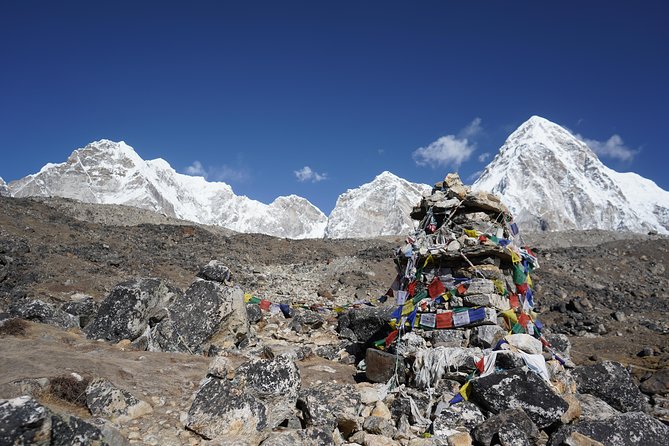
You also pass a memorial hill dedicated to climbers who died in the mountains. This is an important reminder that Everest is not only a scenic destination or a bucket-list achievement. The memorial adds a serious note to the trek and asks you to think about the risks behind the famous stories.
Kala Patthar and the best mountain viewpoint
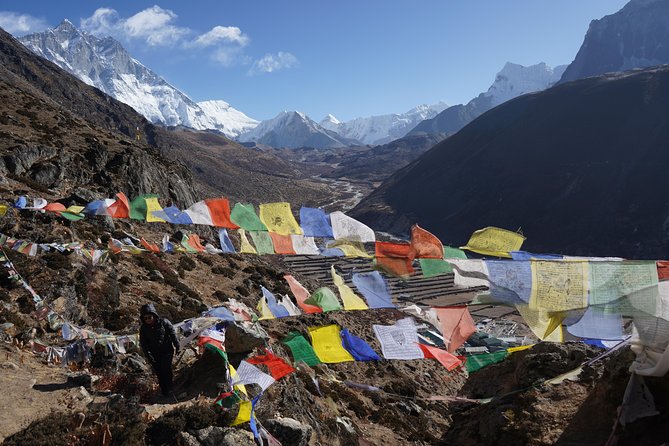
Kala Patthar is included as a famous viewpoint with close views of Everest. It should not be confused with Base Camp. Base Camp is the destination associated with expeditions, while Kala Patthar is the viewpoint where the mountain panorama is the central reward.
For many hikers, this may be the most visually powerful part of the route. You get the chance to look closely at Everest and the surrounding high peaks, provided the weather cooperates.
The operator does not provide a detailed day-by-day schedule or exact walking times for each segment. That is useful to remember when comparing this package with a more detailed itinerary. You are buying an organized route with guide support, not a minute-by-minute sightseeing plan.
Tea-house lodging and daily trail life
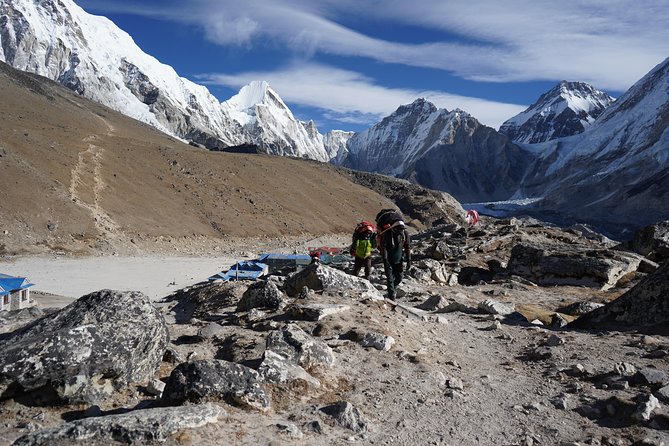
The 11 nights of accommodation are in basic tea houses. That phrase sets the right expectation. You are not booking a chain hotel in the mountains, and comfort will be simple.
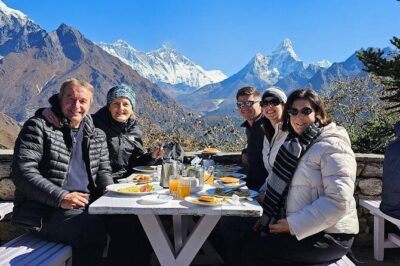
The advantage is that tea-house lodging keeps you close to the route and to local communities. It also means you do not have to carry camping equipment or arrange a separate camp crew. Meals are included during the trekking portion, with breakfast, lunch, and dinner supplied.
The trade-off is that several useful comforts cost extra. Hot showers, hot water, battery charging, and Wi-Fi are not included. Personal drinks, laundry, phone bills, and tips are also your responsibility.
A sleeping bag and down jacket can be provided on request, along with a duffel bag. Since personal trekking equipment is excluded, ask exactly what you need to bring and what the operator will issue. The package helps with the basics, but it is not a full equipment rental service.
The guide and porter arrangement
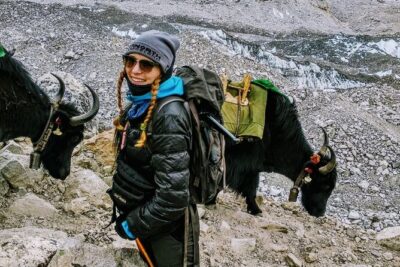
The strongest part of this setup is the human support. You walk with a licensed English-speaking guide, and one porter serves two trekkers. That ratio gives you help with heavier luggage without making the group entirely dependent on porters for every personal item.
The company also covers staff food, salary, accommodation, and insurance. That makes the listed price easier to understand and gives you a clear local support structure during the trek.
Several staff members are named in the available feedback. Ram Dhakal received specific praise for caring for a group through the full trek, while Dillip was praised for his support on a solo trip. Manager Nadin was also singled out for clear communication before the trek. You should not assume one of these people will be assigned to you, but these names show the kind of guide and management contact you may encounter.
The experience received a 5.0 rating from 146 reviews, with 99 percent recommending it. The most repeated praise centers on communication, safety, planning, flexibility, and personal care. Those are exactly the areas that matter most on a high-altitude trek.
What you still need to arrange
You need a passport name, passport number, expiry date, and country of passport for every participant at booking. Confirmation is provided at the time of booking, and a vegetarian meal option is available if you request it in advance.
You also need personal travel insurance that covers medical care, accidents, and rescue. Emergency evacuation expenses are not included, including helicopter evacuation. This is one of the most important preparation points, not a minor extra.
Bring or arrange your own personal trek equipment. The operator may provide a sleeping bag, down jacket, and duffel bag on request, but the package does not cover all clothing and gear needs.
The cancellation policy is simple: you can receive a full refund if you cancel at least 24 hours before the local start time. Cancellations or changes made less than 24 hours before departure are not accepted for a refund.
Who should book this Everest trek?
I would choose this trek if you want the main Everest Base Camp route organized by a local company and you value having a guide, porter, permits, meals, and accommodation handled together.
It suits a fit hiker who is willing to accept basic lodging and extra costs for comfort. It also suits a solo participant who wants support without having to build a private itinerary from scratch. The maximum group size of 15 keeps the trip from becoming a huge procession.
I would hesitate if you want luxury lodging, a detailed published day-by-day schedule, or a package with rescue insurance and all equipment included. You should also think twice if you are not prepared for a demanding high-altitude trek.
Should you book it?
I think this is a solid value for a properly prepared trekker who wants logistics taken off their plate. The best reasons to book are the included Lukla flights, permits, tea-house lodging, trail meals, licensed guide, porter support, cultural stops, and access to both Everest Base Camp and Kala Patthar.
Before paying, confirm the flight airport, request the sleeping bag and down jacket if needed, ask about the guide assignment, and price personal insurance and Kathmandu lodging. If you are comfortable with the extra costs and the physical demands, this package gives you a practical route into one of the world’s great mountain journeys.
FAQ
How long is the Everest Base Camp trek?
The experience lasts approximately 12 days and includes 11 nights of basic tea-house accommodation during the trekking portion.
Where does the trek start?
The stated meeting point is in Thamel, Kathmandu, Nepal. The start time is 6:15 a.m.
Are flights to Lukla included?
Yes. Airfare between Kathmandu or Ramechhap and Lukla is included for the outbound and return flights.
Are meals included during the trek?
Yes. Breakfast, lunch, and dinner are included during the trekking portion. Meals in Kathmandu are not included.
Is accommodation in Kathmandu included?
No. Accommodation in Kathmandu is not included in the price.
Is a guide included?
Yes. A government-licensed, English-speaking trekking guide accompanies the group throughout the itinerary.
How are porters arranged?
The package provides one porter for every two trekkers. Porter food, salary, accommodation, and insurance are included.
Is personal rescue insurance included?
No. Personal medical, accident, and rescue insurance are not included. Emergency evacuation costs, including helicopter evacuation, are also excluded.
Can I cancel for a full refund?
Yes, if you cancel at least 24 hours before the experience start time. Cancellations or changes made less than 24 hours before the local start time are not accepted for a refund.
Just added in Kathmandu
- Kathmandu to Chitwan Tour by Tourist Bus – A Convenient and Affordable Way★ 4.0 · 4 reviews
- Mt Everest Base CampTrek | Budget Package★ 5.0 · 4 reviews
- Chitwan Jungle Safari 3-Day Tour★ 5.0 · 9 reviews
- Changunarayan Hill to Telkot Hike Near Kathmandu Day Tour★ 5.0 · 6 reviews
- Chandragiri Hill Station Tour by Cable Car★ 5.0 · 4 reviews
- Chandragiri Hills cable car day trip, private car with driver from Kathmandu★ 5.0 · 8 reviews
- Chandragiri to Taudaha Nature Day Hiking from Kathmandu★ 5.0 · 13 reviews
- Chandragiri Cable Car & Monkey Temple Private Guided Day Tour★ 5.0 · 5 reviews
Everest Base Camp Treks, compared.
Everest Base Camp Helicopter Tour landing at Everest View Hotel
Read our review →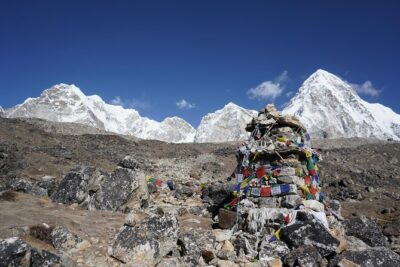
Browse the lists this tour appears in