
Reviewed · EVEREST BASE CAMP TREKS
From Kathmandu: Private 14-Day Everest Base Camp Trek
Everest Base Camp is the headline, but the real prize is the slow approach through Sherpa country. This private 14-day trek gives you time to adjust to thin air while moving from Lukla to Namche Bazaar, Tengboche, Dingboche, Gorakshep, and finally EBC at 5,364 meters.
I like the built-in acclimatization days in Namche and Dingboche, and I like that the $1,650 price includes domestic flights, permits, lodging, meals, a guide, a porter, and useful gear. The main caution is the altitude: Kala Patthar reaches 5,545 meters, and the itinerary has a few timing details worth confirming before you pay.
Key points to know before booking
- Lukla flight included: The package covers the return Kathmandu to Lukla flight, a major cost and a key part of the adventure.
- Two acclimatization days: You spend extra time in Namche Bazaar and Dingboche rather than racing uphill.
- Kala Patthar is the high point: At 5,545 meters, it offers the major mountain panorama, but the early climb is demanding.
- Private group format: Only your own group participates, with an experienced guide and Sherpa porter.
- Useful equipment supplied: A down jacket, sleeping bag, and duffle bag are available for use and return.
- Schedule needs checking: The material describes the trip as both 14 and 15 days, so confirm the exact day-by-day plan.
What the $1,650 price really buys you
At first glance, $1,650 is not a small price. For a private Everest Base Camp trek, though, the package covers several expenses that can quickly add up: the return domestic flight, trekking permits, Sagarmatha National Park fees, accommodation, airport transfers, meals, a guide, and a porter.
You also get a down jacket, sleeping bag, and duffle bag on a returnable basis. That matters if you are not planning a full Nepal trekking wardrobe. A company T-shirt, trekking map, and trip certificate are included too, though these are pleasant extras rather than reasons to choose the trip.
The strongest value is the organization. You are not left to arrange the Lukla flights, permits, airport pickup, mountain lodging, and support staff separately. The package also includes 11 lunches, 12 dinners, and 13 breakfasts. Personal snacks, drinks, extra meals, visa costs, insurance, tips, and personal spending are outside the price.
A solo supplement may apply. Travel insurance is compulsory, and that is especially important here because poor weather can affect flights and altitude illness can change plans. I would treat insurance as part of the real trip cost, not an optional add-on.
Other treks that start from Kathmandu:
- Everest Base Camp Trek – 14 Days
★ 5.0 · 1,499 reviews - Everest Base Camp Helicopter Tour landing at Everest View Hotel
★ 5.0 · 668 reviews - Everest Base Camp Trekking
★ 5.0 · 485 reviews
Kathmandu arrival and the first practical steps
Day one begins at Tribhuvan International Airport, where a Cordial Trek representative meets you and takes you to your hotel. The airport transfer removes an immediate hassle after a long international flight.
You have hotel time in Kathmandu, but the supplied plan does not describe a sightseeing program in the city. If you want temples, markets, or extra time to recover from jet lag, ask whether you should arrive earlier than the trek start date.
The company issues booking confirmation at the time of reservation. Airport transfers are included, and the activity operates every day during the published season. Still, confirm your pickup time and hotel details before flying to Nepal.
The short flight to Lukla
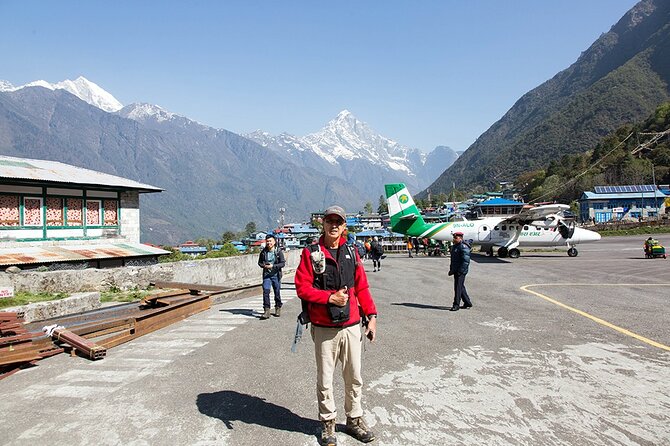
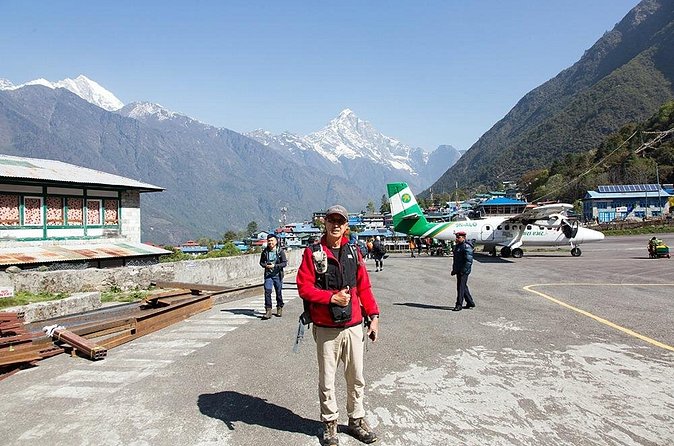
On day two, you take a roughly 30-minute flight from Kathmandu to Tenzing Hillary Airport in Lukla. The airstrip is famous for its difficult setting, so the flight itself becomes part of the story, not just a transfer.
Your support staff meets you in Lukla, and the walk begins from there. The schedule sends you toward Phakding, which gives your legs a gentler first day before the climb to Namche Bazaar.
Weather can disrupt mountain flights. The cancellation terms allow a new date or full refund if the experience is canceled because of poor weather, but a flight delay during your trip can still affect the schedule. Build flexibility into your wider Nepal plans if you can.
Namche Bazaar, the first major test
The walk from Phakding to Namche Bazaar takes about six hours and reaches 3,438 meters. You pass through Monjo village and enter Sagarmatha National Park, so this is where the trek begins to feel properly high and remote.
Namche is more than a stopping point. It is the main commercial center in the Khumbu Valley and a sensible place to rest, eat, check supplies, and let your body adjust. The route becomes harder from here, so this overnight pause has real value.
Day four is an acclimatization day in Namche. You do not simply lose a day by staying put. You make a shorter outing, then return to sleep at the same altitude. That pattern is useful because it lets you gain height without forcing your sleeping altitude upward too quickly.
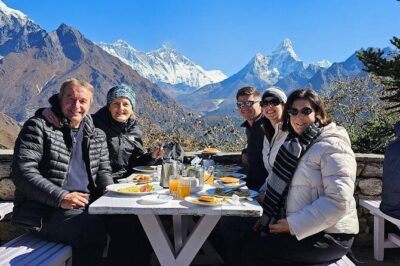
The itinerary includes Everest View Point and Hotel Everest View, which offers broad mountain views from inside Sagarmatha National Park. The hotel opened in 1971 and sits at a useful viewpoint above Namche. The visit is listed as about one hour, so expect a scenic excursion rather than a long hotel stay.
A few more things to do in Kathmandu worth a look
- Nagarkot Sunrise View and Day Hiking from Kathmandu
★ 5.0 · 471 reviews - Annapurna Circuit Trek with Tilicho Lake
★ 5.0 · 368 reviews - Everest Base Camp Trekking – 13 Day
★ 5.0 · 365 reviews - Everest Base Camp Trek -14 Days
★ 5.0 · 321 reviews
Tengboche and Deboche at 3,820 meters
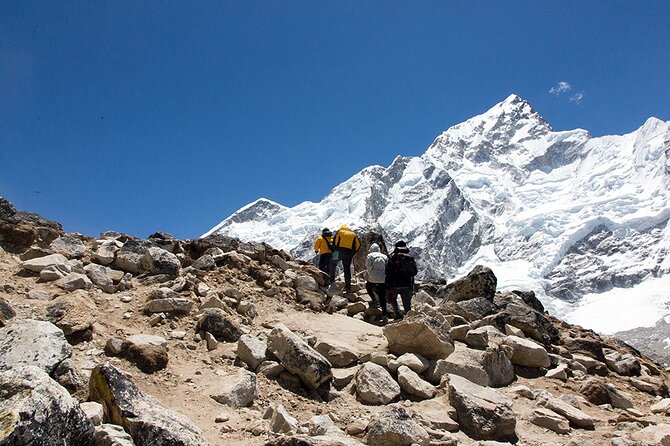
From Namche, you walk toward Deboche, a roughly six-hour day at an elevation listed as 3,820 meters. The route includes views toward the major peaks and passes through the area around Tengboche.
The trip highlights Tengboche Monastery, one of the most meaningful cultural stops on the route. The itinerary does not give a separate visit duration, so confirm with your guide how much time is planned there. This is a place to slow down, observe respectfully, and remember that the trek is not only about a mountain summit.
Deboche provides a quieter overnight stop before the route climbs again. At this point, you will notice that the same distance feels harder than it would at low altitude. Keep your pace steady, drink regularly, and tell your guide early if you develop a headache, nausea, unusual fatigue, or breathing trouble.
Dingboche and the second acclimatization day
Day six takes you from Deboche to Dingboche in about five hours, reaching 4,360 meters. The route passes near the Lobuche River and opens into higher mountain country.
Dingboche is another important pause in the schedule. Day seven is set aside for acclimatization, with a guided outing around the village and nearby high ground. The point is not to collect another distant viewpoint at any cost. It is to let your body work at altitude before the route heads above 4,900 meters.
I consider this one of the better features of the plan. Some short Everest Base Camp programs remove rest days to save time, but that can make the high section feel rushed. Here, you get a chance to learn how your body responds before the most demanding walks.
The itinerary lists Dingboche at 4,360 meters, but one line repeats 14,305 feet, which does not match that metric figure. Small errors like this do not change the route, yet they show why you should ask for a final written schedule and altitude chart.
Lobuche and the approach to Gorakshep
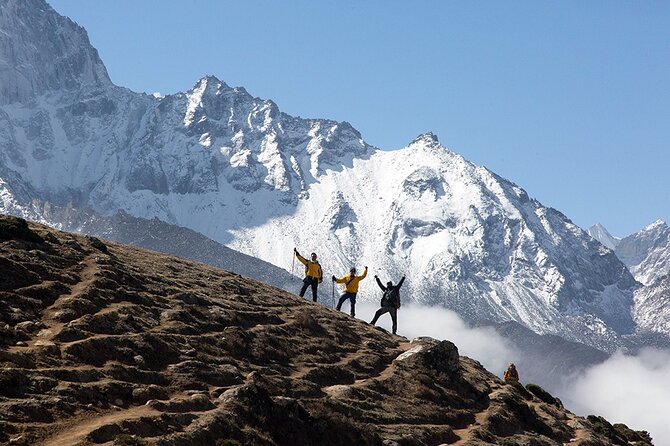
From Dingboche, you walk four to five hours to Lobuche, reaching about 4,940 meters. Lobuche lies close to the Khumbu Glacier and is a serious altitude stop, even though the walking time is not especially long.
At this height, the cold, thin air, and uneven trail can make a modest climb feel substantial. Your guide and porter are important here. The strongest praise associated with Cordial Trek centers on attentive support, condition checks, and practical help when the walking becomes difficult.
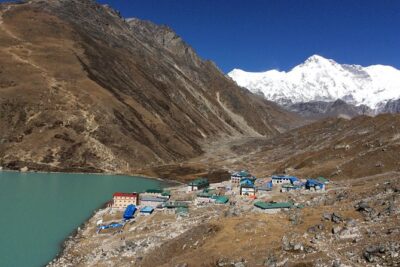
The following day takes you to Gorakshep at 5,164 meters, then onward to Everest Base Camp at 5,364 meters. The day is demanding because you are gaining altitude while walking on rough ground, and you still need enough energy for the return to Gorakshep.
Gorakshep is a small settlement and the final overnight base for this part of the route. The accommodation is functional mountain lodging rather than a comfort-focused hotel. At this altitude, keeping warm, resting, and eating matter more than decoration.
Everest Base Camp at 5,364 meters
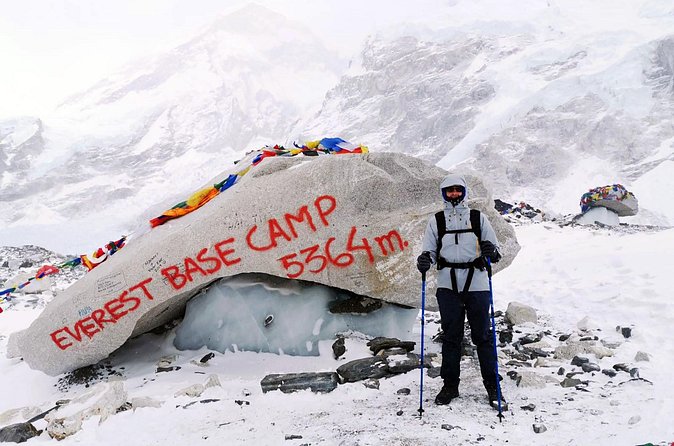
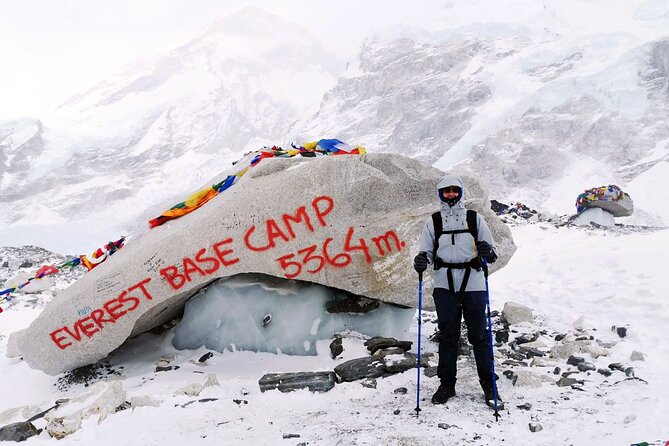
Everest Base Camp is the emotional center of the trek. You reach the site inside Sagarmatha National Park at 5,364 meters, a point associated with expeditions heading toward the world’s highest mountain.
One practical detail matters: Everest is not necessarily in full view from Base Camp itself. The route’s best broad mountain outlook comes from Kala Patthar, which is why the two stops work together. Base Camp gives you the sense of standing at the start of a famous climbing route, while Kala Patthar provides the higher viewpoint.
The itinerary allows about an hour at EBC. That is enough for photographs and a moment to take in the setting, but it is not a long camp visit. Conditions at this elevation can change quickly, so your guide may keep the stop focused.
Kala Patthar, the highest viewpoint
Day ten begins early with a roughly three-hour round trip from Gorakshep to Kala Patthar. The top reaches 5,545 meters, higher than Everest Base Camp.
This is often the visual high point of the trip. From the ridge, you get the grand Himalayan panorama that many people picture when they think of Everest. The early start also gives you the chance to see changing light across the peaks, though the supplied information does not promise a particular sunrise or weather condition.
Do not underestimate the climb because it is short. At 5,545 meters, each step can feel slow, and the round trip comes after the previous day’s walk to EBC. If your body is struggling, follow your guide’s advice rather than treating the summit as a test of will.
After Kala Patthar, the schedule begins the long return. One itinerary line says you return to Namche from Pheriche via Tengboche on day eleven. It does not clearly spell out the transition from Gorakshep to Pheriche, so ask the operator to explain that section and confirm where you sleep each night.
The return through Tengboche, Namche, and Lukla
The descent is not simply a repeat in reverse. Walking downhill uses different muscles, and fatigue can build after the high point. The route returns through Tengboche and eventually to Namche, where you have time for local cafés and pubs before staying overnight.
Namche is a good place to mark the change from high-altitude trekking to the lower valley. You may find the atmosphere easier here, but your legs may be tired after several long days.
Day twelve takes you through Phakding to Lukla in about seven to eight hours. This is a long closing walk, so do not plan it as an easy stroll. In Lukla, you have time around the local bazaar and a final evening with the support team.
The next morning, you say goodbye to the crew and fly back to Kathmandu. The return flight is included, but weather can affect mountain aviation in both directions. In Kathmandu, you check into your hotel and have free evening time.
Day fourteen is the formal finish. You receive a trip certificate and are taken to the airport three hours before your departure. The published material sometimes calls this a 15-day classical trek while the detailed schedule has 14 days. Confirm the exact number of hotel nights and departure dates before booking flights.
Guide support, porters, and private-group advantages
This is a private activity, so only your own group participates. That gives you more control over walking pace and rest stops than a large mixed group, although the route still has fixed altitude and flight limits.
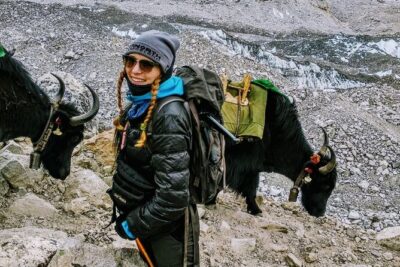
The package provides an experienced trekking guide and a Sherpa porter. A porter can carry the main load, leaving you with a lighter daypack for water, clothing, documents, and personal items. Ask how luggage weight is handled before departure, since that detail is not specified.
Cordial Trek guides connected with this route include Raj Tamang, Prakash Neupane, and Pratip. Guide assignments can change, so ask who will lead your group. The most useful quality to look for is not a famous name but a guide who checks your condition, explains choices clearly, and takes altitude symptoms seriously.
Tips for the guide and porter are not included. Carry enough local currency for gratuities and personal expenses, since the package does not cover them.
Who should book this Everest trek
You should consider this trip if you want the classic Everest Base Camp route with private support and a good amount of organization handled for you. It suits someone with moderate physical fitness who is ready for repeated six to eight-hour walking days at high altitude.
You should think twice if you dislike basic lodging, cannot accept possible flight delays, or want a relaxed sightseeing holiday. This is a strenuous mountain trek, not a soft adventure. The itinerary includes acclimatization, but no schedule can guarantee that your body will adapt well.
The trip also suits first-time high-altitude trekkers who want a guide and porter rather than a fully independent route. It is less suitable if you want a very flexible itinerary, because the return flight, accommodation, and altitude timetable tie the journey together.
Should you book the 14-day Everest Base Camp trek?
I would book this trek if the private format, included Lukla flights, equipment, and two acclimatization days match your needs. The $1,650 price is reasonable for the services included, especially when you add permits, park fees, meals, lodging, guide support, porter support, and airport transfers.
Before booking, ask three direct questions: Is the trip definitely 14 days or 15, who is the assigned guide, and how does the day eleven descent from Gorakshep to Namche work? Also confirm the solo supplement, luggage rules, hotel names, and what happens if weather disrupts a flight.
With those points settled, this is a well-supported way to reach Everest Base Camp and Kala Patthar without arranging every piece yourself. Just bring patience, insurance, realistic fitness expectations, and respect for the altitude.
FAQ
How long is the Everest Base Camp trek?
The detailed schedule runs for 14 days, from arrival in Kathmandu through airport departure on day fourteen. The tour description also refers to a 15-day package, so confirm the exact schedule before booking.
Is the Kathmandu to Lukla flight included?
Yes. Return domestic flights between Kathmandu and Lukla are included in the package.
What is the highest point on the trek?
Kala Patthar is the highest listed point, at 5,545 meters. Everest Base Camp is listed at 5,364 meters.
Are meals included?
The package includes 11 lunches, 12 dinners, and 13 breakfasts. Personal expenses, unspecified meals, and other personal purchases are not included.
Is a guide and porter provided?
Yes. The package includes an experienced trekking guide and a Sherpa porter. Tips for them are not included.
Is trekking equipment provided?
A returnable down jacket, sleeping bag, and duffle bag are included. The package also includes a trekking map.
What happens if bad weather cancels the experience?
If the experience is canceled because of poor weather, you are offered a different date or a full refund. For a voluntary cancellation, you must cancel at least 24 hours before the start time for a full refund.
Just added in Kathmandu
- Kathmandu to Chitwan Tour by Tourist Bus – A Convenient and Affordable Way★ 4.0 · 4 reviews
- Mt Everest Base CampTrek | Budget Package★ 5.0 · 4 reviews
- Chitwan Jungle Safari 3-Day Tour★ 5.0 · 9 reviews
- Changunarayan Hill to Telkot Hike Near Kathmandu Day Tour★ 5.0 · 6 reviews
- Chandragiri Hill Station Tour by Cable Car★ 5.0 · 4 reviews
- Chandragiri Hills cable car day trip, private car with driver from Kathmandu★ 5.0 · 8 reviews
- Chandragiri to Taudaha Nature Day Hiking from Kathmandu★ 5.0 · 13 reviews
- Chandragiri Cable Car & Monkey Temple Private Guided Day Tour★ 5.0 · 5 reviews
Everest Base Camp Treks, compared.
Everest Base Camp Helicopter Tour landing at Everest View Hotel
Read our review →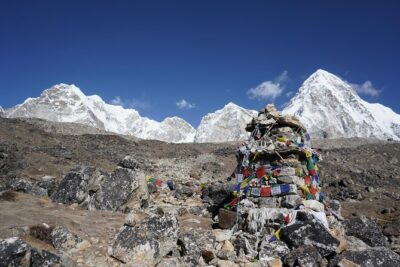
Browse the lists this tour appears in