
Reviewed · NEPALI COOKING CLASSES
Kathmandu: Local Lead Nepali Cooking & Momo Making Class
Kathmandu’s most useful cooking lesson starts before you reach the stove. You walk to a local market or shop, choose fresh ingredients with your chef, then return to the Kathmandu Cooking Academy to turn them into momo and dal bhat. It is a good way to learn what Nepali food is made of, not just what it looks like on a plate.
I like the hands-on format, where you prepare, cook, fold, and finally eat the food yourself. I also like the small groups, which give you room to ask questions and get help with tricky tasks such as shaping momo. The main consideration is timing: market visit, cooking, and the meal can take about three hours, or up to four depending on the schedule and menu.
Key points at a glance
- Market first, cooking second: Choose ingredients at a nearby market or shop with guidance from your chef.
- Momo folding practice: Learn how to shape the pastry, a task that takes patience even with clear instruction.
- More than one dish: Momo and dal bhat are the focus, but you may also choose dishes such as bara or yomari.
- Small groups of up to 10: The class is designed for personal help rather than a large demonstration.
- A full meal at the end: You eat the dishes you prepare, with Nepali masala tea included.
- Easy access from Thamel: The academy is about a 10 to 15 minute walk from Thamel, with optional pickup in Kathmandu Valley.
Starting with a Kathmandu market visit
Your cooking session begins at a meeting point that is easy to reach from Thamel. Kathmandu Cooking Academy is about a 10 to 15 minute walk away, and staff meet you at the building entrance. If you select pickup, a driver can collect you from an address within Kathmandu Valley and take you to the academy.
The market stop is short, but it adds real value. Instead of arriving at a kitchen with ingredients already measured and waiting, you see the shopping side of Nepali cooking. Your chef helps select what is needed, explains the ingredients, and introduces you to some of the food culture behind the meal.
This part is especially useful if you have already eaten momo or dal bhat in Nepal and want to understand the dishes better. You get to connect the finished food with the raw ingredients. Bring a camera if you like taking food and market photos, but arrive at least 15 minutes early so the group can begin without delay.
The market portion may be less appealing if you want a purely sit-down cooking demonstration. It is not a long sightseeing stop, and its purpose is practical shopping rather than a guided tour of Kathmandu. Still, it gives the class a stronger local feel and helps the rest of the lesson make sense.
More cooking and eating in Kathmandu:
- Half day cooking class in Thamel kathmandu
★ 5.0 · 607 reviews - Kathmandu: Local Women-Led Nepali Cooking & Momo Class
★ 4.9 · 360 reviews - Kathmandu: Local Lead Nepali Cooking & Momo-Making Class
★ 5.0 · 212 reviews
Three hours at the Kathmandu Cooking Academy
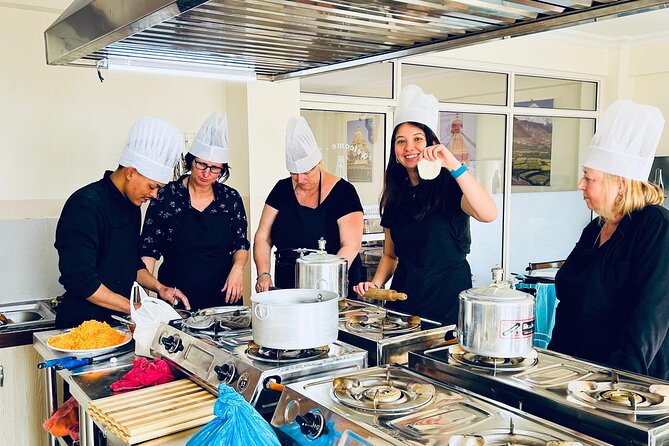
Back at the academy, you move into a clean, equipped kitchen and begin preparing the selected dishes. Cooking equipment and accessories are provided, so you do not need to bring anything beyond comfortable clothing and perhaps your camera.
The teaching is step by step. That matters here because Nepali cooking includes several tasks that look simple until you try them. Folding momo is the obvious example. The pastry must be filled and shaped, and your instructor can correct your technique as you work rather than leaving you to copy from a distance.
The English-speaking chefs make the lesson accessible to most visitors. Instructors have included Vikram, who is described as patient and clear, and Niche, whose teaching style is energetic and good-humored. The class is not built around a single fixed menu, so your final dishes can vary.
You will normally prepare two main courses, a dessert, and Nepali masala tea. Momo and dal bhat are the central dishes, but additional traditional options may be available. Past menus have included bara and yomari, giving you a chance to try something beyond the usual restaurant order.
That choice is one of the class’s strongest features, but it also means you should ask what is available on your date. The supplied details promise a selection of dishes, not one fixed list for every session. Tell the academy about dietary restrictions or food preferences in advance so the menu can be adjusted where possible.
What makes momo worth learning
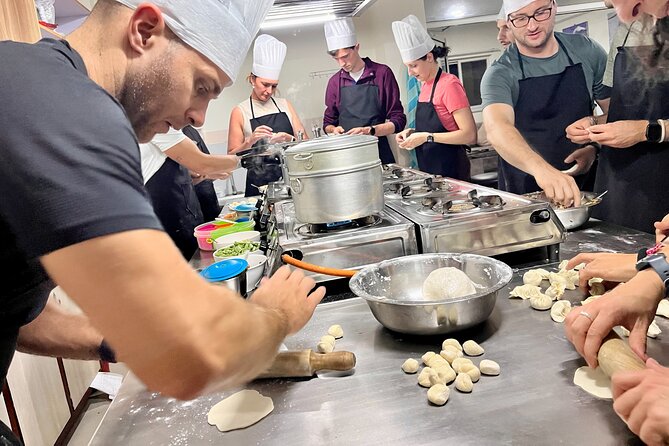
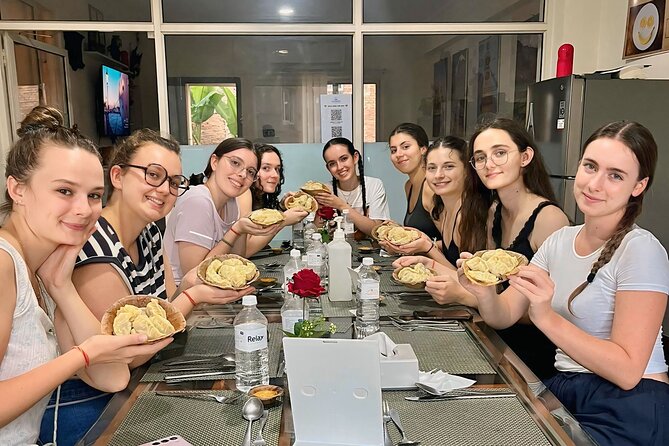
Momo is one of Nepal’s best-known foods, and learning to make it gives you a skill you can repeat at home. The cooking lesson covers the preparation and the folding, so you are not simply watching someone else make the dumplings.
Expect the folding stage to take time. You may not produce a perfect shape on the first attempt, and that is part of the fun. The instructor’s patience matters more than speed, especially if this is your first time handling momo pastry.
The benefit of learning momo in a small group is that you can work at your own pace while still seeing how other people approach the same task. A group can include as many as 10 participants, which is still small enough for guidance but not necessarily private. If you want one-on-one instruction, confirm the group arrangement before booking.
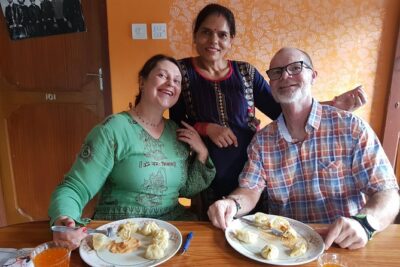
The final meal gives you a clear test of what you learned. You can taste the filling, pastry, and seasoning together, then decide which parts you want to repeat at home. That is more useful than leaving with a recipe alone.
Dal bhat and the wider Nepali menu
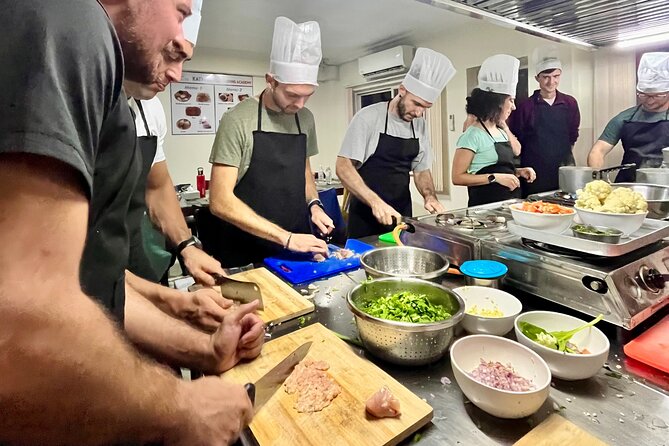
Dal bhat is the other main focus. It is a central Nepali meal built around lentils and rice, often accompanied by additional sides. The class offers a practical introduction to the balance of flavors and preparation steps involved.
I like that dal bhat shares the lesson with momo. Momo teaches careful assembly, while dal bhat gives you a broader look at a familiar home-style meal. Together, the dishes show two different sides of Nepali food: hand-shaped dumplings and a filling meal built around rice and lentils.
The additional menu choices can make the class more worthwhile for repeat visitors to Nepal. Bara and yomari have appeared among the possible dishes, and other traditional meals may be offered. You should not assume every option will be available at every class, but the menu has enough flexibility to keep the session from feeling like a one-dish workshop.
Dessert is included as part of the usual format. The exact dessert is not specified, so ask the instructor if you have allergies or strong preferences. Nepali masala tea is also included and makes a pleasant finish to the meal.
A few more things to do in Kathmandu worth a look
- Knife (Khukuri) Making Workshop- Forge of the Gurkhas
★ 5.0 · 143 reviews - The best Private Nepali Cooking Class in Kathmandu
★ 5.0 · 83 reviews - Kathmandu: Traditional Momo Making Class & Pickup
★ 4.8 · 60 reviews - Traditional Nepali Momo Making Classes
★ 5.0 · 53 reviews
Eating what you prepared
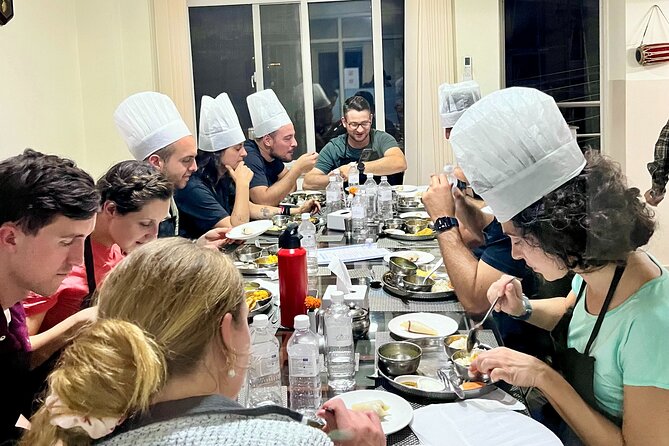
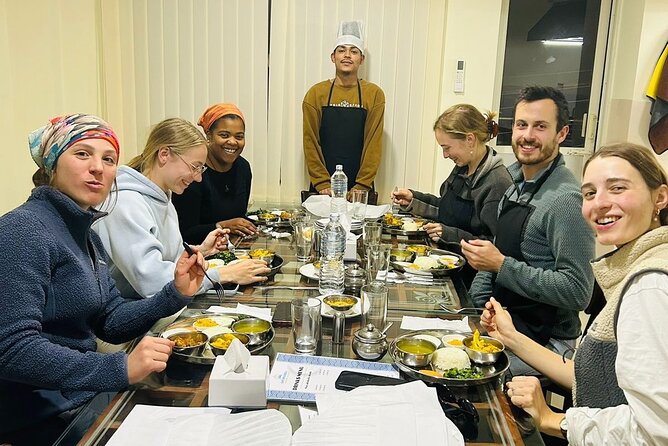
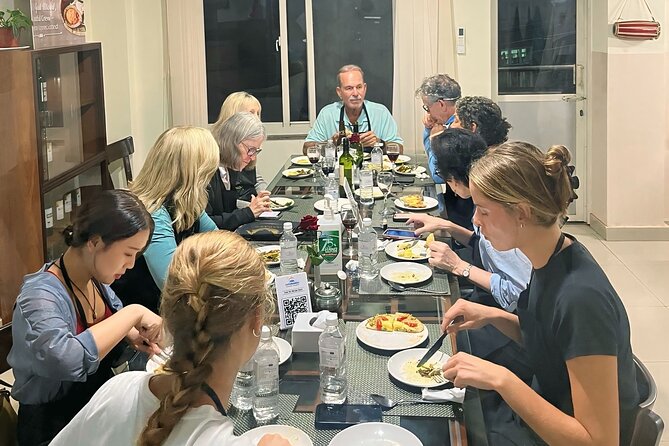
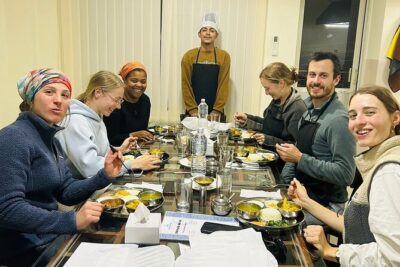
After the cooking is finished, you sit down in the academy’s dining area and eat the meal you made. This is not a rushed tasting of one sample. The format includes a full tasting session, and the food is prepared in enough quantity to make the meal feel like the natural end of the class.
The dining room and kitchen have been described as clean and well equipped, which is important in a hands-on food activity. You are handling ingredients and working with cooking equipment, so a tidy setup makes the lesson more comfortable.
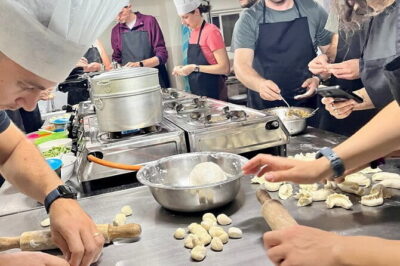
This shared meal is also where the class becomes social. You cook alongside a small group, compare results, and enjoy the food together. The pace is intended to be relaxed rather than hurried, but allow three to four hours in your schedule. If you have a flight, long tour, or fixed dinner reservation afterward, leave plenty of time.
Do not plan on specialty drinks or alcohol being part of the package. Those are not included. The complimentary Nepali masala tea is included, while other drinks cost extra.
Price, pickup, and practical value
At the stated price of $4 per person, this is an unusually inexpensive way to spend half a day in Kathmandu. Even if the price changes, the value comes from the combination of a market visit, instruction, kitchen use, a cooked meal, dessert, and tea.
The optional pickup is useful if you are staying outside central Kathmandu or would rather not navigate the city before a cooking session. It is available from locations within Kathmandu Valley, but it is not automatically included in every booking. Check that you have selected the pickup option and provide your hotel details clearly.
If you are staying in Thamel, walking may be simpler. The academy is close enough to reach in roughly 10 to 15 minutes on foot, and you avoid arranging a vehicle for a short transfer. The meeting point is at the Kathmandu Cooking Academy, not necessarily at your hotel, so check the selected starting option before setting out.
The reserve-now, pay-later option gives you some flexibility, and cancellation is allowed up to 24 hours before the activity for a full refund. A minimum of two participants may be required. If that minimum is not reached, you are offered another date or a full refund.
Who will enjoy this class most
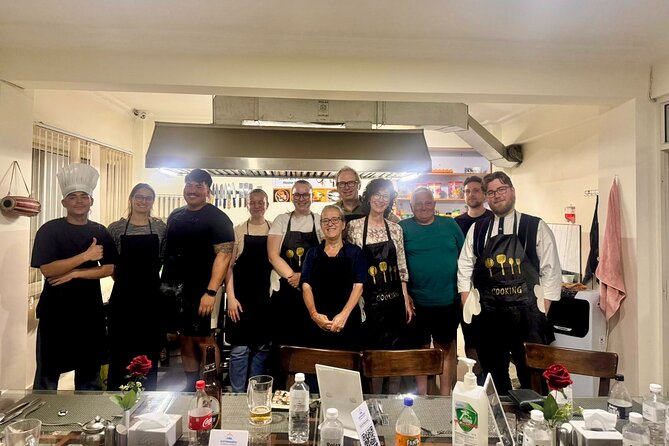
I would recommend this class to anyone who wants more than a restaurant meal. It suits food lovers, first-time visitors who want a cultural activity, and returning visitors who already know they like momo and dal bhat.
It is also a good choice for people who learn by doing. You will not spend the whole session watching a chef work. You prepare ingredients, follow instructions, shape momo, cook the dishes, and sit down to eat them.
Families should note the age limits. Children under five are not suitable for the activity, and the stated upper age limit is 95. The class is wheelchair accessible, but it is still wise to share mobility needs in advance so the academy can prepare appropriately.
You should wear comfortable clothes. The class involves active participation, and cooking can be less enjoyable if you arrive dressed for a formal evening out. Tell the academy about dietary needs before the day of the class, not when the ingredients are already being purchased.
A few drawbacks to keep in mind
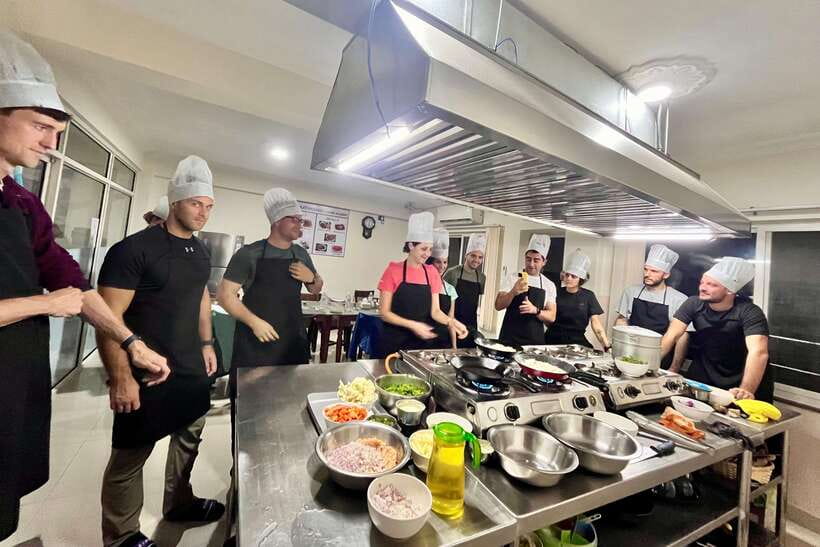
The menu is flexible, which is helpful, but it also creates some uncertainty. If you have your heart set on one particular dish, ask in advance whether it will be available. Momo and dal bhat are the main courses, while the other dishes depend on the class selection.
The group can reach 10 people. That is small compared with a large public demonstration, but it is not the same as a private lesson. You should receive personal help, though the amount of individual attention can depend on the group and the number of assistants present.
The class also takes a good part of your day. The cooking itself is about three hours, with the full activity lasting roughly three to four hours. That is a fair amount of time for the food and instruction included, but it may not suit a tight Kathmandu schedule.
Professional photos and videos are not included. You can bring your own camera, but any professional images are an extra purchase.
Should you book it?
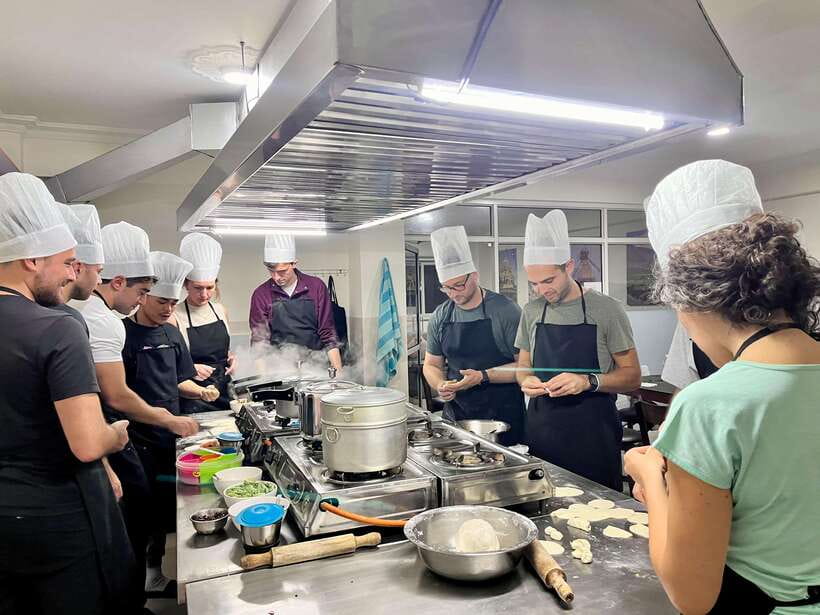
Book this class if you want to learn Nepali food through action rather than a lecture. The market visit, patient momo instruction, flexible menu, and shared meal make it particularly good value at the stated $4 price.
I would be cautious only if you need a private class, a fixed menu, or a very short activity. For everyone else, especially people who plan to order momo again after leaving Nepal, this is a practical and enjoyable way to take a little Nepali cooking home with you.
FAQ
Where does the cooking class take place?
The class takes place at Kathmandu Cooking Academy in Kathmandu. The academy is about a 10 to 15 minute walk from Thamel.
How long does the activity last?
The full activity takes about three to four hours. The market visit, cooking, and tasting session together typically last around three hours.
Is hotel pickup available?
Yes. Optional pickup and drop-off are available from locations within Kathmandu Valley. You need to select the pickup option and provide your hotel details.
What dishes will I learn to cook?
Momo and dal bhat are the main dishes. You may also choose from other traditional Nepali options, and the usual format includes two main courses and a dessert.
Is Nepali masala tea included?
Yes. Complimentary Nepali masala tea is included with the tasting session.
Is the class taught in English?
Yes. English is the stated language for the instructor.
How many people are in the class?
The class is described as a small group with a maximum of 10 participants.
Can I tell the academy about dietary restrictions?
Yes. You should inform the academy in advance about dietary restrictions or food preferences so the class can be adjusted where possible.
Is the cooking academy wheelchair accessible?
Yes. The activity is listed as wheelchair accessible.
What should I bring and wear?
Bring a camera if you want to take photos, and wear comfortable clothing because you will take part in the cooking. Arrive at least 15 minutes before the start time.
Just added in Kathmandu
- Kathmandu to Chitwan Tour by Tourist Bus – A Convenient and Affordable Way★ 4.0 · 4 reviews
- Changunarayan Hill to Telkot Hike Near Kathmandu Day Tour★ 5.0 · 6 reviews
- Mt Everest Base CampTrek | Budget Package★ 5.0 · 4 reviews
- Chitwan Jungle Safari 3-Day Tour★ 5.0 · 9 reviews
- Chandragiri Hill Station Tour by Cable Car★ 5.0 · 4 reviews
- Chandragiri Hills cable car day trip, private car with driver from Kathmandu★ 5.0 · 8 reviews
- Chandragiri to Taudaha Nature Day Hiking from Kathmandu★ 5.0 · 13 reviews
- Chandragiri Cable Car & Monkey Temple Private Guided Day Tour★ 5.0 · 5 reviews
Nepali Cooking Classes, compared.
Nepalese Momos or Dal Bhat Cooking Class (Cook with Delight)
Read our review →
The best Private Nepali Cooking Class in Kathmandu
Read our review →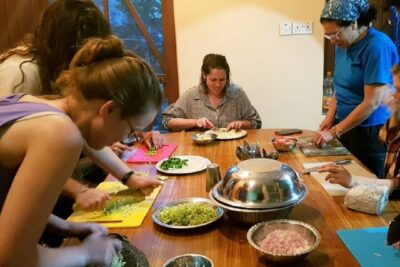
Nepalese Kitchen in Pokhara: Momos or Dal Bhat Cooking Class
Read our review →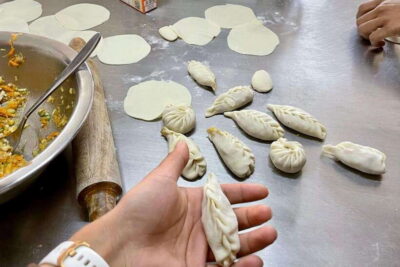
Browse the lists this tour appears in