
Reviewed · NEPALI COOKING CLASSES
Kathmandu: Local Lead Nepali Cooking & Momo-Making Class
Momos are the star here, but the best part is that you do not simply sit and watch someone fold dumplings. You shop for ingredients, handle traditional cooking tools, prepare several Nepali dishes, and eat what you make. I especially like the small group limit of 12 and the chance to begin with a short market or shop visit, which gives the class a useful connection to daily life in Kathmandu.
I also like the warm, practical format: masala tea on arrival, clear step-by-step instruction, and a full tasting session at the end. The main consideration is that the three-dish menu can vary, and the class may be less appealing if you want a purely momo-focused lesson or a long guided market tour.
Key points at a glance
- Momo-making is hands-on: Choose a vegetarian or chicken version and learn to shape Nepal’s famous dumplings yourself.
- Three Nepali dishes are included: The menu covers one entrée, one main course, and one dessert.
- The class begins with masala tea: You start with a traditional drink before shopping and cooking.
- A market or shop visit adds local context: You help buy fresh ingredients rather than beginning with a prepared workstation.
- Small groups keep the lesson personal: The maximum group size is 12 people.
- The price is unusually low: At the listed $5 per person, this is strong value if the selected option matches your needs.
Starting with masala tea near Thamel
The class meets at Kathmandu Cooking Academy on Yapikhya Marg in Kathmandu. The location is about a 10-minute walk from Thamel, according to the practical directions provided, so you may be able to walk from a nearby hotel rather than arrange transport.
Your first few minutes are simple and useful. You receive a traditional Nepali masala tea, meet the instructor, and get an outline of what you will cook. This opening matters because it gives you time to settle in before the knives, dough, spices, and hot pans appear.
The setting is described as a clean kitchen with cooking equipment and accessories provided. You do not need to bring specialist tools, and the class is designed for beginners as well as people who already cook. Clear English instruction is available, with recipes explained in an easy, step-by-step way.
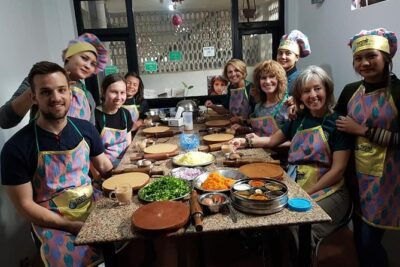
The group limit of 12 is a good middle ground. You have enough people for a social meal and a chance to meet someone new, but the class should not feel like a large demonstration where you can barely see the work surface. If you are traveling alone, this is one of the better parts of the experience. The cooking gives everyone an easy subject to talk about.
More cooking and eating in Kathmandu:
- Half day cooking class in Thamel kathmandu
★ 5.0 · 607 reviews - Kathmandu: Local Women-Led Nepali Cooking & Momo Class
★ 4.9 · 360 reviews - The best Private Nepali Cooking Class in Kathmandu
★ 5.0 · 83 reviews
Shopping for the ingredients
Before cooking, you take a short visit to a local market or shop to buy important ingredients. The exact stop may vary, so you should not expect a long market tour with extensive sightseeing. Think of it as a practical shopping trip that shows you where the food for the lesson comes from.
I like this part because it adds context without taking over the class. You see that Nepali cooking is built from ordinary, fresh ingredients and a careful mix of spices, vegetables, dough, and pulses. The visit also helps you understand what you will later be chopping, mixing, filling, and cooking.
The shopping stage may be especially helpful if you plan to cook Nepali food at home. You can pay attention to the ingredients being selected and ask how they are used. Since the lesson includes traditional dishes rather than only a tourist-friendly snack, this small stop helps connect the recipes to regular Nepali meals.
Keep your expectations in check. The activity description allows for a market or shop visit, not a guaranteed full-scale food market experience. If your main goal is shopping, bargaining, and photographing market life, choose a dedicated market tour. If you want a cooking lesson with a local food stop, this format makes better sense.
Learning the folds behind Nepal’s momos
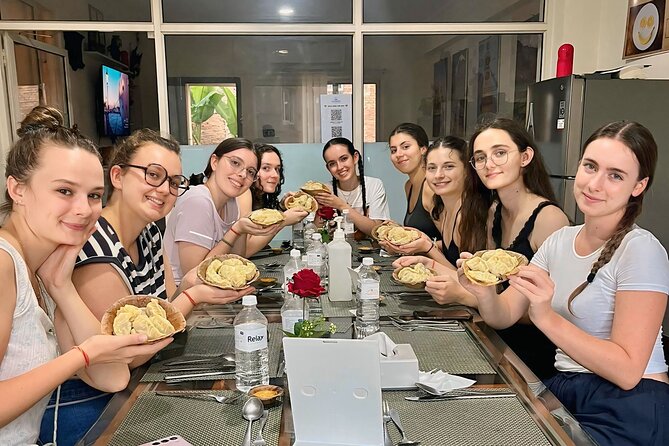
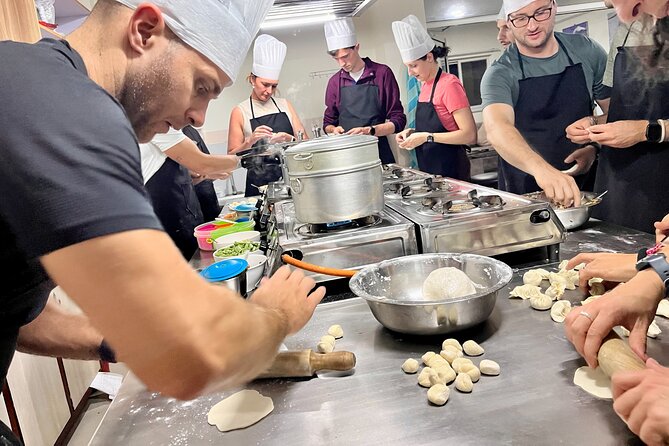
Momo-making is the main hands-on draw. You work with the dough and filling, then learn how to shape the dumplings. You can choose a vegetarian or chicken version, which makes the class suitable for different food preferences.
The folding looks easy when someone else does it. Your first few may come out a little lopsided, which is part of the fun. The instructors demonstrate the technique, then let you try it yourself. The relaxed tone is useful here. You are not being tested for neatness, and laughter is part of the process when your dumplings take on shapes of their own.
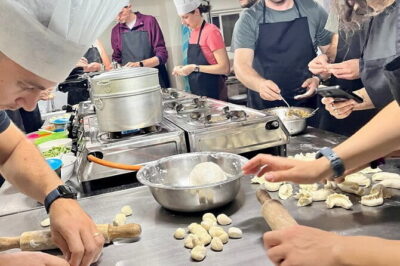
The class is not just a recipe handout. You learn how to prepare the ingredients and use traditional utensils, then cook the finished food. That difference is important. Watching a chef fold 20 perfect momos may look impressive, but making your own teaches you far more.
If you have never made dumplings before, expect to spend a fair amount of time on repetition. That is a benefit if you want a skill you can repeat at home. It may feel slow if you only want to eat momos and move on, but the hands-on practice is the point.
Beyond momos: dal bhat, bara, and dessert
The class prepares three authentic Nepali dishes: one entrée, one main course, and one dessert. Dal bhat, Nepal’s familiar lentil and rice meal, is among the dishes associated with this style of class. Bara and several dessert options have also appeared in the food selection, but you should understand that the precise menu is not fixed in the information provided.
This variety gives the class more depth than a single-dish workshop. You get to see how a Nepali meal can include different textures and cooking methods, from dumplings to lentils and sweets. The dessert also keeps the session from ending as soon as the savory food is finished.
The changing menu is both a plus and a small drawback. You may discover a dish you would never have chosen yourself, but you may not receive every item you were hoping to cook. If you have a strict dietary need, confirm the available menu before booking, since the information only specifies a vegetarian or chicken choice for the momos.
The instruction focuses on useful kitchen technique rather than culinary theory. You learn how to prepare ingredients, work with traditional equipment, follow the chef’s sequence, and adjust your hands to Nepali methods. That makes the class approachable even if you rarely cook.
A few more things to do in Kathmandu worth a look
- Knife (Khukuri) Making Workshop- Forge of the Gurkhas
★ 5.0 · 143 reviews - Kathmandu: Traditional Momo Making Class & Pickup
★ 4.8 · 60 reviews - Traditional Nepali Momo Making Classes
★ 5.0 · 53 reviews - Kathmandu: Local Women-Lead Nepali Cooking & Momo Class
★ 4.9 · 45 reviews
Sitting down to eat what you prepared
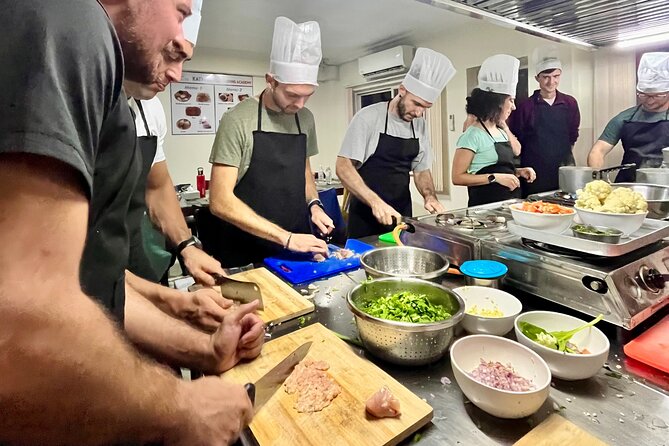
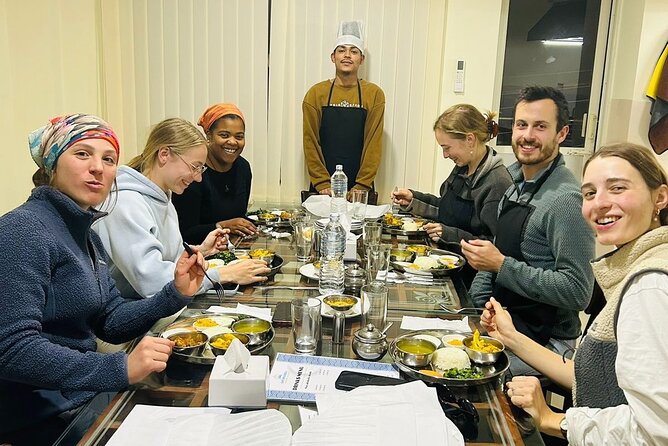
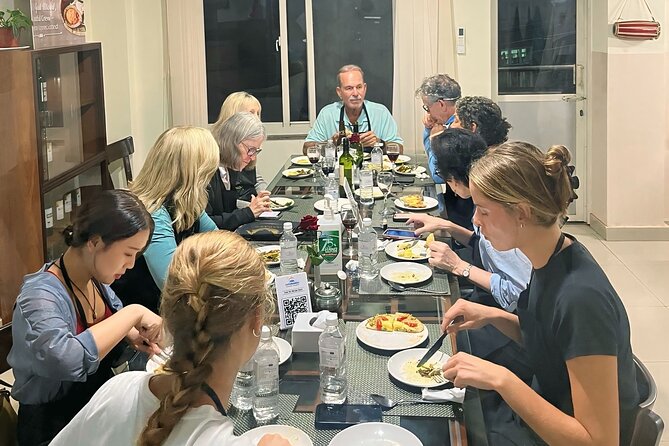
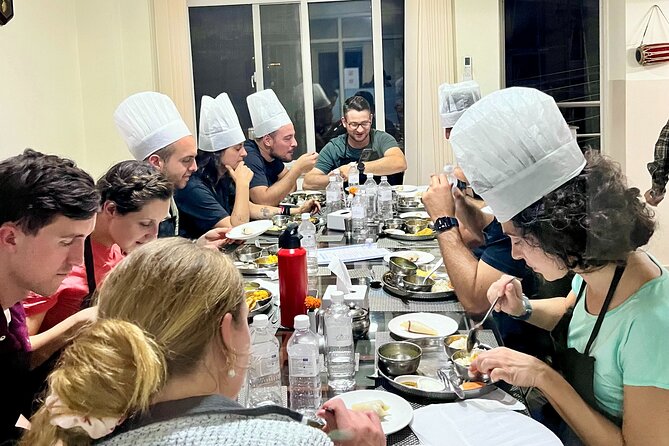
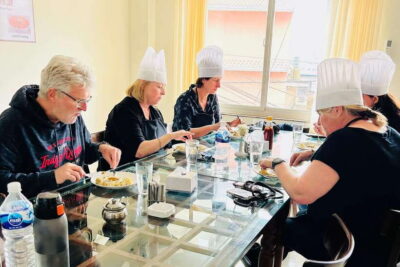
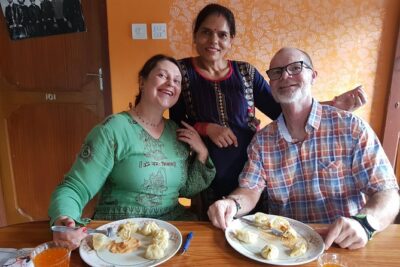
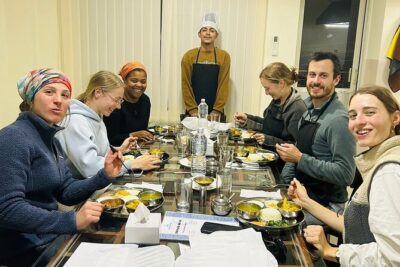
After the cooking, you sit down for a tasting session. This is more satisfying than a quick sample because you have handled the ingredients and worked through each stage yourself. A plate of momos tastes different when you remember which dumplings you folded and which ones nearly lost their shape.
The tasting also gives you a chance to compare results with the rest of the group. Solo participants can meet people over the meal, while couples and families have a relaxed finish to the activity. The food is the reward, but the shared table is part of the cultural exchange.
Masala tea during the lesson adds another small touch. Specialty and alcoholic drinks are not included, so you should not expect a full drinks service. The included tea is the traditional element, while anything beyond that is your own expense.
A detailed cookbook or PDF recipes may be provided so you can recreate the dishes later. That is particularly useful for momos, since the first attempt at home is much easier when you have the filling, dough, and folding steps in front of you.
How much value does the $5 price offer?
At the listed price of $5 per person, this is remarkably inexpensive for a three-and-a-half-hour activity that includes instruction, ingredients, equipment, cooking, and a meal. Even allowing for the possibility that the price changes by date or option, it offers excellent value when compared with the cost of a restaurant meal and a separate cultural activity.
The value comes from the amount of participation. You are not paying only for food. You are also getting a local instructor, a short ingredient-shopping visit, use of the kitchen, recipes, and time to practice. For a tight Kathmandu budget, that combination is hard to beat.
Read the booking option carefully, especially if you want transportation. Hotel pickup and drop-off are included only when that option is selected. Otherwise, the academy is near public transport and within walking distance of Thamel, which keeps the logistics fairly simple.
Tips are not included. Specialty and alcoholic drinks are also outside the stated price. These are small costs, but you should count them if you are planning every rupee.
Timing, transport, and the small-group format
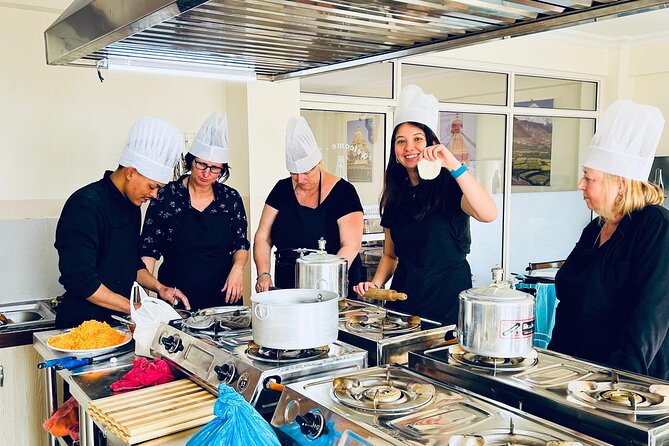
Allow about three hours and 30 minutes for the full experience. That is long enough for a proper lesson, but short enough to fit around sightseeing in Kathmandu. I would place it on a day when you are not rushing to a flight or a distant appointment, since cooking tends to be more enjoyable when you have time to eat at the end.
The meeting point is Kathmandu Cooking Academy on Yapikhya Marg, Kathmandu 44600. The activity ends back at the same location. Pickup and drop-off can be arranged only if you select the relevant option, so do not assume hotel transport comes with the basic booking.
The maximum group size is 12. That limit supports the strongest parts of the class, particularly the folding and preparation work. With a very large group, an instructor might have trouble correcting your technique. Here, you have a better chance to receive direct help, though the exact amount of personal attention depends on the group that day.
The class is also a good rainy-day plan. It keeps you indoors for much of the session while still adding an outdoor ingredient stop. Kathmandu weather can change your plans, and a cooking class gives you something active to do without spending the afternoon moving between monuments.
Who should book this cooking class?
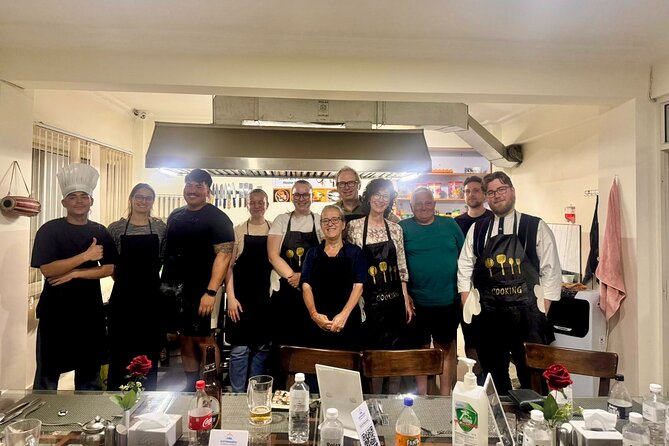
I would recommend it most strongly if you want an activity that mixes food, conversation, and a little local shopping. It suits solo visitors, couples, families, first-time cooks, and people who already enjoy making dumplings.
You should book it if:
- You want to learn a practical Nepali recipe rather than just sample local food.
- You like hands-on activities and do not mind making imperfect dumplings.
- You are staying near Thamel and want an easy half-day plan.
- You want a social activity where you can meet people while doing something together.
- You value a low price and a meal included in the experience.
- You would like recipes you can try again at home.
You may want another activity if you need a guaranteed fixed menu, a long market visit, or a private class. The menu can vary, the market stop is short, and the maximum group size is 12 rather than one-on-one instruction.
The class also requires some flexibility around food. The momo choice is vegetarian or chicken, but the supplied details do not explain every ingredient, substitution, or allergy procedure. Contact the academy before booking if you have strict dietary requirements.
Booking details and cancellation
Confirmation is received at booking, and the activity is near public transportation. Free cancellation is available if you cancel at least 24 hours before the local start time. Cancellations or changes made within 24 hours are not refunded or accepted, so keep that deadline in mind when arranging your Kathmandu schedule.
The experience has a 5 out of 5 rating from 212 reviews and is recommended by 100 percent of the people who rated it. The most consistently praised features are the patient instruction, clean kitchen, friendly atmosphere, tasty food, and the fact that the class works well for solo visitors.
Should you book it?
Yes, if you want a friendly, active introduction to Nepali food at a very low listed price. The strongest reasons are the hands-on momo work, the chance to cook several dishes, and the practical ingredient stop before class.
Go in expecting a small cooking lesson with a short shopping visit, not a full market tour or a fixed restaurant-style menu. If that matches what you want, Kathmandu Cooking Academy offers a useful way to spend three and a half hours, and you leave with more than a full stomach. You leave knowing how to make the food yourself.
FAQ
Where does the cooking class start?
The class starts at Kathmandu Cooking Academy on Yapikhya Marg, Kathmandu 44600, Nepal.
Where does the activity end?
The activity ends back at the cooking academy meeting point.
How long does the class last?
The experience lasts approximately three hours and 30 minutes.
Is hotel pickup included?
Hotel pickup and drop-off are included only if you select the option that includes transportation.
Is the class near Thamel?
Yes. The academy is described as about a 10-minute walk from Thamel.
How many people can join the class?
The maximum group size is 12 people.
What food will I prepare?
You will prepare three Nepali dishes: one entrée, one main course, and one dessert. The exact selection can vary.
Can I choose vegetarian momos?
Yes. The momo-making portion offers a vegetarian or chicken option.
Are cooking equipment and ingredients included?
Cooking equipment and accessories are included, along with the market or shop visit to buy important ingredients for the lesson.
Are drinks included?
Nepali masala tea is included during the lesson. Specialty and alcoholic drinks are not included.
Are tips included?
No. Tips are not included in the price.
Can I cancel for a full refund?
Yes, if you cancel at least 24 hours before the experience start time. Cancellations made within 24 hours are not refunded.
Just added in Kathmandu
- Kathmandu to Chitwan Tour by Tourist Bus – A Convenient and Affordable Way★ 4.0 · 4 reviews
- Changunarayan Hill to Telkot Hike Near Kathmandu Day Tour★ 5.0 · 6 reviews
- Mt Everest Base CampTrek | Budget Package★ 5.0 · 4 reviews
- Chitwan Jungle Safari 3-Day Tour★ 5.0 · 9 reviews
- Chandragiri Hill Station Tour by Cable Car★ 5.0 · 4 reviews
- Chandragiri Hills cable car day trip, private car with driver from Kathmandu★ 5.0 · 8 reviews
- Chandragiri to Taudaha Nature Day Hiking from Kathmandu★ 5.0 · 13 reviews
- Chandragiri Cable Car & Monkey Temple Private Guided Day Tour★ 5.0 · 5 reviews
Nepali Cooking Classes, compared.
Nepalese Momos or Dal Bhat Cooking Class (Cook with Delight)
Read our review →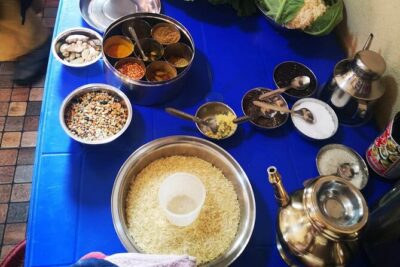
The best Private Nepali Cooking Class in Kathmandu
Read our review →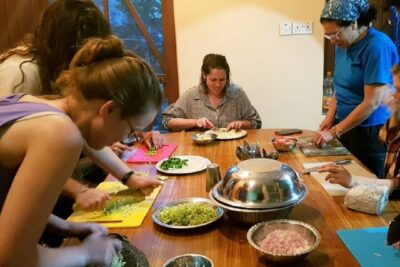
Nepalese Kitchen in Pokhara: Momos or Dal Bhat Cooking Class
Read our review →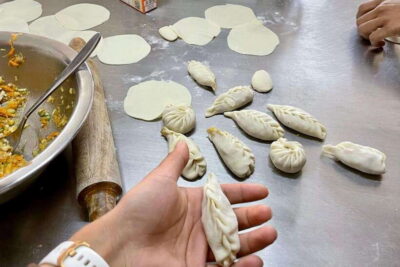
Browse the lists this tour appears in