
Reviewed · NEPALI COOKING CLASSES
Momo, Dhalbhat & Thukpa Cooking Class, Nepal
The best part of this experience is that cooking begins at a local vegetable market, not at the stove. Esther Rai takes you through the market, helps you choose ingredients, and gives you a close look at ordinary food shopping in Lalitpur. I like that the class also sits just a five-minute walk from Patan Durbar Square, and I like the warm, family-style welcome Esther and Amos offer. The main consideration is that some preparation may already be done, so you may not handle every step yourself.
At $25 for about three hours, this is a good-value way to connect food with daily life in Nepal. You’ll cook and eat a full meal, but you should book it for the cultural exchange as much as for the recipes. If you want a formal chef school with exact measurements and individual workstations, this is probably too casual.
Key points to know before you book
- Market first: You shop for ingredients at a local vegetable market and interact with sellers before cooking.
- Three classic dishes: The class focuses on momo, dal bhat, and thukpa, with other dishes possible by request.
- Patan location: The meeting point is in Nagabahal, Lalitpur, near the Golden Temple and Patan Durbar Square.
- Small group size: The class accepts a maximum of 10 people, which keeps the lesson fairly personal.
- Rooftop setting: Cooking takes place in a pleasant rooftop space, according to the experience details.
- A few prepared steps: Some ingredients or cooking stages may be completed ahead of time, which can reduce hands-on practice.
Why this Patan cooking class feels different
Many food classes begin with a recipe card and a pile of ingredients. This one begins with the question of where Nepalese food comes from. You meet at Nagabahal, in Lalitpur, and head to a local market before the cooking starts.
That short market visit gives the class a useful sense of place. You can interact with vegetable sellers, see the ingredients used in a Nepalese meal, and watch Esther select what is needed. It is a simple activity, but it makes the cooking feel connected to the neighborhood rather than staged for visitors.
Esther Rai began the class during the COVID-19 period as a way to support her family. Cooking has been part of her life since childhood, when she spent time in the kitchen with her mother and sister. That background matters because the lesson is built around home cooking and sharing food, not restaurant theater.
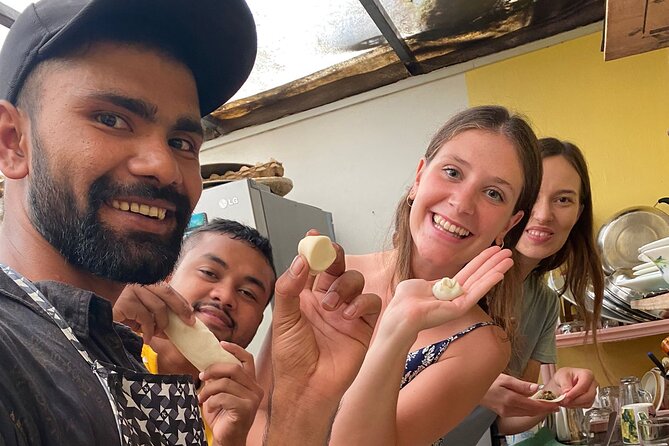
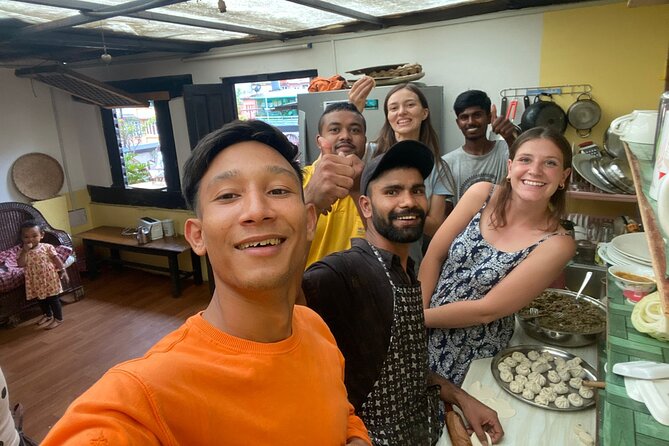
Esther is joined by Amos or another cooking partner, depending on the session. The tone is personal and informal. You are not simply shown how food is made, then sent away with a printed recipe. You spend time talking about Nepalese customs, family life, education, and food traditions while working together.
More cooking and eating in Kathmandu:
- Half day cooking class in Thamel kathmandu
★ 5.0 · 607 reviews - Kathmandu: Local Women-Led Nepali Cooking & Momo Class
★ 4.9 · 360 reviews - Kathmandu: Local Lead Nepali Cooking & Momo-Making Class
★ 5.0 · 212 reviews
From the market to the kitchen
The market visit is the first real activity, and it helps set the pace for the morning. You will interact with local vegetable sellers and buy ingredients for the meal. The available details do not specify one fixed market or a set shopping list, so the exact selection can vary.
I like this part because it gives you a practical view of Nepalese cooking. You see the raw materials before they become a finished dish. It also gives you a chance to ask about unfamiliar spices, vegetables, meat, or other ingredients used in the class.
Do not expect a long guided market tour with a lecture at every stall. The market stop is part of the cooking experience, not a separate sightseeing visit. Its value comes from the everyday contact and the chance to shop alongside your host.
Once the shopping is done, you return to the cooking location near Patan. The class is limited to 10 people, so you should have a better chance to ask questions than in a large demonstration. Still, the amount of personal cooking time can depend on the number of people attending and the dishes prepared that day.
Making momo, dal bhat, and thukpa
The advertised menu centers on three dishes that help explain Nepalese home cooking.
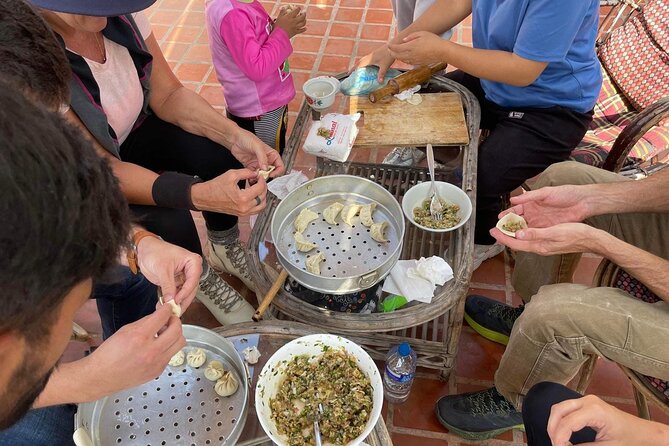
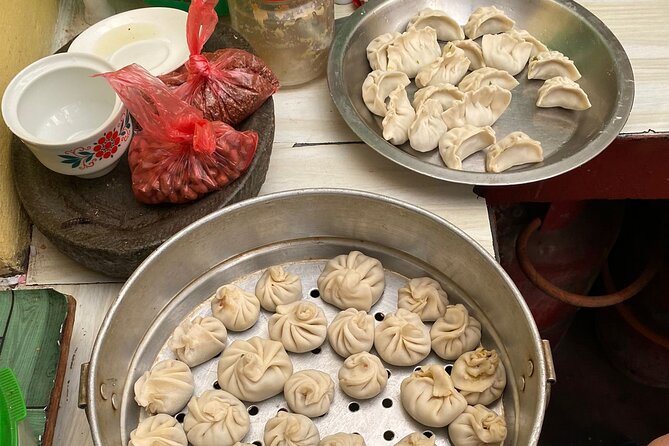
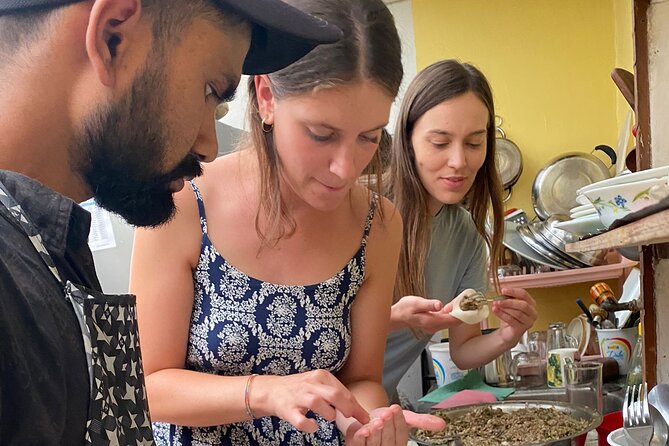
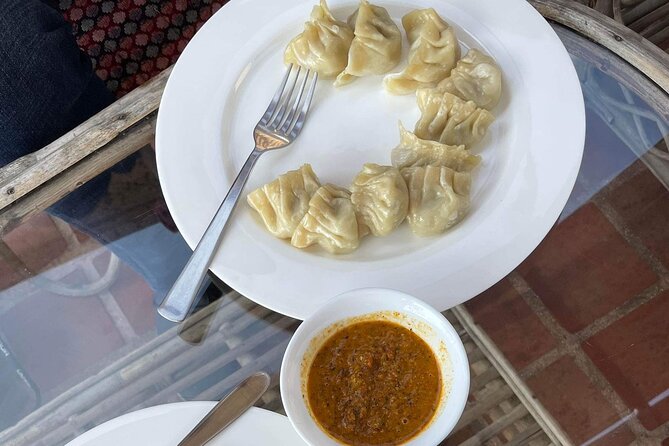
Momo are Nepalese dumplings, and preparing them usually includes working with filling, dough, and folding. The shape takes practice. This is likely to be the most playful part of the class, especially if you have never made dumplings before.
Dal bhat is a basic Nepalese meal built around lentils and rice, commonly served with vegetables, pickles, or other side dishes. It is filling and central to daily eating in Nepal. Learning to make it gives you something more useful than a one-off snack recipe because it shows how several parts of a meal come together.
Thukpa is a noodle soup associated with Himalayan food traditions. It gives the menu a different texture and style from dal bhat and momo. The three dishes together make a satisfying meal and let you work with several types of preparation.
The menu is not completely rigid. Esther says she can adjust it to a request, and one class included chicken curry along with momo and dal bhat. If you have a strong preference, ask about it when booking or before the class begins. The supplied information does not give a complete list of dietary substitutions, so do not assume every request can be met.
You will eat the food once it is cooked. That matters at a class like this. You get to see how the separate dishes work together as a meal, rather than sampling a small bite and leaving before the final stage.
How hands-on is the cooking?
This is the one area where you should set your expectations carefully. The class is designed to teach you how to make the dishes, and you will practice cooking them. But one person who attended felt disappointed that many steps had already been completed.
That can happen for practical reasons. A three-hour class needs to cover shopping, preparation, cooking, conversation, and eating. Some ingredients may need advance work so the meal is ready on time. If your main goal is to perform every task from start to finish, ask Esther how much preparation will be done ahead of time.
For most people, the balance will probably feel reasonable. You can still learn the structure of the meal, handle key ingredients, practice momo making, and ask questions as the cooking moves along. The class is best viewed as a guided home-kitchen lesson, not a professional cooking examination.
I would pay particular attention to the spices. The food has been praised for strong, layered flavor, and one class introduced new spices that were unfamiliar to the participants. Ask Esther what each spice does and how you might use it in your own kitchen.
A few more things to do in Kathmandu worth a look
- Knife (Khukuri) Making Workshop- Forge of the Gurkhas
★ 5.0 · 143 reviews - The best Private Nepali Cooking Class in Kathmandu
★ 5.0 · 83 reviews - Kathmandu: Traditional Momo Making Class & Pickup
★ 4.8 · 60 reviews - Traditional Nepali Momo Making Classes
★ 5.0 · 53 reviews
The Golden Temple and Patan setting
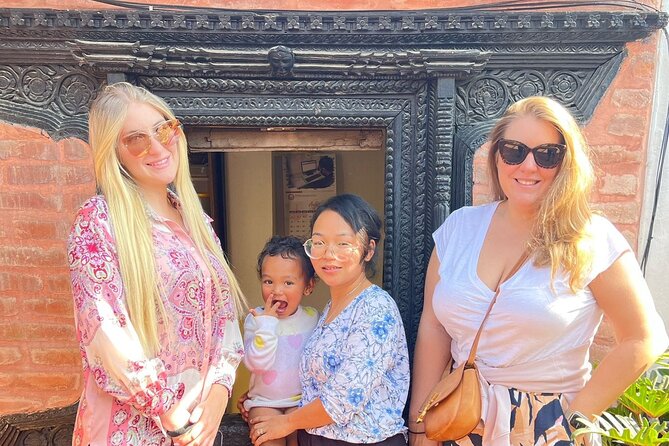
The class is located close to the Golden Temple, also called Hiranya Varna Mahavihar, and near Patan Durbar Square. The itinerary includes both the temple and Patan, though the central purpose remains cooking rather than a full walking tour.
The Golden Temple gives the experience a useful cultural setting. It is a traditional Buddhist courtyard complex in the Patan area, and its proximity helps place the class within one of Lalitpur’s historic neighborhoods. You can combine the cooking session with time around Patan Durbar Square before or after, though the cooking activity itself is scheduled for about three hours.
The location is one of the strongest practical features. If you are staying in Kathmandu’s Thamel district, this gives you a reason to spend time outside that familiar visitor center. One participant called it a good way to get out of Thamel for a meal and a local experience.
The meeting point is Nagabahal, Nyadha Galli, Lalitpur 44600. The activity ends back at the same meeting point. It is near public transportation, but no hotel pickup is listed, so you should plan your own way there.
A rooftop meal with a family feel
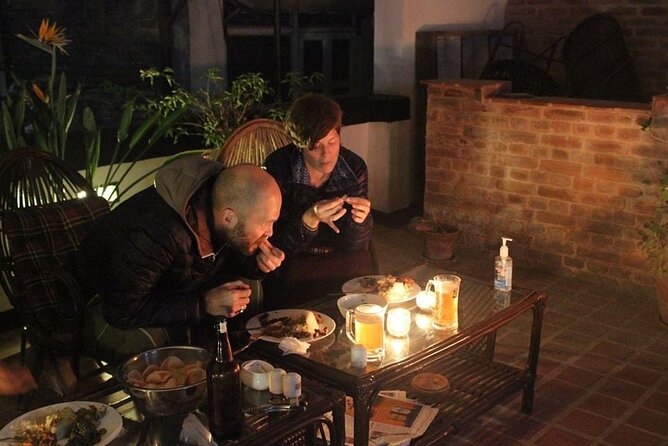
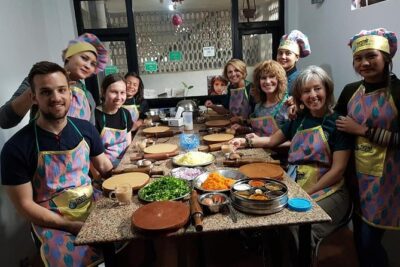
The cooking space is described as a lovely rooftop setting. That detail helps explain the mood of the class. You are not seated in a polished culinary studio with a commercial kitchen feel. Instead, you are in a more personal space connected to the people teaching you.
The welcoming atmosphere is a major part of the experience. Esther and her family have invited people into their cooking world, and the food is eaten together after preparation. You may hear about family customs, Nepalese culture, education, and everyday life while you cook.
That conversation can be as useful as the food lesson. A dish like dal bhat tells you something about meals, but a discussion about family and customs gives the meal context. The class is a good fit if you enjoy asking questions and sharing a table with your host.
The casual setting has a trade-off. Instructions may not always follow a strict written format, and the pace may change depending on the group. If you need a precise recipe with exact weights, fixed cooking times, and a certificate, this probably is not the right choice.
Is $25 a fair price?
At $25 per person, the price is reasonable for what is included. You receive roughly three hours of activity, a market visit, instruction in several dishes, and a meal at the end. The class also includes a cultural exchange that would be difficult to reproduce by simply eating at a restaurant.
The value is strongest if you treat the meal as only one part of the purchase. A restaurant meal may cost less or more depending on where you eat, but it will not include shopping with Esther, cooking beside her, or learning how ingredients are used in a Nepalese kitchen.
The maximum group size of 10 is worth noting. That is small enough to avoid a huge class, but it does not guarantee one-to-one instruction. If several people attend, you may share preparation tasks. The rooftop location and home-style format suggest a relaxed lesson rather than a private class.
The experience is booked on average six days ahead. That is not a rule, but it is a useful planning clue. If your schedule in Kathmandu is tight, reserve before arriving or early in your stay.
Who will enjoy this experience most?
I would recommend this class to you if you want a practical way to meet a local host and understand Nepal through food. It suits people who enjoy markets, informal conversation, and meals made with their own hands.
It is especially good for:
- First-time visitors who want an activity near Patan
- Food lovers curious about momo, dal bhat, and thukpa
- Couples, families, and small groups
- People who want to spend time outside Thamel
- Visitors who value a personal exchange over a polished demonstration
- Anyone who likes learning about customs while cooking
You should think twice if you want a strictly timed lesson in a commercial kitchen. You should also ask about the menu in advance if you have dietary restrictions, since the available information does not explain substitutions or special meal arrangements.
The class requires good weather. That matters because the cooking setting includes a rooftop space. If poor weather causes cancellation, you are offered another date or a full refund.
Booking and cancellation details
You receive confirmation at the time of booking, and the ticket is mobile. The class is near public transportation, and the activity begins and ends at Nagabahal in Lalitpur.
Free cancellation is available until 24 hours before the start time. Cancel at least 24 hours ahead for a full refund. Cancellations or changes made within 24 hours are not refunded or accepted. The cut-off uses local Nepal time, so check the clock carefully if you are booking from another country.
Should you book the Patan cooking class?
Book it if you want food, conversation, and a look at ordinary life in Lalitpur in one compact experience. Esther’s personal connection to cooking, the market visit, the nearby Golden Temple, and the shared meal give the class more substance than a simple recipe demonstration.
The strongest reasons to choose it are the market-to-table format and the chance to learn in a family-style setting. The food itself has been praised for its flavor, especially the dal bhat, and the class can include dishes beyond the standard menu if you make a request.
The main caution is the hands-on level. Some preparation may already be complete, and the class does not promise that every participant will perform every step. For a relaxed introduction to Nepalese food and culture, that is a minor drawback. For a formal chef lesson, it may be a deal-breaker.
At $25, I think it is a sensible choice for most food-focused visitors in Kathmandu, especially if you plan time in Patan. Bring curiosity, arrive ready to share the work, and expect a generous meal rather than a strict culinary course.
FAQ
Where does the cooking class begin?
The meeting point is Nagabahal, Nyadha Galli, Lalitpur 44600, Nepal.
Where does the activity end?
The activity ends back at the meeting point in Nagabahal.
How long does the class last?
The experience lasts approximately three hours.
What food will I learn to cook?
The main menu includes momo, dal bhat, and thukpa. The menu can also be adjusted to a guest request, and one session included chicken curry.
Does the experience include a market visit?
Yes. You visit a local vegetable market, interact with sellers, and buy ingredients before starting the cooking class.
Is the class near Patan Durbar Square?
Yes. The cooking location is about a five-minute walk from Patan Durbar Square. The itinerary also includes the Golden Temple, or Hiranya Varna Mahavihar.
How many people can join?
The activity has a maximum of 10 participants.
What is the cancellation policy?
You can cancel at least 24 hours before the start time for a full refund. Cancellations or changes made less than 24 hours before the start time are not accepted or refunded. If poor weather causes cancellation, you are offered another date or a full refund.
Just added in Kathmandu
- Traditional Momo Making Class★ 5.0 · 10 reviews
- Women Empowerment Project(Nepali cooking class & jewelry workshop★ 5.0 · 15 reviews
- Kathmandu 2 Nights 3 Days Chitwan Jungle Safari Tour★ 5.0 · 9 reviews
- Walking tour of Kathmandu with awesome local guides★ 5.0 · 4 reviews
- Wildlife Adventure in Chitwan Nepal★ 4.0 · 4 reviews
- Kathmandu to Pokhara Premium sofa bus ticket★ 4.0 · 17 reviews
- Regular Yoga for all levels of practitioners in Kathmandu★ 5.0 · 4 reviews
- Kathmandu Street Food Walking Tour – Eat Like a Local★ 5.0 · 3 reviews
Nepali Cooking Classes, compared.
Nepalese Momos or Dal Bhat Cooking Class (Cook with Delight)
Read our review →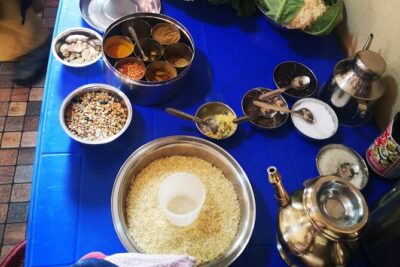
The best Private Nepali Cooking Class in Kathmandu
Read our review →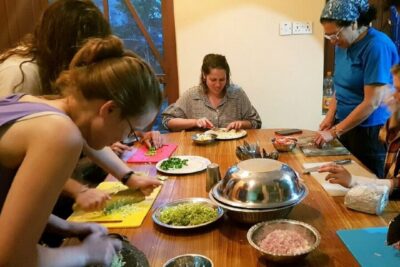
Nepalese Kitchen in Pokhara: Momos or Dal Bhat Cooking Class
Read our review →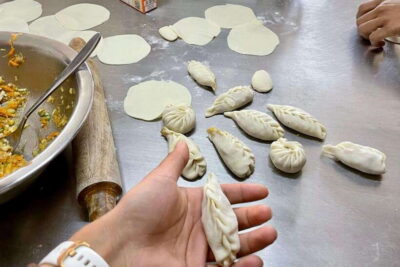
Browse the lists this tour appears in