
Reviewed · WORKSHOPS
Kathmandu: Wood Carving Workshop with Local Artisan (Thamel)
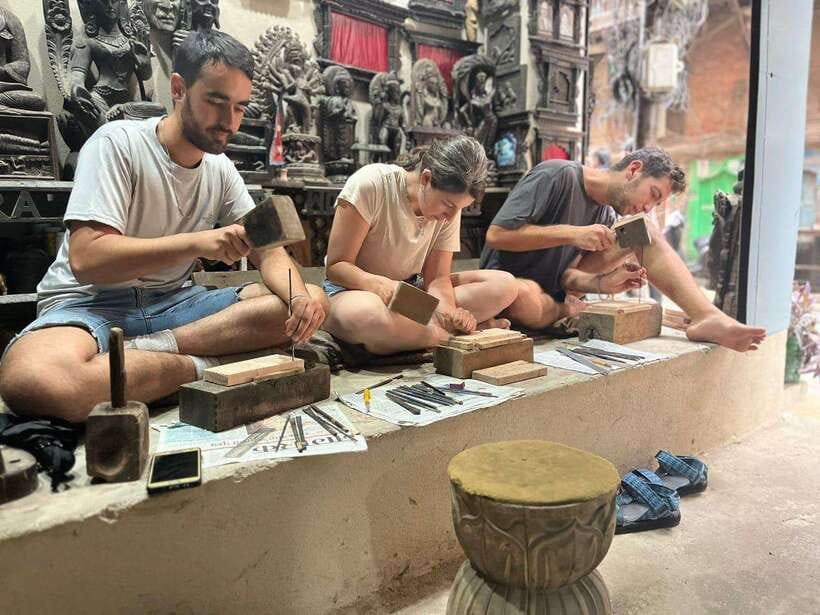
Nepali wood carving is not just decoration. It shapes temple windows, palace details, and sacred figures across the Kathmandu Valley. In this three-hour Thamel workshop, you get to handle the same basic tools and patterns in a calm, small-group setting, then take home a piece made by your own hands.
I like two things here: the maximum group size of four, which gives the artisan time to correct your grip and cuts, and the finished wooden souvenir, which has far more meaning than a shop purchase. The main consideration is that the history lesson may be fairly light, so choose this for practical making first and detailed cultural study second.
Key points
- Work with a local artisan: You learn directly from a Nepali wood carver rather than simply watching a demonstration.
- Use traditional techniques: Practice outlining, chiseling, and fine detailing on a prepared wooden block.
- Connect craft with culture: Learn how lotus flowers, mandalas, deities, and mythical creatures appear in Nepali carving.
- Take home your own work: Your finished piece becomes a personal souvenir, not a mass-produced trinket.
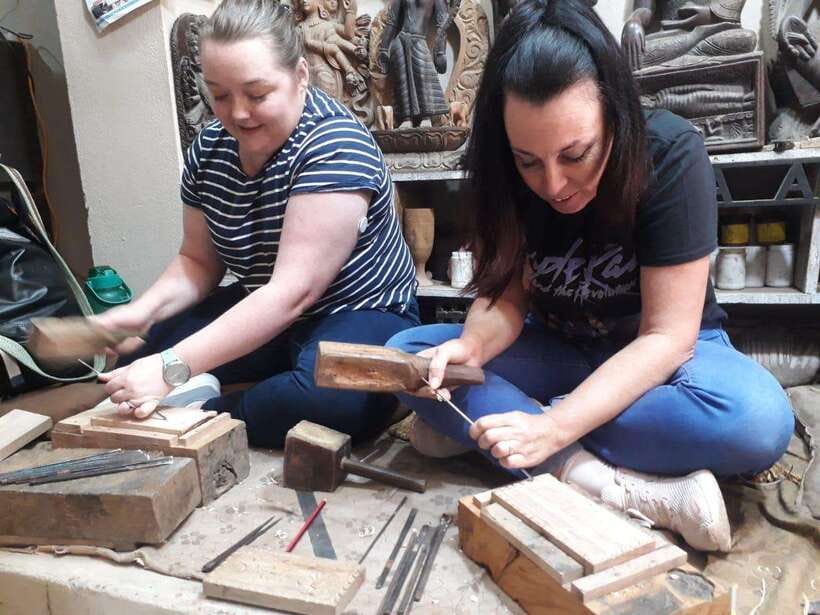
- Small group format: With no more than four participants, you should receive useful individual guidance.
- Family-friendly instruction: A ten-year-old was able to take part with patient help, making this suitable for curious beginners.
Why Nepali wood carving matters
Wood carving in Nepal reaches back to the Licchavi period, from the fourth to ninth centuries. It later developed strongly under the Malla dynasty, from the twelfth to eighteenth centuries, when artisans produced the elaborate wooden work still seen around the Kathmandu Valley.
This is why the class can feel more meaningful than a standard craft activity. You are not learning an isolated hobby. You are getting a small, practical look at an art form used in temples, palaces, windows, and religious buildings.
The Newar community of the Kathmandu Valley has played a central role in preserving this craft. Examples include the Kasthamandap, whose name means House of Wood, Bhaktapur’s 55-Window Palace, and the famous Peacock Window.
You will not carve a palace window in three hours, of course. The point is to understand the basic logic behind the work. A simple line, flower, or figure demands control of the tool, patience with the wood, and respect for the pattern.
A few more things to do in Kathmandu worth a look
- Half day cooking class in Thamel kathmandu
★ 5.0 · 607 reviews - Kathmandu: Local Women-Led Nepali Cooking & Momo Class
★ 4.9 · 360 reviews - Kathmandu: Local Lead Nepali Cooking & Momo-Making Class
★ 5.0 · 212 reviews
Entering a small workshop in Thamel
The class takes place in Thamel, Kathmandu’s well-known visitor district, though the exact meeting point is not specified in the available details. You should confirm the meeting instructions before setting out, rather than assuming the activity begins at a particular hotel or landmark.
The group is limited to four people. That number matters in a hands-on class. If an instructor is helping three other people at the same time, you may still need to wait now and then, but you should have much more personal attention than in a large demonstration.
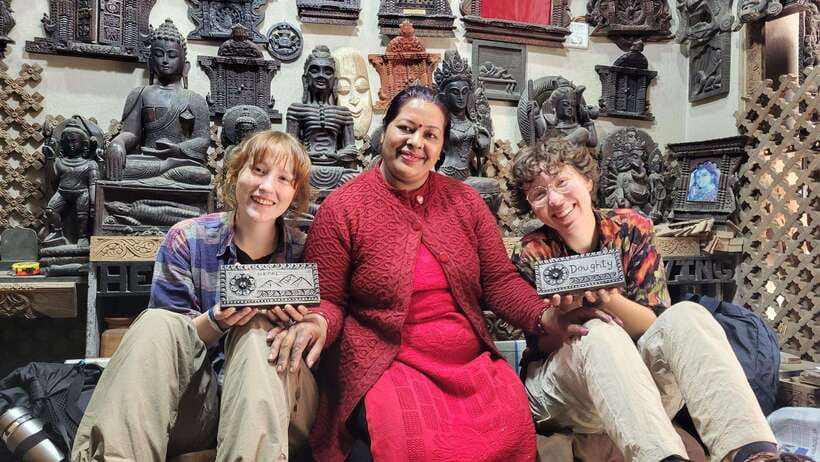
English is the listed teaching language. One instructor named in the experience information is Hera. He is described as warm, funny, encouraging, and patient, with his wife also helping create a friendly workshop atmosphere. The exact instructor may depend on the date and availability, so treat Hera as a possibility rather than a guarantee.
Wear comfortable clothes. Wood carving is practical work, and you will want sleeves and clothing that allow easy movement. Smoking is not allowed during the activity.
The first lesson: tools, wood, and patterns
The session begins with an introduction to the tools and materials. You learn about chisels, hammers, and the other instruments used to cut and shape wood.
That short introduction is important. A chisel is not simply pushed into the block with force. The angle, pressure, and direction all affect the cut. Beginners often want to remove too much material at once, but good carving usually comes from many controlled cuts.
The class uses high-quality wood, with sal and teak identified as examples of woods commonly used in Nepali carving. You may work on a pre-cut wooden block, which keeps the project manageable within the three-hour schedule.
The artisan also introduces common Nepali motifs. Lotus flowers, mandalas, deities, mythical creatures, and symbolic patterns appear often in Hindu and Buddhist art. These designs are not merely ornamental. They can carry religious meaning, ideas about purity, protection, balance, or the natural world.
I find this cultural explanation especially useful because it gives your finished object a context. You are not just making a shape that looks attractive. You begin to understand why certain forms recur across Kathmandu’s temples and traditional buildings.
Choosing a design you can finish
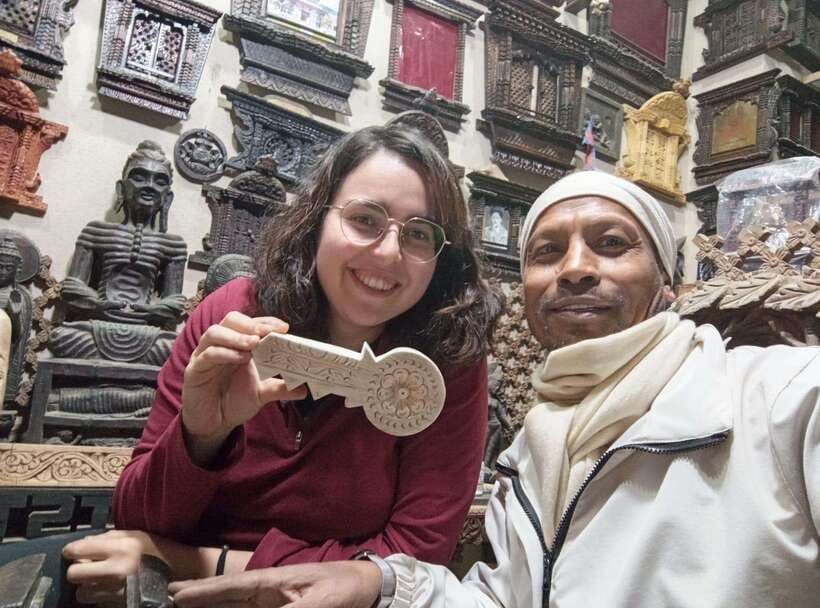
You then begin the practical part of the class with a design on your wooden block. The project might become a decorative panel, a small figurine, or a symbolic motif, depending on the class and your ability.
The choice of design affects how satisfying the session feels. A simple pattern gives you time to learn clean cuts and finish the piece properly. A highly detailed figure may look impressive, but it can be too ambitious for a first attempt.
The artisan guides you step by step. If you have never carved before, that matters more than artistic talent. You do not need to arrive with drawing skills or previous experience. The class is designed for beginners as well as people who already enjoy art.
You should expect to make mistakes. A line may go too deep, a corner may chip, or a curve may lose its shape. That is part of the process. The instructor can show you how to adjust the design and use the next cut to improve the result.
Same base, a different kind of day:
- Everest Base Camp Trek – 14 Days
★ 5.0 · 1,499 reviews - Private Kathmandu Sightseeing Tour | UNESCO World Heritage sites
★ 5.0 · 756 reviews - Everest Base Camp Helicopter Tour landing at Everest View Hotel
★ 5.0 · 668 reviews - Everest Base Camp Trekking
★ 5.0 · 485 reviews
Outlining, chiseling, and detailing
The carving work develops in stages. First comes outlining, where you mark the main shape and establish the boundaries of the pattern. This stage helps prevent you from cutting into areas that need to remain raised.
Next comes chiseling. You remove wood around the design, gradually bringing the pattern forward. The work is physical but not described as strenuous. The real challenge is control, especially when you are trying to follow a curve or keep two sides of a pattern balanced.
Detailing comes last. You refine edges, add small lines, and give the design more character. This is where a plain block begins to look like a finished object.
The instructor offers tips and corrections throughout the practice. In a group of four, you should be able to ask for help without losing the whole session. A one-on-one class is also possible during quieter periods. One participant who booked in the off season received individual instruction, which can make the pace especially comfortable.
Do not expect museum-quality carving from your first afternoon. The value is in learning how the work is done and leaving with something you made yourself. A slightly uneven line can be part of the charm.
A personal souvenir instead of a shop purchase
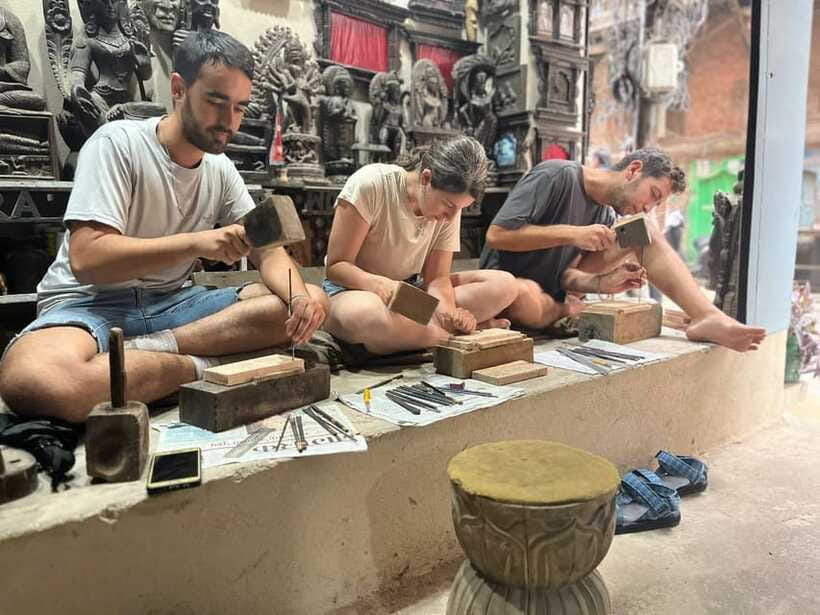
At the end, you take home your own wooden artwork. The exact result may be a panel, figurine, or symbolic pattern, depending on your design and how quickly you work.
This is one of the strongest reasons to book the class. Kathmandu’s shops offer many attractive handmade objects, but buying a finished carving gives you little sense of the patience behind it. Making even a small piece changes how you look at the carved windows and doors around the valley.
Your object also carries a memory of the day. You remember the first cut, the tool that felt awkward, and the moment the pattern began to appear. That makes the souvenir more personal than something chosen from a shelf.
Keep your expectations sensible. The supplied details do not promise professional finishing, custom packaging, or a large sculpture. You receive a handcrafted wooden piece, but the size and final design can vary.
What the class gets right
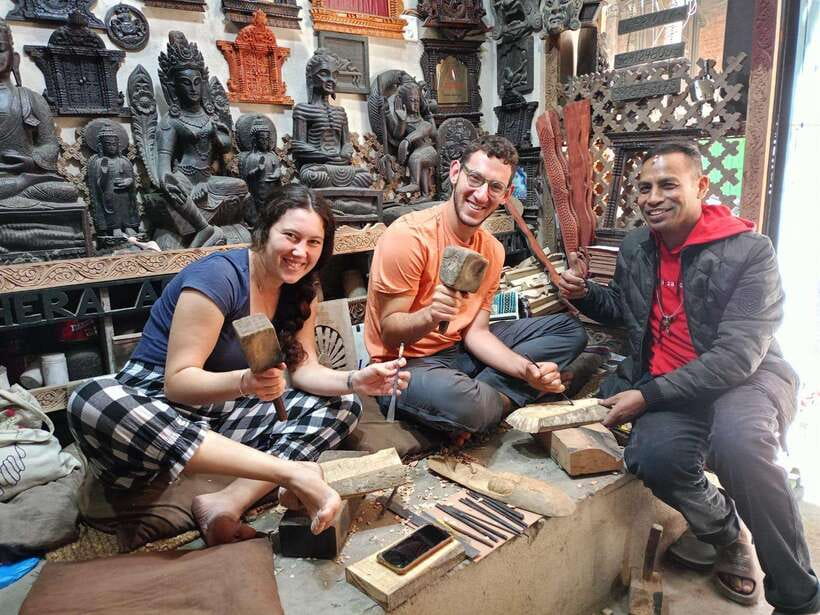
The strongest feature is the teaching style. The available experience information describes Hera and his wife as warm, kind, funny, patient, and encouraging. A family with a ten-year-old child found the instruction helpful while learning a completely new skill.
That makes this a good choice if you worry that you are not artistic. The instructor’s job is not to judge your first attempt. It is to show you how to handle the tools, simplify the pattern, and keep moving.
The small group also helps. A four-person limit is not the same as a private lesson, but it should reduce long waits and make it easier to ask questions. During a quiet period, you might even receive individual attention.
I also like the balance between making and explanation. You learn about the craft’s connection with temples, palaces, Hindu and Buddhist imagery, and the Newar artisans of the Kathmandu Valley. Then you put that information to work with a chisel.
The main limitation: cultural detail may be brief
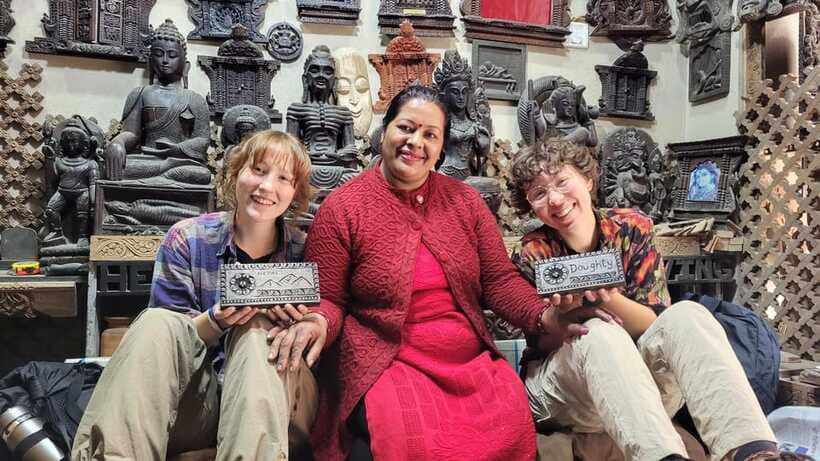
If you want a long, detailed account of Nepali art history, this may leave you wanting more. The session has to divide its three hours between tools, instruction, practice, and finishing your piece.
One participant specifically wished for more historical and cultural context. That is a fair point. You may receive a useful introduction to the craft, but this is primarily a workshop, not a formal lecture or museum class.
You can make the cultural side more rewarding by asking questions as you work. Ask why a particular motif is used, how temple carvings differ from decorative objects, or which patterns are associated with Hindu and Buddhist traditions. The artisan may be able to add stories beyond the basic introduction, but the available information does not promise a set lecture.
For a fuller art-history experience, pair the class with visits to Kathmandu Valley landmarks connected with wood carving, such as Kasthamandap, Bhaktapur’s 55-Window Palace, or the Peacock Window. Those sites are not part of the workshop, so plan them separately.
Is $42 a fair price?
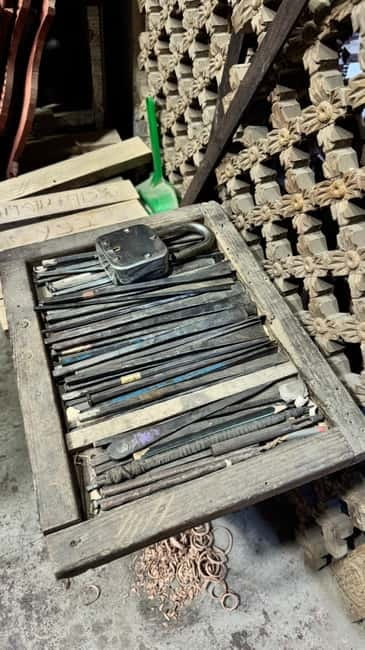
At $42 per person, the class costs more than buying a small wooden souvenir from a market stall. You are paying for three hours of instruction, the artisan’s time, the tools, the wood, and the finished piece.
The value is strongest if you want an activity rather than a purchase. You receive all necessary materials, guided instruction, and your own artwork to take home. Government taxes and VAT are included, so the listed price covers the stated essentials.
The small group makes the price easier to justify. With a maximum of four people, this is not a crowded production line where you simply copy a demonstration from across the room. You have a better chance to get corrections on your technique and guidance suited to your pace.
The price may feel less worthwhile if you only want a quick introduction or a ready-made object. In that case, a shop purchase will take less time and probably cost less. Book this when the process matters as much as the souvenir.
Who should book this workshop?
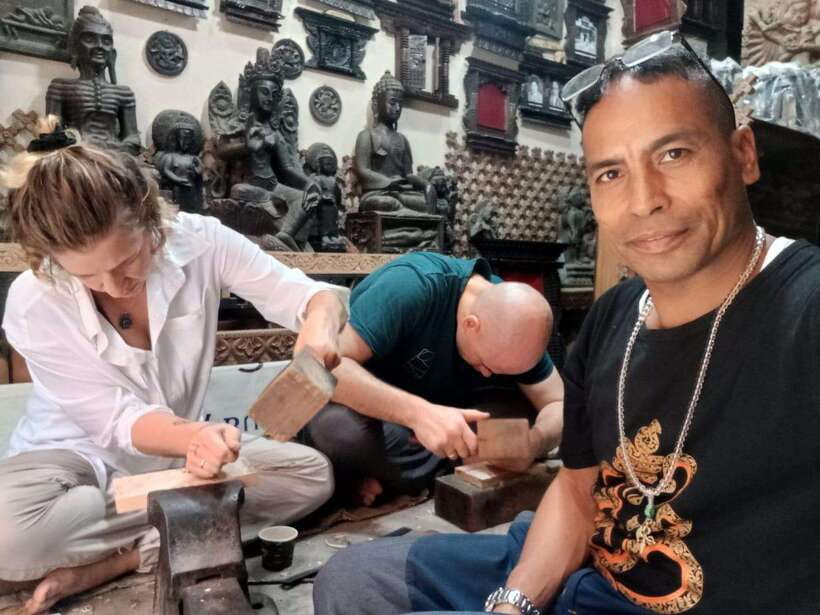
I would recommend it to first-time visitors who want a direct connection with Nepali culture without spending a full day on a formal tour. It also suits art lovers, craft enthusiasts, curious beginners, and families looking for a quiet activity in Kathmandu.
The class works particularly well for people who enjoy making things with their hands. You do not need prior carving experience, and the instruction is presented for all skill levels.
Families should note the positive experience with a ten-year-old child. The available information does not give a minimum age, so confirm age suitability if you are bringing a younger child. The tools are sharp, and children will need close attention during the practical work.
This is less suitable if you dislike slow, careful tasks or expect a finished piece that looks like professional temple carving. The class rewards patience. It is not a quick photo stop.
Practical details before you go
The duration is three hours, so leave enough room in your Kathmandu schedule. Starting times vary, and availability should be checked when booking.
The meeting point is not described in detail beyond an instruction to meet at the designated meeting location. Confirm the exact address and allow time to reach it in Thamel.
Instruction is in English. The group size is limited to four participants. Tools and materials are provided, and your finished piece is included.
You can cancel up to 24 hours before the activity for a full refund. The reserve-now, pay-later option lets you hold a place without paying immediately, which is useful if your Kathmandu plans may change.
Should you book the Thamel wood carving class?
Book it if you want to spend a quiet three hours learning a real Nepali craft and making a souvenir with your own hands. The patient teaching, small group, and personal wooden piece give this experience a clear purpose.
I would especially choose it for a family, a couple, or a solo visitor who prefers a hands-on activity to another sightseeing stop. Just keep the history portion in perspective. You will gain useful cultural background, but the main event is holding the tools, following the pattern, and slowly turning a block of wood into something personal.
FAQ
How long does the wood carving workshop last?
The workshop lasts three hours.
Where does the workshop take place?
It takes place in Thamel, Kathmandu, in the Bagmati Zone. The exact meeting point should be confirmed with the activity provider.
How much does the experience cost?
The price is $42 per person.
How many people can join the class?
The group is limited to four participants.
Is the instruction offered in English?
Yes. English is the listed instruction language.
Are tools and materials included?
Yes. All necessary tools and materials are provided.
Do I get to take home what I make?
Yes. You create a wooden piece during the class and take it home afterward.
What should I bring?
Wear comfortable clothes. The activity information does not list any special equipment that you need to bring.
Can I cancel the booking for a refund?
Yes. You can cancel up to 24 hours in advance for a full refund. You can also reserve now and pay later.
Just added in Kathmandu
- Kathmandu to Chitwan Tour by Tourist Bus – A Convenient and Affordable Way★ 4.0 · 4 reviews
- Changunarayan Hill to Telkot Hike Near Kathmandu Day Tour★ 5.0 · 6 reviews
- Mt Everest Base CampTrek | Budget Package★ 5.0 · 4 reviews
- Chitwan Jungle Safari 3-Day Tour★ 5.0 · 9 reviews
- Chandragiri Hills cable car day trip, private car with driver from Kathmandu★ 5.0 · 8 reviews
- Chandragiri to Taudaha Nature Day Hiking from Kathmandu★ 5.0 · 13 reviews
- Chandragiri Hill Station Tour by Cable Car★ 5.0 · 4 reviews
- Chandragiri Cable Car & Monkey Temple Private Guided Day Tour★ 5.0 · 5 reviews
Workshops, compared.


Knife (Khukuri) Making Workshop- Forge of the Gurkhas
Read our review →
Nepalese Momos or Dal Bhat Cooking Class (Cook with Delight)
Read our review →
The best Private Nepali Cooking Class in Kathmandu
Read our review →
Nepalese Kitchen in Pokhara: Momos or Dal Bhat Cooking Class
Read our review →
Browse the lists this tour appears in