
Reviewed · WORKSHOPS
Knife Khukuri Making Workshop
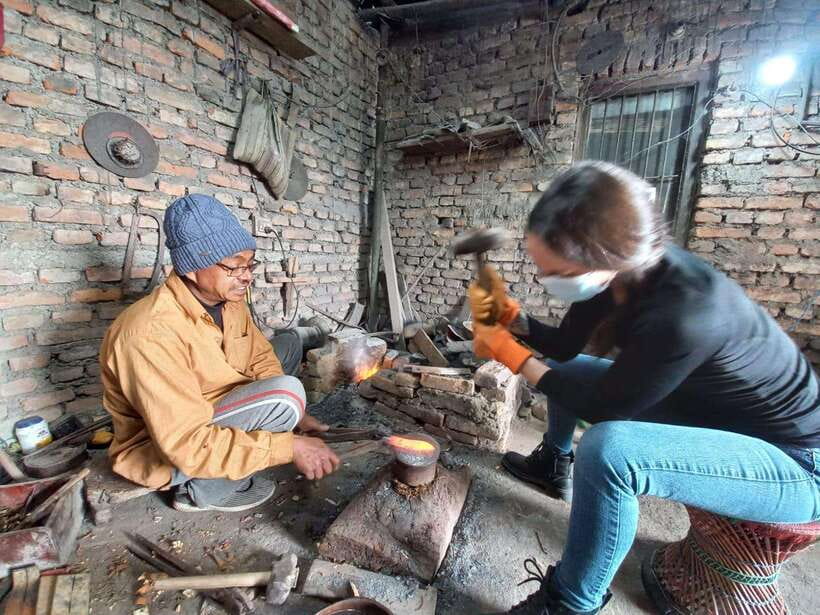
The best part of this four-hour workshop is watching a raw piece of iron become a real khukuri in the hands of Indra, a blacksmith with more than 40 years of experience. You’ll visit his family home, learn why this curved knife matters to Nepal, and take part in the safer jobs instead of simply watching from a chair.
I like two things here: the small group, limited to five, keeps the session personal, and the finished knife is a useful souvenir rather than a trinket. Guides such as Namrata, Sajeena, and Swayam also add value by translating, explaining the craft, and helping the conversation flow.
The main consideration is safety. You will not do every step, and the host handles the hardest shaping, sharpening, and later grinding work. Sparks fly, hot metal is involved, and this is not suitable for children under 10. Wear long pants and follow the smith’s instructions closely.
Key points to know before you book
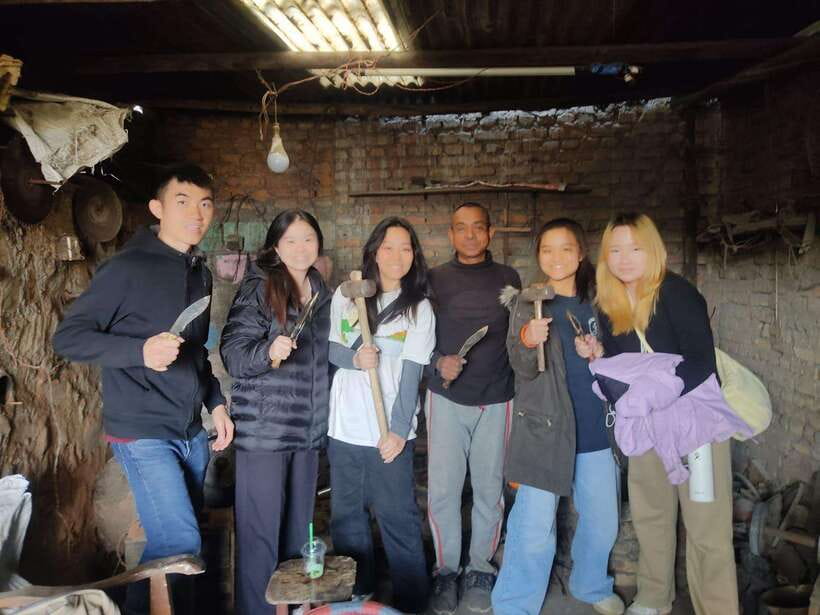
- You make a small six-inch khukuri: The finished blade is compact, practical, and easier to take home than a full-size ceremonial knife.
- The blacksmith has over four decades of experience: Indra handles the skilled work and shows you how the knife changes shape.
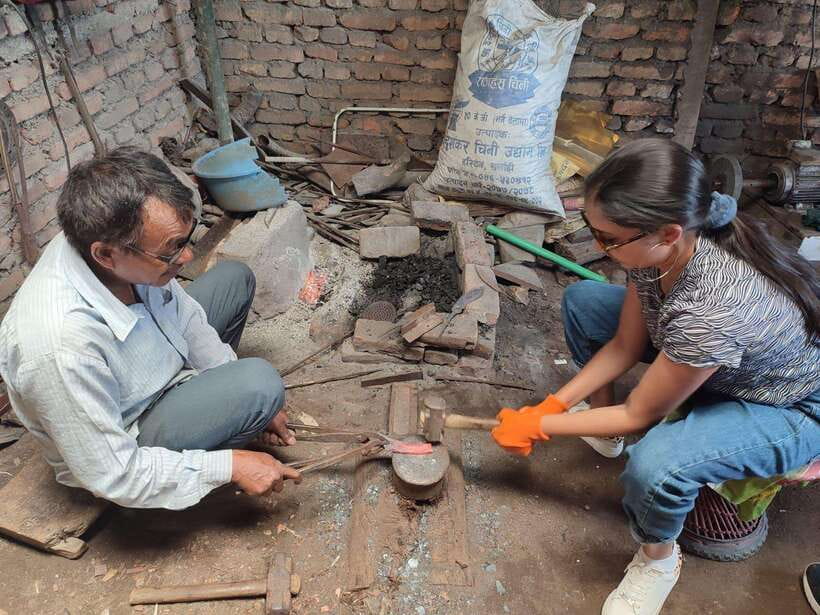
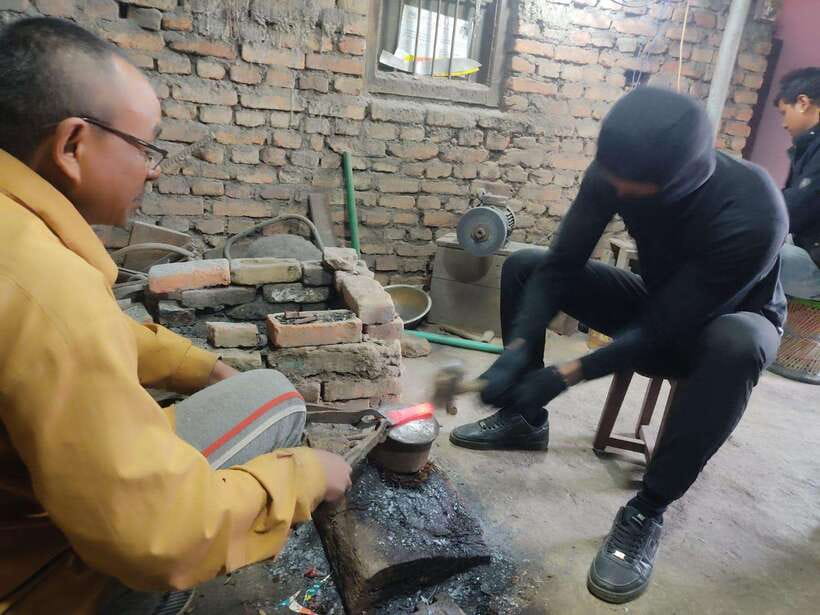
- You take part in hammering and the first grinding: Your role is hands-on, but carefully limited for safety.
- You visit a local family home: Tea, water, snacks, and warm hospitality help turn a workshop into a personal cultural encounter.
- Pickup and drop-off are included: Your guide collects you from your hotel lobby and returns you afterward.
- The group is capped at five people: That matters when you need instruction around a forge and want time with the maker.
Why the khukuri matters in Nepal
The khukuri is not just a curved knife sold in a market stall. It is linked with the Gurkha warrior and is regarded as a traditional tool among Nepal’s hill communities. Its uses range from shaping timber to chopping meat and vegetables, so the knife has both symbolic and everyday value.
The blade is made from tempered steel and is known for being very sharp. A small notch near the handle is traditionally said to keep blood from running onto the grip. It also carries a religious meaning connected with the Hindu Trinity of Brahma, Vishnu, and Shiva.
You’ll see how the handle and sheath complete the tool. Handles are usually made from wood or buffalo horn, while the blade sits in a wood-and-leather cover. The standard workshop knife is a small six-inch version, not one of the larger khukuris you may see displayed in shops.
That size is a sensible choice for a souvenir. It is still a proper handmade blade, but it is less cumbersome than a large knife and gives you a clear record of what you helped create.
A few more things to do in Kathmandu worth a look
- Half day cooking class in Thamel kathmandu
★ 5.0 · 607 reviews - Kathmandu: Local Women-Led Nepali Cooking & Momo Class
★ 4.9 · 360 reviews - Kathmandu: Local Lead Nepali Cooking & Momo-Making Class
★ 5.0 · 212 reviews
From hotel lobby to the blacksmith’s home
Your guide picks you up from the lobby of your hotel and takes you to the workshop in Nepal’s Bagmati Zone. The transport is included, and the activity lasts about four hours from pickup through return.
The setting is part of the appeal. You are not simply entering a polished tourist attraction with a display of finished knives. You visit a local family home, where the blacksmith works in a modest studio and carries out a craft practiced over decades.
The guide helps bridge the language gap and gives you context as the work progresses. Namrata, Sajeena, and Swayam are among the guides associated with this experience, and the strongest part of their role is practical: they explain the process, translate your questions, and help you understand the meaning behind the knife.
The small group limit of five is important here. A forge area is not a good place for a crowd, and a small party gives you more room to watch the metal, hear instructions, and take your turn with the hammer.
Expect a family-style welcome. Tea, water, and snacks are included, and past sessions have included tea and fruit from the household garden. Those touches do not change the knife itself, but they make the visit feel more like an introduction to a working family than a quick production stop.
Learning the craft before touching the metal
The workshop begins with an explanation of the khukuri and its place in Nepalese life. This is not a long museum lecture. You learn enough to understand why the blade has a curved form, why the notch matters, and why Gurkha tradition is part of its identity.
I like this order. If you started with the hammer, you might enjoy the noise and heat but miss the point of the object. Once you know that the khukuri is both a tool and a cultural symbol, the rough piece of iron on the workbench becomes more interesting.
Your guide can also help with questions about local traditions and the origin of the knife. English and Hindi are offered, so you can ask about the process rather than merely watch it. Guides have been praised for clear English and patient explanations, which is useful when the blacksmith is busy working and cannot stop to explain every motion himself.
Do not expect to become a blacksmith in four hours. The skill comes from years of practice, not from copying a few swings of a hammer. The workshop gives you a controlled look at the craft and lets you complete selected parts under supervision.
Hammering the raw iron
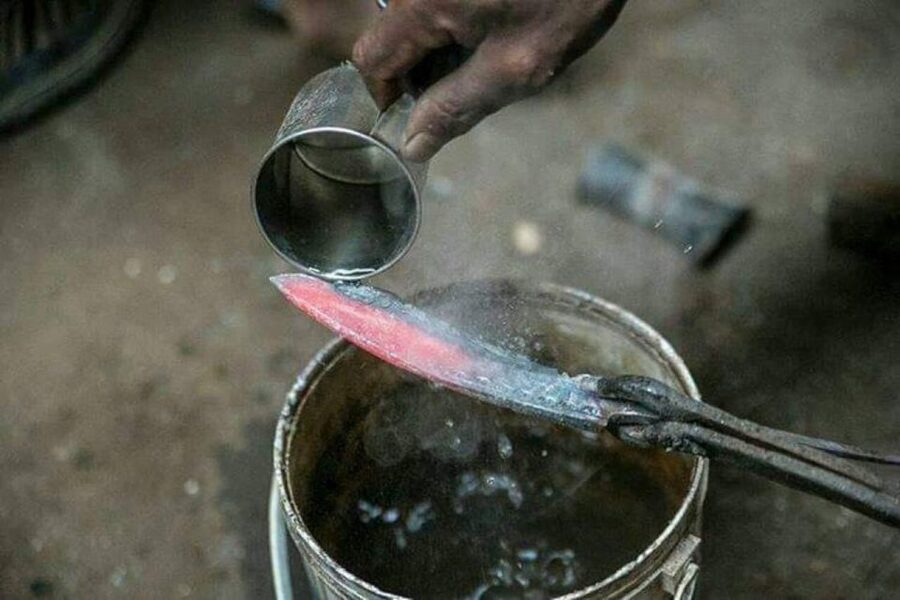
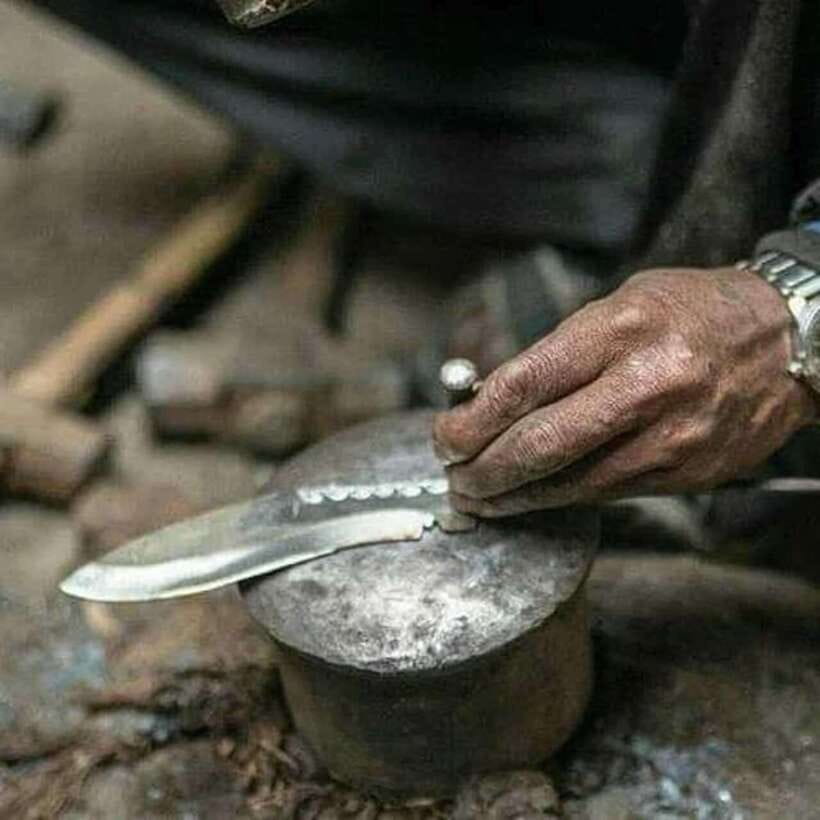
The first major hands-on task is hammering the iron. The blacksmith heats and positions the metal, then guides you through the basic action of striking it to help shape the blade.
This is the moment when the workshop feels most physical. You are not pressing a souvenir into a mold or choosing a handle from a shelf. You are helping alter the form of a hard piece of metal with heat, force, and timing.
The host controls the difficult shaping. That distinction matters. A khukuri’s curve and balance require skill, and the blacksmith will perform the parts that demand experience. You get the satisfaction of helping while avoiding the risk of being responsible for the blade’s most exact features.
The hammering can be tiring, especially if you have never done forge work. You may also find that your first strikes are less precise than expected. That is normal. The point is to feel the process and understand the labor behind the finished knife, not to match a master smith after a few minutes.
For families with older children, the activity can work well if the host agrees and the child follows directions. The stated minimum age is 10, and the adults in the group remain responsible for following all safety instructions.
Same base, a different kind of day:
- Everest Base Camp Trek – 14 Days
★ 5.0 · 1,499 reviews - Private Kathmandu Sightseeing Tour | UNESCO World Heritage sites
★ 5.0 · 756 reviews - Everest Base Camp Helicopter Tour landing at Everest View Hotel
★ 5.0 · 668 reviews - Everest Base Camp Trekking
★ 5.0 · 485 reviews
Grinding, sparks, and the limits of your role
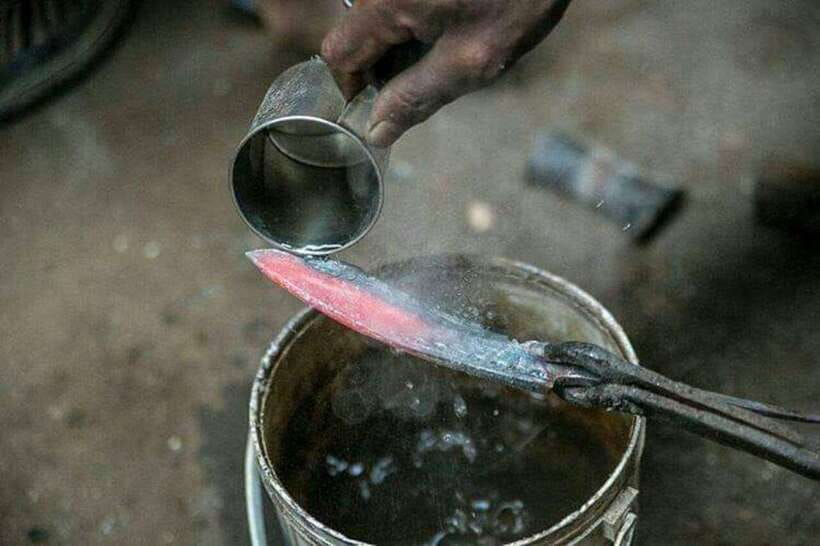
After hammering, you take part in the first grinding stage. This helps refine the rough shape and gives you another direct connection with the making process.
The more dangerous grinding and sharpening are handled by the host. You must stay clear of flying sparks and follow the instructions about where to stand. This is one place where the workshop is honest about the limits of visitor participation. The craft is too skilled and too hazardous to turn every stage into a hands-on activity.
That balance is one of the experience’s strengths. You get more than a demonstration, but you are not asked to operate equipment beyond your ability. The blacksmith can concentrate on the precision work while you take part in the safer sections.
The grinding area may be noisy and smoky, and the work is not suitable for anyone expecting a relaxed craft class. Wear long pants, keep loose clothing and hands away from the working area, and treat the sparks as a real hazard rather than part of a photo opportunity.
The final blade is sharpened and completed by the professional. You should understand this before booking: you help make the knife, but you do not personally carry out every stage.
The handle, cover, and finished souvenir
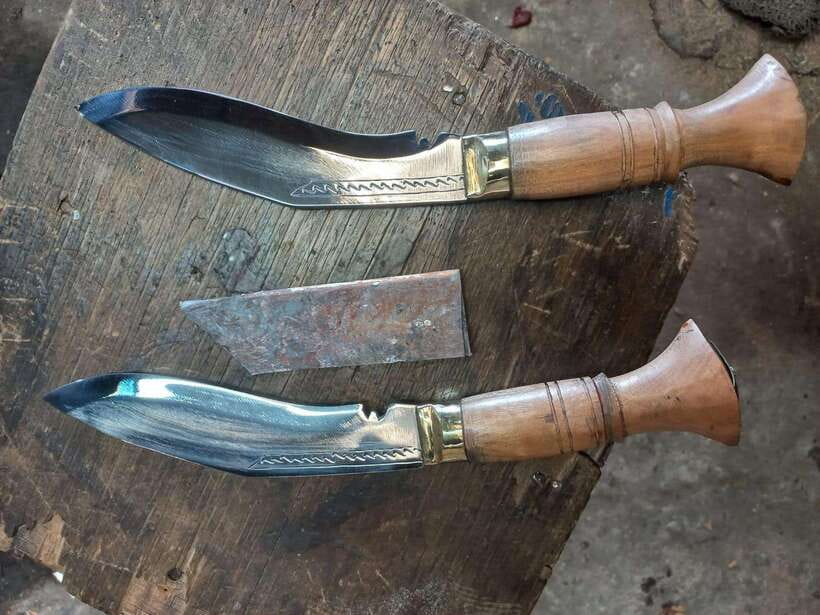
Once the blade has been shaped and refined, the knife needs a handle and a cover. The usual materials are wood or buffalo horn, and the standard experience includes a knife cover.
A horn or bone cover may be available for an additional cost. If that finish matters to you, ask about the extra price before the workshop begins. The included cover is enough to protect the blade and make the knife easier to carry, but the upgraded option may appeal if you want a more decorative keepsake.
The final result is one of the most satisfying parts of the visit. You can hold an object that began as a piece of metal and became a shaped, sharp, covered knife in less than one afternoon. The exact finish will depend on the blacksmith’s work and the materials used, but the point is that your involvement is tied to a real handmade item.
Several people have taken their knives home and continued to use or display them. A small khukuri is also a strong conversation piece because you can explain where it came from, who made it, and which parts you helped complete.
Check your own travel plans before carrying any blade home. The workshop includes the knife and cover, but the information provided does not specify airline or border rules. You are responsible for confirming how to pack and transport it.
What the $73 price includes
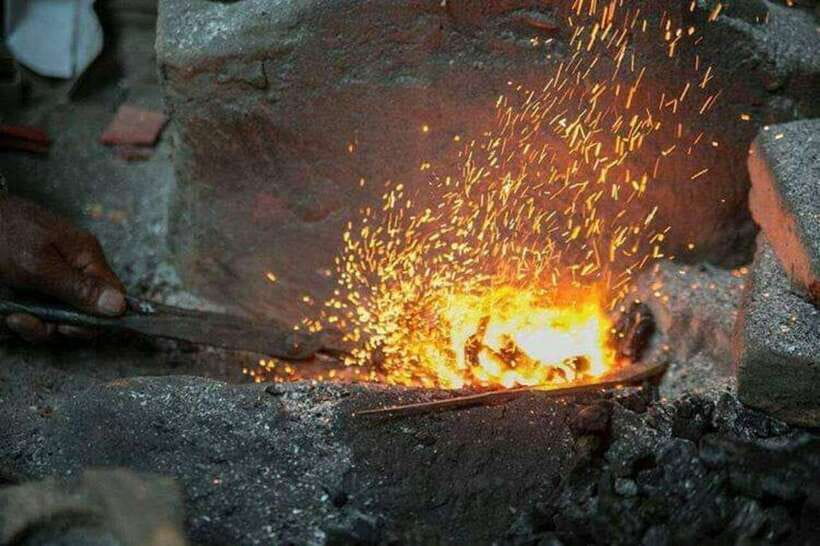
At $73 per person, this is more expensive than buying a khukuri in a market. That comparison is fair, but incomplete. You are paying for transport, a four-hour visit, the guidance of an experienced blacksmith, the tools and materials, refreshments, a knife cover, and a finished six-inch knife.
You are also paying for access to the making process. A shop purchase gives you a blade, while this activity gives you the story behind it and a chance to help shape the object.
The value is strongest if you care about craft, local connections, or meaningful souvenirs. It is weaker if you only want the cheapest knife or have little interest in how it is made.
Pickup and drop-off improve the value, especially when you do not want to arrange transport to an unfamiliar home workshop. A small group also means the cost includes personal attention rather than a short turn in a large crowd.
The experience has a 4.9 rating from 38 bookings, and transport received a perfect score from 86 percent of participants. Those figures do not guarantee that every session will feel identical, but they point to the two areas where the activity is designed to perform well: personal hosting and simple transport.
Who will enjoy this workshop most
I would choose this for you if you like practical cultural activities more than passive sightseeing. It suits people who want to meet a local maker, ask questions, and bring home something with a clear connection to Nepal.
It is especially good for:
- Visitors interested in metalwork, tools, or traditional crafts
- Couples and small groups who want a shared activity
- Families with children aged 10 and older who can follow safety instructions
- Anyone looking for a useful souvenir rather than a mass-produced item
- People who appreciate meeting a family and seeing work carried out at home
You should think twice if you dislike heat, noise, sparks, or close supervision. You also may not enjoy it if you expect to make a complete knife alone. The blacksmith’s role is central, and the most technical work remains in professional hands.
Older children can take part with help, and adults can do as much or as little as their ability allows. That flexibility is useful for mixed-age groups, though everyone still needs to respect the safety rules.
Practical details that make the day easier
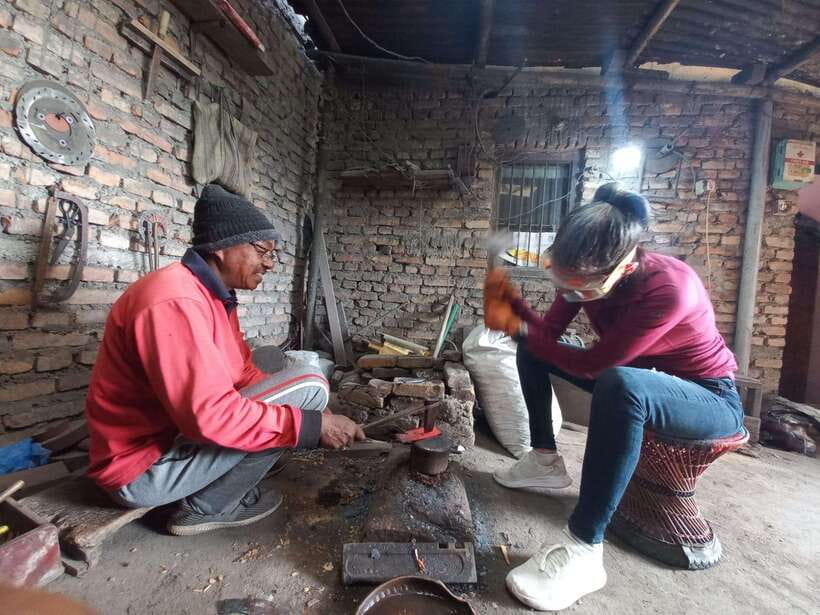
Wear long pants. This is the one clothing instruction given, and it makes sense around hot metal and sparks.
Plan on four hours, including pickup and drop-off. Starting times depend on availability, so check the schedule when you book. The activity is offered in English and Hindi.
Free cancellation is available up to 24 hours before the start for a full refund. You can also reserve and pay later, which helps if your Nepal plans are still shifting.
The experience provider is I. Experience Nepal Trek And Tour. Pickup is from your hotel lobby, and the group is limited to five people. Children under 10 are not permitted.
Bring curiosity, patience, and shoes and clothing you do not mind wearing around a working forge. You do not need to bring tools because everything required for the knife is supplied.
Should you book the khukuri workshop?
I would book this if you want a personal Nepal experience with a real object to take home. The combination of a family home, a blacksmith with more than 40 years of practice, guided hammering, first grinding, and a finished six-inch khukuri gives the four hours a clear purpose.
The best reason to go is not that you will become an expert knife maker. You will not. The reason is that you get a close look at a skilled local craft and take part in enough of the process to understand the work behind the blade.
Skip it if you only want a quick shopping stop, dislike workshop conditions, or need to perform every step yourself. For everyone else, $73 is a reasonable price for transport, instruction, refreshments, a covered handmade knife, and a memorable connection to Nepalese tradition.
FAQ
How long does the khukuri-making workshop last?
The activity lasts four hours, including hotel pickup and drop-off.
How much does the experience cost?
The price is $73 per person.
What size knife will I make?
You will make a small khukuri with a blade of about six inches.
Which parts of the knife-making process can I do?
You can take part in hammering the iron and the first grinding. The host handles the dangerous grinding, detailed shaping, and sharpening for safety.
Is pickup included?
Yes. The host picks you up from your hotel lobby and drops you back afterward.
What should I wear?
Wear long pants. You should also follow all instructions about staying clear of sparks and hot metal.
Can children join the workshop?
Children under 10 are not permitted. The activity can suit older children who can follow safety instructions and take part with adult guidance.
Just added in Kathmandu
- Kathmandu to Chitwan Tour by Tourist Bus – A Convenient and Affordable Way★ 4.0 · 4 reviews
- Chitwan Jungle Safari 3-Day Tour★ 5.0 · 9 reviews
- Changunarayan Hill to Telkot Hike Near Kathmandu Day Tour★ 5.0 · 6 reviews
- Mt Everest Base CampTrek | Budget Package★ 5.0 · 4 reviews
- Chandragiri Hill Station Tour by Cable Car★ 5.0 · 4 reviews
- Chandragiri Hills cable car day trip, private car with driver from Kathmandu★ 5.0 · 8 reviews
- Chandragiri to Taudaha Nature Day Hiking from Kathmandu★ 5.0 · 13 reviews
- Chandragiri Cable Car & Monkey Temple Private Guided Day Tour★ 5.0 · 5 reviews
Workshops, compared.
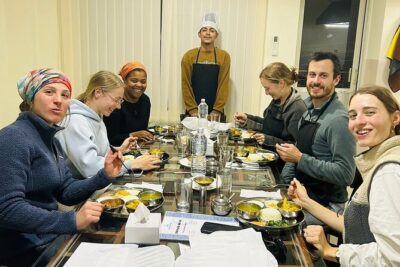
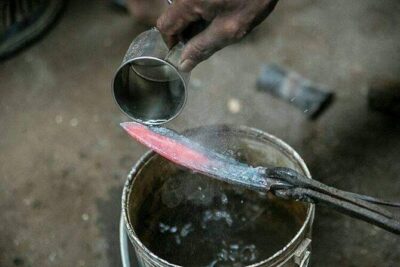
Knife (Khukuri) Making Workshop- Forge of the Gurkhas
Read our review →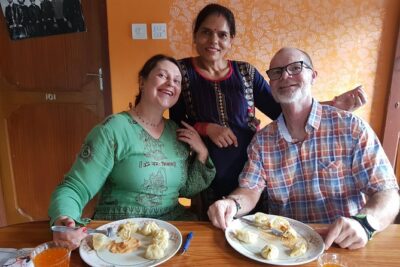
Nepalese Momos or Dal Bhat Cooking Class (Cook with Delight)
Read our review →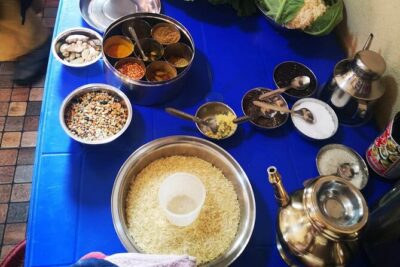
The best Private Nepali Cooking Class in Kathmandu
Read our review →
Nepalese Kitchen in Pokhara: Momos or Dal Bhat Cooking Class
Read our review →
Browse the lists this tour appears in